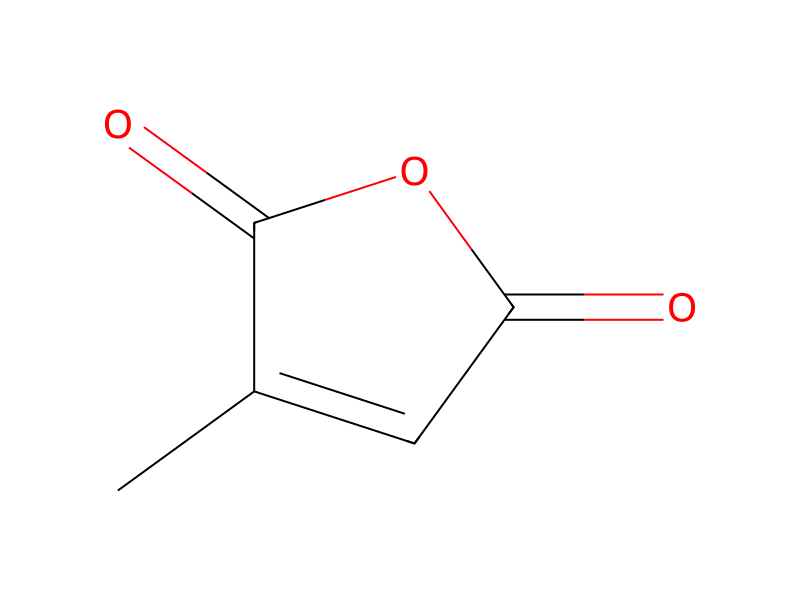
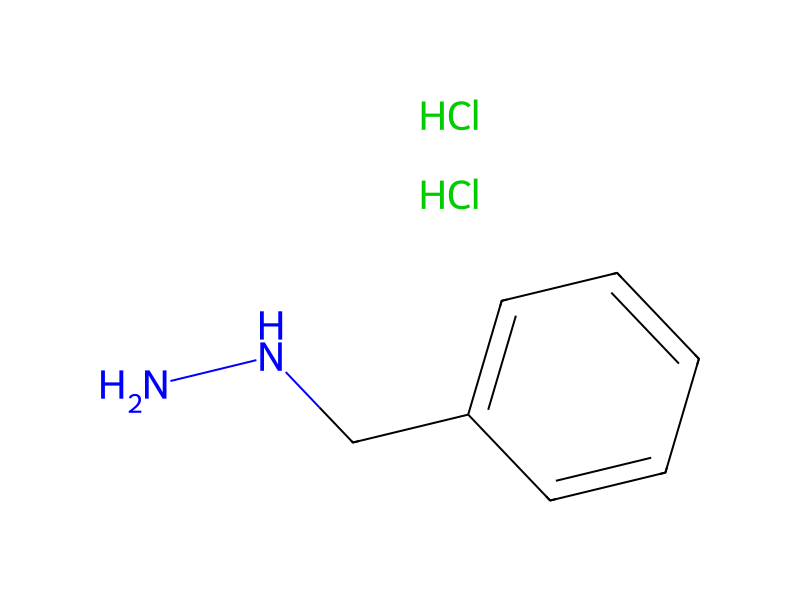
Citraconic Anhydrides → 1,2-Dihydro-1-benzyl-4-methyl-3,6-pyridazinedione
Reaction equation

[C:1]1(=[O:8])O[C:5](=[O:6])[CH:4]=[C:2]1[CH3:3].Cl.Cl.[CH2:11]([NH:18][NH2:19])[C:12]1[CH:17]=[CH:16][CH:15]=[CH:14][CH:13]=1.C([O-])(=O)C.[K+]>C(O)(=O)C>[CH2:11]([N:18]1[C:5](=[O:6])[CH:4]=[C:2]([CH3:3])[C:1](=[O:8])[NH:19]1)[C:12]1[CH:17]=[CH:16][CH:15]=[CH:14][CH:13]=1Participants
5
Reactant 3

Product 1

Reagents, catalysts & solvents 1

Procedure
A slurry of citraconic anhydride (5.61 g, 50.0 mmol), benzylhydrazine dihydrochloride (9.80 g, 50.0 mmol) and potassium acetate (9.80 g, 100 mmol) in acetic acid (100 mL) was heated to reflux for 17 h. The reaction mixture was cooled and filtered. The filtrate was evaporated under reduced pressure and re-evaporated from toluene. The gummy yellow residue was partitioned between sodium carbonate solution (90 mL, 4 N) and EtOAc (50 mL). The aqueous extract was washed once with EtOAc and then slowly added to hydrochloric acid (3 M, 140 mL). The resulting white precipitate was collected, washed with water and dissolved in chloroform (1 L). The insoluble material was collected and boiled in EtOAc and filtered hot, to give 1,2-dihydro-1-benzyl-4-methyl-3,6-pyridazinedione as a white solid, mp >200° C. (1.85 g, 17%). Part IA compound.