HomeMCPSkillsWorkbenchOpenChem
HomeWorkbenchNotificationsMe
llms.txt · skill.md · MCP GuidePrivacy Policy · Terms of Service · Supportv1.8.5
  1. Home
  2. /Reaction

Hydrochloric Acid → 1-{1-[3-(4-Fluorophenyl)-2,2-dimethylpropyl]-piperidin-3-ylmethyl}-3-[3-(1-methyl-1H-tetrazol-5-yl)-phenyl]-urea

HRID 896521
Print

Reaction equation

B.O1CCCC1.[F:7][C:8]1[CH:13]=[CH:12][C:11]([CH2:14][C:15]([CH3:42])([CH3:41])[C:16]([N:18]2[CH2:23][CH2:22][CH2:21][CH:20]([CH2:24][NH:25][C:26]([NH:28][C:29]3[CH:34]=[CH:33][CH:32]=[C:31]([C:35]4[N:39]([CH3:40])[N:38]=[N:37][N:36]=4)[CH:30]=3)=[O:27])[CH2:19]2)=O)=[CH:10][CH:9]=1.Cl>CO>[F:7][C:8]1[CH:13]=[CH:12][C:11]([CH2:14][C:15]([CH3:42])([CH3:41])[CH2:16][N:18]2[CH2:23][CH2:22][CH2:21][CH:20]([CH2:24][NH:25][C:26]([NH:28][C:29]3[CH:34]=[CH:33][CH:32]=[C:31]([C:35]4[N:39]([CH3:40])[N:38]=[N:37][N:36]=4)[CH:30]=3)=[O:27])[CH2:19]2)=[CH:10][CH:9]=1
ParticipantsProcedureWorkupSources & evidenceReaction notes

Participants

6

Reactant 4

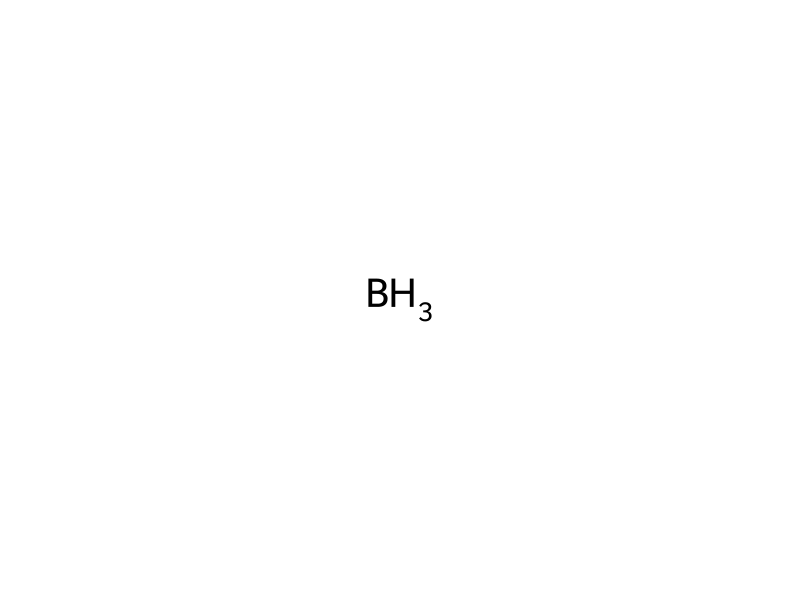
HCID 313Hydrochloric AcidHCID 6331BoraneHCID 8028TetrahydrofuranHCID 697363521-{1-[3-(4-fluorophenyl)-2,2-dimethylpropionyl]-piperidin-3-ylmethyl}-3-[3-(1-methyl-1H-tetrazol-5-yl)-phenyl]-urea

Product 1

HCID 99130081-{1-[3-(4-Fluorophenyl)-2,2-dimethylpropyl]-piperidin-3-ylmethyl}-3-[3-(1-methyl-1H-tetrazol-5-yl)-phenyl]-urea
Yield 38%

Reagents, catalysts & solvents 1

HCID 887MethanolSolvent

Procedure

A solution of borane in tetrahydrofuran (1.0 M, 5.3 mL, 5.3 mmol) was added to 1-{1-[3-(4-fluorophenyl)-2,2-dimethylpropionyl]-piperidin-3-ylmethyl}-3-[3-(1-methyl-1H-tetrazol-5-yl)-phenyl]-urea (66 mg, 134 μmol) and the resulting solution was stirred at room temperature for 18 hours. A mixture of 1.0 N hydrochloric acid (5 mL) and methanol (5 mL) was added very slowly until the resulting vigorous reaction subsided, then the remainder was added quickly and the resulting solution was stirred at room temperature for 5 hours. The solution was concentrated under vacuum. The residue was dissolved in 1.0 N aqueous sodium hydroxide and dichloromethane, and the phases were separated. The aqueous phase was extracted twice with dichloromethane, and the combined organic phases were dried over sodium sulfate and concentrated under vacuum. The residue was purified twice by flash chromatography, eluting with 4% methanol in dichloromethane containing 0.4% aqueous ammonium hydroxide, to provide a white amorphous solid (24 mg, 38%). 1H NMR (300 MHz, CDCl3) δ7.81 (s, 1H), 7.68 (d, J=8 Hz, 1H), 7.34 (t, J=8 Hz, 1H), 7.18 (m, 1H), 7.01 (m, 2H), 6.84 (t, J=9 Hz, 2H), 4.09 (s, 3H), 3.09 (m, 2H), 2.95 (m, 1H), 2.55 (s, 2H), 2.40 (m, 3H), 2.10 (m, 1H), 1.9-1.5 (m, 5H), 1.0 (m, 1H), 0.85 (s, 6H). Mass spec (ES+) m/z 480.5 (M+H+).

Workup

  1. additionwas added very slowly until the resulting vigorous reaction
  2. additionthe remainder was added quickly
  3. stirringthe resulting solution was stirred at room temperature for 5 hours
  4. concentrationThe solution was concentrated under vacuum
  5. dissolutionThe residue was dissolved in 1.0 N aqueous sodium hydroxide
  6. customdichloromethane, and the phases were separated
  7. extractionThe aqueous phase was extracted twice with dichloromethane
  8. dry with materialthe combined organic phases were dried over sodium sulfate
  9. concentrationconcentrated under vacuum
  10. customThe residue was purified twice by flash chromatography
  11. washeluting with 4% methanol in dichloromethane containing 0.4% aqueous ammonium hydroxide

Sources & evidence

ORD record
ord-a1367abda6d946648213a758ce652f4b
Source dataset
uspto-grants-2005_07
DOI
10.6084/m9.figshare.5104873.v1
Patent number
US06919356B2

Reaction notes

On this pageParticipantsProcedureWorkupSources & evidenceReaction notes