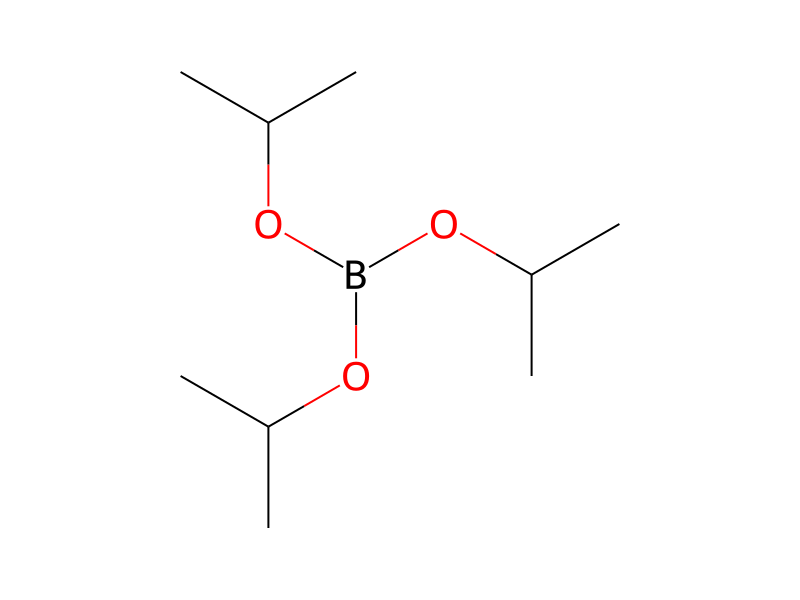
A solution of 6-methoxy-3-bromo-2-methylpyridine (59.8 g, 296 mmol) in dry THF (429 mL) was cooled with stirring to ˜−78° C. under a nitrogen atmosphere. A solution of n-butyl lithium (2.5 M, 130.4 mL, 326 mmol) in hexane was added dropwise over 30 min. The reaction mixture was stirred for 3 h at ˜−78° C. A solution of tri-isopropyl borate (102.7 mL, 445 mmol) in dry THF (100 mL) was added dropwise over 30 min. The reaction mixture was warmed to ambient temperature with stirring over 16 h. Acetic acid (37.35 g, 622 mmol), then water (110 mL) were added to the reaction mixture with stirring. After 2 h, the layers were separated and the organic layer was concentrated in vacuo. The residue was taken up in 2-propanol (750 mL) and solvent was removed on a rotary evaporator (bath temperature ˜50° C). The residue was triturated with ether. The product was collected by filtration and dried in vacuo (48.4 g): mp>200° C.; 1H-NMR(CD3OH, 300 MHz): δ 7.83 (d, 1H, J=8), 6.56 (d, 1H, J=8), 3.85 (s, 3H), 2.44 (s, 3H); GC-MS: 168 (M++H).