HomeMCPWorkbenchSkills
HomeWorkbenchNotificationsMe
llms.txt · MCP GuidePrivacy Policy · Terms of Service · Supportv1.8.3
  1. Home
  2. /Reaction

Triethylamine → 4-(4-Benzyl-2-oxo-oxazolidin-3-yl)-4-oxo-2-phenethyl-butyric acid methyl ester

HRID 902918
Print

Reaction equation

HRID 902918 reaction equation
[CH3:1][O:2][C:3](=[O:17])[CH:4]([CH2:9][CH2:10][C:11]1[CH:16]=[CH:15][CH:14]=[CH:13][CH:12]=1)[CH2:5][C:6]([OH:8])=O.C(N(CC)CC)C.CC(C)(C)C(Cl)=O.C([Li])CCC.[CH2:37]1[O:42][C:40](=[O:41])[NH:39][C@@H:38]1[CH2:43][C:44]1[CH:49]=[CH:48][CH:47]=[CH:46][CH:45]=1>C1COCC1>[CH3:1][O:2][C:3](=[O:17])[CH:4]([CH2:9][CH2:10][C:11]1[CH:16]=[CH:15][CH:14]=[CH:13][CH:12]=1)[CH2:5][C:6]([N:39]1[CH:38]([CH2:43][C:44]2[CH:49]=[CH:48][CH:47]=[CH:46][CH:45]=2)[CH2:37][O:42][C:40]1=[O:41])=[O:8]
ParticipantsConditionsProcedureWorkupSources & evidenceReaction notes

Participants

7

Reactant 5

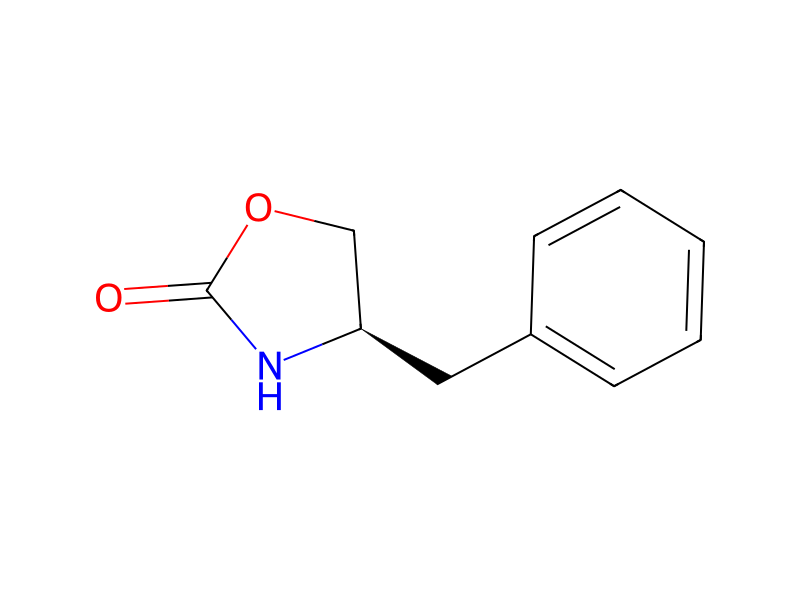
HCID 8471TriethylamineHCID 62493Pivaloyl chlorideHCID 2734969(R)-4-Benzyl-2-oxazolidinoneHCID 19748729HCID 19748729, compoundHCID 178418339Butyllithium

Product 1

HCID 692077874-(4-Benzyl-2-oxo-oxazolidin-3-yl)-4-oxo-2-phenethyl-butyric acid methyl ester

Reagents, catalysts & solvents 1

HCID 8028TetrahydrofuranSolvent2×

Conditions

Temperature
-78 °C

Procedure

To a solution of the compound of example 49 (2.51 g, 10.62 mmol) in anhydrous THF (60 mL) and containing triethyl amine (1.8 mL, 12.74 mmol) at −70° C. was added drop wise trimethylacetyl chloride. After 15 minutes, the reaction mixture was placed in an ice bath and stirred for 45 minutes after which time, the reaction mixture was cooled to −78° C. In a separate flask, n-butyl lithium (2.5 M in hexanes, 43 mL, 10.62 mmol) was added to a solution of R-4-benzyl-2-oxazolidinone in anhydrous THF at −78° C. After 15 minutes of stirring, this mixture was transferred by cannula to the former solution. The resultant mixture was stirred for 20 minutes at −78° C. followed by an additional 2 h in an ice bath. The reaction was quenched by the addition of a saturated solution of ammonium chloride. The mixture was extracted several times using ethyl acetate. The recombined organic layer was extracted with brine, saturated sodium hydrogen carbonate, brine, and water, respectively. The solvent was evaporated following drying over sodium sulfate and filtration. The resultant crude material was flashed using 30% ethyl acetate in hexanes to give the product as a white solid. 1H-NMR(CDCl3, 300 MHz: 1.89(m, 1H); 2.05(m, 1H); 2.75(m, 3H); 3.00(m, 1H); 3.68(m, 3H); 3.75(s, 3H); 4.18(m, 2H); 4.65(m, 1H); 7.21(m, 5H), 7.33(m, 5H).


Workup

  1. customthe reaction mixture was placed in an ice bath
  2. stirringAfter 15 minutes of stirring
  3. waitfollowed by an additional 2 h in an ice bath
  4. customThe reaction was quenched by the addition of a saturated solution of ammonium chloride
  5. extractionThe mixture was extracted several times
  6. extractionThe recombined organic layer was extracted with brine, saturated sodium hydrogen carbonate, brine, and water
  7. customThe solvent was evaporated
  8. dry with materialfollowing drying over sodium sulfate and filtration

Sources & evidence

ORD record
ord-737e789492194486ac8e9ab7023a9c28
Source dataset
uspto-grants-2008_04
DOI
10.6084/m9.figshare.5104873.v1
Patent number
US07365091B2

Reaction notes

On this pageParticipantsConditionsProcedureWorkupSources & evidenceReaction notes