HomeMCPWorkbenchSkills
HomeWorkbenchNotificationsMe
llms.txt · MCP GuidePrivacy Policy · Terms of Service · Supportv1.8.0
  1. Home
  2. /Reaction

Potassium Cyanide → trans-3-(beta-Cyanostyryl)-2,2-dimethyl-cyclopropanecarboxylic acid, alpha-cyano-m-(p-chlorophenoxy)benzyl ester

HRID 905254
Notes
Print preview

Reaction equation

HRID 905254 reaction equation
S(Cl)(Cl)=O.[C:5]([C:7]([C:17]1[CH:22]=[CH:21][CH:20]=[CH:19][CH:18]=1)=[CH:8][CH:9]1[CH:11]([C:12]([OH:14])=[O:13])[C:10]1([CH3:16])[CH3:15])#[N:6].[Cl:23][C:24]1[CH:38]=[CH:37][C:27]([O:28][C:29]2[CH:30]=[C:31]([CH:34]=[CH:35][CH:36]=2)[CH:32]=O)=[CH:26][CH:25]=1.C1OCCOCCOCCOCCOCCOC1.[C-:57]#[N:58].[K+]>C1(C)C=CC=CC=1.O>[C:5]([C:7]([C:17]1[CH:18]=[CH:19][CH:20]=[CH:21][CH:22]=1)=[CH:8][C@H:9]1[C@H:11]([C:12]([O:14][CH:32]([C:57]#[N:58])[C:31]2[CH:34]=[CH:35][CH:36]=[C:29]([O:28][C:27]3[CH:37]=[CH:38][C:24]([Cl:23])=[CH:25][CH:26]=3)[CH:30]=2)=[O:13])[C:10]1([CH3:16])[CH3:15])#[N:6]
ParticipantsConditionsProcedureWorkupSources & evidenceReaction notes

Participants

8

Reactant 5

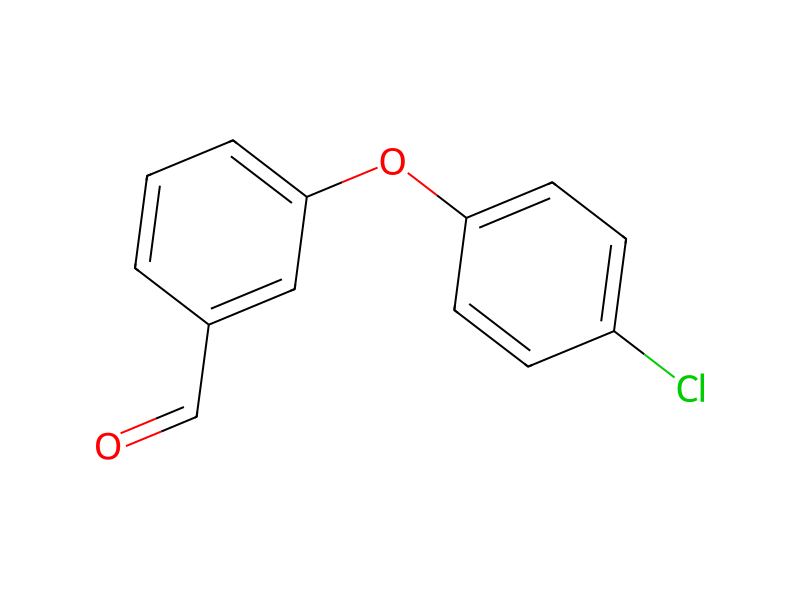
HCID 9032Potassium CyanideHCID 24386Thionyl ChlorideHCID 2855718-Crown-6HCID 6160153-(4-Chlorophenoxy)benzaldehydeHCID 571159863-(beta-Cyanostyryl)-2,2-dimethyl-cyclopropanecarboxylic acid

Product 1

HCID 86737699
trans-3-(beta-Cyanostyryl)-2,2-dimethyl-cyclopropanecarboxylic acid, alpha-cyano-m-(p-chlorophenoxy)benzyl ester

Reagents, catalysts & solvents 2

HCID 962WaterSolvent2×HCID 1140TolueneSolvent2×

Conditions

Temperature
100 °C

Procedure

Thionyl chloride (1.61 ml, 2.6 g; 0.022 mole), 3-(β-cyanostyryl)-2,2-dimethyl-cyclopropanecarboxylic acid (4.82 g; 0.02 mole) and toluene are mixed and heated at 100° C. for 1 hour. The reaction mixture is cooled to 25° C. and a solution of m-(p-chlorophenoxy)benzaldehyde (4.65 g; 0.02 mole) and 18-crown-6 (0.49 g; 0.002 mole) in toluene (10 ml) is added. To this reaction mixture a solution of potassium cyanide (2.6 g; 0.04 mole) in water (6 ml) is added slowly while maintaining the temperature between 20°-25° C. The reaction mixture is then stirred for 18 hours at room temperature. The resultant black reaction mixture is poured in water and extracted with ether (3x). The combined ether extracts are washed with water, 10% hydrochloric acid, 10% sodium bicarbonate, water and saturated sodium chloride solution. The ether layer is dried over sodium sulfate and evaporated in vacuo to leave a brown gum. This gum is purified by dry column chromatography (silica gel; eluent: 1:1 methylene chloride:hexane) to afford the title product, a yellow glass (1.0 g, 8.6%).

Workup

  1. temperatureThe reaction mixture is cooled to 25° C.
  2. temperaturewhile maintaining the temperature between 20°-25° C
  3. customThe resultant black reaction mixture
  4. extractionextracted with ether (3x)
  5. washThe combined ether extracts are washed with water, 10% hydrochloric acid, 10% sodium bicarbonate, water and saturated sodium chloride solution
  6. dry with materialThe ether layer is dried over sodium sulfate
  7. customevaporated in vacuo
  8. customto leave a brown gum
  9. customThis gum is purified
  10. dry with materialby dry column chromatography (silica gel; eluent: 1:1 methylene chloride:hexane)

Sources & evidence

ORD record
ord-2c76e182f78340718803c05c06b11515
Source dataset
uspto-grants-1983_12
DOI
10.6084/m9.figshare.5104873.v1
Patent number
US04423062

Reaction notes

Loading…

On this pageParticipantsConditionsProcedureWorkupSources & evidenceReaction notes