Reaction equation

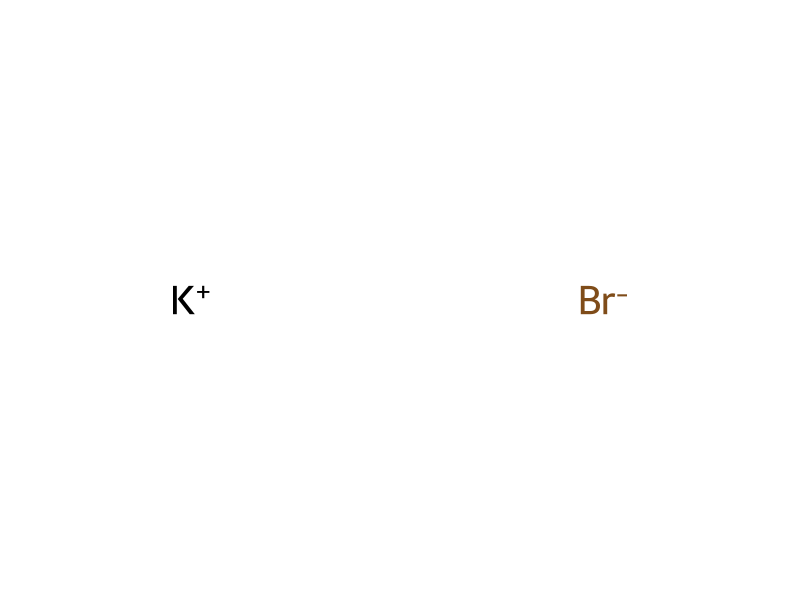
[Cl:1][C:2]1[CH:8]=[CH:7][C:5]([NH2:6])=[C:4]([CH3:9])[CH:3]=1.[Br-:10].[K+].C(O)(=O)C.B1([O-])OO1.O.O.O.O.[Na+].C(=O)(O)[O-].[Na+]>N.N.N.N.N.N.O.O.O.O.O[Mo](O)(=O)=O.O[Mo](O)(=O)=O.O[Mo](O)(=O)=O.O=[Mo](=O)=O.O=[Mo](=O)=O.O=[Mo](=O)=O.O=[Mo](=O)=O.O>[Br:10][C:7]1[CH:8]=[C:2]([Cl:1])[CH:3]=[C:4]([CH3:9])[C:5]=1[NH2:6]Participants
8
Reactant 5




Product 1

Reagents, catalysts & solvents 2


Conditions
- Temperature
- 0 °C
Procedure
4-Chloro-2-methylaniline (1.0 g, 7.06 mmol), potassium bromide (1.01 g, 8.47 mmol), and ammonium heptamolybdate tetrahydrate (87 mg, 0.07 mmol) were suspended in acetic acid (7 mL, 122 mmol) and cooled to 0° C. The reaction was treated with sodium perborate tetrahydrate (1.2 g, 7.77 mmol), stirred at 0° C. for 30 min, and at room temperature for 2 h. The mixture was poured into water, neutralized with saturated sodium bicarbonate and extracted with ethyl acetate (2×). The organic layers were pooled together, washed with brine (2×), dried over sodium sulfate, and concentrated to afford 1.2 g (78%). 1H-NMR (CDCl3, 500 MHz) δ 7.28 (s, 1H), 6.97 (s, 1H), 4.03 (bs, 2H), 2.17 (s, 3) Mass spec.: 221.90 (MH)+.
Workup
- waitat room temperature for 2 h
- extractionextracted with ethyl acetate (2×)
- washwashed with brine (2×)
- dry with materialdried over sodium sulfate
- concentrationconcentrated
- customto afford 1.2 g (78%)
Sources & evidence
- ORD record
- ord-b3bb722067144d10a04789b67aeacb86
- Source dataset
- uspto-grants-2011_09
- Patent number
- US08026257B2
Linked notes
Loading…