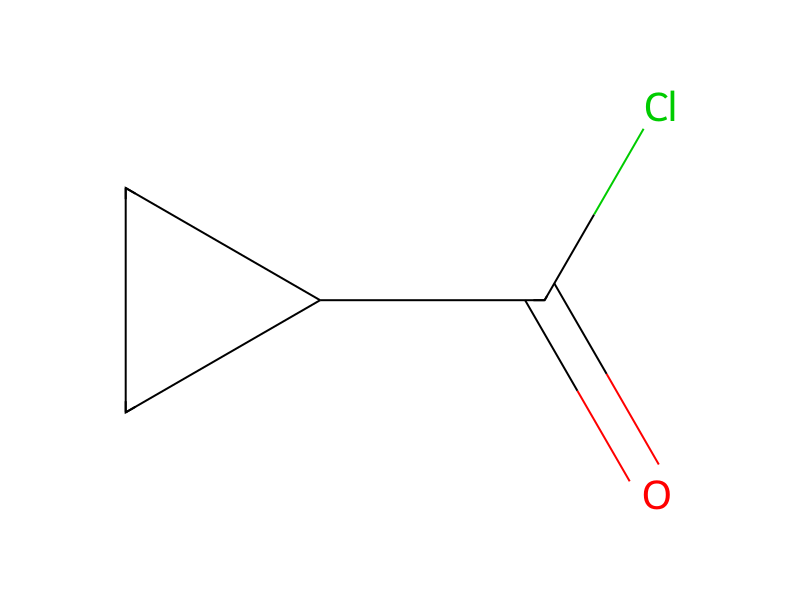
[CH2:1]([O:8][C:9]([N:11]1[CH2:15][C:14](=[O:16])[N:13]=[C:12]1[NH2:17])=[O:10])[C:2]1[CH:7]=[CH:6][CH:5]=[CH:4][CH:3]=1.[CH:18]1([C:21](Cl)=[O:22])[CH2:20][CH2:19]1.CCN(C(C)C)C(C)C>C(#N)C>[CH2:1]([O:8][C:9]([N:11]1[CH2:15][C:14](=[O:16])[N:13]=[C:12]1[NH:17][C:21]([CH:18]1[CH2:20][CH2:19]1)=[O:22])=[O:10])[C:2]1[CH:7]=[CH:6][CH:5]=[CH:4][CH:3]=1A suspension of 2-amino-4-oxo-4,5-dihydro-imidazole-1-carboxylic acid benzyl ester (100.0 mg, 0.43 mmol), cyclopropanecarbonylchloride (45.0 mg, 0.43 mmol) and Hunig's base (83.0 mg, 0.64 mmol) in acetonitrile (4 mL) was heated to reflux under argon for 0.5 hr. Cooled to r.t., the reaction mixture was concentrated and the residue was partitioned between EtOAc and water. The organic layer was dried over Na2SO4 and concentrated and the residue was triturated with AcOEt to give a suspension. The solid was filtered to give 2-(cyclopropanecarbonyl-amino)-4-oxo-4,5-dihydro-imidazole-1-carboxylic acid benzyl ester as an oil (113.0 mg, 87.6%).