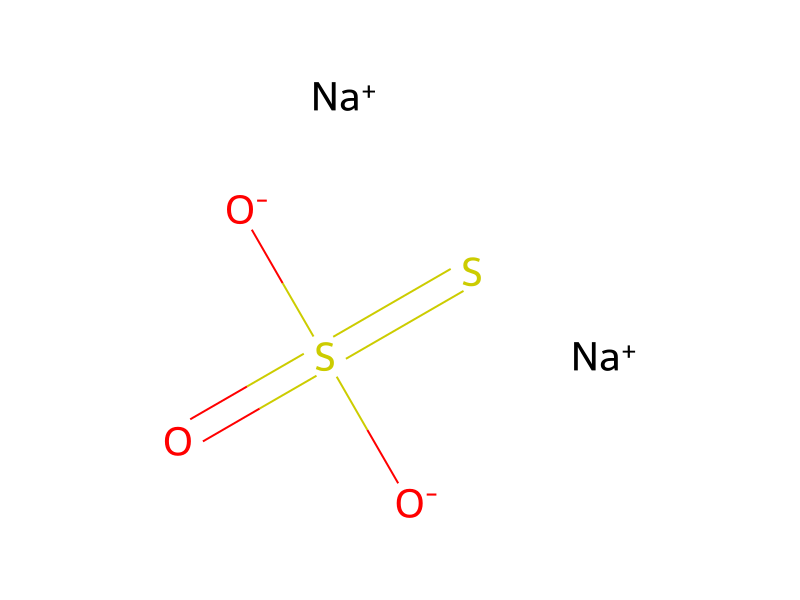
Cl[C:2]1C=C(C=C[CH:11]=1)C(OO)=O.C(S[C:15]1[CH:20]=[CH:19][CH:18]=[CH:17][C:16]=1[N:21]1[CH:29]=[C:28]2[C:23]([CH:24]=[C:25]([C:30]([F:33])([F:32])[F:31])[CH:26]=[CH:27]2)=[N:22]1)C.[S:34]([O-:38])([O-])(=[O:36])=S.[Na+].[Na+]>C(Cl)(Cl)Cl>[CH2:2]([S:34]([C:15]1[CH:20]=[CH:19][CH:18]=[CH:17][C:16]=1[N:21]1[CH:29]=[C:28]2[C:23]([CH:24]=[C:25]([C:30]([F:33])([F:32])[F:31])[CH:26]=[CH:27]2)=[N:22]1)(=[O:38])=[O:36])[CH3:11]607 mg of 3-chloroperoxybenzoic acid (purity of 65% or more) was added to a mixture of 407 mg of 2-(2-ethylsulfanylphenyl)-6-trifluoromethyl-2H-indazole and 5 ml of chloroform under ice cooling, and the mixture was stirred at room temperature for 4 hours. A 10% aqueous sodium thiosulfate solution was poured to the reaction mixture, and the mixture was extracted with chloroform. The organic layer was washed with a saturated aqueous sodium bicarbonate solution and dried over anhydrous magnesium sulfate, then concentrated under reduced pressure to obtain 452 mg of 2-(2-ethylsulfonylphenyl)-6-trifluoromethyl-2H-indazole (hereinafter, referred to as Compound of Present Invention 2)