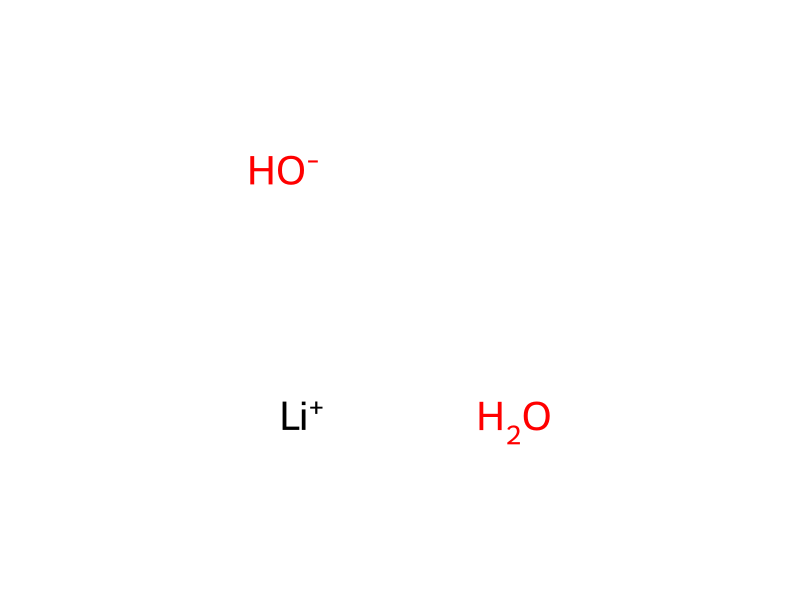
Into a 500-mL round bottom flask, was placed a solution of methyl 3-((2-(2-hydroxyethoxy)ethyl)carbamoyl)benzoate (10 g, 37.45 mmol, 1.00 equiv) in tetrahydrofuran (40 mL), and a solution of lithium hydroxide hydrate (23.4 g, 558.33 mmol, 15.00 equiv) in water (30 mL). The resulting solution was stirred overnight at room temperature. The resulting mixture was concentrated under vacuum. The solution was adjusted to pH 3-4 with hydrochloric acid (2 mol/L). The resulting solution was extracted with 3×10 mL of ethyl acetate and the organic layers combined. The resulting mixture was washed with 2×10 mL of brine, dried over anhydrous sodium sulfate, and concentrated under vacuum. The residue was applied onto a silica gel column and eluted with dichloromethane:methanol (50:1). This resulted in 5 g (53%) of 3-((2-(2-hydroxyethoxy)ethyl)carbamoyl)benzoic acid as a yellowish solid. 1H-NMR (300 MHz, DMSO, ppm): δ 13.25 (s, 1H), 8.71 (m, 1H), 8.48 (d, J=8.5 Hz 1H), 8.06 (m, 2H), 7.62 (m, 1H), 4.59 (s, 1H), 3.41-3.60 (m, 8H). MS (ES, m/z): 254 [M+H]+.