Dimethylformamide → 3-Morpholinoquinoxaline-6-carbaldehyde
HRID 929346
Reaction equation

Br[C:2]1[CH:11]=[C:10]2[C:5]([N:6]=[CH:7][C:8]([N:12]3[CH2:17][CH2:16][O:15][CH2:14][CH2:13]3)=[N:9]2)=[CH:4][CH:3]=1.[SiH](CC)(CC)CC.CN([CH:28]=[O:29])C>>[O:15]1[CH2:16][CH2:17][N:12]([C:8]2[CH:7]=[N:6][C:5]3[C:10]([N:9]=2)=[CH:11][C:2]([CH:28]=[O:29])=[CH:3][CH:4]=3)[CH2:13][CH2:14]1Participants
4

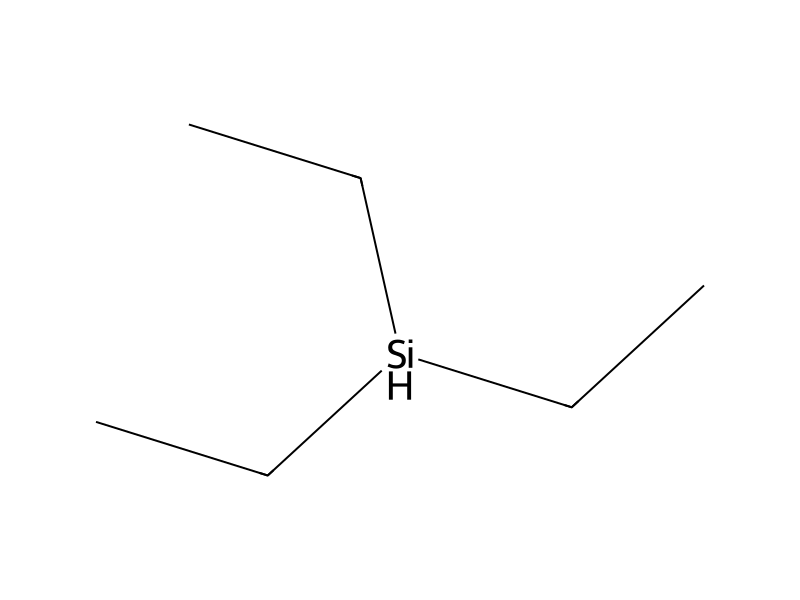


Conditions
- Temperature
- 90 °C
Procedure
To a solution of 4-(7-bromoquinoxalin-2-yl)morpholine (59 g, 0.2 mol, 1.0 eq.) in DMF (500 mL) was added TEA (139 mL, 1.0 mol, 5.0 eq.), Et3SiH (127 mL, 0.8 mol, 4.0 eq) and Pd(dppf)Cl2CH2Cl2 (8.16 g, 0.01 mol, 0.05 eq.). The resulting mixture was stirred at 90° C. for 12 h in an autoclave under CO (1 MPa), then cooled and concentrated. The resulting residue was purified by flash column chromatography (EA/PE=1/1) to afford 3-morpholinoquinoxaline-6-carbaldehyde as a yellow solid (40 g, 82.3%).