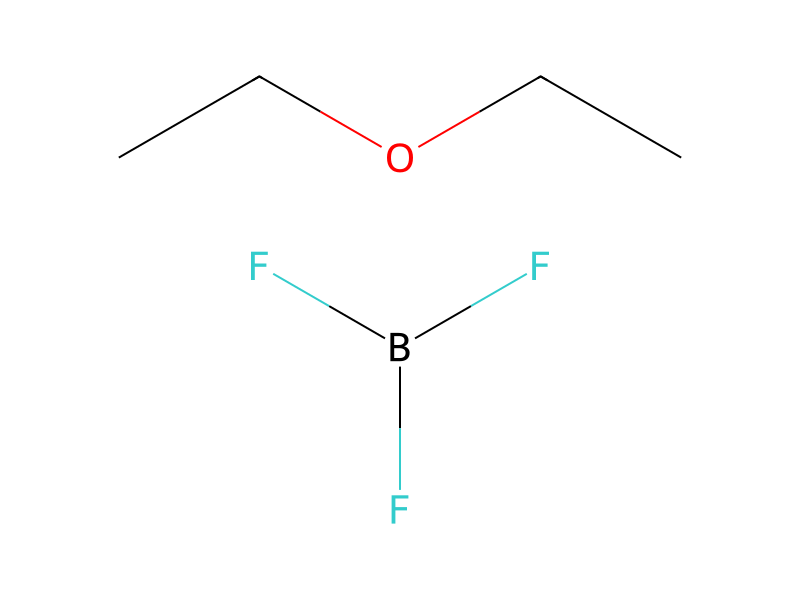
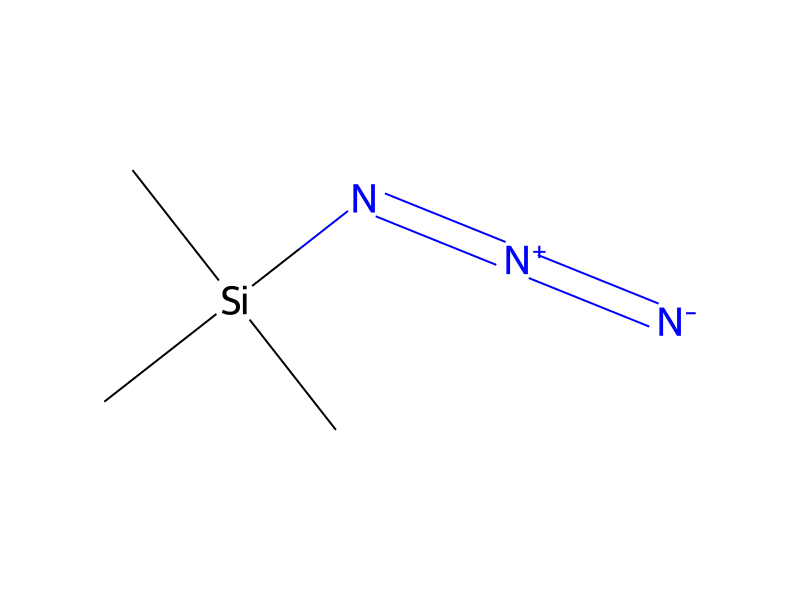
[Br:1][C:2]1[CH:3]=[C:4]2[C:15](=[CH:16][CH:17]=1)[O:14][C:7]1[C:8]([F:13])=[N:9][C:10]([Cl:12])=[CH:11][C:6]=1[C:5]2([CH2:19][CH2:20][OH:21])O.[N:22]([Si](C)(C)C)=[N+:23]=[N-:24].B(F)(F)F.CCOCC>C1COCC1>[N:22]([C:5]1([CH2:19][CH2:20][OH:21])[C:6]2[CH:11]=[C:10]([Cl:12])[N:9]=[C:8]([F:13])[C:7]=2[O:14][C:15]2[C:4]1=[CH:3][C:2]([Br:1])=[CH:17][CH:16]=2)=[N+:23]=[N-:24]To a solution of 7-bromo-3-chloro-1-fluoro-5-(2-hydroxyethyl)-5H-chromeno[2,3-c]pyridin-5-ol (48 g, 128 mmol) in THF (58 mL) were added azidotrimethylsilane (34.0 ml, 256 mmol) and boron trifluoride diethyl etherate (31.6 ml, 256 mmol). The reaction mixture was heated to 60° C. for 15 h. Additional azidotrimethylsilane (34.0 ml, 256 mmol) and boron trifluoride diethyl etherate (31.6 ml, 256 mmol) were added and heating was continued for 3 h. The reaction mixture was quenched with aqueous, saturated NaHCO3 solution and extracted with EtOAc. The organic phase was separated, dried over Na2SO4 and concentrated under reduced pressure. The residue was purified by chromatography (0-30% EtOAc/hexanes) to afford 2-(5-azido-7-bromo-3-chloro-1-fluoro-5H-chromeno[2,3-c]pyridin-5-yl)ethanol (41 g, 103 mmol, 80% yield) as a pale yellow solid-foam.