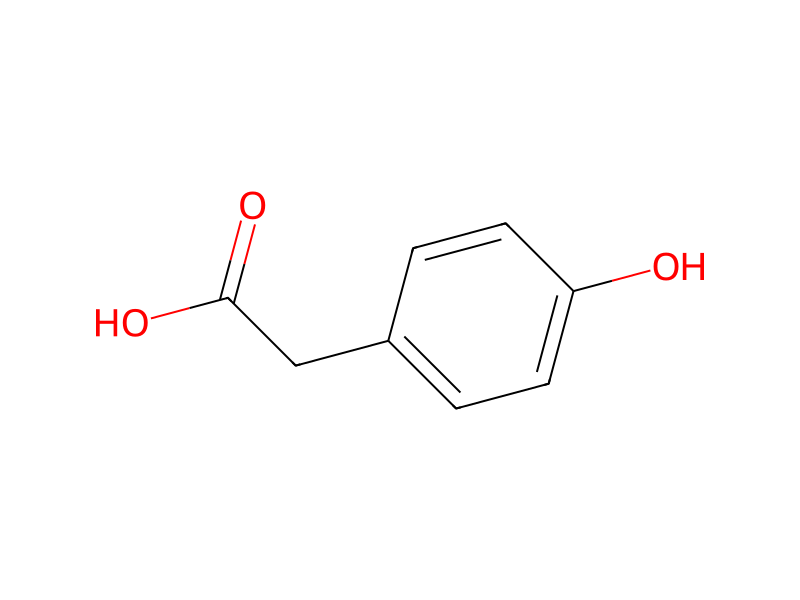
[OH:1][C:2]1[CH:7]=[CH:6][C:5]([CH2:8][C:9]([OH:11])=O)=[CH:4][CH:3]=1.C(N1C=CN=C1)(N1C=CN=C1)=O.[NH2:24][C:25]1[CH:30]=[CH:29][N:28]=[C:27]([CH2:31][CH3:32])[C:26]=1[Cl:33].O>O1CCOCC1>[Cl:33][C:26]1[C:27]([CH2:31][CH3:32])=[N:28][CH:29]=[CH:30][C:25]=1[NH:24][C:9](=[O:11])[CH2:8][C:5]1[CH:4]=[CH:3][C:2]([OH:1])=[CH:7][CH:6]=10.76 g (5.0 mmol) of 4-hydroxyphenyl acetic acid was dissolved in 20 ml of 1,4-dioxane, and the solution was stirred at 5° C. Then, 0.97 g (6.0 mmol) of 1,1'-carbonyldiimidazole was added thereto, and the mixture was stirred for one hour at 5° C. Then, 0.76 g (5.0 mmol) of 4-amino-3-chloro-2-ethylpyridine was added thereto, and the mixture was refluxed under heating for 20 hours. The reaction solution was poured into water and extracted with ethyl acetate. The organic layer was washed with water and then dried over anhydrous magnesium sulfate. Then, ethyl acetate was distilled off under reduced pressure. The obtained residue was purified by silica gel column chromatography (developing solvent: n-hexane/ethyl acetate) and then recrystallized from ethanol to obtain 0.7 g of the desired product as a white powder (melting point: 158° to 161° C.).