Reaction equation

C(OC([NH:8][CH2:9][CH2:10][CH2:11][CH2:12][C@@H:13]([C:15]([OH:17])=[O:16])[NH2:14])=O)(C)(C)C.N1C=CC=CC=1.[C:24](Cl)(=[O:33])[CH:25]=[CH:26][C:27]1[CH:32]=[CH:31][CH:30]=[CH:29][CH:28]=1>CN(C)C=O.C(Cl)(Cl)Cl>[C:24]([NH:14][C@H:13]([C:15]([OH:17])=[O:16])[CH2:12][CH2:11][CH2:10][CH2:9][NH2:8])(=[O:33])[CH:25]=[CH:26][C:27]1[CH:32]=[CH:31][CH:30]=[CH:29][CH:28]=1Participants
6





Procedure
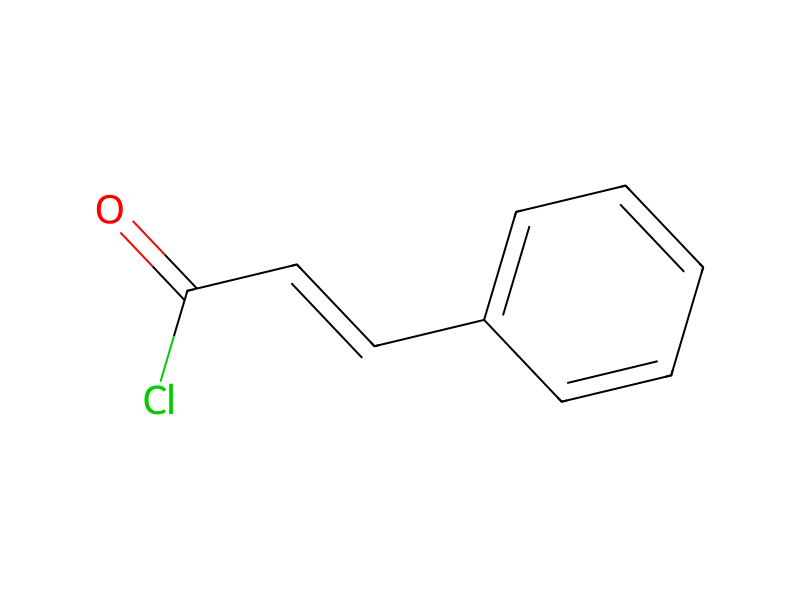
Nε-t-Butoxycarbonyl-L-lysine (2.58 g) was dissolved in 50 ml of dimethylformamide, and 30 ml of anhydrous pyridine was added to the solution. To the mixture was added a solution of cinnamoyl chloride in chloroform (1.665 g/20 ml) was added, and the reaction was carried out at 40° C. The reaction mixture was concentrated to dryness under reduced pressure, the residue was dissolved in 3.6N HCl/dioxane (33 ml) and, after 4 hours of standing, the solution was concentrated under reduced pressure to give the desired compound (2.43 g; hereinafter referred to as compound B).
Workup
- additionwas added
- customwas carried out at 40° C
- concentrationThe reaction mixture was concentrated to dryness under reduced pressure
- dissolutionthe residue was dissolved in 3.6N HCl/dioxane (33 ml) and, after 4 hours
- concentrationthe solution was concentrated under reduced pressure
Sources & evidence
- ORD record
- ord-6833cb4d0c1e4459a7473e26f7b6418c
- Source dataset
- uspto-grants-1998_06
- Patent number
- US05763504
Linked notes
Loading…