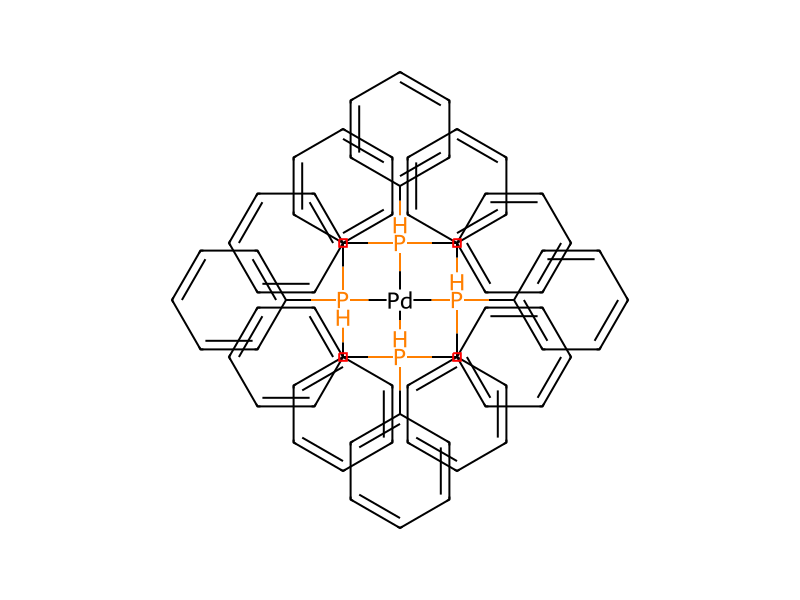
C(=O)([O-])[O-].[K+].[K+].Br[C:8]1[CH:9]=[C:10]([CH:21]=[CH:22][CH:23]=1)[CH2:11][N:12]([CH3:20])[C:13](=[O:19])[O:14][C:15]([CH3:18])([CH3:17])[CH3:16].[OH:24][C:25]1[CH:30]=[CH:29][C:28](B(O)O)=[CH:27][CH:26]=1>COCCOC.O.C1(P([Pd](P(C2C=CC=CC=2)(C2C=CC=CC=2)C2C=CC=CC=2)(P(C2C=CC=CC=2)(C2C=CC=CC=2)C2C=CC=CC=2)P(C2C=CC=CC=2)(C2C=CC=CC=2)C2C=CC=CC=2)(C2C=CC=CC=2)C2C=CC=CC=2)C=CC=CC=1>[OH:24][C:25]1[CH:30]=[CH:29][C:28]([C:8]2[CH:23]=[CH:22][CH:21]=[C:10]([CH2:11][N:12]([CH3:20])[C:13](=[O:19])[O:14][C:15]([CH3:18])([CH3:17])[CH3:16])[CH:9]=2)=[CH:27][CH:26]=141.6 ml (83.2 mmol) of aqueous 2M potassium carbonate solution are added dropwise to a solution of 10 g (33 mmol) of tert-butyl (3-bromobenzyl)-N-methylcarbamate and 8.3 g (60 mmol) of 4-hydroxybenzeneboronic acid in 100 ml of ethylene glycol dimethyl ether. The reaction medium is degassed and 1.9 g (1.7 mmol) of tetrakis(triphenylphosphino)palladium are added. After heating for 12 hours at 80° C., the reaction medium is cooled, diluted with water and extracted with ethyl acetate. The organic phase is dried over sodium sulfate, filtered and concentrated under vacuum. The residue obtained is purified by chromatography on a column of silica eluted with an 80/20 heptane/ethyl acetate mixture. 7 g of tert-butyl (4′-hydroxybiphenyl-3-ylmethyl)methylcarbamate are obtained in the form of a beige-colored solid, in a yield of 68%.