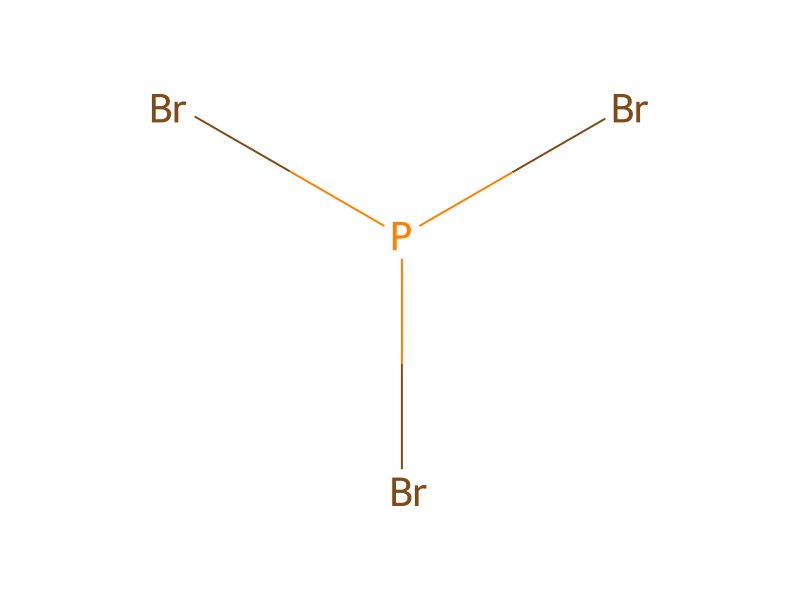
P(Br)(Br)[Br:2].O[CH2:6][C:7]1[C:8]([CH3:28])=[N:9][C:10]([C:22]2[CH:27]=[CH:26][CH:25]=[CH:24][CH:23]=2)=[CH:11][C:12]=1[C:13]1[CH:18]=[CH:17][CH:16]=[C:15]([N+:19]([O-:21])=[O:20])[CH:14]=1.C(=O)([O-])[O-].[K+].[K+]>O1CCCC1>[Br:2][CH2:6][C:7]1[C:8]([CH3:28])=[N:9][C:10]([C:22]2[CH:27]=[CH:26][CH:25]=[CH:24][CH:23]=2)=[CH:11][C:12]=1[C:13]1[CH:18]=[CH:17][CH:16]=[C:15]([N+:19]([O-:21])=[O:20])[CH:14]=1To a solution of phosphorus tribromide (0.93 g) in tetrahydrofuran (10 ml) was dropwise added a suspension of 3-hydroxymethyl-2-methyl-4-(3-nitrophenyl)-6-phenylpyridine (1.65 g) in tetrahydrofuran (10 ml) at 5-10° C. After stirring for 1.5 hours at the same temperature, the reaction mixture was poured into icewater (20 ml), adjusted to pH 9.5 with saturated aqueous potassium carbonate and extracted with ethyl acetate (40 ml). The organic layer was washed with saturated aqueous sodium chloride, dried over magnesium sulfate and evaporated in vacuo. The residue was subjected to a column chromatography on silica gel eluting with chloroform. The fractions containing the desired compound were combined and evaporated in vacuo to give 3-bromomethyl-2-methyl-4-(3-nitrophenyl)-6-phenylpyridine (0.49 g).
Loading…