HomeMCPWorkbenchSkills
HomeWorkbenchNotificationsMe
llms.txt · MCP GuidePrivacy Policy · Terms of Service · Supportv1.8.3
  1. Home
  2. /Reaction

Sodium Carbonate → 5-naphthalen-1-yl-1H-pyrrole-2-carboxylic acid methyl ester

HRID 985607
Print

Reaction equation

HRID 985607 reaction equation
[CH3:1][O:2][C:3]([C:5]1[NH:6][C:7](Br)=[CH:8][CH:9]=1)=[O:4].[C:11]1(B(O)O)[C:20]2[C:15](=[CH:16][CH:17]=[CH:18][CH:19]=2)[CH:14]=[CH:13][CH:12]=1.C(=O)([O-])[O-].[Na+].[Na+].C1([As](C2C=CC=CC=2)C2C=CC=CC=2)C=CC=CC=1>CN(C=O)C>[CH3:1][O:2][C:3]([C:5]1[NH:6][C:7]([C:19]2[C:20]3[C:15](=[CH:14][CH:13]=[CH:12][CH:11]=3)[CH:16]=[CH:17][CH:18]=2)=[CH:8][CH:9]=1)=[O:4]
ParticipantsProcedureWorkupSources & evidenceReaction notes

Participants

6

Reactant 4

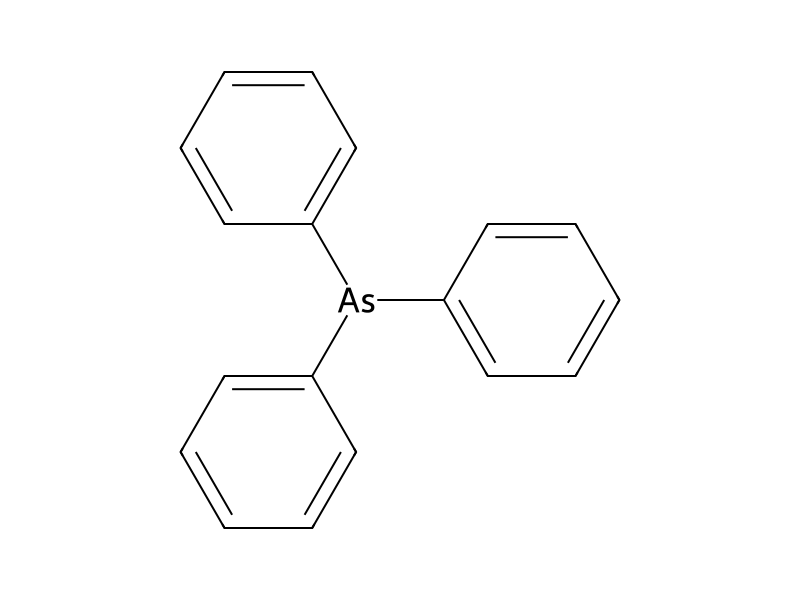
HCID 10340Sodium CarbonateHCID 11773TriphenylarsineHCID 2545321-Naphthaleneboronic acidHCID 11600885Methyl 5-bromo-1H-pyrrole-2-carboxylate

Product 1

HCID 697453065-naphthalen-1-yl-1H-pyrrole-2-carboxylic acid methyl esterYield 81.6%

Reagents, catalysts & solvents 1

HCID 6228
Dimethylformamide
Solvent

Procedure

Argon gas was bubbled 15 min through a solution of 5-bromo-1H-pyrrole-2-carboxylic acid methyl ester (10.0 mmol, 2.04 g), 1-naphthylboronic acid (30.0 mmol, 5.16 g), 2M aqueous sodium carbonate (20 ml), and DMF (150 ml). The mixture was then treated with tris(dibenzylidienacetone)dipalladium (0) (0.50 mmol, 0.46 g), and triphenylarsine (2.0 mmol, 0.61 g), then heated to reflux under argon for 12 h. The mixture was partitioned between ethyl acetate (500 ml) and water (150 ml). The organics were filtered through celite, washed with brine (3×50 ml), then concentrated under reduced pressure and the residue was purified by silica gel chromatography to provide 2.05 g (81%) of 5-naphthalen-1-yl-1H-pyrrole-2-carboxylic acid methyl ester. 1H NMR (CDCl3) δ 9.37 (1H, s), 8.22-8.17 (1H, m), 8.16-7.89 (2H, m), 7.59-7.50 (4H, m), 7.88 (1H, dd, J=3.9, 2.7), 6.22 (1H, dd, J=3.8. 2.6), 3.88 (3H, s).

Workup

  1. temperatureheated
  2. temperatureto reflux under argon for 12 h
  3. customThe mixture was partitioned between ethyl acetate (500 ml) and water (150 ml)
  4. filtrationThe organics were filtered through celite
  5. washwashed with brine (3×50 ml)
  6. concentrationconcentrated under reduced pressure
  7. customthe residue was purified by silica gel chromatography

Sources & evidence

ORD record
ord-f8078f23463945e28cd9f5e83af2b2d9
Source dataset
uspto-grants-2005_03
DOI
10.6084/m9.figshare.5104873.v1
Patent number
US06872745B2

Reaction notes

On this pageParticipantsProcedureWorkupSources & evidenceReaction notes