ホームMCPワークベンチSkills
ホームワークベンチ通知マイページ
llms.txt · MCPガイドプライバシーポリシー · 利用規約 · サポートv1.8.0
  1. ホーム
  2. /化合物

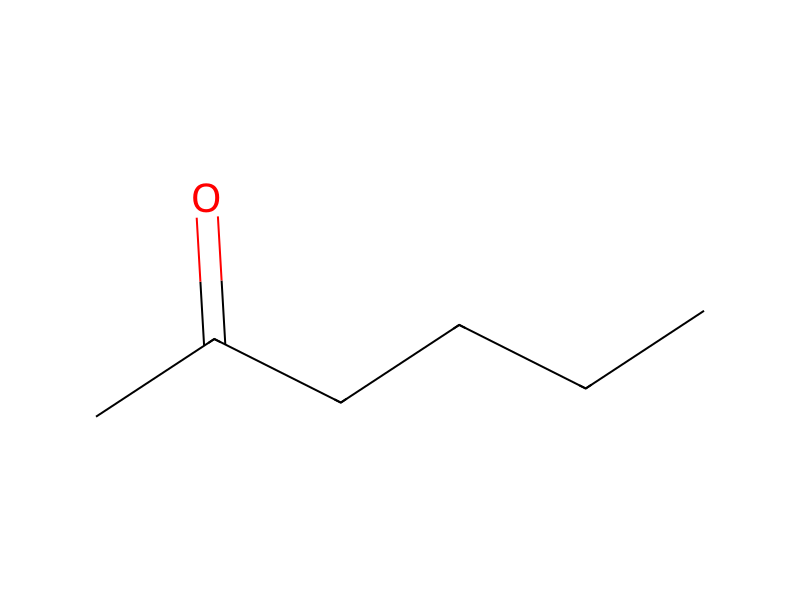
2-ヘキサノン

2-Hexanone

HCID 11583
ノートを作成反応を作成見積依頼を出す
印刷プレビュー

データを補完しています。しばらくしてからページを更新すると最新の内容を表示できます
基本情報概要名称と識別子物性安全と法規制化学と産業関連反応化合物ノート
部分構造検索類似構造を探す

基本情報

CAS
591-78-6
標準SMILES
CCCCC(C)=O
InChIKey
QQZOPKMRPOGIEB-UHFFFAOYSA-N
分子式
C6H12O
平均分子量
100.16 g/mol
単同位体質量
100.088815

概要

2-Hexanone is also known as methyl n-butyl ketone, MBK, or propyl acetone. It is a clear, colorless liquid with a sharp odor. It dissolves very easily in water, and can evaporate easily into the air as a vapor. It was used in the past in paint and paint thinner, to make other chemical substances, and to dissolve oils and waxes. It is no longer made or used in the United States because it has harmful health effects. It is formed as a waste product resulting from industrial activities such as making wood pulp and producing gas from coal, and in oil shale operations.

名称と識別子

優先名称
2-Hexanone
IUPAC
hexan-2-one
現地名
2-ヘキサノン
英語名
2-Hexanone
分子式
C6H12O
分子量
100.16

名称と別名

2-HEXANONEHexan-2-one591-78-6Butyl methyl ketoneMethyl butyl ketone2-OxohexanePropylacetoneMethyl N-butyl ketonen-Butyl methyl ketoneHexanone-2MNBKKetone, butyl methyl
名称をさらに表示
2-ヘキサノン2ヘキサノンメチルN-ブチルケトンブチルメチルケトンメチルブチルケトンメチル-ノルマル-ブチルケトン2‐ヘキサノン2-ヘキサノン REAGENT GRADE,98%2-ヘキサノン STANDARD2-ヘキサノン 溶液2-ヘキサノン Standard, 2.0 mg/mL in MeOH2-ヘキサノン, 100 µg/mL in MeOHn-ブチルメチルケトン2-HexanonHexan-2-onn-C4H9COCH3
methyl-n-butyl ketoneDTXSID00220686QDY60NH6NButylmethyl Ketone2 HexanoneHexan 2 oneKetone, ButylmethylMethyl n Butyl Ketone

データベース識別子

CAS
591-78-6

物性

構造計算による物性補完中

XLogP
1.4
極性表面積
17.1 Ų
水素結合供与体数
0
水素結合受容体数
1
回転可能結合数
3
重原子数
7
形式電荷
0
複雑度
57.2

実験および物理化学的性質

Chemical Classes · 2 件

Flammable agents - 3rd degree

Volatile Organic Compound (VOC)

LipidsFatty Acyls [FA] -> Oxygenated hydrocarbons [FA12]
SolventsSolvents -> Ketones (<C12)
SpringerMaterials PropertiesBoiling point
PesticidesPesticide -> EPA IRIS
LogP · 3 件

log Kow = 1.38

1.38

1.38

OdorCharacteristic acetone like odor, but more pungent
Density · 6 件

0.812 at 68 °F (USCG, 1999) - Less dense than water; will float

0.830 at 20 °C/20 °C

Relative density (water = 1): 0.8

0.812

0.83 @ 20°C

0.81

Viscosity0.62 cP at 20 °C
Color/FormColorless liquid
Solubility · 6 件

安全と法規制

安全情報は参考情報です。供給元の安全データシート(SDS)、適用法令、専門家による評価に代わるものではありません。

GHS分類

GHS Classification · 6 件

Danger

H226: Flammable liquid and vapor [Warning Flammable liquids]

P203, P210, P233, P240, P241, P242, P243, P260, P261, P264, P270, P271, P280, P303+P361+P353, P304+P340, P318, P319, P370+P378, P403+P233, P403+P235, P405, and P501 (click each P-code to see the statement)

Danger

H226 (100%): Flammable liquid and vapor [Warning Flammable liquids]

P203, P210, P233, P240, P241, P242, P243, P260, P261, P264, P270, P271, P280, P303+P361+P353, P304+P340, P318, P319, P370+P378, P403+P233, P403+P235, P405, and P501 (click each P-code to see the statement)

危険有害性情報

Regulatory Information · 5 件

Chemical: 2-Hexanone

Hazard Traits - Developmental Toxicity; Neurotoxicity; Reproductive Toxicity

S - indicates a substance that is identified in a final Significant New Use Rule.

2-Hexanone: HSNO Approval: HSR000981 Approved with controls

The New Jersey Worker and Community Right to Know Act requires public and private employers to provide information about hazardous substances at their workplaces. (N.J.S.A. 34:5A-1 et. seq.)

Other Safety InformationIMAP assessments - 2-Hexanone: Human health tier II assessment
DOT LabelFlammable Liquid
Fire Hazards · 2 件

This chemical is flammable. (NTP, 1992)

Flammable. Above 23 °C explosive vapour/air mixtures may be formed.

Fire PotentialDangerous fire and explosion hazard when exposed to heat or flame ...
Health Hazards · 1 件

Inhalation of high concentrations of vapor may result in narcosis; peripheral neuropathy may develop. Ingestion of large amounts may cause some systemic injury. Contact with eyes causes mild to moderate irritation. Liquid irritates skin; prolonged or repeated contact may cause defatting of the skin with resultant dermatitis. (USCG, 1999)

化学と産業

薬理情報

Mechanism of Action · 3 件

The mechanism of acute MnBK toxicity is by progressive depression of the CNS resulting in coma and cardiorespiratory failure. The mechanism(s) associated with subchronic and chronic toxicity are associated with significant binding of MnBK metabolites to axonal protein ...

n-Hexane and 2-hexanone... are metabolized by the liver to a common toxic metabolite, 2,5-hexanedione, which is a direct neurotoxin. An apparent high degree of specificity exists for the toxic effect of this compound, as related metabolites of similar solvents have no similar toxicity. 2,5-hexanedione is a gamma-diketone. Other diketones (alpha, beta, delta) do not produce neurotoxicity. The proposed mechanisms of action have been reviewed. Current evidence supports the concept that adducts are formed which lead to cross-linkages between neurofilaments. These cross-linkages lead to the axonal swellings seen on microscopy and, ultimately, to distal degeneration of the nerve.

The omega-1 oxidation of the carbon chain /of methyl n-butyl ketone/ results ultimately in the gamma-diketone, 2,5-hexanedione (HD) ... /which/ react with amino groups in all tissues to form pyrroles ... Pyrrole derivatization is not sufficient to produce the neurofilamentous swellings; pyrrole oxidation, followed by nucleophilic attack and neurofilament cross-link, seems to be necessary for neurotoxicity.

Biological Half-LifeNo reports found; [TDR, p. 776]
Metabolism/Metabolites · 6 件

/Investigators/ studied the biotransformation of MnBK by the guinea pig and concluded that the primary metabolite was hexanedione.

/2-Hexanone/ is metabolized by the liver to a common toxic metabolite, 2,5-hexanedione. This compound is a direct neurotoxin.

In guinea pigs and rats, methyl butyl ketone was oxidatively and reductively metabolized. 2,5-Dimethyl-2,3-dihydrofuran; 5-hydroxy-2-hexanone; 2-hexanol; and 2,5-hexanedione were compounds identified in serum of guinea pigs dosed with MBK.

Urinary metabolites from Charles river rats: 2-hexanol; 5-hydroxy-2-hexanone; 2,5-hexanedione; 2,5-dimethylfuran; gamma-valerolactone; norleucine; and urea. Apparently, alpha-oxidation to carbon dioxide is detoxification mechanism and omega-1 oxidation leads to activation.

For more Metabolism/Metabolites (Complete) data for 2-HEXANONE (8 total), please visit the HSDB record page.

関連反応

62 件
反応記録を作成
HRID 26127 の反応式
HRID 26127反応物としてuspto-grants-1979_04
HRID 207871 の反応式
HRID 207871反応物としてTraining data from https://doi.org/10.1039/C8SC04228D (6/10)
HRID 220234 の反応式
HRID 220234反応物としてuspto-grants-2012_06
HRID 259228 の反応式
HRID 259228反応物としてuspto-grants-1977_07
HRID 267653 の反応式
HRID 267653反応物としてuspto-grants-1976_03
HRID 268149 の反応式
HRID 268149反応物としてuspto-grants-1976_03
HRID 268150 の反応式
HRID 268150反応物としてuspto-grants-1976_03
HRID 268151 の反応式
HRID 268151反応物としてuspto-grants-1976_03
1 / 8 ページ

化合物ノート

読み込み中…

このページの内容基本情報概要名称と識別子物性安全と法規制化学と産業関連反応化合物ノート
その他の操作
ノートを作成反応を作成見積依頼を出す
PubChem CID
11583
DTXSID
DTXSID0022068
ChEMBL
CHEMBL195861
ChEBI
CHEBI:89206
UNII
6QDY60NH6N
EC Number
209-731-1
Nikkaji
J3.303K

10 to 50 mg/mL at 72 °F (NTP, 1992)

1.4 wt% in water at 20 °C

Sol in acetone; miscible in ethanol and ether

In water, 1.72X10+4 mg/L at 20 °C

17.5 mg/mL at 20 °C

Solubility in water, g/100ml at 20 °C: 1.4

Flash Point · 6 件

73 °F (NTP, 1992)

75 ° F

25 °C (closed cup)

95 °F (open cup)

77 °F (25 °C) (Closed cup)

23 °C c.c.

物理化学的性質

融点
-57 °C · -57 °C
沸点
127 °C · 127 °C(lit.)
比重(密度)
0.812 g/mL · 0.812 g/mL at 25 °C(lit.)
蒸気圧
10 mm · 10 mm Hg ( 39 °C)
屈折率
20 · n20/D 1.401(lit.)
闪点
95 °F · 95 °F
貯蔵温度
2 · 2-8°C
溶解性
アセトン、エタノール、エーテルに可溶 (Weast, 1986)
酸解離定数(Pka)
-8.3 · -8.30 (quoted, Riddick et al., 1986)
外見
液体
色
無色透明~薄黄色
臭い (Odor)
1 %。フルーティーな菌類、肉のようなバターのような · ジプロピレングリコール中1.00%。フルーティーな菌類、肉のようなバターのような
においのタイプ
フルーティーな
臭気閾値(Odor Threshold)
0.024 ppm · 0.024ppm
水溶解度
2 g/100mL · 2g/100mL(20℃)
比熱容量
2.13 J/ · Cp(liquid): 2.13 J/(g·K), at 25℃
Merck
14 · 14,6033
BRN
1737676 · 1737676
Henry's Law Constant
24.4 at · 24.4 at 37 °C (static headspace-GC, Bylaite et al., 2004)
Dielectric constant
14.6 · 14.6(15℃)
安定性
安定。可燃性。酸化剤、強塩基、還元剤とは相容れない。
主な用途
洗浄剤化粧品環境食品および飲料パーソナルケア
InChI
1S/C6H12O/c1-3-4-5-6(2)7/h3-5H2,1-2H3
InChIKey
QQZOPKMRPOGIEB-UHFFFAOYSA-N
SMILES
CCCCC(C)=O
LogP
1.38 · 1.380
CAS データベース
591 · 591-78-6(CAS DataBase Reference)
NISTの化学物質情報
2 · 2-Hexanone(591-78-6)
EPAの化学物質情報
2 · 2-Hexanone (591-78-6)
化学的性質 · 1 件

化学的特性2-Hexanone is a colorless to pale yellow liquid with a sharp odor. It dissolves very easily in water and is miscible in ethanol, methanol, and benzene. 2-Hexanone evaporates easily into the air as a vapor. It is stable, flammable, and incompatible with oxidizing agents, strong bases, and reducing agents. 2-Hexanone is a waste product of wood pulping, coal gasifi cation, and oil shale operations. Formerly, 2-hexanone was in use as a paint and paint thinner with other chemical substances, and to dissolve oils and waxes.and is used as a solvent and organic syn- thesis intermediates. However, the industrial uses of 2-hexanone is now very much restricted.

Hazards Summary · 2 件

2-Hexanone is also known as methyl n-butyl ketone, MBK, or propyl acetone. It is a clear, colorless liquid with a sharp odor. It dissolves very easily in water, and can evaporate easily into the air as a vapor. It was used in the past in paint and paint thinner, to make other chemical substances, and to dissolve oils and waxes. It is no longer made or used in the United States because it has harmful health effects. It is formed as a waste product resulting from industrial activities such as making wood pulp and producing gas from coal, and in oil shale operations.

The peripheral neuropathy caused by n-hexane and methyl n-butyl ketone is due to the toxic intermediary metabolite, gamma-diketone 2,5-hexanedione. Both of these chemicals have been abused for their acute, euphoric effects. Occupational toxic polyneuropathy was recognized in the 1960s among workers in the shoe and adhesive industries. [LaDou, p. 430] MnBK causes testicular atrophy in male rats after exposure to 700 ppm for 11 weeks. [ACGIH]

Reactive GroupKetones
EC ClassificationSymbol: T; R: 10-48/23-62-67; S: (1/2)-36/37-45
UN ClassificationUN Hazard Class: 3; UN Pack Group: III
Special ReportsDHHS/ATSDR; Toxicological Profile for 2-Hexanone PB/93/110773/AS (1992)
Reactivity AlertsHighly Flammable

安全と保護具

Fire Fighting · 2 件

Excerpt from ERG Guide 127 [Flammable Liquids (Water-Miscible)]:

Use alcohol-resistant foam, powder, carbon dioxide. In case of fire: keep cylinder cool by spraying with water.

First Aid Measures · 4 件

Fresh air, rest. Refer for medical attention.

Remove contaminated clothes. Rinse and then wash skin with water and soap. Refer for medical attention .

First rinse with plenty of water for several minutes (remove contact lenses if easily possible), then refer for medical attention.

Rinse mouth. Do NOT induce vomiting. Refer for medical attention .

First Aid · 2 件

EYES: First check the victim for contact lenses and remove if present. Flush victim's eyes with water or normal saline solution for 20 to 30 minutes while simultaneously calling a hospital or poison control center. Do not put any ointments, oils, or medication in the victim's eyes without specific instructions from a physician. IMMEDIATELY transport the victim after flushing eyes to a hospital even if no symptoms (such as redness or irritation) develop.

(General first aid procedures)

Safe StorageFireproof. Separated from strong oxidants.
Exposure Control and Personal Protection · 2 件

Biological Exposure Indices (BEI) [ACGIH] - 2,5-Hexanedione (free) in urine = 0.4 mg/L end of shift at end of workweek;

5.0 [ppm]

Fire Fighting Procedures · 2 件

If material is on fire or involved in fire: Do not extinguish fire unless flow can be stopped. Use water in flooding quantities as fog. Solid streams of water may spread fire. Cool all affected containers with flooding quantities of water. Apply water from as far a distance as possible. Use "alcohol" foam, dry chemical or carbon dioxide.

Water may be ineffective. Alcohol foam.

Storage Conditions · 1 件

MATERIALS WHICH ARE TOXIC AS STORED OR WHICH CAN DECOMPOSE INTO TOXIC COMPONENTS ... SHOULD BE STORED IN A COOL WELL VENTILATED PLACE, OUT OF THE DIRECT RAYS OF THE SUN, AWAY FROM AREAS OF HIGH FIRE HAZARD, AND SHOULD BE PERIODICALLY INSPECTED. INCOMPATIBLE MATERIALS SHOULD BE ISOLATED ...

Cleanup Methods · 3 件

Environmental considerations -- land spill: Dig a pit, pond, lagoon, holding area to contain liquid or solid material. /SRP: If time permits, pits, ponds, lagoons, soak holes, or holding areas should be sealed with an impermeable flexible membrane liner./ Dike surface flow using soil, sand bangs, foamed polyurethane, or foamed concrete. Absorb bulk liquid with fly ash, cement powder, or commercial sorbents.

Environmental considerations -- water spill: Use natural barriers or oil spill control booms to limit spill travel. Remove trapped material with suction hoses.

Environmental considerations -- air spill: Apply water spray or mist to knock down vapors.

Nonfire Spill ResponseExcerpt from ERG Guide 127 [Flammable Liquids (Water-Miscible)]:
Disposal Methods · 4 件

SRP: The most favorable course of action is to use an alternative chemical product with less inherent propensity for occupational exposure or environmental contamination. Recycle any unused portion of the material for its approved use or return it to the manufacturer or supplier. Ultimate disposal of the chemical must consider: the material's impact on air quality; potential migration in soil or water; effects on animal, aquatic, and plant life; and conformance with environmental and public health regulations.

2-Hexanone was shown to undergo rapid (less than eight weeks) anaerobic biodegradation utilizing an anaerobic digester sludge inoculum.

The following wastewater treatment technologies have been investigated for 2-hexanone: Activated carbon.

Spray into the furnace. Incineration will become easier by mixing with a more flammable solvent. Recommendable method: Incineration.

Spillage Disposal · 1 件

Personal protection: self-contained breathing apparatus. Collect leaking and spilled liquid in sealable containers as far as possible. Absorb remaining liquid in sand or inert absorbent. Then store and dispose of according to local regulations.

Preventive Measures · 5 件

If material not on fire and not involved in fire: Keep sparks, flames, and other sources of ignition away. Keep material out of water sources and sewers. Build dikes to contain flow as necessary. Attempt to stop leak if without undue personnel hazard. Use water spray to disperse vapors and dilute standing pools of liquid.

Personnel protection: Avoid breathing vapors. Keep upwind. ... Do not handle broken packages unless wearing appropriate personal protective equipment. Wash away any material which may have contacted the body with copious amounts of water or soap and water. Avoid bodily contact with the material.

SRP: The scientific literature for the use of contact lenses in industry is conflicting. The benefit or detrimental effects of wearing contact lenses depend not only upon the substance, but also on factors including the form of the substance, characteristics and duration of the exposure, the uses of other eye protection equipment, and the hygiene of the lenses. However, there may be individual substances whose irritating or corrosive properties are such that the wearing of contact lenses would be harmful to the eye. In those specific cases, contact lenses should not be worn. In any event, the usual eye protection equipment should be worn even when contact lenses are in place.

The worker should immediately wash the skin when it becomes contaminated.

For more Preventive Measures (Complete) data for 2-HEXANONE (6 total), please visit the HSDB record page.

毒性情報

Toxicological InformationCDC-ATSDR Toxicological Profile
Interactions · 3 件

Enhancement of MnBK neurotoxicity by MEK (methyl ethyl ketone) was reported ... Exposure of 225 ppm MnBK, 1125 ppm MEK, and 225 ppm MnBK plus 1125 ppm MEK in rats /indicated/ that the addition of high levels of MEK to a neurotoxic dose of MnBK shortened the onset of paralysis from 66 to 25 days ...

Inhalation of MEK (methyl ethyl ketone)/MnBK shortened hexobarbital sleeping time and increased in vitro production of n-aminophenol, formaldehyde, n-aminobenzoate, and sulfanilamide by rat hepatocyte microsomes ... Phenobarbital, also a microsomal inducer, protects against MnBK neurotoxicity ... Trans-1,2-dichloroethylene, an inhibitor of P450 2El, increased the exhaled MnBK concentration in rats not exposed to MnBK, presumably by decreasing the metabolism of endogeneous MnBK.

While MnBK itself does produce liver or kidney toxicity, exposure to MnBK is reported to enhance the activity of materials that are hepatotoxic or nephrotoxic. Prior exposure to an oral dose of MnBK followed by chloroform has been reported to enhance the toxicity, resulting in increased liver enzyme and urea nitrogen levels in the plasma, altered bile flow, and degenerative changes in hepatic and renal tissue. These effects are postulated to be due to alteration in P450 levels by MnBK. MnBK exposure may also alter the activity of other enzyme systems ... the inhibition of alcohol dehydrogenase by MnbK results in slower elimination of ethanol from the blood and prolongation of ethanol-induced loss of the righting reflex.

Target Organs · 3 件

Body Weight, Neurological (Nervous System), Reproductive (Producing Children)

Nervous

Eyes, skin, respiratory system, central nervous system, peripheral nervous system

Health EffectsBreathing 2-hexanone affects the nervous and reproductive systems. This may include pathologies such as peripheral neuropathy and developmental defects. (L176)
Ecotoxicity ValuesLC50 Pimephales promelas (Fathead minnow, 31 days old) 428 mg/L/96 hr at 25 °C (99+% purity), flow-through bioassay.
Environmental Fate · 3 件

TERRESTRIAL FATE: Based on a classification scheme(1), an estimated Koc value of 134(SRC), determined from a log Kow of 1.38(2) and a regression-derived equation(3), indicates that 2-hexanone is expected to have high mobility in soil(SRC). Volatilization of 2-hexanone from moist soil surfaces is expected to be an important fate process(SRC) given an estimated Henry's Law constant of 9.3X10⁻⁵ atm-cu m/mole(SRC), derived from its vapor pressure of 11.6 mm Hg(4) and water solubility of 17,200 mg/L(5). Volatilization from dry soil surfaces is expected(SRC) based upon the vapor pressure of this compound(4). Theoretical 5-day BOD results of 59%(6) and 61.4%(7) degradation indicate that biodegradation may be an important fate process in soil(SRC).

AQUATIC FATE: Based on a classification scheme(1), an estimated Koc value of 134(SRC), determined from a log Kow of 1.38(2) and a regression-derived equation(3), indicates that 2-hexanone is not expected to adsorb to suspended solids and sediment(SRC). Volatilization from water surfaces is expected(3) based upon an estimated Henry's Law constant of 9.3X10⁻⁵ atm-cu m/mole(SRC), derived from its vapor pressure, 11.6 mm Hg(4), and water solubility, 17,200 mg/L(5). Using this Henry's Law constant and an estimation method(3), volatilization half-lives for a model river and model lake are 7 and 164 hours, respectively(SRC). According to a classification scheme(6), an estimated BCF 2(SRC), from its log Kow(2) and a regression-derived equation(7), suggests the potential for bioconcentration in aquatic organisms is low(SRC). Theoretical 5-day BOD results of 59%(8) and 61.4%(9) degradation indicate that biodegradation may be an important fate process in water(SRC).

ATMOSPHERIC FATE: According to a model of gas/particle partitioning of semivolatile organic compounds in the atmosphere(1), 2-hexanone, which has a vapor pressure of 11.6 mm Hg at 25 °C(2), is expected to exist solely as a vapor in the ambient atmosphere. Vapor-phase 2-hexanone is degraded in the atmosphere by reaction with photochemically-produced hydroxyl radicals(SRC); the half-life for this reaction in air is estimated to be about 2 days(3).

Food Survey Values · 1 件

2-Hexanone has been identified, not quantified as a component of the aromatic fraction of blue cheese(1) and Beaufort (Gruyere) cheese(2). 2-Hexanone has been identified, not quantified as a component of raw chicken breast muscle(3). 2-Hexanone has been identified, not quantified as a volatile component of roasted filberts(4), nectarines(5), mutton(6), chicken(6), beef(6,7) and cognac(8). 2-Hexanone has been detected in white bread, toasted oats and uncured beef (0.38 mg/kg)(6). 2-Hexanone has been detected in canned cream (1 ppb), canned kernel (2 ppb), frozen kernel (<5 ppb) and fresh kernel (<1 ppb) corn products(9).

Adverse EffectsNeurotoxin - Predominantly motor
Exposure Routes · 3 件

The substance can be absorbed into the body by inhalation and through the skin.

inhalation, skin absorption, ingestion, skin and/or eye contact

Oral (L176); inhalation (L176) ;dermal (L176)

Milk Concentrations2-Hexanone has been detected in milk at a concn of 0.007-0.011 ppm(1). 2-Hexanone was detected, not quantified in store bought milk in Australia(2).
Toxicity Summary · 1 件

2-Hexanone's toxicity is believed to be caused by covalent binding of its metabolites, especially 2,5-hexanedione, with axonal components of nerve tissue and inhibition of enzymes associated with the production of energy in this tissue. 2-Hexanone and 2,5-hexanedione may also inhibit sulfhydryl-dependent enzymes such as fructose-6-phosphate kinase and glyceraldehyde-3-phosphate dehydrogenase, as well as certain creatine kinases and adenylate kinases, impairing energy metabolism and subsequently resulting in axon deterioration. In addition, 2,5-hexanedione can covalently cross-links neurofilaments, causing large axonal swellings. (L176, A124, A125)

Signs and Symptoms · 6 件

Cough. Drowsiness. Headache. Nausea. Sore throat.

MAY BE ABSORBED! Dry skin.

Redness. Pain. Blurred vision.

Abdominal pain. Diarrhoea. Sore throat. Further see Inhalation.

irritation eyes, nose; peripheral neuropathy: lassitude (weakness, exhaustion), paresthesia; dermatitis; headache, drowsiness

Chronic 2-hexanone exposure causes weakness, numbness, tingling in the skin of the hands and feet, irritation to the lungs, and narcosis. (L176)

法規制情報

State Drinking Water Guidelines(FL) FLORIDA 280 ug/l

安全データ

OEB
B
OEL
TWA: 1 ppm (4 mg/m3)
wgk
1
IDLA
1,600 ppm
tsca
TSCA listed
rtecs
MP1400000
ridadr
UN 1224 3/PG 3
毒性
LD50 orally in rats: 2.59 g/kg (Smyth)
hs_code
29141900
risk_code
10-48/23-62-67-39/23/24/25-23/24/25-11
化審法
(2)-542
安衛法
有機則 第二種有機溶剤等
消防法
危-4-2-III
hazard_code
T,F
safety_code
36/37-45-16-7
hazard_class
3
packing_group
II
自然発火温度
530 °C
Hazard Classifications
Flam. Liq. 3Repr. 2STOT RE 1STOT SE 3
ストレージクラス
3 - Flammable liquids
有毒物質データの
591-78-6(Hazardous Substances Data)

2-Hexanone is absorbed via ingestion, inhalation, and dermal routes, then distributed widely throughout the body, with the highest levels in the liver and blood. Metabolism is likely similar to that of other aliphatic ketones, proceeding via reduction to the corresponding secondary alcohol, 2-hexanol. An alternate pathway is oxidation to the corresponding alcohol, 5-hydroxy-2-hexanone, followed by further oxidation to the diketone 2,5-hexanedione. 2-Hexanone and its metabolites are excreted via exhalation or in the urine. (L176)

Absorption, Distribution and Excretion · 5 件

Inhalation is the primary route of exposure; however, dermatologic exposure can lead to skin irritation and this absorption may contribute to chronic exposure and polyneuropathy. Ingestion has rarely been reported.

Methyl n-butyl ketone (MNBK) is readily absorbed by lung, gi tract and through skin. It is not eliminated extensively unchanged in breath or urine. Radioactivity derived from (1-14)C-MNBK was excreted slowly by man, suggesting that exposure may lead to prolonged toxic metabolite exposure.

Humans exposed for 7.5 hr to 10 or 50 ppm or for 4 hr to 100 ppm of methyl n-butyl ketone (MNBK) absorbed between 75 and 92% of inhaled vapor. Two volunteers exposed by skin contact to (1-14)C-MNBK absorbed 4.8 ug/min/sq cm and 8.0 ug/min/sq cm, respectively.

Oral gavage administration of radiolabeled MnBK to rats indicated that 98% of the dose was absorbed. Beagle dogs that inhaled 50 or 100 ppm MnBK for 6 hr absorbed 65-68% of the vapor. absorption of radiolabeled MnBK through dog skin was observed to be slow at first but increased dramatically after 20 min of exposure ... It was concluded that approximately twice as much MnBK would be absorbed during a 1-hr dermal exposure as would be absorbed by inhalation of 25 ppm of MnBK vapor for 1 hr. Therefore, repeated dermal exposure to MnBK may contribute to its toxicity. Concomitant exposure to methyl ethyl ketone (MEK) may increase absorption of MnBK

For more Absorption, Distribution and Excretion (Complete) data for 2-HEXANONE (8 total), please visit the HSDB record page.

用途と製造

Uses · 5 件

No longer used in the USA, but used in the past in organic synthesis and as a solvent for inks, coatings, adhesives, oils, waxes, etc.; [CHEMINFO]

Not currently produced or used in the US; Production ceased in 1979; [ATSDR ToxProfile]

MnBK is a ketonic solvent used in a wide variety of materials, including paints, lacquers, ink thinners, nitrocellulose, glues, resins, oils, fats, and waxes, and in printing of plasticized fabric.

... It is a medium evaporating solvent for nitrocellulose acrylates, vinyl, and alkyd coatings.

2-Hexanone was used in the past in paint and paint thinner, to make other chemical substances, and to dissolve oils and waxes. Today it is formed as a waste product resulting from industrial activities such as wood pulping, coal gasification, and oil shale operations. (L176)

U.S. Production(1975) PROBABLY LESS THAN 4.54X10+5 G
Methods of Manufacturing · 2 件

2-Hexanone can be made, in 75% yield, by reaction of acetyl chloride with butylmagnesium chloride.

MnBK can be produced by a reaction between acetic acid and ethylene under pressure with a catalyst.

Formulations/Preparations · 2 件

GRADE: Technical

Commercial grades of MnBK vary in purity from 70 to 96%; the more dilute grades include predominantly methyl isobutyl ketone (MiBK).

Use ClassificationChemical Classes -> Volatile organic compounds
General Manufacturing Information2-Hexanone: ACTIVE
応用分野 · 4 件

用途溶剤、香料 (化学工業日報社)

説明2-Hexanone has been used as a solvent for both cellulose- and resin-based coating systems. In the early 1970s, a number of workers in the print department of a coated fabrics plant developed severe peripheral neuropathy from an unknown cause. In search of an etiological agent, and in the absence of other neurotoxicants, 2-hexanone was implicated as it was recently substituted for methyl isobutyl ketone in the manufacturing process. Similar observations in workers exposed to 2-hexanone may have resulted in the decline in production and use in the United States.

使用2-Hexanone is used in various organic chemical syntheses. It is used in the synthesis of (+/-)-monomorine. It is also used in the preparation of alcohols by transfer hydrogenation of ketones.

一般的な説明A clear colorless liquid. Flash point 95°F. Less dense than water. Vapors heavier than air.

調製方法

MnBK can be produced by a reaction between acetic acid and ethylene under pressure MnBK can be produced by a reaction between acetic acid and ethylene under pressure.

上流・下流製品情報

上流原料

2-(アセチルオキシ)酢酸塩化ナトリウム3-ヘプタノンメチルリチウム2-ヨードプロパントリエチルボラン (約1mol/Lテトラヒドロフラン溶液)2-メチル-1-ヘキセン2-ヘキシン5-ヘキセン-2-オン1,2-エポキシヘキサン1-ヘキシン

下流製品

メチルプロピルジケトンtrans-p-クマル酸シクロヘキサノンε-カプロラクタム7-ヒドロキシ-8-[[4-[1-[4-[(4-ヒドロキシフェニル)アゾ]フェニル]シクロヘキシル]フェニル]アゾ]-1,3-ナフタレンジスルホン酸二ナトリウム1-ヨードブタン2-ヘキサノールHeptanoic acid, 2-methyl-3-oxo-, ethyl ester5-メチルデカン