
2-アミノ-2-メチル-1-プロパノール
2-Amino-2-methyl-1-propanol

基本情報
- CAS
124-68-5- 標準SMILES
CC(C)(N)CO- InChIKey
CBTVGIZVANVGBH-UHFFFAOYSA-N- 分子式
- C4H11NO
- 平均分子量
- 89.14 g/mol
- 単同位体質量
- 89.08406397
概要
2-amino-2-methyl-1-propanol appears as a clear light colored liquid. Insoluble in water and about the same density as water. Flash point 172 °F. Used to make other chemicals.
名称と識別子
- 優先名称
- 2-Amino-2-methyl-1-propanol
- IUPAC
- 2-amino-2-methylpropan-1-ol
- 現地名
- 2-アミノ-2-メチル-1-プロパノール
- 英語名
- 2-Amino-2-methyl-1-propanol
- 分子式
- C4H11NO
- 分子量
- 89.14
名称と別名
2-Amino-2-methyl-1-propanol124-68-52-AminoisobutanolAminomethylpropanolIsobutanol-2-amineAMP Regular1-Propanol, 2-amino-2-methyl-2-AminodimethylethanolAmp-952-AMINO-2-METHYLPROPANOL2-Methyl-2-aminopropanolCorrguard 75
名称をさらに表示
2-アミノ-2-メチル-1-プロパノール2-アミノ-2-メチルプロパン-1-オール(1,1-ジメチル-2-ヒドロキシエチル)アミン2-メチル-2-アミノ-1-プロパノール2-アミノイソブタノール2アミノ2メチル1プロパノルAMP2-アミノ-2-メチルプロパノール2‐アミノ‐2‐メチル‐1‐プロパノールΒ-アミノイソブタノール2-アミノ-2-メチルプロパノール (〜95%)2-AMINO-2-METHYLPROPAN-1-OLKarl Fischer2-methyl-2-amino-1-propanolmonoisobutanolamine2,2-Diethyl-ethanolamine2-amino-2-methyl-1-propano
Hydroxy-tert-butylamineAMP (thinner)2-Amino-2,2-dimethylethanolIsobutanolamine1,1-Dimethyl-2-hydroxyethylamine2-Hydroxymethyl-2-propylamine2-Methyl-2-aminopropanol-12-Amino-1-hydroxy-2-methylpropane
データベース識別子
- CAS
124-68-5- PubChem CID
- 11807
- DTXSID
DTXSID8027032- ChEMBL
CHEMBL122588- UNII
- LU49E6626Q
- EC Number
- 204-709-8
- Nikkaji
- J38.382A
物性
構造計算による物性
- XLogP
- -0.8
- 極性表面積
- 46.3 Ų
- 水素結合供与体数
- 2
- 水素結合受容体数
- 2
- 回転可能結合数
- 1
- 重原子数
- 6
- 形式電荷
- 0
- 複雑度
- 42.8
実験および物理化学的性質
Chemical Classes
Nitrogen Compounds -> Amines, Aliphatic
Flammable agents - 2nd degree
Cosmetics
Cosmetic ingredients (Aminomethyl Propanol) -> CIR (Cosmetic Ingredient Review)
Cosmetic ingredients (Aminomethylpropanol) -> CIR (Cosmetic Ingredient Review)
Buffering
pHPH OF 0.1 AQ SOLN 11.3
SpringerMaterials PropertiesChemical diffusion
Density
0.935 (USCG, 1999) - Less dense than water; will float
0.934 @ 20 °C/20 °C
0.93 g/cm³
0.935
0.934 @25 °C
Color/FormCRYSTALLINE MASS
Solubility
MISCIBLE WITH WATER; SOL IN ALCOHOLS
Solubility in water: miscible
Flash Point
153 °F (USCG, 1999)
67 °C
67 °C CC
67 °C c.c.
153 °F
Boiling Point
329 °F at 760 mmHg (99+% compound) (USCG, 1999)
165 °C @ 760 MM HG
165 °C
329 °F
165 °C @760 [mm Hg]
Melting Point
89.6 °F (USCG, 1999)
31 °C
31 °C
89.6 °F
Vapor Density
3.0 (AIR= 1)
Relative vapor density (air = 1): 3.0
Vapor Pressure
1.0 [mmHg]
Vapor pressure, Pa at 20 °C: 133
物理化学的性質
- 融点
- 24 · 24-28 °C (lit.)
- 沸点
- 165 °C · 165 °C (lit.)
- 比重(密度)
- 0.934 g/mL · 0.934 g/mL at 25 °C (lit.)
- 蒸気密度
- 3 · 3 (vs air)
- 蒸気圧
- 1 mm · <1 mm Hg ( 25 °C)
- 屈折率
- 20 · n20/D 1.4455(lit.)
- 闪点
- 153 °F · 153 °F
- 貯蔵温度
- 30 °C · Store below +30°C.
- 溶解性
- 2 O: · H2O: 0.1M at20℃、透明、無色
- 外見
- 低融点固体
- 比重
- 0.934 · 0.934
- 色
- 無色
- PH
- 11 · 11.0-12.0 (25℃, 0.1M in H2O)
- 酸解離定数(Pka)
- 9.7 · 9.7(at 25℃)
- 臭い (Odor)
- 100 · 100.00?%で。軽度のアンモニア
- 水溶解度
- 混和性
- Merck
- 14 · 14,449
- BRN
- 505979 · 505979
- Henry's Law Constant
- 2.1 · 2.1×102 mol/(m3Pa) at 25℃, Du et al. (2017)
- 安定性
- 安定。可燃性。強力な酸化剤とは相容れない。加熱すると爆発の危険性があります。
- 化粧品成分の機能
- バッファリング
- InChI
- 1S/C4H11NO/c1-4(2,5)3-6/h6H,3,5H2,1-2H3
- InChIKey
- CBTVGIZVANVGBH-UHFFFAOYSA-N
- SMILES
- CC(C)(N)CO
- LogP
- -0.63 at · -0.63 at 20℃
- CAS データベース
- 124 · 124-68-5(CAS DataBase Reference)
- NISTの化学物質情報
- 1 · 1-Propanol, 2-amino-2-methyl-(124-68-5)
- EPAの化学物質情報
- 2 · 2-Amino-2-methyl-1-propanol (124-68-5)
安全と法規制
安全情報は参考情報です。供給元の安全データシート(SDS)、適用法令、専門家による評価に代わるものではありません。
GHS分類
GHS Classification
Warning
H315: Causes skin irritation [Warning Skin corrosion/irritation]
P264, P264+P265, P273, P280, P302+P352, P305+P351+P338, P321, P332+P317, P337+P317, P362+P364, and P501 (click each P-code to see the statement)
This chemical does not meet GHS hazard criteria for 0.3% (12 of 4294) of reports.
Warning
H315 (99.7%): Causes skin irritation [Warning Skin corrosion/irritation]
危険有害性情報
Regulatory Information
Chemical: 1-Propanol, 2-amino-2-methyl-
1-Propanol, 2-amino-2-methyl- is listed on the EPA's Chemical Data Reporting (CDR) system. Manufacturers and importers of 1-Propanol, 2-amino-2-methyl- are required to report information about their production and use of this chemical to the EPA under the Toxic Substances Control Act (TSCA). (40 eCFR Part 711)
REACH registered substance: 2-amino-2-methylpropanol (EC: 204-709-8)
2-Amino-2-methyl-1-propanol: Does not have an individual approval but may be used under an appropriate group standard
The New Jersey Worker and Community Right to Know Act requires public and private employers to provide information about hazardous substances at their workplaces. (N.J.S.A. 34:5A-1 et. seq.)
Other Safety InformationIMAP assessments - 1-Propanol, 2-amino-2-methyl-: Environment tier I assessment
DOT LabelCombustible Liquid
Fire Hazards
Special Hazards of Combustion Products: Emits toxic fumes during fire conditions. (USCG, 1999)
Combustible. Gives off irritating or toxic fumes (or gases) in a fire. Above 67 °C explosive vapour/air mixtures may be formed.
Health Hazards
Causes severe irritation. Inhalation may be fatal as a result of spasm, inflammation, and edema of laryns and bronchi, chemical pneumonitis, and pulmonary edema. Symptoms of exposure may include burning sensation, coughing, wheezing, laryngitis, shortness of breath, headache, nausea and vomiting. (USCG, 1999)
Hazards Summary
Corrosive to the eyes; A respiratory tract and severe skin irritant; May cause liver injury if ingested; [ICSC] May cause skin irritation after prolonged contact; Emergency treatment: Irritants; [HSDB] Highly irritating or corrosive to rabbit skin; Not sensitizing to guinea pig skin in the Buehler Test; Histopathological changes to liver observed in 28-day and 3-month feeding studies of dogs; [IUCLID] Irritating to skin; May be corrosive to eye; Harmful to aquatic organisms; [Alfa Aesar MSDS] Skin designation; [MAK]
Reactive GroupAlcohols and Polyols
EC ClassificationSymbol: Xi; R: 36/38-52/53; S: (2)-61
Reactivity Profile
2-AMINO-2-METHYL-1-PROPANOL is an organic compound with both amine and alcohol substituents. Amines are chemical bases. They neutralize acids to form salts plus water. These acid-base reactions are exothermic. The amount of heat that is evolved per mole of amine in a neutralization is largely independent of the strength of the amine as a base. Amines may be incompatible with isocyanates, halogenated organics, peroxides, phenols (acidic), epoxides, anhydrides, and acid halides. Flammable gaseous hydrogen is generated by amines in combination with strong reducing agents, such as hydrides.
Chemical DangersDecomposes on burning. This produces toxic fumes including nitrogen oxides. The solution in water is a medium strong base. Reacts with strong acids and strong oxidants.
Air and Water ReactionsInsoluble in water.
NFPA Hazard Classification
2 - Materials that, under emergency conditions, can cause temporary incapacitation or residual injury.
2 - Materials that must be moderately heated or exposed to relatively high ambient temperatures before ignition can occur. Materials would not under normal conditions form hazardous atmospheres with air, but under high ambient temperatures or under moderate heating could release vapor in sufficient quantities to produce hazardous atmospheres with air.
0 - Materials that in themselves are normally stable, even under fire conditions.
安全と保護具
Fire Fighting
Excerpt from ERG Guide 128 [Flammable Liquids (Water-Immiscible)]:
Use water spray, powder, alcohol-resistant foam, carbon dioxide.
First Aid Measures
Fresh air, rest. Refer for medical attention.
Remove contaminated clothes. Rinse skin with plenty of water or shower.
First rinse with plenty of water for several minutes (remove contact lenses if easily possible), then refer for medical attention.
Rinse mouth. Do NOT induce vomiting. Give one or two glasses of water to drink. Refer for medical attention .
First AidINHALATION: Call for medical aid. Remove victim to fresh air. If breathing has stopped, give artificial respiration. If breathing is difficult, give oxygen.
Safe StorageSeparated from strong oxidants and strong acids.
Exposure Control and Personal Protection1.0 [ppm]
Nonfire Spill ResponseExcerpt from ERG Guide 128 [Flammable Liquids (Water-Immiscible)]:
Spillage Disposal
Personal protection: filter respirator for organic gases and particulates adapted to the airborne concentration of the substance. Sweep spilled substance into covered containers. If appropriate, moisten first to prevent dusting. Carefully collect remainder. Then store and dispose of according to local regulations.
Isolation and EvacuationExcerpt from ERG Guide 128 [Flammable Liquids (Water-Immiscible)]:
Eye PreventionWear safety goggles or eye protection in combination with breathing protection if powder.
Fire PreventionNO open flames. Above 67 °C use a closed system and ventilation.
Inhalation RiskNo indication can be given about the rate at which a harmful concentration of this substance in the air is reached on evaporation at 20 °C.
Skin PreventionProtective gloves.
毒性情報
Adverse EffectsOccupational hepatotoxin - Secondary hepatotoxins: the potential for toxic effect in the occupational setting is based on cases of poisoning by human ingestion or animal experimentation.
Exposure RoutesThe substance can be absorbed into the body by inhalation and by ingestion.
Toxicity Summary
Safe in the present practices of use and concentration. Ingredient, concentration, and use information are available in documents discoverable at https://cir-reports.cir-safety.org
Safe in the present practices of use and concentration. Ingredient, concentration, and use information are available in documents discoverable at https://cir-reports.cir-safety.org
Signs and Symptoms
Cough. Sore throat.
Redness. Pain.
Redness. Pain. Severe deep burns.
Abdominal pain. Burning sensation.
Human Toxicity Excerpts
PROLONGED SKIN EXPOSURE MAY CAUSE IRRITATION DUE TO THE ALKALINITY OF THE FREE MATERIAL...
...IN MOST COMMERCIAL FORMULAS /OF 2-AMINO-2-METHYL-1-PROPANOL/...ALKALINITY IS NEUTRALIZED.
安全データ
- wgk
- 1
- tsca
- TSCA listed
- rtecs
- UA5950000
- ridadr
- 2735
- 毒性
- LD50 orally in Rabbit: 2900 mg/kg LD50 dermal Rabbit > 2000 mg/kg
- hs_code
- 2922199090
- risk_code
- 36/38-52/53
- 化審法
- (9)-118
- hazard_code
- Xi,F
- hazard_note
- Harmful/Flammable
- safety_code
- 61-26
- packing_group
- III
- 自然発火温度
- 438 °C
- Hazard Classifications
- Aquatic Chronic 3Eye Dam. 1Skin Corr. 1
- ストレージクラス
- 8A - Combustible corrosive hazardous materials
- 有毒物質データの
- 124-68-5(Hazardous Substances Data)
- 危険度評価(NFPA 704基準/消防庁データ)
- 火災[赤]=2
化学と産業
薬理情報
Absorption, Distribution and Excretion
METABOLISM AND DISTRIBUTION OF (3)H-LABELED 2-AMINO-2-METHYLPROPANOL WAS STUDIED IN RATS RECEIVING NORMAL OR CHOLINE-DEFICIENT DIETS. TRITIUM APPEARED IN THE SERUM OF BOTH GROUPS 30 MIN AFTER THE IP INJECTION BUT THE LEVEL WAS GENERALLY LOWER IN THE CHOLINE-DEFICIENT GROUP. RATS ON THE NORMAL DIET EXCRETED MORE OF THE AMINO ACID IN THE URINE THAN DID THE CHOLINE-DEFICIENT RATS IN BOTH GROUPS ONLY THE UNCHANGED AMINO ACID WAS EXCRETED. LIVERS FROM THE CHOLINE-DEFICIENT GROUP HAD A GREATER UPTAKE AND RETENTION OF THE LABEL THAN THOSE FROM NORMAL RATS. MOST OF THE LABEL WAS FOUND IN THE CYTOSOL OF BOTH LIVER AND KIDNEY.
用途と製造
Uses
CIR ingredient: Aminomethyl Propanol
CIR ingredient: Aminomethylpropanol
Used to make other chemicals (surface-active agents, vulcanization accelerators, and pharmaceuticals) and as an emulsifying agent for cosmetic creams and lotions, mineral oil and paraffin wax emulsions, leather dressings, textile specialties, polishes, cleaning compounds, and so-called soluble oils; Also used in hair sprays, wave sets, hair dyes, Pamabrom (drug), and absorbents for acidic gases; [Merck Index] Used as a pigment dispersant for water-based paints, resin solubilizer, corrosion inhibitor, protecting agent for carbonyl groups and in boiler-water treatment; [CHEMINFO]
Painting (Pigments, Binders, and Biocides) [Category: Paint]
IN SYNTH OF SURFACE-ACTIVE AGENTS, VULCANIZATION ACCELERATORS, PHARMACEUTICALS; ABSORBENT FOR ACIDIC GASES; EMULSIFYING AGENT FOR COSMETIC CREAMS AND LOTIONS, MINERAL OIL & PARAFFIN WAX EMULSIONS, LEATHER DRESSINGS, TEXTILE SPECIALTIES, POLISHES, CLEANING COMPOUNDS, SO-CALLED SOL OILS; INGREDIENT OF DIURETIC PAMABROM
U.S. Production2023: 10,000,000 - <50,000,000 lb
Consumer UsesNot Known or Reasonably Ascertainable
Industry UsesPigment
Methods of ManufacturingAN AMINO ALCOHOL PREPD BY REDN OF THE CORRESPONDING NITRO COMPD: VANDERBILT, HASS, US PATENT 2,174,242 (1940); JOHNSON, DEGERING, J ORG CHEM 8: 7 (1943).
Household ProductsInformation on 247 consumer products that contain Aminoethylpropanol in the following categories is provided:
Use ClassificationCosmetics -> Buffering
General Manufacturing Information
Fabricated Metal Product Manufacturing
1-Propanol, 2-amino-2-methyl-: ACTIVE
応用分野
用途界面活性剤?加硫促進剤?医薬の合成 、化粧クリーム?ローション?鉱物油エマルションの乳化剤、賛成ガスの吸収剤
用途有機合成原料。
使用2-Amino-2-methyl-1-propanol is also used in ATR-FTIR spectroscopic investigation of the carbon monoxide absorption characteristics of a series of heterocyclic diamines.
一般的な説明A clear light colored liquid. Insoluble in water and about the same density as water. Flash point 172°F. Used to make other chemicals.
調製方法
純化方法Purify it by distilling and fractional freezing. The hydrochloride has m 204o-206o. [Beilstein 4 III 783, 4 IV 1740.]
上流・下流製品情報
上流原料
下流製品
補足説明
定義AMPは、アミノメチルプロパノールの表示名称である。本品は、次の化学式で表される脂肪族アルコールの誘導体である。
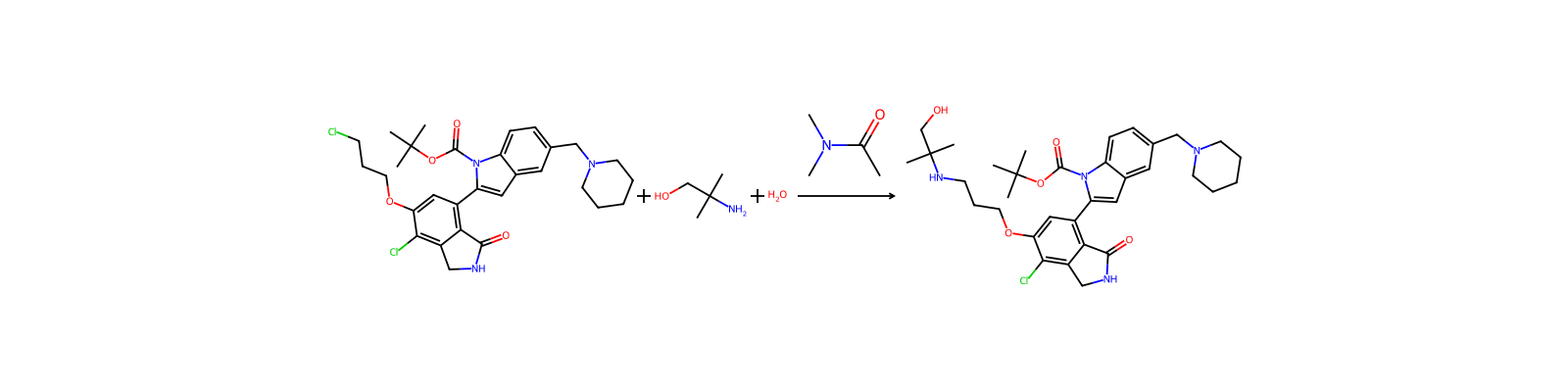
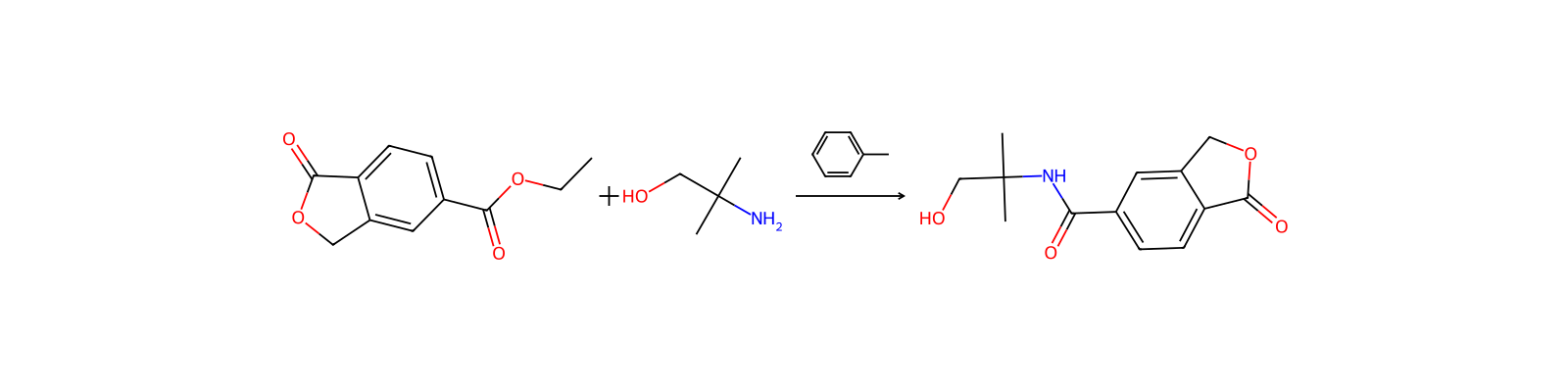
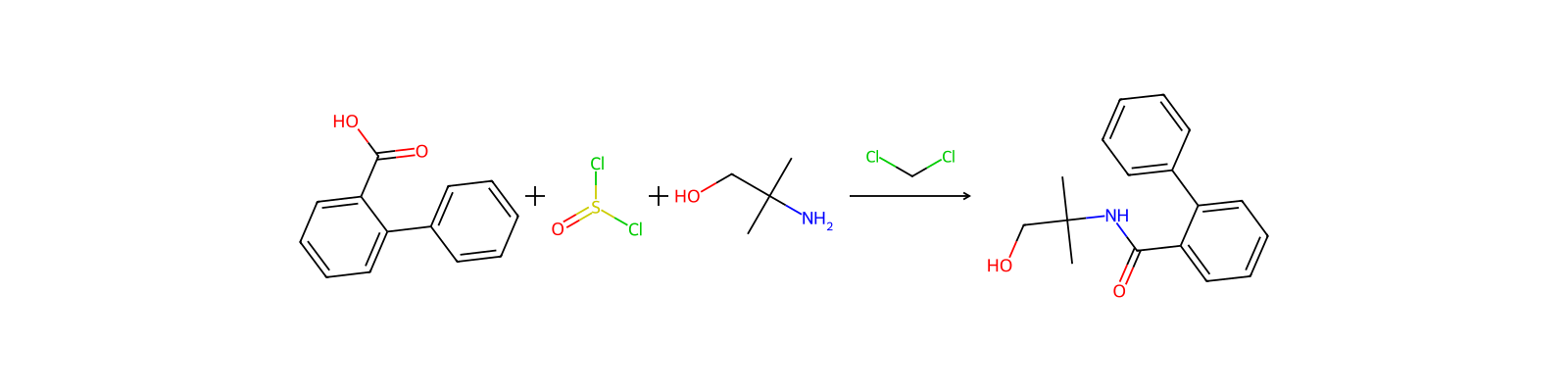
関連反応
785 件



化合物ノート
読み込み中…