
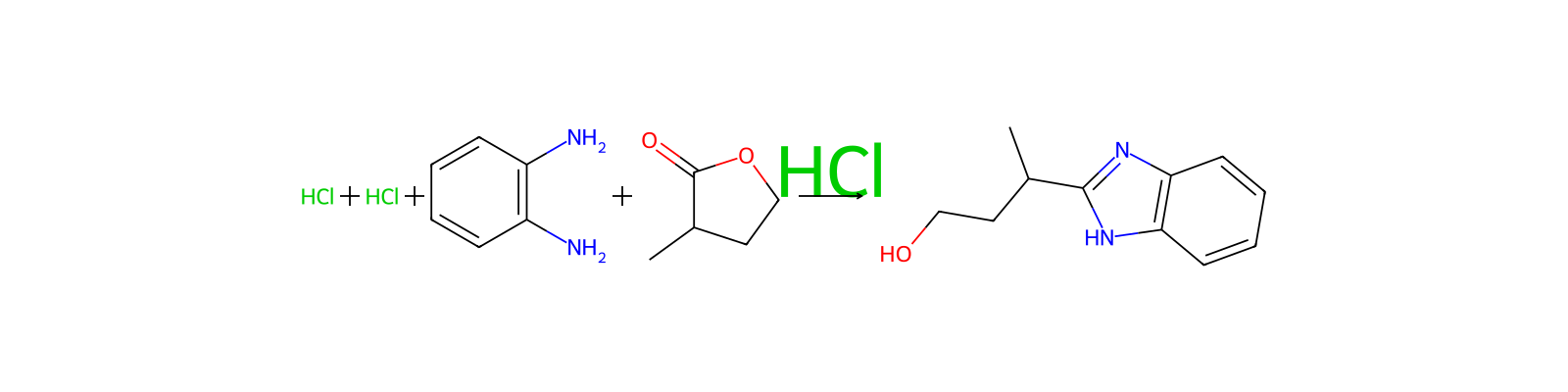
HRID 921040反応物として
1,2-Phenylenediamine dihydrochloride

615-28-1Cl.Cl.Nc1ccccc1NRIIWUGSYXOBDMC-UHFFFAOYSA-N1,2-phenylenediamine dihydrochloride appears as brownish-yellow crystals. Slightly soluble in water. Used in the manufacture of dye.
615-28-1DTXSID3021140CHEMBL31832081,2-phenylenediamine dihydrochloride appears as brownish-yellow crystals. Slightly soluble in water. Used in the manufacture of dye.
Brownish-yellow solid; [CAMEO]
安全情報は参考情報です。供給元の安全データシート(SDS)、適用法令、専門家による評価に代わるものではありません。
Danger
H301: Toxic if swallowed [Danger Acute toxicity, oral]
P203, P261, P264, P264+P265, P270, P271, P272, P273, P280, P301+P316, P302+P352, P304+P340, P305+P351+P338, P317, P318, P321, P330, P333+P317, P337+P317, P362+P364, P391, P405, and P501 (click each P-code to see the statement)
Danger
H301 (100%): Toxic if swallowed [Danger Acute toxicity, oral]
P203, P261, P264, P264+P265, P270, P271, P272, P273, P280, P301+P316, P302+P352, P304+P340, P305+P351+P338, P317, P318, P321, P330, P333+P317, P337+P317, P362+P364, P391, P405, and P501 (click each P-code to see the statement)
Chemical: 1,2-Benzenediamine, dihydrochloride
Hazard Traits - Carcinogenicity
1,2-Benzenediamine, dihydrochloride: Does not have an individual approval but may be used under an appropriate group standard
The New Jersey Worker and Community Right to Know Act requires public and private employers to provide information about hazardous substances at their workplaces. (N.J.S.A. 34:5A-1 et. seq.)
Has the potential to form methemoglobin; Emergency treatment: Paraphenylenediamine; In sensitized individuals, paraphenylenediamine may cause allergic contact dermatitis following application as a hair dye and asthma following inhalation; Following ingestion, can cause angioneurotic edema, methemoglobinemia, acute tubular necrosis, and hepatotoxicity; An adult died after ingestion of 3 grams of p-phenylenediamine; Another adult who ingested 1800 mg developed angioneurotic edema and acute renal failure; [HSDB] An eye irritant; May cause skin sensitization; [eChemPortal: ESIS]; Harmful by ingestion, inhalation, or skin absorption; May cause allergic skin reaction; Suspected cause of cancer and genetic defects; [Aldrich MSDS] See p-Phenylenediamine.
Used to make dyes; [CAMEO] Not commercially produced in the US; [HSDB]
Used mainly in the manufacture of dyes and dye intermediates /Phenylenediamines/
1,2-Benzenediamine, hydrochloride (1:2): ACTIVE
Not commercially produced in the US. /1981/
用途EIA法によるPOD測定基質。
用途パーオキシダーゼの基質(精製が必要な場合がある)。
一般的な説明Brownish-yellow crystals. Slightly soluble in water. Used in the manufacture of dye.
純化方法Crystallise the salt from dilute HCl (60mL conc HCl, 40mL water, with 2g stannous chloride), after treatment of the hot solution with charcoal by adding an equal volume of conc HCl and cooling in an ice-salt mixture. The crystals are washed with a small amount of conc HCl and dried in a vacuum desiccator over NaOH. [Beilstein 13 IV 38.]


化学的特性white to light pink powder
USEPA; PHENYLENEDIAMINES; RESPONSE TO INTERAGENCY TESTING COMMITTEE; FED REGIST 47(5) 973 (1982). EVIDENCE IS GIVEN SUPPORTING TESTING OF THE CLASS OF COMPOUNDS PHENYLENEDIAMINES FOR THEIR TOXIC EFFECTS ON HUMAN HEALTH AND THE ENVIRONMENT. THE RESULTS OF TOXICITY TESTING OF 22 COMPOUNDS ARE TABULATED AS ARE THE EFFECTS FOR WHICH TESTING IS BEING CONSIDERED FOR 13 COMPOUNDS, AND THE USES OR POTENTIAL USES OF 47 PHENYLENEDIAMINES.
Pursuant to section 8(d) of TSCA, EPA promulgated a model Health and Safety Data Reporting Rule. The section 8(d) model rule requires manufacturers, importers, and processors of listed chemical substances and mixtures to submit to EPA copies and lists of unpublished health and safety studies. 1,2-Benzenediamine dihydrochloride is included on this list. Effective date: 4/29/83; Sunset date: 4/29/93.
Acidic organic/inorganic salts, such as 1,2-PHENYLENEDIAMINE DIHYDROCHLORIDE, are generally soluble in water. The resulting solutions contain moderate to high concentrations of hydrogen ions and have pH's of less than 7.0. They react as acids to neutralize bases. These neutralizations generate heat, but less or far less than is generated by neutralization of inorganic acids, inorganic oxoacids, and carboxylic acid. They usually do not react as either oxidizing agents or reducing agents but such behavior is not impossible. Many of these compounds catalyze organic reactions.
Acute Tox. 3 (100%)
Carcinogenicity - category 2
Carcinogenicity - Category 1B
Serious eye damage/eye irritation - Category 2A
Carc. 2
SRP: The most favorable course of action is to use an alternative chemical product with less inherent propensity for occupational harm/injury/toxicity or environmental contamination. Recycle any unused portion of the material for its approved use or return it to the manufacturer or supplier. Ultimate disposal of the chemical must consider: the material's impact on air quality; potential migration in soil or water; effects on animal and plant life; and conformance with environmental and public health regulations.
1.7 [mg/m3]
19 [mg/m3]
110 [mg/m3]
1,2-Benzenediaminedihydrochloride (CAS # 615-28-1) was evaluated for carcinogenicity in male Charles River CD-1 rats (25/group) exposed to 0, 2000, and 4000 ppm in the diet for 18 months. At 6 months, 12 rats/group plus any study mortalities were necropsied for determination of gross pathology. Treatment was associated with dose-related inhibition of growth rate and significantly (0.05 level) increased incidence of tumors. Observed tumors in 4000 ppm fed rats that were not seen in control animals included 5 hepatomas with one metastasized to lung, kidney, liver, stomach, and intestine. No mortality or other clinical signs of toxicity were reported and specific data were not provided.
1,2-Benzenediaminedihydrochloride (CAS # 615-28-1) was evaluated for carcinogenicity in Charles River HaM/ICR random-bred albino mice (25/sex/group) exposed to 0, 4000, and 8000 ppm in the diet for 18 months. Treatment was amended in respective treatment groups to 0, 8000, and 16,000 ppm (durations of original and amended regimens was not specified). At 6 months, 12 mice/ group were necropsied for determination of gross pathology. Treatment was associated with a significantly (0.05 level) increased incidence of hepatomas in high-dose females (6), low-dose females (7, including 1 hemangioma), and low dose males (5); High dose males were also found with hepatic tumors (3), although incidence was not of statistical significance relative to a solitary hepatoma in controls. No mortality or other clinical signs of toxicity were reported and specific data were not provided.
/SIGNS AND SYMPTOMS/ Produces severe local reactions and systemic effects from percutaneous absorption and from ingestion. Local actions include severe dermatitis and urticaria; in the eye, chemosis, lacrimation, exophthalmos, ophthalmia, and even permanent blindness. Systemic actions include asthma, gastritis (regardless of portal of entry), rise in blood pressure, transudation into serous cavities, vertigo, tremors, convulsions and coma. ... The ortho isomer (diolene) is less toxic than the para (orsin). Neither is believed to be capable of inducing significant methemoglobinemia.
ortho-Phenylenediamine dihydrochloride
Group 2B: Possibly carcinogenic to humans
Volume 123: (2020) Some Nitrobenzenes and Other Industrial Chemicals
2020 online
2018
/LABORATORY ANIMALS: Chronic Exposure or Carcinogenicity/ The results of carcinogenicity studies of 13 substituted-benzenediamines (SBD) were summarized & compared with the results of relevant short-term tests. o-Phenylenediamine dihydrochloride induced statistically significant incidences of tumors in rats and mice. The mouse, particularly the female, was more susceptible than the rat to the carcinogenic effects of the SBD. All the SBD studied in short-term tests were positive in at least 1 assay system.
/LABORATORY ANIMALS: Chronic Exposure or Carcinogenicity/ The carcinogenicity of ortho-phenylenediamine (o-PD) was examined by administrating o-phenylenediamine dihydrochloride (o-PD2HCl) in dinking water to groups of 50 F344/DuCrj rats and 50 Crj:BDF1 mice of both sexes for 2 years. The drinking water concentration of o-PD2HCl was 0, 500, 1,000 or 2,000 ppm (wt/wt) for male rats; 0, 250, 500 or 1,000 ppm for female rats; 0, 500, 1,000 or 2,000 ppm for male mice; and 0, 1,000, 2,000 or 4,000 ppm for female mice. Two-year administration of o-PD2HCl produced a dose-dependent increase in the incidences of hepatocellular adenomas and carcinomas in rats of both sexes and in female mice, and hepatocellular adenomas in male mice. In mice, the incidences of hepatocellular adenomas were increased at the lowest dose used in both males and females. Metastasis from hepatocellular carcinomas of rats occurred predominantly in the lung. Incidences of transitional cell papillomas and carcinomas in the urinary bladder were noted in male rats administered 2,000 ppm, together with an increased incidence of papillary and/or nodular hyperplasia of transitional epithelium. In mice, the incidence of papillary adenomas in the gall bladder, which is rare in mice, was increased in both males and females administered 2,000 ppm. Thus, o-PD is carcinogenic in two species, i.e., rats and mice of both sexes.
NIOSH (NOES Survey 1981-1983) has statistically estimated that 6,080 workers (5,092 of these were female) were potentially exposed to 1,2-benzenediamine dihydrochloirde in the US(1). Occupational exposure to 1,2-benzenediamine dihydrochloirde may occur through inhalation and dermal contact with this compound at workplaces where1,2-benzenediamine dihydrochloirde is produced or used. Use data indicate that the general population may be exposed to 1,2-benzenediamine dihydrochloirde via dermal contact with consumer products products containing 1,2-benzenediamine dihydrochloirde(SRC).
/SRP:/ Immediate first aid: Ensure that adequate decontamination has been carried out. If patient is not breathing, start artificial respiration, preferably with a demand valve resuscitator, bag-valve-mask device, or pocket mask, as trained. Perform CPR if necessary. Immediately flush contaminated eyes with gently flowing water. Do not induce vomiting. If vomiting occurs, lean patient forward or place on the left side (head-down position, if possible) to maintain an open airway and prevent aspiration. Keep patient quiet and maintain normal body temperature. Obtain medical attention. /Organic bases/Amines and related compounds/
/SRP:/ Basic treatment: Establish a patent airway (oropharyngeal or nasopharyngeal airway, if needed). Suction if necessary. Watch for signs of respiratory insufficiency and assist ventilations if necessary. Administer oxygen by nonrebreather mask at 10 to 15 L/min. Monitor for pulmonary edema and treat if necessary ... . Monitor for shock and treat if necessary ... . Anticipate seizures and treat if necessary ... . For eye contamination, flush eyes immediately with water. Irrigate each eye continuously with 0.9% saline (NS) during transport ... . Do not use emetics. For ingestion, rinse mouth and administer 5 mL/kg up to 200 mL of water for dilution if the patent can swallow, has a strong gag reflex, and does not drool. Administer activated charcoal ... . Cover skin burns with dry sterile dressings after decontamination ... . /Organic bases/Amines and related compounds/
/SRP:/ Advanced treatment: Consider orotracheal or nasotracheal intubation for airway control in the patient who is unconscious, has severe pulmonary edema, or is in severe respiratory distress. Positive-pressure ventilation techniques with a bag-valve-mask device may be beneficial. Consider drug therapy for pulmonary edema ... . Monitor cardiac rhythm and treat arrhythmias as necessary ... . Start IV administration of D5W /SRP: "To keep open", minimal flow rate/. Use 0.9% saline (NS) or lactated Ringer's (LR) if signs of hypovolemia are present. For hypotension with signs of hypovolemia, administer fluid cautiously. If patient is unresponsive to these measures, vasopressors may be helpful. Watch for signs of fluid overload ... . Administer 1% solution methylene blue if patient is symptomatic with severe hypoxia, cyanosis, and cardiac compromise not responding to oxygen. ... . Treat seizures with diazepam or lorazepam ... . Use proparacaine hydrochloride to assist eye irrigation ... . /Organic bases/Amines and related compounds/
Pursuant to section 8(d) of TSCA, EPA promulgated a model Health and Safety Data Reporting Rule. The section 8(d) model rule requires manufacturers, importers, and processors of listed chemical substances and mixtures to submit to EPA copies and lists of unpublished health and safety studies. 1,2-Benzenediamine dihydrochloride is included on this list. Effective date: 4/29/83; Sunset date: 4/29/93.