
オルトケイ酸カルシウム
Dicalcium silicate
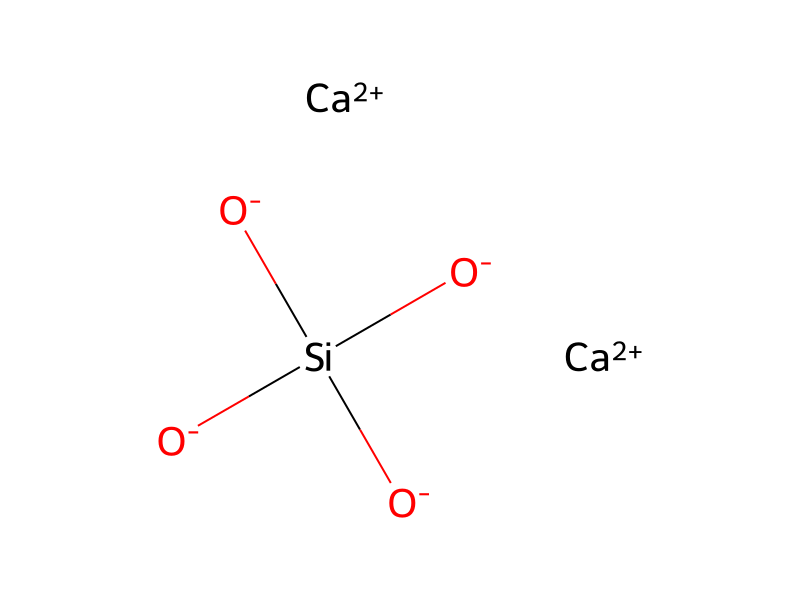
基本情報
- CAS
10034-77-2- 標準SMILES
[Ca+2].[Ca+2].[O-][Si]([O-])([O-])[O-]- InChIKey
JHLNERQLKQQLRZ-UHFFFAOYSA-N- 分子式
- Ca2O4Si
- 平均分子量
- 172.24 g/mol
- 単同位体質量
- 171.88176697
名称と識別子
- 優先名称
- Dicalcium silicate
- IUPAC
- dicalcium;silicate
- 現地名
- オルトケイ酸カルシウム
- 英語名
- dicalcium silicate
- 分子式
- Ca2O6Si2
- 分子量
- 232.3234
名称と別名
Dicalcium silicate9W3UX8K5UQDTXSID5049570RefChem:920062DTXCID8029529233-107-810034-77-2Silicic acid (H4SiO4), calcium salt (1:2)dicalcium;silicatedicalcium orthosilicateCalcium silicate [NF]MFCD00015979
名称をさらに表示
オルトケイ酸カルシウムケイ酸二カルシウム
Calcium silicate (NF)HSDB 705EINECS 215-710-8Calcium silicate, syntheticUNII-S4255P4G5MCa2O4SiEC 215-710-8SCHEMBL3578
データベース識別子
- CAS
10034-77-2、1344-95-2- PubChem CID
- 14941
- DTXSID
DTXSID5049570- UNII
- 9W3UX8K5UQ
- EC Number
- 233-107-8
物性
構造計算による物性
- 極性表面積
- 92.2 Ų
- 水素結合供与体数
- 0
- 水素結合受容体数
- 4
- 回転可能結合数
- 0
- 重原子数
- 7
- 形式電荷
- 0
- 複雑度
- 19.1
実験および物理化学的性質
Chemical ClassesMetals -> Metals, Inorganic Compounds
Physical Description
Large Crystals; CBI; Dry Powder; Other Solid
Colorless, cream, or white odorless powder and pieces; [Materion Advanced Chemicals MSDS]
物理化学的性質
- InChI
- InChI=1S/2Ca.2O3Si/c;;2*1-4(2)3/q2*+2;2*-2
- InChIKey
- GGDIOEDJZLBCGA-UHFFFAOYSA-N
- SMILES
- [Ca+2].[Ca+2].[Si]([O-])([O-])=O.[Si]([O-])([O-])=O
- EPAの化学物質情報
- Silicic acid (H4SiO4), calcium salt (1:2) (10034-77-2)
安全と法規制
安全情報は参考情報です。供給元の安全データシート(SDS)、適用法令、専門家による評価に代わるものではありません。
危険有害性情報
Regulatory Information
Chemical: Silicic acid (H4SiO4), calcium salt (1:2)
Silicic acid (H4SiO4), calcium salt (1:2) is listed on the EPA's Chemical Data Reporting (CDR) system. Manufacturers and importers of Silicic acid (H4SiO4), calcium salt (1:2) are required to report information about their production and use of this chemical to the EPA under the Toxic Substances Control Act (TSCA). (40 eCFR Part 711)
Dicalcium silicate: Does not have an individual approval but may be used as a component in a product covered by a group standard. It is not approved for use as a chemical in its own right.
Other Safety InformationIMAP assessments - Silicic acid (H4SiO4), calcium salt (1:2): Human health tier I assessment
Hazards SummaryMay cause mild irritation; Skin or eye contact may cause itching and redness; Chronic inhalation exposure may cause lung injury; [Materion Advanced Chemicals MSDS] See Calcium silicate. See Tricalcium silicate.
安全データ
- tsca
- TSCA listed
化学と産業
用途と製造
U.S. Production2023: 25,000,000,000 - <30,000,000,000 lb
Consumer UsesAdhesion/cohesion promoter
Industry UsesOther
Household ProductsInformation on 11 consumer products that contain Dicalcium silicate in the following categories is provided:
General Manufacturing Information
Oil and Gas Drilling, Extraction, and Support activities
Silicic acid (H4SiO4), calcium salt (1:2): ACTIVE
応用分野
解説オルトケイ酸カルシウム:Ca2SiO4(172.24).セメントクリンカーの10~40% を占める主成分の一つで,セメント業界ではケイ酸二石灰(belite)とよばれる.独立した四面体型構造のSiO4からなる.
一般的な説明Dicalcium silicate occurs when cement clinker is not completely saturated with calcium oxide. Pure dicalcium silicate melts congruently at 2130 ℃. In lime-rich raw mixes, C2S forms already at temperatures below 1000 ℃ by solid-state reaction. During the sintering process in the presence of a melt above 1250 ℃, C2S incorporates additional Ca2+, resulting in the formation of C3S.
関連反応
21 件






化合物ノート
読み込み中…