
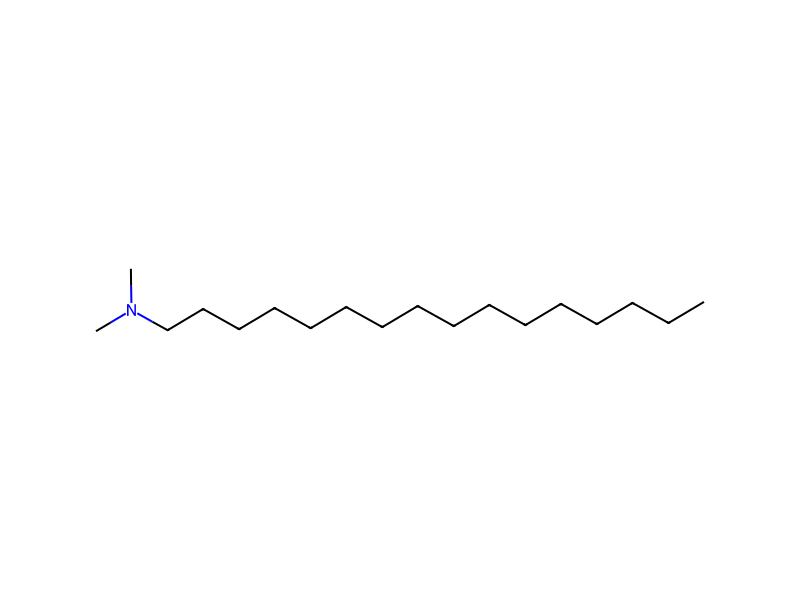
基本情報
- 標準SMILES
CCCCCCCCCCCCCCCCN(C)C- InChIKey
NHLUVTZJQOJKCC-UHFFFAOYSA-N- 分子式
- C18H39N
- 平均分子量
- 269.5 g/mol
- 単同位体質量
- 269.30825025
名称と識別子
- 優先名称
- Dimethylhexadecylamine
- IUPAC
- N,N-dimethylhexadecan-1-amine
- 現地名
- N,N-ジメチルヘキサデシルアミン
- 英語名
- Hexadecyldimethylamine
- 分子式
- C18H39N
- 分子量
- 269.51
名称と別名
Hexadecyldimethylamine112-69-6N,N-dimethylhexadecan-1-amineCetyldimethylamineDimethyl palmitamineDimethylhexadecylaminePalmityl dimethyl amine1-HEXADECANAMINE, N,N-DIMETHYL-DimethylpalmitylaminePalmityldimethylamineArmeen DM16DFarmin DM 60
名称をさらに表示
N,N-ジメチルヘキサデシルアミンN,N-ジメチル-1-ヘキサデカンアミンN-セチルジメチルアミンN,N-ジメチル-ヘキサデシルアミンセチルジメチルアミンN,N-ジメチルヘキサデカン-1-アミンジメチルヘキサデシルアミンヘキサデシルジメチルアミン1-(ジメチルアミノ)ヘキサデカンN,N-ジメチルセチルアミンN,N-ジメチルパルミチルアミンN,N-ジメチルヘキサデカン-1-イルアミンN,N-ジメチル-N-ヘキサデシルアミンジメチルパルミタミンN,N-DIMETHYLHEXADECYLAMINEDMA16N-CetyldimethylamineN,N-dimethyl-1-aminohexadecaneAdma 16DMA1697NoKe DMA16
Genamin 16R302DBairdcat B16IPL 67Dimethyl palmitylamine5E4QI660PWNSC-404177DMHDA compoundRefChem:145988
データベース識別子
- CAS
112-69-6、68037-93-4、68037-96-7、68439-70-3、75444-69-8- PubChem CID
- 16221
- DTXSID
DTXSID9026924- ChEMBL
CHEMBL1877748- UNII
- 5E4QI660PW
- EC Number
- 203-997-2
- Nikkaji
- J106.586F
物性
構造計算による物性
- XLogP
- 8
- 極性表面積
- 3.2 Ų
- 水素結合供与体数
- 0
- 水素結合受容体数
- 1
- 回転可能結合数
- 15
- 重原子数
- 19
- 形式電荷
- 0
- 複雑度
- 154
実験および物理化学的性質
Physical Description
Dimethyl hexadecanamine appears as a clear yellow colored liquid with a fishlike odor. Insoluble in water and less dense than water. Hence floats on water. Contact may irritate skin, eyes and mucous membranes. May be toxic by ingestion, inhalation or skin absorption. Used to make other chemicals.
Liquid
Clear yellow liquid with a fishy odor; [CAMEO] Clear light yellow liquid; [Sigma-Aldrich MSDS]
Kovats Retention Index1894
物理化学的性質
- 融点
- 12 °C · 12°C
- 沸点
- 148 °C · 148 °C / 2mmHg
- 比重(密度)
- 0.801 g/mL · 0.801 g/mL at 20 °C (lit.)
- 蒸気圧
- 0.02 · 0.02-0.36Pa at 20-50℃
- 屈折率
- 20 · n20/D 1.444
- 闪点
- 147 °C · 147°C
- 貯蔵温度
- Inert atmosphere,Room Temperature
- 水溶解度
- Insoluble in water
- 溶解性
- Chloroform (Slightly), Methanol (Slightly)
- 外見
- Liquid
- 酸解離定数(Pka)
- 9.78 · 9.78±0.28(Predicted)
- 色
- Colorless to Almost colorless
- BRN
- 1755921 · 1755921
- 化粧品成分の機能
- 帯電防止ヘアコンディショニング界面活性剤 - 乳化剤
- InChI
- 1S/C18H39N/c1-4-5-6-7-8-9-10-11-12-13-14-15-16-17-18-19(2)3/h4-18H2,1-3H3
- InChIKey
- NHLUVTZJQOJKCC-UHFFFAOYSA-N
- SMILES
- CCCCCCCCCCCCCCCCN(C)C
- LogP
- 1.3 · 1.3-5.1 at 20℃ and pH7.1-8.8
- 表面張力
- 26.5 · 26.5-32.2mN/m at 1g/L and 25℃
- CAS データベース
- 112 · 112-69-6(CAS DataBase Reference)
- NISTの化学物質情報
- 1 · 1-Hexadecanamine, n,n-dimethyl-(112-69-6)
- EPAの化学物質情報
- Dimethylcetylamine (112-69-6)
化学的性質
化学的特性Hexadecyldimethylamine is Liquid/Solid
安全と法規制
GHS分類
GHS Classification
This chemical does not meet GHS hazard criteria for 0.5% (4 of 771) of reports.
Danger
H302 (88.2%): Harmful if swallowed [Warning Acute toxicity, oral];H314 (99.2%): Causes severe skin burns and eye damage [Danger Skin corrosion/irritation];H318 (26.3%): Causes serious eye damage [Danger Serious eye damage/eye irritation];H400 (88.1%): Very toxic to aquatic life [Warning Hazardous to the aquatic environment, acute hazard];H410 (23%): Very toxic to aquatic life with long lasting effects [Warning Hazardous to the aquatic environment, long-term hazard]
P260, P264, P264+P265, P270, P273, P280, P301+P317, P301+P330+P331, P302+P361+P354, P304+P340, P305+P354+P338, P316, P317, P321, P330, P363, P391, P405, and P501 (click each P-code to see the statement)
Aggregated GHS information provided per 771 reports by companies from 23 notifications to the ECHA C&L Inventory. Each notification may be associated with multiple companies.;Reported as not meeting GHS hazard criteria per 4 of 771 reports by companies.;There are 22 notifications provided by 767 of 771 reports by companies with hazard statement code(s).;Information may vary between notifications depending on impurities, additives, and other factors. The percentage value in parenthesis indicates the notified classification ratio from companies that provide hazard codes. Only hazard codes with percentage values above 10% are shown. For more detailed information, please visit ECHA C&L website.
危険有害性情報
Regulatory Information
Chemical: 1-Hexadecanamine, N,N-dimethyl-
1-Hexadecanamine, N,N-dimethyl- is listed on the EPA's Chemical Data Reporting (CDR) system. Manufacturers and importers of 1-Hexadecanamine, N,N-dimethyl- are required to report information about their production and use of this chemical to the EPA under the Toxic Substances Control Act (TSCA). (40 eCFR Part 711)
Status: Active Update: 25-09-2021 https://echa.europa.eu/registration-dossier/-/registered-dossier/14932
1-Hexadecanamine, N,N-dimethyl-: Does not have an individual approval but may be used under an appropriate group standard
Other Safety InformationIMAP assessments - Tertiary aliphatic (C12-22) and fatty amines: Human health tier II assessment
DOT LabelCorrosive
Fire Hazards
Excerpt from ERG Guide 153 [Substances - Toxic and/or Corrosive (Combustible)]:;Combustible material: may burn but does not ignite readily. When heated, vapors may form explosive mixtures with air: indoors, outdoors and sewers explosion hazards. Those substances designated with a (P) may polymerize explosively when heated or involved in a fire. Corrosives in contact with metals may evolve flammable hydrogen gas. Containers may explode when heated. Runoff may pollute waterways. Substance may be transported in a molten form. (ERG, 2024)
Health Hazards
Excerpt from ERG Guide 153 [Substances - Toxic and/or Corrosive (Combustible)]:;TOXIC and/or CORROSIVE; inhalation, ingestion or skin contact with material may cause severe injury or death. Methyl bromoacetate (UN2643) is an eye irritant/lachrymator (causes flow of tears). Contact with molten substance may cause severe burns to skin and eyes. Avoid any skin contact. Fire may produce irritating, corrosive and/or toxic gases. Runoff from fire control or dilution water may be corrosive and/or toxic and cause environmental contamination. (ERG, 2024)
Hazards SummaryCauses burns; Inhalation may cause corrosive injuries to upper respiratory tract; [Sigma-Aldrich MSDS]
Reactive GroupAmines, Phosphines, and Pyridines
Reactivity Profile
DIMETHYL HEXADECANAMINE neutralizes acids in exothermic reactions to form salts plus water. May be incompatible with isocyanates, halogenated organics, peroxides, phenols (acidic), epoxides, anhydrides, and acid halides. Flammable gaseous hydrogen may be generated in combination with strong reducing agents, such as hydrides.
Air and Water ReactionsInsoluble in water.
Hazard Classes and Categories
Acute Tox. 4 (88.2%);Skin Corr. 1B (99.2%);Eye Dam. 1 (26.3%);Aquatic Acute 1 (88.1%);Aquatic Chronic 1 (23%)
Acute toxicity - category 4;Skin corrosion - category 1B;Specific target organ toxicity (single exposure) - category 3
安全と保護具
Fire Fighting
Excerpt from ERG Guide 153 [Substances - Toxic and/or Corrosive (Combustible)]:;SMALL FIRE: Dry chemical, CO2 or water spray.;LARGE FIRE: Dry chemical, CO2, alcohol-resistant foam or water spray. If it can be done safely, move undamaged containers away from the area around the fire. Dike runoff from fire control for later disposal.;FIRE INVOLVING TANKS, RAIL TANK CARS OR HIGHWAY TANKS: Fight fire from maximum distance or use unmanned master stream devices or monitor nozzles. Do not get water inside containers. Cool containers with flooding quantities of water until well after fire is out. Withdraw immediately in case of rising sound from venting safety devices or discoloration of tank. ALWAYS stay away from tanks in direct contact with flames. (ERG, 2024)
First Aid
Excerpt from ERG Guide 153 [Substances - Toxic and/or Corrosive (Combustible)]:;Refer to the "General First Aid" section. Specific First Aid: For corrosives, in case of contact, immediately flush skin or eyes with running water for at least 30 minutes. Additional flushing may be required. Removal of solidified molten material from skin requires medical assistance. (ERG, 2024)
Nonfire Spill Response
Excerpt from ERG Guide 153 [Substances - Toxic and/or Corrosive (Combustible)]:;ELIMINATE all ignition sources (no smoking, flares, sparks or flames) from immediate area. Do not touch damaged containers or spilled material unless wearing appropriate protective clothing. Stop leak if you can do it without risk. Prevent entry into waterways, sewers, basements or confined areas. Absorb or cover with dry earth, sand or other non-combustible material and transfer to containers. DO NOT GET WATER INSIDE CONTAINERS. (ERG, 2024)
Isolation and Evacuation
Excerpt from ERG Guide 153 [Substances - Toxic and/or Corrosive (Combustible)]:;IMMEDIATE PRECAUTIONARY MEASURE: Isolate spill or leak area in all directions for at least 50 meters (150 feet) for liquids and at least 25 meters (75 feet) for solids.;SPILL: Increase the immediate precautionary measure distance, in the downwind direction, as necessary.;FIRE: If tank, rail tank car or highway tank is involved in a fire, ISOLATE for 800 meters (1/2 mile) in all directions; also, consider initial evacuation for 800 meters (1/2 mile) in all directions. (ERG, 2024)
Personal Protective Equipment (PPE)
Excerpt from ERG Guide 153 [Substances - Toxic and/or Corrosive (Combustible)]:;Wear positive pressure self-contained breathing apparatus (SCBA). Wear chemical protective clothing that is specifically recommended by the manufacturer when there is NO RISK OF FIRE. Structural firefighters' protective clothing provides thermal protection but only limited chemical protection. (ERG, 2024)
毒性情報
Adverse EffectsDermatotoxin - Skin burns.
Toxicity SummarySafe in the present practices of use and concentration. Ingredient, concentration, and use information are available in documents discoverable at https://cir-reports.cir-safety.org
法規制情報
Regulatory Information
Chemical: 1-Hexadecanamine, N,N-dimethyl-
1-Hexadecanamine, N,N-dimethyl- is listed on the EPA's Chemical Data Reporting (CDR) system. Manufacturers and importers of 1-Hexadecanamine, N,N-dimethyl- are required to report information about their production and use of this chemical to the EPA under the Toxic Substances Control Act (TSCA). (40 eCFR Part 711)
Status: Active Update: 25-09-2021 https://echa.europa.eu/registration-dossier/-/registered-dossier/14932
1-Hexadecanamine, N,N-dimethyl-: Does not have an individual approval but may be used under an appropriate group standard
安全データ
- F
- 10-34
- wgk
- 2
- tsca
- TSCA listed
- rtecs
- MM0750000
- ridadr
- UN 2735 8/PG 3
- hs_code
- 29211990
- risk_code
- 34
- 化審法
- (2)-176, (2)-185
- 消防法
- 危-4-3-III
- hazard_code
- C
- safety_code
- 26-36/37/39-45
- hazard_class
- 8
- packing_group
- III
- Hazard Classifications
- Acute Tox. 4 OralAquatic Acute 1Aquatic Chronic 1Eye Dam. 1Skin Corr. 1B
- ストレージクラス
- 8A - Combustible corrosive hazardous materials
化学と産業
用途と製造
Uses
CIR ingredient: Dimethyl Palmitamine
Used in chemical manufacture; [CAMEO] Used as a catalyst, laboratory reagent, and to make other products (detergents, hydraulic fluids, lubricants-greases, metalworking fluids, polymers, and heat transfer fluids); [ExPub: ECHA REACH Registrations] Permitted for use as an inert ingredient in non-food pesticide products; [EPA]
Metal Machining [Category: Heat or Machine]
U.S. Production2023: 7,000,000 - <8,500,000 lb;2022: 10,000,000 - <25,000,000 lb;2021: 10,000,000 - <25,000,000 lb;2020: 10,000,000 - <25,000,000 lb
Consumer UsesSurfactant (surface active agent)
Industry UsesSurfactant (surface active agent);Corrosion inhibitor;Not Known or Reasonably Ascertainable;Intermediate
Use ClassificationCosmetics -> Antistatic; Hair conditioning; Emulsifying
General Manufacturing Information
Oil and Gas Drilling, Extraction, and Support activities;Soap, Cleaning Compound, and Toilet Preparation Manufacturing;Wholesale and Retail Trade;All Other Basic Organic Chemical Manufacturing
1-Hexadecanamine, N,N-dimethyl-: ACTIVE
応用分野
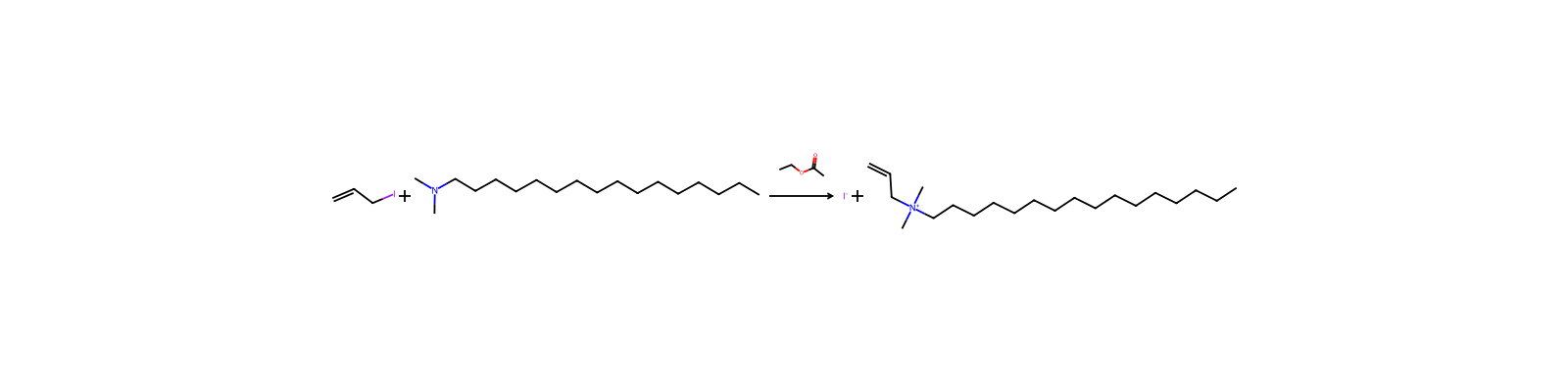
使用Barlene(R) tertiary amines are used as chemical intermediates for the manufacture of quaternary ammonium compounds, amine oxide and betaine surfactants
一般的な説明Hexadecyldimethylamine is a clear yellow colored liquid with a fishlike odor. Insoluble in water and less dense than water. Hence floats on water. Contact may irritate skin, eyes and mucous membranes. May be toxic by ingestion, inhalation or skin absorption. Used to make other chemicals.
上流・下流製品情報
下流製品
サプライヤー8 社
陕西缔都医药化工有限公司+86-29-87569262 +86-15003564040 · [email protected]
Alfa Chemistry1-516-6625404 · [email protected]
上海岚克医药科技发展有限公司0086-21-58956006
杭州洁汉化工有限公司+86-571-86217390; +8618058761490 · [email protected]
湖北摆渡化学有限公司027-59106051 13627137652 · [email protected]
XIAMEN AMITY INDUSTRY AND TRADE CO., LTD.+8618950047208 · [email protected]
DAYANG CHEM (HANGZHOU) CO.,LTD+86-88938639 +86-17705817739 · [email protected]
Hefei TNJ Chemical Industry Co.,Ltd.+86-0551-65418684 +86-18949823763 · [email protected]
関連反応
19 件






関連ノート
読み込み中…