
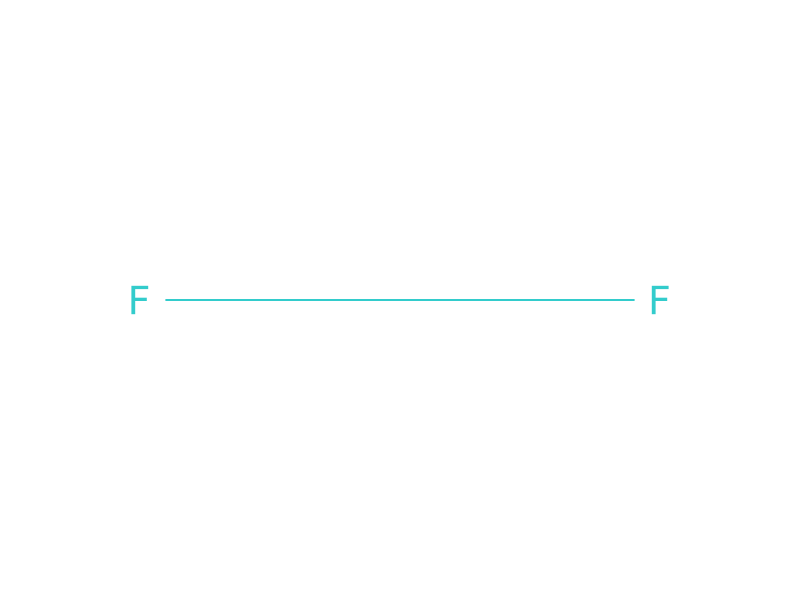
基本情報
- 標準SMILES
FF- InChIKey
PXGOKWXKJXAPGV-UHFFFAOYSA-N- 分子式
- F2
- 平均分子量
- 37.9968 g/mol
- 単同位体質量
- 37.99680644
概要
Fluorides, hydrogen fluoride, and fluorine are chemically related. Fluorine is a naturally-occurring, pale yellow-green gas with a sharp odor. It combines with metals to make fluorides such as sodium fluoride and calcium fluoride, both white solids. Sodium fluoride dissolves easily in water, but calcium fluoride does not. Fluorine also combines with hydrogen to make hydrogen fluoride, a colorless gas. Hydrogen fluoride dissolves in water to form hydrofluoric acid. Fluorine and hydrogen fluoride are used to make certain chemical compounds. Hydrofluoric acid is used for etching glass. Other fluoride compounds are used in making steel, chemicals, ceramics, lubricants, dyes, plastics, and pesticides. Fluorides are often added to drinking water supplies and to a variety of dental products, including toothpaste and mouth rinses, to prevent dental cavities. UPDATE: In 2015, thePHS replacedthe 1962 Drinking Water Standards from 0.7""1.2 mg/L to an optimal fluoride concentration of 0.7 mg/L. This is to provide optimal concentration of fluoride in drinking water that provides the best balance of protection from dental caries while limiting the risk of dental fluorosis.
名称と識別子
- 優先名称
- Fluorine
- IUPAC
- molecular fluorine
- 現地名
- ふっ素
- 英語名
- Fluorine
- 分子式
- F2
- 分子量
- 38
名称と別名
FLUORINE7782-41-4Fluorine-19FluorbifluoridendifluorinefluoroFluorures acideSaeure fluorideFluoruri acidimolecular fluorineFluorine 19
名称をさらに表示
ふっ素分子ふっ素(原子)ふっ素フルオロフルオリドふっ素フルオリドふっ素原子フルオリンフッ素ガスF2ガス二フッ素F2fluorine gasC00742Fluorine (atom)
RCRA waste number P056DTXSID3024106284SYP0193CHEBI:30236Dietary FluorineRefChem:5837DTXCID004106CHEBI:36895
データベース識別子
- CAS
7782-41-4- PubChem CID
- 24524
- DTXSID
DTXSID3024106- ChEBI
CHEBI:30236- UNII
- 284SYP0193
- EC Number
- 231-954-8
- Nikkaji
- J95.227C
物性
構造計算による物性
- XLogP
- 1.1
- 極性表面積
- 0 Ų
- 水素結合供与体数
- 0
- 水素結合受容体数
- 2
- 回転可能結合数
- 0
- 重原子数
- 2
- 形式電荷
- 0
- 複雑度
- 0
実験および物理化学的性質
Chemical Classes
Toxic Gases & Vapors -> Oxidizers
Reactive agents - 4th degree
SpringerMaterials Propertiesthermal expansion coefficient
PesticidesPesticide -> EPA IRIS
Odor
Sharp penetrating odor
Strong, choking, intense
... Pungent, irritating odor.
Density
1.5127 at -306.6 °F (EPA, 1998) - Denser than water; will sink
1.5127 at -188.13 °C (liquid)
Saturated vapor density: 0.36850 lb/cu ft at -305 °F
Density = 1.667 g/L at 25 °C
1.5127 at -306.2 °F
1.553 @25 °C
Viscosity0.257 mPa-s liquid at 85 deg K; 0.0218 mPa-s gas
Color/Form
Pale yellow, diatomic gas or liquid
Pale-yellow to greenish gas ...
Solubility
Reacts with water (NIOSH, 2024)
Decomposes in water
Soluble in water with decomposition, forming hydrofluoric acid.
Solubility in water: reaction
Reacts
CorrosivityCorrosive gas
Boiling Point
-306.6 °F at 760 mmHg (EPA, 1998)
-188.13 °C
-188 °C
-307 °F
-188.12 °C @760 [mm Hg]
-307 °F
DecompositionDecomposes in water, giving hydrofluoric acid, HF, oxygen fluoride, OF2, hydrogen peroxide, oxygen and ozone.
Melting Point
-363.3 °F (EPA, 1998)
-219.67 °C (triple point)
-219 °C
-363 °F
-363 °F
物理化学的性質
- 融点
- -220 °C · -220°C
- 沸点
- -188 °C · -188°C
- 比重(密度)
- 1.695 · 1.695(15℃)
- 蒸気圧
- 760 mmHg · >760 mmHg at 20 °C
- 屈折率
- 1.000195 · 1.000195
- 貯蔵温度
- -20 °C · -20°C
- 溶解性
- 2 O · reacts with H2O
- 酸解離定数(Pka)
- 7.93 · 7.93(Solvent: Water)
- 外見
- 淡黄色のガス
- 色
- pale
- 臭い (Odor)
- 0.1 · 0.1~0.2ppmで検知可能な強いオゾン様臭
- 由来生物
- rabbit
- 水溶解度
- 反応する
- 比熱容量
- 0.82 J/ · Cp(gas): 0.82 J/(g·K), at 25℃
- Dielectric constant
- 1.5 · 1.5(-201℃)
- 安定性
- 安定。非常に強力な酸化剤で、プラスチック、還元剤、有機物などの可燃性物質と激しく反応する可能性があります。水と反応して腐食性の酸を生成する。
- CAS データベース
- 7782 · 7782-41-4(CAS DataBase Reference)
- NISTの化学物質情報
- Fluorine(7782-41-4)
- EPAの化学物質情報
- Fluorine (7782-41-4)
化学的性質
化学的特性Fluorine (F) is a chemical element(group VIla, halogens).It is a pale yellow,highly toxic, corrosive, flammable gas. It is a stable, extremely strong oxidant, which may react violently with combustible materials, including plastics, reducing agents, and organic material. It reacts with water to form corrosive acids. Fluorine is very toxic and may be fatal if inhaled. Fluorine reacts violently with many oxidising agents (e.g. perchlorates, peroxides, permanganates, chlorates, nitrates, chlorine, bromine, and fluorine), strong acids (hydrochloric, sulphuric, and nitric), organic compounds, combustible materials like oil and paper, hydrogen, bromine, iodine, and chemically active metals like, potassium, sodium, magnesium, and zinc. Fluorine is the most electro negative of all elements and the most chemically energetic of all nonmetallic elements. Fluorine is a high-tonnage chemical that is used in production of fluorides, in synthesis of fluorocarbons,and as an oxidizer for rocket fuels. Because of its severe oxidizing characteristics, special permits are required for shipping of fluorine,and all containers,piping,and processing equipment used for fluorine service must be passivated prior to use. Thereafter, they must be designated for exclusive fluorine service.
化学性质フッ素ガスは淡黄色の気体で,猛毒であり,安全性の観点から保管方法が厳しく規制されている。化学的には塩素よりも活性に富み,希ガスとも反応して,KrF2,XeF2,XeF4,XeF6などの化合物も合成されている。
安全と法規制
GHS分類
GHS Classification
Danger
H270: May cause or intensify fire; oxidizer [Danger Oxidizing gases]
P220, P244, P260, P264, P271, P280, P284, P301+P330+P331, P302+P361+P354, P304+P340, P305+P354+P338, P316, P320, P321, P363, P370+P376, P403, P403+P233, P405, and P501 (click each P-code to see the statement)
Danger
H270 (100%): May cause or intensify fire; oxidizer [Danger Oxidizing gases]
P220, P244, P260, P262, P264, P264+P265, P270, P271, P280, P284, P301+P330+P331, P302+P352, P302+P361+P354, P304+P340, P305+P354+P338, P316, P317, P320, P321, P361+P364, P363, P370+P376, P403, P403+P233, P405, P410+P403, and P501 (click each P-code to see the statement)
危険有害性情報
Hazards IdentificationToxic/poison by inhalation (TIH/PIH)
Regulatory Information
Chemical: Fluorine
Directive 2002/32/EC
Fluorine is listed on the EPA's Chemical Data Reporting (CDR) system. Manufacturers and importers of Fluorine are required to report information about their production and use of this chemical to the EPA under the Toxic Substances Control Act (TSCA). (40 eCFR Part 711)
Status: Active Update: 29-05-2018 https://echa.europa.eu/registration-dossier/-/registered-dossier/22611
Fluorine: Does not have an individual approval but may be used as a component in a product covered by a group standard. It is not approved for use as a chemical in its own right.
The New Jersey Worker and Community Right to Know Act requires public and private employers to provide information about hazardous substances at their workplaces. (N.J.S.A. 34:5A-1 et. seq.)
Other Safety InformationIMAP assessments - Fluorine: Human health tier I assessment
DOT LabelPoison Gas Oxidizer Corrosive
Fire Hazards
May ignite other combustible materials (wood, paper, oil, etc.) Mixture with fuels may explode. Container may explode in heat of fire. Vapor explosion and poison hazard indoors, outdoors, or in sewers. Poisonous gas is produced in fire. Avoid contact with all oxidizable materials, including organic materials. Will react violently with water and most organic materials to produce heat and toxic fumes. Keep gas in tank, avoid exposure to all other materials. (EPA, 1998)
· Substance does not burn but will support combustion.
Not combustible but enhances combustion of other substances. Many reactions may cause fire or explosion. Risk of fire and explosion on contact with many substances. See Chemical Dangers.
Fire PotentialNot flammable
Health Hazards
Poisonous; may be fatal if inhaled. Vapor extremely irritating. Contact may cause burns to skin and eyes. Chronic absorption may cause osteosclerosis and calcification of ligaments. (EPA, 1998)
· TOXIC and/or CORROSIVE; may be fatal if inhaled or absorbed through skin.
Hazards Summary
Fluorides, hydrogen fluoride, and fluorine are chemically related. Fluorine is a naturally-occurring, pale yellow-green gas with a sharp odor. It combines with metals to make fluorides such as sodium fluoride and calcium fluoride, both white solids. Sodium fluoride dissolves easily in water, but calcium fluoride does not. Fluorine also combines with hydrogen to make hydrogen fluoride, a colorless gas. Hydrogen fluoride dissolves in water to form hydrofluoric acid. Fluorine and hydrogen fluoride are used to make certain chemical compounds. Hydrofluoric acid is used for etching glass. Other fluoride compounds are used in making steel, chemicals, ceramics, lubricants, dyes, plastics, and pesticides. Fluorides are often added to drinking water supplies and to a variety of dental products, including toothpaste and mouth rinses, to prevent dental cavities. UPDATE: In 2015, thePHS replacedthe 1962 Drinking Water Standards from 0.7""1.2 mg/L to an optimal fluoride concentration of 0.7 mg/L. This is to provide optimal concentration of fluoride in drinking water that provides the best balance of protection from dental caries while limiting the risk of dental fluorosis.
Fluorine gas is a severe irritant to the eyes, skin, and respiratory tract. Liver injury has been reported in experimental animals exposed to high concentrations. The TLV Basis is fluorosis and eye irritation; A TLV-TWA of 0.1 ppm is expected to minimize the potential for skeletal fluorosis. This is based on the assumption that drinking water and inhalation doses produce equivalent fluorosis. Fluorine gas produces hydrofluoric acid upon contact with water. [ACGIH] Liquid causes second and third degree burns after short skin exposure; [CHRIS] Highly corrosive to skin; [Quick CPC] A lachrymator; [CHEMINFO] May cause respiratory tract irritation and pulmonary edema; Evaporating liquid can cause frostbite; [ICSC] See FLUORIDES.
DOT ID and Guide
1045 124
9192 167(cryogenic liquid)
1045 124
Reactive GroupOxidizing Agents, Strong
EC ClassificationSymbol: T+, C; R: 7-26-35; S: (1/2)-9-26-36/37/39-45
UN ClassificationUN Hazard Class: 2.3; UN Subsidiary Risks: 5.1 and 8
安全と保護具
Fire Fighting
A few whiffs of the gas or vapor could cause death. Gas, vapor or liquid could be fatal on penetrating the firefighters' normal full protective clothing. Only special protective clothing designed to protect against fluorine should be used; the normal full protective clothing available to the average fire department will not provide adequate protection. Do not direct water onto fluorine leaks as the fire may be intensified.
NO water. In case of fire in the surroundings, use appropriate extinguishing media. In case of fire: keep cylinder cool by spraying with water. NO direct contact with water. Combat fire from a sheltered position.
First Aid Measures
Fresh air, rest. Half-upright position. Artificial respiration may be needed. Refer for medical attention.
First rinse with plenty of water for at least 15 minutes, then remove contaminated clothes and rinse again. Refer for medical attention .
First rinse with plenty of water for several minutes (remove contact lenses if easily possible), then refer for medical attention.
Accidental Release Measures
· CALL 911. Then call emergency response telephone number on shipping paper. If shipping paper not available or no answer, refer to appropriate telephone number listed on the inside back cover.
· Do not touch or walk through spilled material.
First Aid
Warning: Fluorine is a corrosive gas and may be converted to hydrofluoric acid in the lungs and on other moist tissue.
General First Aid:
(General first aid procedures)
Safe StorageFireproof if in building. Cool.
Exposure Control and Personal Protection
· Wear positive pressure self-contained breathing apparatus (SCBA).
Biological Exposure Indices (BEI) [ACGIH] - Fluorides in urine = 2 mg/L prior to shift or 3 mg/L at end of shift; (Repeated measurements recommended.) Uranium in urine = 200 ug/L at end of shift;
Fire Fighting Procedures
If material involved in fire: Do not extinguish fire unless flow can be stopped. Extinguish fire using agent suitable for type of surrounding fire. (Material itself does not burn or burns with difficulty.) Cool all affected containers with flooding quantities of water. Apply water from as far a distance as possible. Do not use water on material itself. Use water spray to knock-down vapors. /Fluorine, compressed/
Wear chemical protective suit with self-contained breathing apparatus. Combat fires from behind barrier, with unmanned hose holder, or monitor nozzle. Cool exposed containers with water.
Use water spray to keep fire-exposed containers cool. Extinguish fire using agent suitable for surrounding fire.
Storage ConditionsStore in cool, dry, well-ventilated location. Outside or detached storage is preferred. Isolate from all other storage.
Cleanup Methods
Keep water away from release. Approach release from upwind. Stop or control the leak, if this can be done without undue risk. Control runoff and isolate discharged material for proper disposal.
1. Ventilate area of leak to disperse gas. 2. Stop flow of gas. If source of leak is a cylinder & the leak cannot be stopped in place, remove the leaking cylinder to a safe place in open air, & repair the leak or allow the cylinder to empty.
Nonfire Spill ResponseExcerpt from ERG Guide 124 [Gases - Toxic and/or Corrosive - Oxidizing]:
Disposal Methods
Generators of waste (equal to or greater than 100 kg/mo) containing this contaminant, EPA hazardous waste number P056, must conform with USEPA regulations in storage, transportation, treatment and disposal of waste.
Pretreatment involves reaction with a charcoal bed. The product of the reaction is carbon tetrafluoride which is usually vented. Residual fluorine can be combusted by means of a fluorine-hydrocarbon air burner followed by a caustic scrubber and stack.
A poor candidate for fluidized bed incineration at a temperature range of 450 to 980 °C and residence times of seconds for liquids and gases, and longer for solids. A poor candidate for rotary kiln incineration at a temp range of 820 to 1,600 °C and residence times of seconds for liquids and gases, and hours for solids. A poor candidate for liquid injection incineration at a temp range of 650 to 1,600 °C and a residence time of 0.1 to 2 seconds.
Add to large volume concentrated reducer solution % hypo, a bisulfite, or a ferrous salt, and acidify with 3-MH2SO4. When reduction is complete, add soda ash, or dilute hydrochloric acid to neutralize. Route to sewage plant ... Contact local sewage authority.
Spillage DisposalEvacuate danger area! Consult an expert! Personal protection: gas-tight chemical protection suit including self-contained breathing apparatus. Ventilation.
毒性情報
Toxicological InformationCDC-ATSDR Toxicological Profile
TreatmentOral exposure to fluoride compounds should be treated by giving milk, calcium carbonate, or milk of magnesia to slow absorption. Eye or skin contact should be treated by removing any contaminated clothing and flushing with water. (L969)
Target Organs
Cardiovascular (Heart and Blood Vessels), Dermal (Skin), Musculoskeletal (Muscles and Skeleton), Ocular (Eyes), Respiratory (From the Nose to the Lungs)
Gastrointestinal
Eyes, skin, respiratory system, liver, kidneys
Health Effects
Exposure to high levels of fluoride can result in denser bones. However, if exposure is high enough, these bones may be more fragile and brittle and there may be a greater risk of fracture. Chronic exposure may also cause dental fluorosis, which alters the appearance of children's teeth during tooth development. (L963, L969)
Ecotoxicity ValuesLC50; Species: Lemna minor (Duckweed) 20 colonies or 40 fronds; Conditions: freshwater, static, 27 °C, pH 7.5; Concentration: 60000 ug/L for 96 hr /technical/
Environmental Fate
TERRESTRIAL FATE: Elemental fluorine was found to be very mobile in both sandy and sandy loam soils(1). Fluorine decomposes in water to form hydrofluoric acid (HF), hydrogen peroxide (H2O2) and oxygen fluoride (OF2)(2); therefore, fluorine is expected to decompose in moist soils as it reacts with water(SRC). Fluorine is a gas at environmental temperatures(2) which indicates volatilization from dry soil will occur(SRC).
AQUATIC FATE: Fluorine decomposes in water to form hydrofluoric acid (HF), hydrogen peroxide (H2O2) and oxygen fluoride (OF2)(1). This hydrolysis will be the dominant fate process in water(SRC). Volatilization, bioconcentration and adsorption to sediment will not be important fate processes(SRC).
ATMOSPHERIC FATE: At atmospheric pressures, fluorine is a gas above its boiling point of -188.13 °C(1), and therefore, will exist as a gas in the ambient environment(SRC). Fluorine gas is a powerful oxidizing agent that reacts with water to form HF and other compounds(1,2). It also reacts readily with many gases and oxidant species(1,2) which indicates that fluorine gas will be converted to a variety of fluorine compounds in the atmosphere(SRC). The elemental form of fluorine, a pale yellow-green, irritating gas with a sharp odor, is so chemically reactive that it rarely occurs in the environment in the elemental state(3).
Adverse EffectsOccupational hepatotoxin - Secondary hepatotoxins: the potential for toxic effect in the occupational setting is based on cases of poisoning by human ingestion or animal experimentation.
Exposure Routes
The substance can be absorbed into the body by inhalation.
inhalation, skin and/or eye contact
Oral (L963) ; inhalation (L963) ; dermal (L963)
Toxicity Summary
Fluoride ions are incorporated into bone by substituting for hydroxyl groups in the carbonate-apatite structure to produce hydroxyfluorapatite, thus altering the mineral structure of the bone. Alteration in mineralization increases hardness and bone mass, but also decreases mechanical strength. A portion of the circulating inorganic fluoride acts as an enzyme inhibitor because it forms metalfluoride-phosphate complexes that interfere with the activity of those enzymes requiring a metal ion cofactor. In addition, fluoride may interact directly with the enzyme or the substrate. It is a general inhibitor of the energy production system of the cell. Fluorine may bind calcium and decrease its concentration. This is thought to indirectly inhibit amelogeninase activity, resulting in altered crystal growth and subsequently causing dental fluorosis. (L963)
Signs and Symptoms
Burning sensation. Cough. Sore throat. Shortness of breath. Laboured breathing. Symptoms may be delayed.
Redness. Pain. Skin burns. ON CONTACT WITH LIQUID: FROSTBITE.
Redness. Pain. Severe deep burns.
irritation eyes, nose, respiratory system; laryngeal spasm, wheezing; pulmonary edema; eye, skin burns; In Animals: liver, kidney damage
Fluorine is very irritating to the skin, eyes, and respiratory tract. Symptoms of fluoride exposure include abdominal pain, diarrhea, dysphagia, hypersalivation, mucosal injury, nausea, vomiting. Electrolyte abnormalities including hyperkalemia, hypocalcemia, hypoglycemia, and hypomagnesemia may occur. Neurological symptoms include headache, muscle weakness, hyperactive reflexes, muscular spasms, paresthesia seizures, tetanic contractions, and tremors. In severe cases, multiorgan failure will occur. Death typically results from cardiac arrest, shock, widening of QRS, and various arrhythmias occur. (L963, L969)
Effluent ConcentrationsMonitoring of atmospheric emissions from two coal-fired power plants found median fluorine concentrations of 0.3-3 ppm(1).
EPA IRIS Information
Fluorine (soluble fluoride)
Gastrointestinal
6 x 10 ^-2 mg/kg-day
法規制情報
RCRA Requirements
P056; As stipulated in 40 CFR 261.33, when fluorine, as a commercial chemical product or manufacturing chemical intermediate or an off-specification commercial chemical product or a manufacturing chemical intermediate, becomes a waste, it must be managed according to federal and/or state hazardous waste regulations. Also defined as a hazardous waste is any container or inner liner used to hold this waste or any residue, contaminated soil, water, or other debris resulting from the cleanup of a spill, into water or on dry land, of this waste. Generators of small quantities of this waste may qualify for partial exclusion from hazardous waste regulations (40 CFR 261.5(e)).
D002; A solid waste containing fluorine may become characterized as a hazardous waste when subjected to testing for corrosivity as stipulated in 40 CFR 261.22, and if so characterized, must be managed as a hazardous waste.
CERCLA Reportable Quantities
Persons in charge of vessels or facilities are required to notify the National Response Center (NRC) immediately, when there is a release of this designated hazardous substance, in an amount equal to or greater than its reportable quantity of 10 lb or 4.54 kg. The toll free number of the NRC is (800) 424-8802. The rule for determining when notification is required is stated in 40 CFR 302.4 (section IV. D.3.b).
Releases of CERCLA hazardous substances are subject to the release reporting requirement of CERCLA section 103, codified at 40 CFR part 302, in addition to the requirements of 40 CFR part 355. Fluorine is an extremely hazardous substance (EHS) subject to reporting requirements when stored in amounts in excess of its threshold planning quantity (TPQ) of 500 lbs.
DHS Chemicals of Interest (COI)
Fluorine
1
1000
6.17
15
Toxic chemical that can be released at a facility.
安全データ
- OEB
- C
- OEL
- TWA: 0.1 ppm (0.2 mg/m3)
- wgk
- WGK 1
- IDLA
- 25 ppm
- tsca
- TSCA listed
- ridadr
- UN 1045
- 毒性
- LC50 (1 hr) inhalation by rats, mice, guinea pigs: 185, 150, 170 ppm (by vol) (Keplinger, Suissa)
- risk_code
- 7-26-35
- hazard_code
- T+,C
- safety_code
- 9-26-36/37/39-45
- hazard_class
- 2.3
- DOT Classification
- 2.3, Hazard Zone A (Gas poisonous by inhalation)
- ストレージクラス
- 10 - Combustible liquids
- 有毒物質データの
- 7782-41-4(Hazardous Substances Data)
化学と産業
薬理情報
Mechanism of Action
Fluorine and fluorides act as direct cellular poisons by interfering with calcium metabolism and enzyme mechanisms.
Fluoride is an inhibitor of several enzyme systems and diminishes tissue respiration and anaerobic glycolysis. ... /it also/ binds Ca+2. It also inhibits erythrocyte glycolysis. /Fluoride/
Biological Half-Life
... Bone retains about 60% of iv-injected fluoride and that the half-time for this uptake is only about 13 min; both blood and extracellular fluid levels therefore decr rapidly. After ingestion of sodium fluoride, plasma fluoride levels show a much slower change with a half-life of about 3 hr ... . /Fluorides/
Metabolism/Metabolites
Fluorides may be absorbed following inhalation, oral, or dermal exposure. Once in the body, the fluoride ion is transported in the blood and accumulates in the bones and teeth. Fluoride is believed to replace the hydroxyl ion (OH-) and possibly the bicarbonate ion (HCO3-) associated with hydroxyapatite—a mineral phase during formation of bone. The resultant material is hydroxyfluorapatite. Once absorbed, a portion of the fluoride is deposited in the skeleton, and most of the remainder is excreted in the urine, with smaller amounts in feces, and sweat, and saliva. (L963)
Absorption, Distribution and Excretion
Fluorides are absorbed from gi tract, lung, and skin. GI tract is major site of absorption. The relatively sol compound, such as sodium fluoride, are almost completely absorbed. ... Fluoride has been detected in all organs and tissues, and it is concentrated in bone, thyroid, aorta, and perhaps kidney. Fluoride is primarily deposited in bone and teeth, and the degree of skeletal storage is related to intake and age. ... Major route of ... excretion is via the kidneys; ... /also excreted in small amount/ in sweat, milk, and intestinal secretions. ... About 90% of fluoride ion filtered by glomerulus is reabsorbed by renal tubules. /fluoride/
Solutions of fluoride salts are rapidly and almost completely absorbed from the gastrointestinal tract, probably by simple diffusion. ... Less than 10% of the ingested fluoride is excreted in the feces, but the proportion varies with circumstances. ... The simultaneous presence of strongly fluoride-binding ions, especially calcium ions, will reduce the absorption of fluoride. ... In patients ingesting aluminum-containing antacids, fluoride absorption decr to about 40%, and the retention decr to nil. /Fluorides/
In the industrial environment, the respiratory tract is the major route of absorption of both gaseous and particulate fluoride. Hydrogen fluoride being highly soluble in water is rapidly taken up in the upper respiratory tract. ... Depending on their aerodynamic characteristics, fluoride-containing particles will be deposited in the nasopharynx, the tracheo-bronchial tree and the alveoli. ... Dermal absorption of fluoride has only been reported in the case of burns resulting from exposure to hydrofluoric acid ... . /Fluorides/
About 75% of the blood fluoride is present in the plasma; the rest is mainly in or on the red blood cells ... Fluoride in human serum exists in both ionic and nonionic forms. ... For the general population under steady-state conditions of exposure, the concn of fluoride ions in plasma is directly related to the fluoride content of the drinking water. /Fluorides/
For more Absorption, Distribution and Excretion (Complete) data for FLUORINE (7 total), please visit the HSDB record page.
用途と製造
Uses
Used in the production of in the synthesis of polymers for adhesives and coatings; About 70-80% is used to manufacuture uranium hexafluoride; Also to make sulfur hexafluoride; [ACGIH]
Fluorine is encountered during its production and use as a rocket propellant; in the manufacture of various fluorides and fluorocarbons; and in various organic and inorganic syntheses.
In manufacture of UF6 /uranium hexafluoride/ for nuclear power generation, of SF6 /sulfur hexafluoride/ for dielectrics, of fluorinating and metal fluoride compounds.
Production of metallic and other fluorides; production of fluorocarbons, active constituent of fluoridating compounds used in drinking water, toothpastes, etc.
Gaseous surface treatment agent (polyethylene bottles)
Fluoride compounds are used in making steel, chemicals, ceramics, lubricants, dyes, plastics, and pesticides. Fluorides are often added to drinking water supplies and to a variety of dental products, including toothpaste and mouth rinses, to prevent dental cavities. (L963)
U.S. Exports4.99X10+9 g
U.S. Production
2023: 10,000,000 - <25,000,000 lb
Production volume for non-confidential chemicals reported under the 2006 Inventory Update Rule. Chemical: Fluorine. Aggregated National Production Volume: < 500,000 lbs.
Consumer UsesOther
Industry UsesDrier
Methods of Manufacturing
... The only method for the production of fluorine, both in the laboratory and in industry, is the electrolysis of anhydrous hydrogen fluoride containing dissolved potassium fluoride to achieve sufficient conductivity. It is important to work in as anhydrous a medium as possible, to prevent the formation of oxygen, or oxygen fluoride, at the anode. In all cases, hydrogen is produced at the cathode and fluorine at the anode.
Electrolysis of molten anhydrous hydrofluoric acid-potassium fluoride melts with special copper-bearing carbon anodes, steel cathodes and containers, and Monel screens.
Formulations/Preparations
Technical Grade - 98% min Fluorine
Available as liquid /from Allied Corp/
Technical (97.0%) grade; 98.0% grade
Use ClassificationChemical Classes -> Inorganic substances, Metals/Elements (the simplest forms of matter)
General Manufacturing Information
Computer and Electronic Product Manufacturing
Fluorine: ACTIVE
Combines directly or indirectly, to form fluorides with all the elements except helium, neon and argon.
応用分野
解説フッ素,元素記号F,原子番号9,原子量 18.9984032。安定同位体はフッ素 19のみである。周期表 17族,ハロゲンの1つ。天然には蛍石,氷晶石などとして産出する。地殻における存在量 625ppm,海水中の平均濃度 1.3 mg/l 。フッ素の存在は 16世紀頃から知られていたが,単体の形で得たのは H.モアッサンである (1886) 。単体は二原子分子 F2 で,常温では黄緑色の特異臭ある気体である。沸点-188℃。化学作用は劇甚で,希ガスの一部を除くすべての元素と直接反応する。銅およびニッケルはフッ化物の薄膜を生じ,内部はおかされないので,反応容器などに使用される。第2次世界大戦中に工業的規模での生産がアメリカで開始された。冷媒,フッ素樹脂,防腐剤,殺虫剤など広範な用途をもっている。
用途強化剤冷媒、樹脂、洗浄剤、製鋼滓化剤等幅広い用途蛍石(CaF2 )、氷晶石(Na2AlF3)、リン灰石(Ca5(PO4)3F)などの鉱物から産出される。フッ素化合物の主な出発原料は、フッ化水素であり、主に蛍石から生産されている。最大需要用途は、エアコン冷媒等に使用されるフロンである。フッ素樹脂は耐熱性、耐薬品性、絶縁性等に優れ、フライパンから輸送機器におけるオイルシール、軸受、精密機械、電子基板など広い範囲で用いられている。フッ酸は半導体製造用のエッチング、液晶ガラスの薄化やステンレス製造用洗浄剤に用いられている。その他、リチウム電池用電解質、触媒、CVD洗浄ガスなどフッ素の用途は幅広い。
説明Fluorine is a highly toxic, pale yellow gas about 1.3 times as heavy as air at atmospheric temperature and pressure. When cooled below its boiling point (-306.8°F or -188.2°C), it is a liquid about 1.5 times as dense as water.
天然物の起源Fluorine is the 13th most abundant element on the Earth. It makes up about 0.06% of theEarth’s crust. Fluorine is widely distributed in many types of rocks and minerals, but neverfound in its pure form. Fluorine is as plentiful as nitrogen, chlorine, and copper, but lessplentiful than aluminum or iron.The most abundant fluorine mineral is fluorite—calcium fluoride (CaF2)—which is oftenfound with other minerals, such as quartz, barite, calcite, sphalerite, and galena. It is mined in Cumberland, England, and in Illinois in the United States. Other minerals from which fluorineis recovered are fluorapatite, cryolite, and fluorspar, which are found in many countriesbut mainly in Mexico and Africa.Today fluorine is produced by the electrolysis of potassium fluoride (KF), hydrofluoric acid(HF), and molten potassium acid fluoride (KHF2).
使用Fluorine is used in the manufacture of vari ous fluorocarbons and fluorides, as a rocketpropellant, and in many inorganic and or ganic syntheses.
一般的な説明Fluorine is a pale yellow gas with a pungent odor. Fluorine is commonly shipped as a cryogenic liquid. Fluorine is toxic by inhalation and skin absorption. Contact with skin in lower than lethal concentrations causes chemical burns. Fluorine reacts with water to form hydrofluoric acid and oxygen. Fluorine is corrosive to most common materials. Fluorine reacts with most combustible materials to the point that ignition occurs. Under prolonged exposure to fire or intense heat the containers may violently rupture and rocket.
調製方法
合成方法溶融KF?2HF浴を約90℃で電気分解することによって,次式のような反応で陽極より得られる。陽極には炭素が使用され,陰極には一般に鉄が使用される。
純化方法Pass the gas through a bed of NaF at 100o to remove HF and SiF4. [For description of stills used in fractional distillation, see Greenberg et al. J Phys Chem 65 1168 1961; Stein et al. Purification of Fluorine by Distillation, Argonne National Laboratory, ANL-6364 1961 (from Office of Technical Services, US Dept of Commerce, Washington 25).] HIGHLY TOXIC.
上流・下流製品情報
上流原料
下流製品
補足説明
定義Nonmetallic halogen element in group 17 of the periodic table. An 9, aw 18.99840, valence of 1, no other stable isotopes, the most electronegative element and most powerful oxidizing agent known.
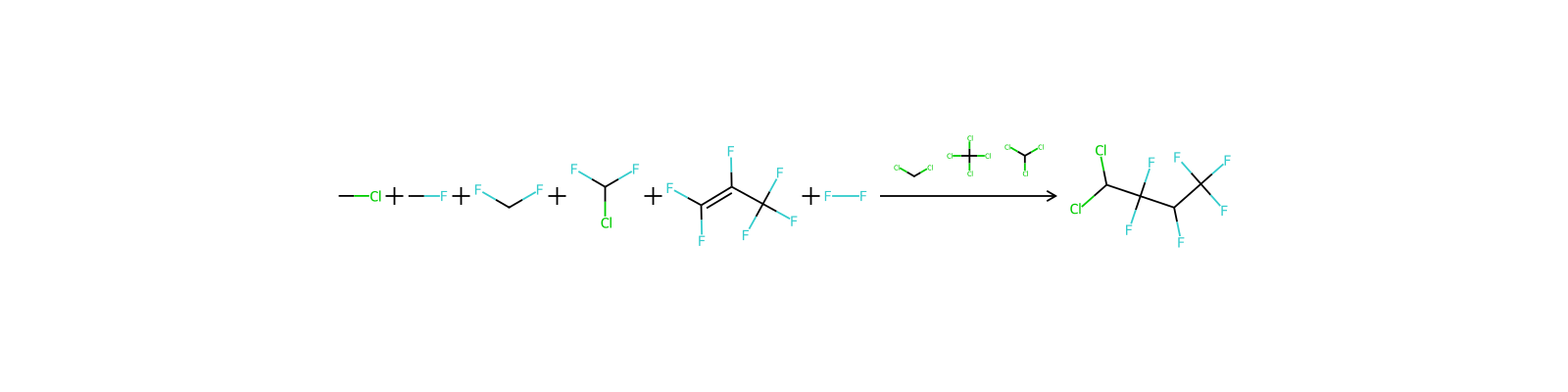
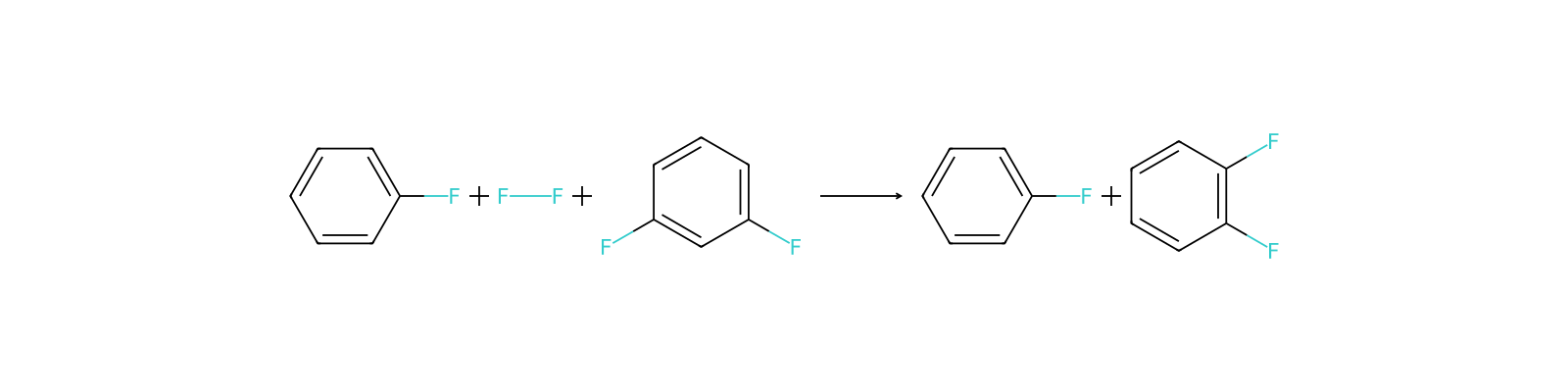
関連反応
189 件



関連ノート
読み込み中…