ホームMCPワークベンチSkills
ホームワークベンチ通知マイページ
llms.txt · MCPガイドプライバシーポリシー · 利用規約 · サポートv1.8.0
  1. ホーム
  2. /化合物

2,2-ジメチル-1,3-プロパンジオール

Neopentyl glycol

HCID 31344
ノートを作成反応を作成見積依頼を出す
印刷プレビュー

データを補完しています。しばらくしてからページを更新すると最新の内容を表示できます

基本情報概要名称と識別子物性安全と法規制化学と産業関連反応化合物ノート
部分構造検索類似構造を探す

基本情報

CAS
126-30-7
標準SMILES
CC(C)(CO)CO
InChIKey
SLCVBVWXLSEKPL-UHFFFAOYSA-N
分子式
C5H12O2
平均分子量
104.15 g/mol
単同位体質量
104.08372962

概要

2,2-dimethylpropane-1,3-diol is a white crystalline solid. Melting point 130 °C.

名称と識別子

優先名称
Neopentyl glycol
IUPAC
2,2-dimethylpropane-1,3-diol
現地名
2,2-ジメチル-1,3-プロパンジオール
英語名
neopentyl glycol
分子式
C5H12O2
分子量
104.15

名称と別名

Neopentyl glycol126-30-72,2-Dimethylpropane-1,3-diol2,2-DIMETHYL-1,3-PROPANEDIOLDimethylolpropaneNeopentanediolNeopentylene glycol1,3-Propanediol, 2,2-dimethyl-NeopentylglycolNeolDimethyltrimethylene glycolHydroxypivalyl alcohol
名称をさらに表示
2,2-ジメチル-1,3-プロパンジオール2,2-ジメチルプロパン-1,3-ジオール2,2-ジメチルトリメチレングリコールネオペンチルグリコールネオールネオペンチルグリコル2-2,ジメチル-1,3-プロパンジオ-ル2,2ジメチルプロパン1,3ジオルネオペンチルグリコール(2,2-ジメチル-1,3-プロパンジオール)ジメチルトリメチレングリコール2,2-ジヒドロキシ-2,2-ジメチルプロパン2,2-ビス(ヒドロキシメチル)プロパン2,2‐ジメチル‐1,3‐プロパンジオールネオペンチレングリコールNEOPENTYL GLYCONPG Glycol2,2-Dimethyl-1
2,2-Dimethyltrimethylene glycolNexcoat 6002,2-Dimethyl-1,3 propanediolDTXSID8027036QI80HXD6S5ORISTAR NPGNSC-63661,3-Dihydroxy-2,2-dimethylpropane

データベース識別子

CAS
126-30-7
PubChem CID
31344
DTXSID
DTXSID8027036
ChEMBL
CHEMBL3184801
ChEBI
CHEBI:143768
UNII
QI80HXD6S5
EC Number
204-781-0
Nikkaji
J2.511I

物性

構造計算による物性補完中

XLogP
0
極性表面積
40.5 Ų
水素結合供与体数
2
水素結合受容体数
2
回転可能結合数
2
重原子数
7
形式電荷
0
複雑度
44

実験および物理化学的性質

PolymersOther Classes -> Alcohols and Polyols, Other
SpringerMaterials PropertiesBoiling point
LogP · 2 件

log Kow = 0.12

-0.84

OdorSweetish
Density · 4 件

1.1 g/cu cm

1.1 g/cm³

Relative density of the vapour/air-mixture at 20 °C (air = 1): 1.0

1.06 @25 °C

Color/Form · 2 件

Needles from benzene

Crystalline solid

Solubility · 6 件

In water, 83 g/100 mL at 20 °C

Solubility in water approximately 65% wet weight

Soluble in water

Freely soluble in alcohol, ether

For more Solubility (Complete) data for Neopentyl glycol (6 total), please visit the HSDB record page.

Solubility in water, g/100ml at 20 °C: 83

Flash Point · 3 件

225 °F (USCG, 1999)

265 °F (129 °C) (open cup)

107 °C

Boiling Point · 4 件

安全と法規制

安全情報は参考情報です。供給元の安全データシート(SDS)、適用法令、専門家による評価に代わるものではありません。

GHS分類

GHS Classification · 6 件

This chemical does not meet GHS hazard criteria for 1.9% (19 of 1013) of reports.

Danger

H315 (21.1%): Causes skin irritation [Warning Skin corrosion/irritation]

P264, P264+P265, P280, P302+P352, P305+P351+P338, P305+P354+P338, P317, P321, P332+P317, P337+P317, and P362+P364 (click each P-code to see the statement)

Aggregated GHS information provided per 1013 reports by companies from 9 notifications to the ECHA C&L Inventory. Each notification may be associated with multiple companies.

Danger

危険有害性情報

Regulatory Information · 4 件

Chemical: 1,3-Propanediol, 2,2-dimethyl-

1,3-Propanediol, 2,2-dimethyl- is listed on the EPA's Chemical Data Reporting (CDR) system. Manufacturers and importers of 1,3-Propanediol, 2,2-dimethyl- are required to report information about their production and use of this chemical to the EPA under the Toxic Substances Control Act (TSCA). (40 eCFR Part 711)

REACH registered substance: 2,2-dimethylpropane-1,3-diol (EC: 204-781-0)

1,3-Propanediol, 2,2-dimethyl-: Does not have an individual approval but may be used under an appropriate group standard

Other Safety InformationIMAP assessments - 1,3-Propanediol, 2,2-dimethyl-: Human health tier I assessment
DOT LabelPoison
Fire Hazards · 2 件

Special Hazards of Combustion Products: Emits toxic fumes under fire condition. (USCG, 1999)

Combustible. Finely dispersed particles form explosive mixtures in air.

Fire PotentialCombustible when exposed to heat or flame.
Health Hazards · 1 件

May be harmful by ingestion or skin absorption. Causes eye and skin irritation. Material is irritating to mucous membrane and upper respiratory tract. INHALATION: Call for medical aid. Remove to fresh air. If breathing has stopped, give artificial respiration. If breathing is difficult, give oxygen. (USCG, 1999)

化学と産業

薬理情報

Metabolism/Metabolites · 1 件

4 rabbits were gavaged with 1000 -1500 mg/kg bw unlabelled neopentyl glycol and excretion of the test substance and their metabolites via urine was determined the following 24 hr (pooled data). After oral application 62% (range 53-67%) of the applied dose was found in the 24-hr urine as the conjugate of glucuronic acid indicating rapid absorption. Only 1.9% of the applied dose was excreted as 3-hydroxy-2,2-dimethylpropionic acid and 0.7% as unchanged neopentyl glycol. Conclusion: Rapid absorption of the test substance after oral exposure followed by conjugation with glucuronic acid and excretion via urine.

Absorption, Distribution and Excretion · 1 件

4 rabbits were gavaged with 1000 -1500 mg/kg bw unlabelled neopentyl glycol and excretion of the test substance and their metabolites via urine was determined the following 24 hr (pooled data). After oral application 62% (range 53-67%) of the applied dose was found in the 24-hr urine as the conjugate of glucuronic acid indicating rapid absorption. Only 1.9% of the applied dose was excreted as 3-hydroxy-2,2-dimethylpropionic acid and 0.7% as unchanged neopentyl glycol. Conclusion: Rapid absorption of the test substance after oral exposure followed by conjugation with glucuronic acid and excretion via urine.

用途と製造

Uses · 6 件

Used to make plasticizers and polyesters and as modifier of alkyd resins; [Merck Index] Used in chemical synthesis and in the polymers industry; [IUCLID] Used to make large scale and fine chemicals, rubber products, plastic products, textiles, leather, fur, wood and wood products, pulp-paper and paper products, non-metallic mineral products (i.e. plasters and cement), in printing and reproduction of recorded media, building and construction work, scientific research and development, and consumer construction chemicals; [ECHA REACH Registrations]

Pulp and Paper Processing [Category: Industry]

In the manufacture of plasticizers, polyesters, as modifier of alkyd resins.

Used in polyester manufacture. An insect repellent.

Application: 2,2-Dimethyl-1,3-propanediol may be used in the synthesis of: 2,2-dimethyl-1,3-propanediol cyclic phosphorochloridate; 2,2-dimethyl-1,3-propanediol cyclic phenylphosphonate; [1',3'-(2',2'-dimethylpropylene)]-2-iodo-3-octyl-5-thienylboronate; cyclic carbonate; 2,2-dimethyl-1,3-propanediol bis(cyclic-2,2-dimethyltrimethylene phosphite)

関連反応

251 件
反応記録を作成
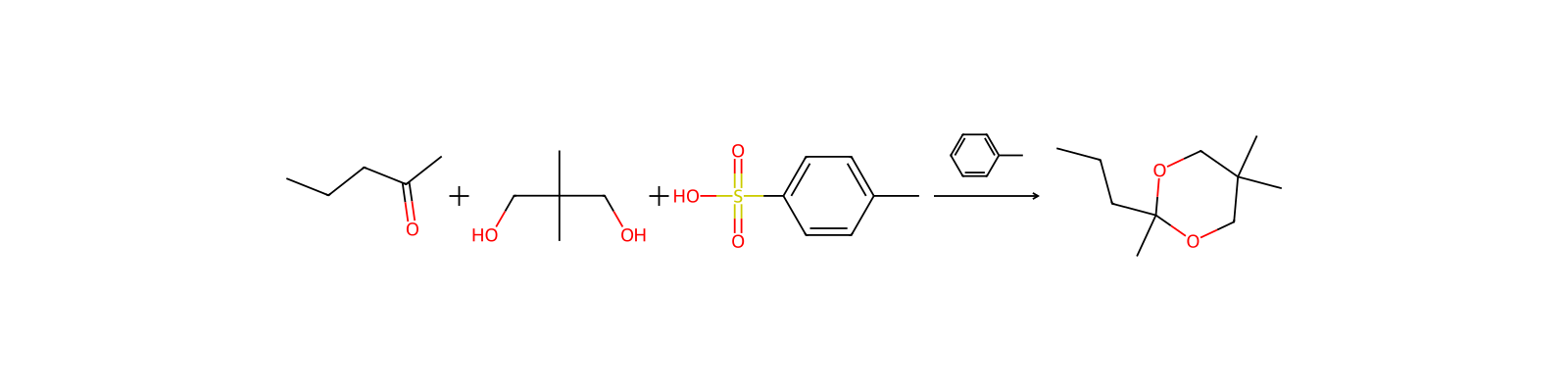
HRID 3616 の反応式
HRID 3616反応物としてuspto-grants-1998_03
HRID 5672 の反応式
HRID 5672反応物としてuspto-grants-1993_09
HRID 15094 の反応式
HRID 15094反応物としてuspto-grants-2010_06
HRID 17782 の反応式
HRID 17782反応物としてuspto-grants-2010_06
HRID 31565 の反応式
HRID 31565反応物としてuspto-grants-2008_09
HRID 31645 の反応式
HRID 31645反応物としてuspto-grants-2008_09
HRID 37620 の反応式
HRID 37620反応物としてuspto-grants-1995_05
HRID 61333 の反応式
HRID 61333反応物としてuspto-grants-2016_09
1 / 32 ページ

化合物ノート

読み込み中…

このページの内容基本情報概要名称と識別子物性安全と法規制化学と産業関連反応化合物ノート
その他の操作
ノートを作成反応を作成見積依頼を出す

406.4 °F at 760 mmHg (USCG, 1999)

207 °C

210 °C

206 °C @760 [mm Hg]

DecompositionWhen heated to decomposition it emits acrid smoke and irritating fumes.
Melting Point · 3 件

260.6 °F (USCG, 1999)

129.3 °C

127 °C

Vapor Density · 2 件

3.6 (Air =1)

Relative vapor density (air = 1): 3.6

物理化学的性質

融点
126 · 126-128 °C
沸点
208 °C · 208 °C
比重(密度)
1.06 · 1.06
蒸気密度
3.6 · 3.6 (vs air)
蒸気圧
0.8 mm · <0.8 mm Hg ( 20 °C)
屈折率
1.4406 · 1.4406 (estimate)
闪点
107 °C · 107 °C
貯蔵温度
Inert atmosphere,Room Temperature
溶解性
830 g/リットル · 830g/リットル
外見
結晶塊
酸解離定数(Pka)
14.57 · 14.57±0.10(Predicted)
色
白い
爆発限界(explosive limit)
1.34 %, · 1.34%, 149°F
水溶解度
830 g/L · 830g/L(20℃)
Merck
14 · 14,6458
BRN
605291 · 605291
Henry's Law Constant
4 · 4.0×102 mol/(m3Pa) at 25℃, Wang et al. (2017)
安定性
安定。強力な酸化剤、無水酢酸、酸塩化物、湿気とは相容れない。可燃性。
化粧品成分の機能
溶媒可塑剤
InChI
1S/C5H12O2/c1-5(2,3-6)4-7/h6-7H,3-4H2,1-2H3
InChIKey
SLCVBVWXLSEKPL-UHFFFAOYSA-N
SMILES
CC(C)(CO)CO
LogP
-0.15 at · -0.15 at 25℃
CAS データベース
126 · 126-30-7(CAS DataBase Reference)
NISTの化学物質情報
1 · 1,3-Propanediol, 2,2-dimethyl-(126-30-7)
EPAの化学物質情報
Neopentyl glycol (126-30-7)
Hazards Summary · 1 件

An eye and respiratory tract irritant; [ICSC] Effects to male liver and kidney but no reproductive or developmental toxicity observed in oral study of rats; [JECDB] An irritant; May cause smarting and reddening of skin if spilled and allowed to remain on clothes; High vapor concentrations may cause mild smarting of eyes and respiratory system; [CHRIS] A severe eye irritant that may cause injury; [Alfa Aesar MSDS]

Reactive GroupAlcohols and Polyols
EPA Safer ChemicalChemical: Neopentyl glycol
Reactivity Profile · 1 件

2,2-DIMETHYLPROPANE-1,3-DIOL may generate toxic gases in combination of with alkali metals, nitrides, and strong reducing agents. Reacts with inorganic acids and carboxylic acids to form esters plus water. Converted to aldehydes or acids by oxidizing agents. May initiate the polymerization of isocyanates and epoxides.

Chemical DangersReacts violently with oxidants.
Physical DangersDust explosion possible if in powder or granular form, mixed with air.

安全と保護具

Fire Fighting · 2 件

Fire Extinguishing Agents: Water sprays, dry chemical powder, alcohol or polymer foam. (USCG, 1999)

Use water spray, powder.

First Aid Measures · 4 件

Fresh air, rest.

Remove contaminated clothes. Rinse and then wash skin with water and soap.

First rinse with plenty of water for several minutes (remove contact lenses if easily possible), then refer for medical attention.

Rinse mouth.

First AidEYES: Flush with copious amounts of water.
Safe StorageSeparated from oxidants. Dry.
Fire Fighting Procedures · 2 件

Water or foam may cause frothing.

Suitable extinguishing media: Use water spray, alcohol-resistant foam, dry chemical or carbon dioxide. Advice for firefighters: Wear self contained breathing apparatus for fire fighting if necessary.

Storage ConditionsKeep container tightly closed in a dry and well-ventilated place. Hygroscopic.
Cleanup Methods · 1 件

ACCIDENTAL RELEASE MEASURES; Personal precautions, protective equipment and emergency procedures: Use personal protective equipment. Avoid dust formation. Avoid breathing vapors, mist or gas. Ensure adequate ventilation. Evacuate personnel to safe areas. Avoid breathing dust. Environmental precautions: Do not let product enter drains. Methods and materials for containment and cleaning up: Pick up and arrange disposal without creating dust. Sweep up and shovel. Keep in suitable, closed containers for disposal.

Nonfire Spill ResponseExcerpt from ERG Guide 154 [Substances - Toxic and/or Corrosive (Non-Combustible)]:
Disposal Methods · 2 件

SRP: Recycle any unused portion of the material for its approved use or return it to the manufacturer or supplier. Ultimate disposal of the chemical must consider: the material's impact on air quality; potential migration in air, soil or water; effects on animal, aquatic and plant life; and conformance with environmental and public health regulations. If it is possible or reasonable use an alternative chemical product with less inherent propensity for occupational harm/injury/toxicity or environmental contamination.

Product: Contact a licensed professional waste disposal service to dispose of this material. Offer surplus and non-recyclable solutions to a licensed disposal company. Contaminated packaging: Dispose of as unused product.

Spillage DisposalPersonal protection: P2 filter respirator for harmful particles. Sweep spilled substance into covered containers. Remove gas with fine water spray.
Preventive Measures · 5 件

Gloves must be inspected prior to use. Use proper glove removal technique (without touching glove's outer surface) to avoid skin contact with this product. Dispose of contaminated gloves after use in accordance with applicable laws and good laboratory practices. Wash and dry hands.

Avoid formation of dust and aerosols. Provide appropriate exhaust ventilation at places where dust is formed.

ACCIDENTAL RELEASE MEASURES; Personal precautions, protective equipment and emergency procedures: Use personal protective equipment. Avoid dust formation. Avoid breathing vapors, mist or gas. Ensure adequate ventilation. Evacuate personnel to safe areas. Avoid breathing dust. Environmental precautions: Do not let product enter drains.

Handle in accordance with good industrial hygiene and safety practice. Wash hands before breaks and at the end of workday.

SRP: Local exhaust ventilation should be applied wherever there is an incidence of point source emissions or dispersion of regulated contaminants in the work area. Ventilation control of the contaminant as close to its point of generation is both the most economical and safest method to minimize personnel exposure to airborne contaminants. Ensure that the local ventilation moves the contaminant away from the worker.

Isolation and EvacuationExcerpt from ERG Guide 154 [Substances - Toxic and/or Corrosive (Non-Combustible)]:

毒性情報

Environmental Fate · 3 件

TERRESTRIAL FATE: Based on a classification scheme(1), an estimated Koc value of 1(SRC), determined from a structure estimation method(2), indicates that neopentyl glycol is expected to have very high mobility in soil(SRC). Volatilization of neopentyl glycol from moist soil surfaces is not expected to be an important fate process(SRC) given an estimated Henry's Law constant of 3.1X1-07 atm-cu m/mole(SRC), developed using a fragment constant estimation method(2). Neopentyl glycol is not expected to volatilize from dry soil surfaces(SRC) based upon a vapor pressure of 1.27X10⁻² mm Hg at 25 °C(3). Utilizing the Japanese MITI test, 1.2% of the Theoretical BOD was reached in 2 weeks(4) indicating that biodegradation is not an important environmental fate process in soil(SRC).

AQUATIC FATE: Based on a classification scheme(1), an estimated Koc value of 1(SRC), determined from a structure estimation method(2), indicates that neopentyl glycol is not expected to adsorb to suspended solids and sediment(SRC). Volatilization from water surfaces is expected(3) based upon an estimated Henry's Law constant of 3.1X10⁻⁷ atm-cu m/mole(SRC), developed using a fragment constant estimation method(2). Using this Henry's Law constant and an estimation method(3), volatilization half-lives for a model river and model lake are 122 and 890 days, respectively(SRC). According to a classification scheme(4), a BCF range of 0.3-0.5(5) suggests bioconcentration in aquatic organisms is low(SRC). Utilizing the Japanese MITI test, 1.2% of the Theoretical BOD was reached in 2 weeks(5) indicating that biodegradation is not an important environmental fate process in water(SRC).

ATMOSPHERIC FATE: According to a model of gas/particle partitioning of semivolatile organic compounds in the atmosphere(1), neopentyl glycol, which has a estimated vapor pressure of 1.27X10⁻² mm Hg at 25 °C(2), is expected to exist solely as a vapor in the ambient atmosphere. Vapor-phase neopentyl glycol is degraded in the atmosphere by reaction with photochemically-produced hydroxyl radicals(SRC); the half-life for this reaction in air is estimated to be 44 hrs(SRC), calculated from its rate constant of 8.7X10⁻¹² cu cm/molecule-sec at 25 °C(SRC) that was derived using a structure estimation method(3). Neopentyl glycol does not contain chromophores that absorb at wavelengths >290 nm(4) and, therefore, is not expected to be susceptible to direct photolysis by sunlight(SRC).

Exposure RoutesThe substance can be absorbed into the body by inhalation of its aerosol and by ingestion.
Toxicity Summary · 1 件

IDENTIFICATION AND USE: Neopentyl glycol (NPG) is a solid. It is used in chemical synthesis, and in polyester manufacture. An insect repellent. HUMAN STUDIES: There are no data available. ANIMAL STUDIES: NPG was not irriating to skin in rabbits, and non sensitizing to the skin in the Murine Local Lymph Node Assay. NPG was practically non-toxic in acute studies in rats and guinea pigs. No treatment-related, adverse findings were observed at clinical examinations, clinical pathology and pathology up to a dose level of 1000 mg/kg bw/d in 90 day oral gavage studies in rats. In other rat study reproductive performance of the parent generation and development of the F1 generation were not affected after oral application of dose levels up to 1000 mg/kg bw/day. In male rats single i.p. injection of 2000 mg/kg bw resulted in a mid level of ataxia but no loss of righting reflex. NPG had no mutagenic activity in Salmonella typhimurium TA 100, TA 1535, TA 98, TA 1537, or in Escherichia coli WP2 uvrA tested with and without metabolic activation at dose levels up to 5000 ug/plate. NPG was not mutagenic in the HPRT locus assay under in vitro conditions in CHO cells in the absence and the presence of metabolic activation.

Signs and Symptoms · 4 件

Cough.

Redness.

Redness. Pain.

Burning sensation.

Ongoing Test Status · 1 件

EPA has released the Interactive Chemical Safety for Sustainability (iCSS) Dashboard. The iCSS Dashboard provides an interactive tool to explore rapid, automated (or in vitro high-throughput) chemical screening data generated by the Toxicity Forecaster (ToxCast) project and the federal Toxicity Testing in the 21st century (Tox21) collaboration. /The title compound was tested by ToxCast and/or Tox21 assays/[USEPA; ICSS Dashboard Application; Available from, as of August 9, 2018: http://actor.epa.gov/dashboard/]

Effluent Concentrations · 1 件

Neopentyl glycol was detected at a concentraiton of 14.7 ug/L in an industrial landfill leachate sampled Decemeber 1996. It was not detected in in an industrial effluent from a petrochemical plant taken in July 1996, January 1997, or March 1997 (landfill leachate); detection limit = 1.0 ug/L(1).

Soil Adsorption/Mobility · 1 件

Using a structure estimation method based on molecular connectivity indices(1), the Koc of neopentyl glycol can be estimated to be 1(SRC). According to a classification scheme(2), this estimated Koc value suggests that neopentyl glycol is expected to have very high mobility in soil(SRC).

Human Toxicity Excerpts · 1 件

/BIOMONITORING/ Patients attending a general hospital for various reasons were screened for raised serum gamma glutamyltransferase (gamma-GT) and positive blood alcohol concentration (BAC). The results served as objective biochemical tests of heavy drinking. Among 419 individuals, 50 (11.9%) met these requirements and blood samples were used to determine the presence of low molecular mass aliphatic diols. 1,2-Propanediol, 2,3-butanediol and 2,2-dimethyl-1,3-propanediol were determined by gas liquid chromatography-mass spectrometry (GC-MS). In patients with blood ethanol concentration less than 2 mmol/L, 1,2-propanediol and 2,2-dimethyl-1, 3-propanediol mainly occurred together at median concentrations of about 200 umol/L. When blood ethanol was 2-42 mmol/L, 2,3-butanediol was also present covering a wide concentration range: three patients had concentrations between 6 and 10 mmol/L. There was no apparent correlation between the concentration of 2,3-butanediol and the concentration of blood ethanol. The diols were below the limits of detection in blood from nonintoxicated control individuals and hospital in-patients.

Artificial Pollution SourcesNeopentyl glycol's production and use in the production of plasticizers and polyesters and as a modifier of alkyd resins(1) may result in its release to the environment through various waste streams(SRC).
Environmental Biodegradation · 2 件

AEROBIC: Neopently glycol has been identified as considered nonbiodegradable in a relatively short time frame(1). Neopentyl glycol, present at 100 mg/L, reached 1.2% of its theoretical BOD in 2 weeks using an activated sludge inoculum at 30 mg/L in the Japanese MITI test(2).

ANAEROBIC: Neopentyl glycol was 1% biodegraded following a lag of >60 days when incubated with an anaerobic digesting sludge from the Reading Sewage Works, Berkshire, UK(1).

Environmental Bioconcentration · 1 件

A BCF range of 0.3-0.5 was calculated in fish for neopentyl glycol at 10 ppm using carp (Cyprinus carpio) which were exposed over an 6-week period(1). According to a classification scheme(2), this BCF suggests the potential for bioconcentration in aquatic organisms is low(SRC).

Volatilization from Water/Soil · 1 件

The Henry's Law constant for neopentyl glycol is estimated as 3.1X10⁻⁷ atm-cu m/mole(SRC) developed using a fragment constant estimation method(1). This Henry's Law constant indicates that neopentyl glycol is expected to volatilize from water surfaces(2). Based on this Henry's Law constant, the volatilization half-life from a model river (1 m deep, flowing 1 m/sec, wind velocity of 3 m/sec)(2) is estimated as 122 days(SRC). The volatilization half-life from a model lake (1 m deep, flowing 0.05 m/sec, wind velocity of 0.5 m/sec)(2) is estimated as 890 days(SRC). Neopentyl glycol's Henry's Law constant indicates that volatilization from moist soil surfaces may occur(SRC). Neopentyl glycol is is not expected to volatilize from dry soil surfaces(SRC) based upon a vapor pressure of 1.27X10⁻² mm Hg(3).

安全データ

F
3
wgk
1
tsca
TSCA listed
rtecs
TY5775000
毒性
rat,LCLo,inhalation,39000ppm/6H (39000ppm),Kodak Company Reports. Vol. 21MAY1971,
hs_code
29053990
risk_code
36/37/38-36-41
化審法
(2)-240
hazard_code
Xi
safety_code
26-36-39
自然発火温度
750 °F
Hazard Classifications
Eye Dam. 1
ストレージクラス
11 - Combustible Solids
有毒物質データの
126-30-7(Hazardous Substances Data)

Synthetic lubricants.

ImpuritiesImpurities may include neopentyl glycol monoformate, neopentyl glycol monoisobutyrate, 2,2,4-trimethyl-1,3-pentanediol, and the cyclic acetal from the reaction of hydroxypivaldehyde and neopentyl glycol.
U.S. Production · 2 件

2023: 100,000,000 - <250,000,000 lb

Non-confidential 2016 Chemical Data Reporting (CDR) information on the production and use of chemicals manufactured or imported into the United States. Chemical: 1,3-Propanediol, 2,2-dimethyl-:

Consumer UsesPlasticizer
Industry UsesIntermediate
Methods of Manufacturing · 1 件

The aldol addition of isobutyraldehyde (2-methylpropanal) and formaldehyde gives hydroxypivaldehyde (3-hydroxy-2,2- dimethylpropanal), which is then reduced to neopentyl glycol. ... Both aldol addition and subsequent reduction are exothermic. Hydroxypivaldehyde can be reduced either by a crossed Cannizzaro reaction with equimolar amounts of formaldehyde and a base, or by catalytic hydrogenation.

Use Classification · 2 件

EPA Safer Chemical Functional Use Classes -> Solvents

Safer Chemical Classes -> Green circle - The chemical has been verified to be of low concern

General Manufacturing Information · 3 件

All Other Basic Organic Chemical Manufacturing

1,3-Propanediol, 2,2-dimethyl-: ACTIVE

2,2-Dimethyl-1,3-propanediol readily absorbs moisture on exposure to air.

応用分野 · 2 件

使用2,2-Dimethyl-1,3-propanediol may be used in the synthesis of:2,2-dimethyl-1,3-propanediol cyclic phosphorochloridate2,2-dimethyl-1,3-propanediol cyclic phenylphosphonate[1′,3′-(2′,2′-dimethylpropylene)]-2-iodo-3-octyl-5-thienylboronatecyclic carbonate2,2-dimethyl-1,3-propanediol bis(cyclic-2,2-dimethyltrimethylene phosphite)

一般的な説明White crystalline solid. Melting point 130°C.

調製方法

純化方法Crystallise the diol from *benzene or acetone/water (1:1). [Beilstein 1 IV 2551.]

上流・下流製品情報

上流原料

ピバルアルデヒドぎ酸ナトリウムイソブチルアルデヒド

下流製品

2-METHOXY-6-(5,5-DIMETHYL-1,3,2-DIOXABORINAN-2-YL)BENZONITRILEUnsaturated polyester resin5-(TRIFLUOROMETHYL)-2-(5,5-DIMETHYL-1,3,2-DIOXABORINAN-2-YL)BENZONITRILE2-CHLORO-6-(5,5-DIMETHYL-1,3,2-DIOXABORINAN-2-YL)BENZONITRILEイブプロフェン3-METHOXY-2-(5,5-DIMETHYL-1,3,2-DIOXABORINAN-2-YL)BENZONITRILE4-(TRIFLUOROMETHYL)-2-(5,5-DIMETHYL-1,3,2-DIOXABORINAN-2-YL)BENZONITRILE2-(TRIFLUOROMETHYL)-6-(5,5-DIMETHYL-1,3,2-DIOXABORINAN-2-YL)BENZONITRILE2-CYANO-5-BROMOPHENYLBORONIC ACID PINACOL ESTERぎ酸ナトリウム2-BROMO-6-(5,5-DIMETHYL-1,3,2-DIOXABORINAN-2-YL)BENZONITRILE4-(5,5-ジメチル-1,3,2-ジオキサボリンアン-2-イル)イソキノリン2-(3-クロロプロピル)-2,5,5-トリメチル-1,3-ジオキサン3,3-ジメチルシクロブタンカルボン酸トリエチレングリコールジメタクリラート4-CHLORO-2-(5,5-DIMETHYL-1,3,2-DIOXABORINAN-2-YL)BENZONITRILE2-Bromomethyl-4-fluorophenylboronic acid neopentyl glycol ester3-FLUORO-2-(5,5-DIMETHYL-1,3,2-DIOXABORINAN-2-YL)BENZONITRILE

補足説明

定義本品は、次の化学式で表される有機化合物である。