
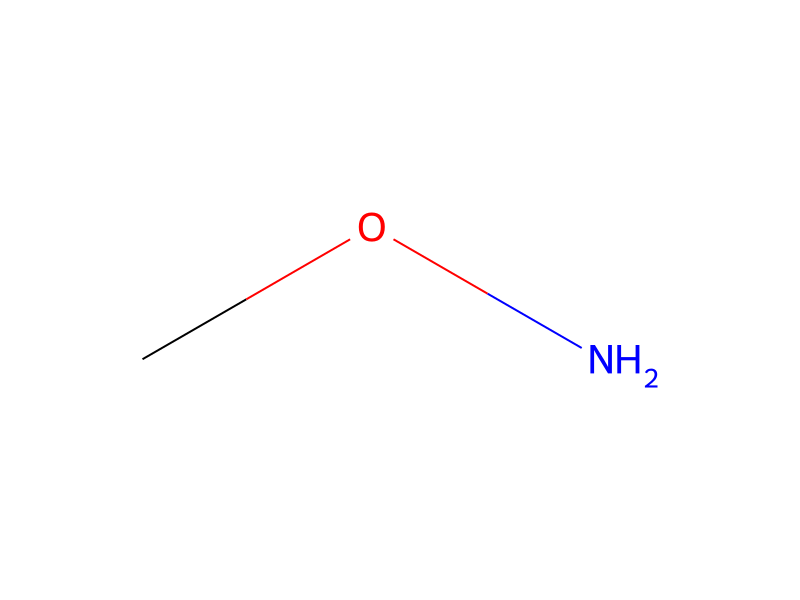
基本情報
- 標準SMILES
CON- InChIKey
GMPKIPWJBDOURN-UHFFFAOYSA-N- 分子式
- CH5NO
- 平均分子量
- 47.057 g/mol
- 単同位体質量
- 47.03711378
概要
Methoxyamine is an organooxygen compound.
名称と識別子
- 優先名称
- O-Methylhydroxylamine
- IUPAC
- O-methylhydroxylamine
- 現地名
- O-メチルヒドロキシルアミン
- 英語名
- O-methylhydroxylamine
- 分子式
- CH5NO
- 分子量
- 47.06
名称と別名
O-METHYLHYDROXYLAMINEMethoxyamine67-62-9Hydroxylamine, O-methyl-MethoxylamineHydroxylamine methyl etheralpha-MethylhydroxylamineNCI-C600609TZH4WY30JDTXSID8043862TRC102 BaseRefChem:157067
名称をさらに表示
(アミノオキシ)メタンメトキシアミンO-メチルヒドロキシルアミンOメチルヒドロキシルアミンNCI-C-60060(Aminooxy)methaneRelugoli Impurity 94ORTHO-METHYLHYDROXYLAMINEHydroxylamine, O-methyl- (8CI,9CI)
DTXCID6023862200-660-1CH3ONH2methane, O-aminohydroxy-HSDB 2883CH5NOEINECS 200-660-1UNII-9TZH4WY30J
データベース識別子
- CAS
67-62-9- PubChem CID
- 4113
- DTXSID
DTXSID8043862- ChEMBL
CHEMBL1213633- ChEBI
CHEBI:192842- UNII
- 9TZH4WY30J
- EC Number
- 200-660-1
- Nikkaji
- J349B
物性
構造計算による物性
- XLogP
- -0.7
- 極性表面積
- 35.3 Ų
- 水素結合供与体数
- 1
- 水素結合受容体数
- 2
- 回転可能結合数
- 0
- 重原子数
- 3
- 形式電荷
- 0
- 複雑度
- 4.8
実験および物理化学的性質
Chemical ClassesNitrogen Compounds -> Hydroxylamines
SpringerMaterials PropertiesSchoenflies notation
OdorFISHY, AMINE ODOR
Color/FormMOBILE LIQUID
Solubility
SLIGHTLY SOL IN BENZENE, PETROLEUM ETHER /N-METHYLHYDROXYLAMINE/
MISCIBLE WITH WATER, ALCOHOL, ETHER
Boiling Point49-50 °C @ 760 MM HG
Vapor Pressure291.0 [mmHg]
Physical DescriptionColorless liquid with an unpleasant odor; [Hawley]
Other Experimental PropertiesINDEX OF REFRACTION: 1.4164 @ 20 °C/D; MELTING POINT: 42 °C WITH RAPID HEATING; DENSITY: 1.0003 G/ML @ 20 °C/4 °C /N-METHYLHYDROXYLAMINE/
物理化学的性質
- 融点
- 25 °C · 25°C
- 沸点
- 47.83 °C · 47.83°C
- 比重(密度)
- 0.9069 g/cm3 · 0.9069 g/cm3
- 屈折率
- 1.4164 · 1.4164 (estimate)
- 酸解離定数(Pka)
- 12.5 · 12.5(at 25℃)
化学的性質
化学的特性Colorless liquid; unpleasant odor.Soluble in water and alcohol.
安全と法規制
GHS分類
GHS Classification
Danger
H302+H312+H332 (96.6%): Harmful if swallowed, in contact with skin or if inhaled [Warning Acute toxicity, oral; acute toxicity, dermal; acute toxicity, inhalation]
P260, P261, P264, P264+P265, P270, P271, P280, P301+P317, P301+P330+P331, P302+P352, P302+P361+P354, P304+P340, P305+P354+P338, P316, P317, P321, P330, P362+P364, P363, P405, and P501 (click each P-code to see the statement)
Aggregated GHS information provided per 29 reports by companies from 2 notifications to the ECHA C&L Inventory. Each notification may be associated with multiple companies.
危険有害性情報
Hazards SummaryHighly irritating; [Merck Index] A strong skin irritant; [Hawley] Emergency treatment: Corrosives-alkaline; [HSDB] Mutagenic; [RTECS] See Hydroxylamine.
Hazard Classes and CategoriesAcute Tox. 4 (100%)
Skin, Eye, and Respiratory Irritations...CORROSIVE TO SKIN & HIGHLY IRRITANT TO EYES & MUCOUS MEMBRANES... /HYDROXYLAMINE/
毒性情報
Adverse EffectsDermatotoxin - Skin burns.
Human Toxicity Excerpts
...CORROSIVE TO SKIN & HIGHLY IRRITANT TO EYES & MUCOUS MEMBRANES. REPEATED EXPOSURE MAY ENHANCE ALLERGIC REACTION PARTICULARLY OF BACK OF HANDS & FOREARMS FROM 1-2 WK TO 2-5 YR AFTER COMMENCEMENT OF EXPOSURE & CASES OF ECZEMA...FOLLOWING PROLONGED CONTACT. ... NO CASES OF SYSTEMIC POISONING...IN WORKERS. /HYDROXYLAMINE/
/HYDROXYLAMINE IS/ ABOUT EQUIPOTENT TO NITRITE AS METHEMOGLOBIN FORMER, BUT IT HAS GREATER TENDENCY TO PRODUCE SULFHEMOGLOBIN, HEINZ BODIES & OTHER IRREVERSIBLE RED CELL DAMAGE. ... SYSTEMIC POISONING CHARACTERIZED BY CYANOSIS, CONVULSIONS & COMA. /HYDROXYLAMINE/
Non-Human Toxicity Excerpts
/HIGH CONCN/ IN ANIMALS...CAUSES CONVULSIONS FOLLOWED BY PARALYSIS & DEATH FROM CESSATION OF BREATHING... CHRONIC ABSORPTION OF MODERATE DOSES (1 MG/KG) MAY LEAD TO SLIGHT ANEMIA. /HYDROXYLAMINE/
...INHIBITOR OF CATALASE &...WHEN ADMIN PARENTERALLY, 40 MG CAUSING CONVULSIONS, NYSTAGMUS & DEATH IN RABBIT. LOCAL APPLICATION OF 10% SOLN...TO RABBIT EYES...CAUSED MODERATE INFLAMMATION OF CONJUNCTIVA. /HYDROXYLAMINE/
HYDROXYLAMINE ELEVATES BRAIN GABA /GAMMA-AMINOBUTYRIC ACID/ LEVELS IN RATS. /HYDROXYLAMINE/
O-METHYLHYDROXYLAMINE (2000 MCG/ML) INDUCED RESISTANCE MUTATION TO 8-AZAGUANINE. IT IS HIGHLY POTENT MUTAGEN FOR MICROORGANISMS AS WELL AS FOR MAMMALIAN CELLS.
REPLICATION OF PHAGE MS2 IN PRESENCE OF O-METHYLHYDROXYLAMINE (MUTAGENESIS IN VIVO) INCR REVERSION FREQUENCY OF 2 AMBER MUTATIONS IN MATURATION PROTEIN. PROBABLE MODE OF MUTAGENIC ACTION INVOLVES ENZYMATIC FORMATION OF MODIFIED PRECURSORS & INCORPORATION INTO RNA.
安全データ
- ridadr
- 1760
- hazard_class
- 8
- packing_group
- II
- 有毒物質データの
- 67-62-9(Hazardous Substances Data)
化学と産業
薬理情報
Mechanism of Action
Methoyxamine is investigated for use as an adjunct to alkylating agents, reverse resistance to chemotherapy, and enhancing radiation therapy. Methoxyamine’s proposed mechanism of action is through blocking of the abasic sites (apurinic/apyrimidinic - AP sites) created by the cleavage of base excision repair (BER) glycoslyates. DNA alkylating agents cause cell death through excessive DNA damage by adduct formation. The human mechanism for DNA repair is very efficient and cancer therapeutics which use this mechanism are often ineffective due to resistance by efficient repair mechanisms such as base excision repair (BER). Alkylating agents such as tezmozolomide form methylated DNA adducts such as O6-methylguanine (O6mG), 7-methylguanine (N7mG) and 3-methyladenine (N3mA). O6mG is a cytotoxic and genotoxic adduct which is repaired by O6-methylguanine DNA-methyltransferase (MGMT). O6mG’s cytotoxicity is due to the mismatch repair mechanism (MMR), but cell induced defects in this repair pathway can lead to drug resistance. The N7mG (dominant lesions caused by methylating agents) and N3mA adducts are both repaired by the BER mechanism. Methoxyamine disrupts the BER pathway, increasing the amount of cytotoxic adducts, which results in cell death. Methoxyamine inhibits BER by stabilizing the AP sites created by cleavage of BER glysosylates, forming MX-AP lesions. Methoxyamine may be an effective adjunct to iododeoxyuridine(IUdR) induced radiosensitization and radiation treatment. IUdR is a halogenated pyrimidine which is incorporated into cellular DNA instead of thymidine, which enhances radiotumor sensitivity. Methoxyamine is proposed to have a dual action in this treatment as it alters cell cycle kinetics as well as prevents repair of DNA by BER, allowing increased sensitivity of tumor cells to DNA damage by radiation therapy. The efficiency of cell cycle repair has been shown to be cell cycle dependent, with the G1 phase being second most sensitive to ionizing radiation (the mitotic, M, phase is the most sensitive). Methoxyamine increases the amount of protein 53 (P53) and protein Rb (pRB), senescence factors which cause the cell to remain in the G1 phase. Methoxyamine also creates a stringent checkpoint at the G1/S boundary as well as an insufficient checkpoint at the G2 stage, preventing cells from going into the S phase. The increased number of G1 cells makes methoxyamine treated tumors more susceptible to ionizing radiation. The temozolomide and methoxyamine created lesion MX-AP not only disrupts the BER pathway but inhibits topoisomerase II alpha (topo II), an enzyme necessary for DNA replication, recombination and chromosome segregation. MX-AP sites block DNA replication and interfere with choromosome splitting. It is currently uncertain how what the interaction between topoisomerase II and methoxyamine causes cytotoxicity, but several mechanisms have been proposed, such as MX-AP sites binding to topo II, thus reducing their functionality by forming a toxic complex.
THE MAJOR MUTAGENIC EFFECT OF O-METHYLHYDROXYLAMINE ON VEGETATIVE SD PHAGE IN ESCHERICHIA COLI IS PROBABLY DUE TO REPLICATION ERRORS RESULTING FROM INCORPORATION OF ENZYMICALLY MODIFIED PRECURSORS INTO DNA.
THE DIPHOSPHATE REACTION PRODUCT (MO6A) OF O-METHYLHYDROXYLAMINE WAS PREPARED AND COPOLYMERIZED WITH CYTIDINE DIPHOSPHATE OR ADENOSINE DIPHOSPHATE. THE SPECIFIC CHANGED BASE PAIRING IS PROBABLY CAUSED BY A TAUTOMERIC SHIFT FROM THE AMINO TO THE IMINO. CHANGING THE TAUTOMERIC EQUILIBRIUM OF A PURINE BY A SUBSTITUTION REACTION WITH A MUTAGEN SHOULD BE CONSIDERED AS A CONTRIBUTING FACTOR FOR THE MECHANISM OF MUTATION OF HYDROXYLAMINES.
用途と製造
Uses
Used as an analytical reagent (mainly for ketones and aldehydes); [Hawley]
ANALYTICAL REAGENT
ANALYTICAL REAGENT FOR ALDEHYDES & KETONES
U.S. Exports
(1972) No Data
(1975) No Data
U.S. Imports
(1972) No Data
(1975) No Data
U.S. Production
(1972) NOT PRODUCED COMMERCIALLY IN US
(1975) NOT PRODUCED COMMERCIALLY IN US
Methods of Manufacturing
REACTION OF HYDROXYLAMINE DISULFONIC ACID WITH METHYL SULFATE
BY HEATING HYDROXYLAMINE DISULFONIC ACID WITH METHYL SULFATE: GOLDFARB, J AM CHEM SOC 67: 1852 (1945). MAY ALSO BE PREPD FROM HYDROXYURETHAN.
General Manufacturing InformationADDITION OF METHOXYAMINE TO ALPHA,BETA-UNSATURATED KETONES & REARRANGEMENT OF BETA-METHOXYAMINO KETONES IS DESCRIBED BY BLATT, J AM CHEM SOC 61, 3494 (1939).
応用分野
使用Analytical reagent, mainly for ketones and aldehydes.
上流・下流製品情報
下流製品
サプライヤー16 社
湖北万得化工有限公司15377098680 15377098680 · [email protected]
普善实业(陕西)有限公司029-81310890 18165209495 · [email protected]
Dayang Chem (Hangzhou) Co.,Ltd.+86-0571-88938639 17705817739 · [email protected]
深圳振强药物研发有限公司0755-66853366 13670046396 · [email protected]
深圳菲斯生物科技有限公司0755-83725350 13380397412 · [email protected]
陕西缔都医药化工有限公司+86-29-87569262 +86-15003564040 · [email protected]
济南沃尔德化工有限公司0531-88773586 13210588999 · [email protected]
上海凯米莱铂生物科技有限公司18116465878 · [email protected]
陕西缔都医药化工有限公司029-029-81120477 17792793610 · [email protected]
杭州洁汉化工有限公司+86-571-86217390; +8618058761490 · [email protected]
上海玉函化工有限公司021-61469567 13774476675 · [email protected]
湖北摩科化学有限公司18627753421; 18627756402 · [email protected]
Wuxi Rejoys chemical Technology Co., Ltd.0510-86103381 · [email protected]
河北药成医药科技有限责任公司19903117580 19903117510 · [email protected]
江苏艾康生物医药研发有限公司025-58859352 18651614124 · [email protected]
北京海特乐思克科技有限公司15210893940; 15116916250 · [email protected]
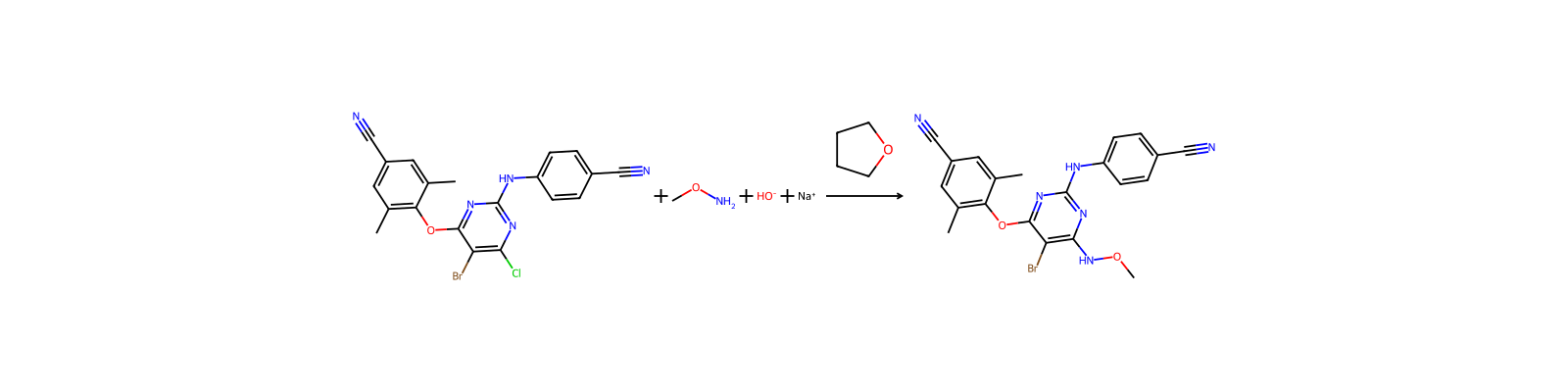
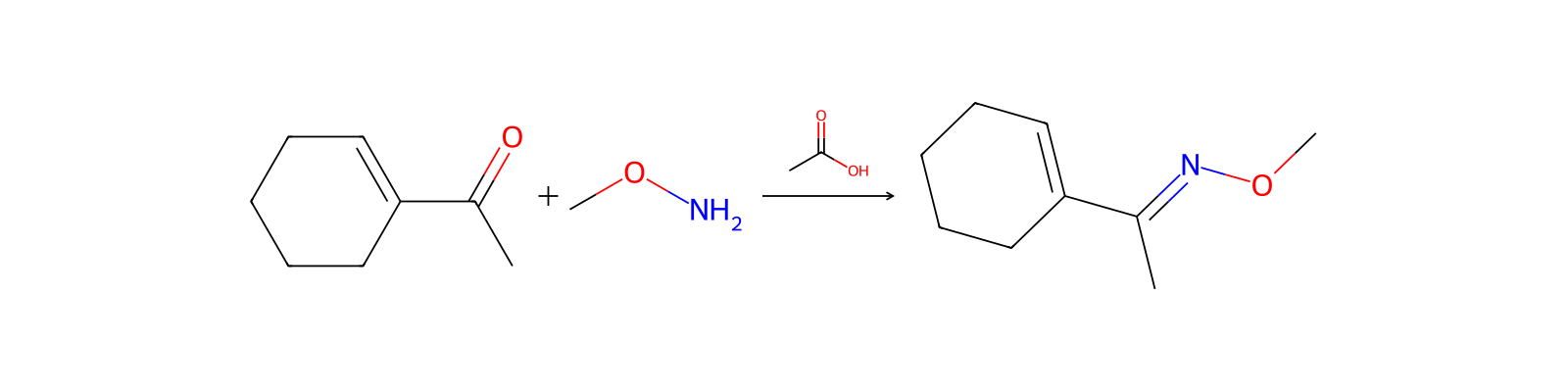
関連反応
620 件



関連ノート
読み込み中…