
パミドロン酸
Pamidronic Acid
データを補完しています。しばらくしてからページを更新すると最新の内容を表示できます
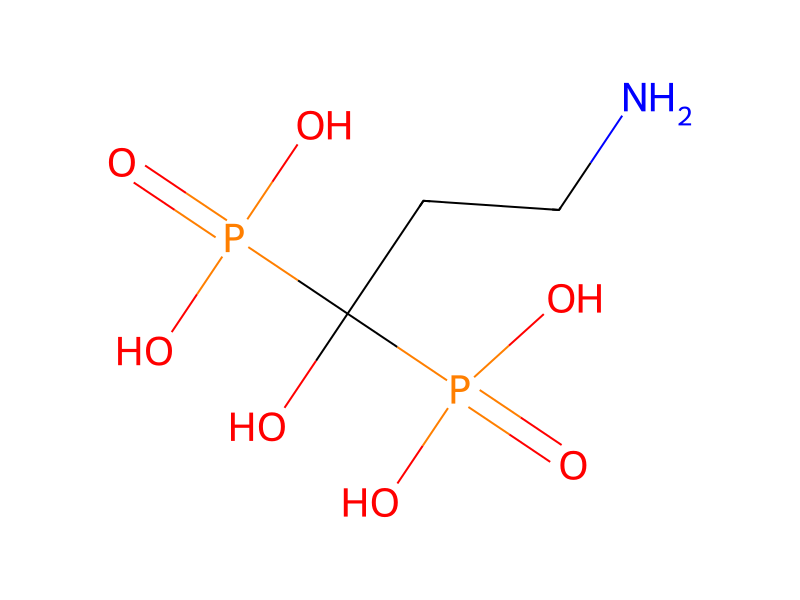
基本情報
- CAS
40391-99-9- 標準SMILES
NCCC(O)(P(=O)(O)O)P(=O)(O)O- InChIKey
WRUUGTRCQOWXEG-UHFFFAOYSA-N- 分子式
- C3H11NO7P2
- 平均分子量
- 235.07 g/mol
- 単同位体質量
- 235.00107495
概要
Pamidronate is a phosphonoacetic acid.
名称と識別子
- 優先名称
- Pamidronic Acid
- IUPAC
- (3-amino-1-hydroxy-1-phosphonopropyl)phosphonic acid
- 現地名
- パミドロン酸
- 英語名
- Pamidronic acid
- 分子式
- C3H11NO7P2
- 分子量
- 235.07
名称と別名
PAMIDRONIC ACIDpamidronate40391-99-9AmidronateAcide pamidronique(3-amino-1-hydroxy-1-phosphonopropyl)phosphonic acidAcido pamidronicoAcidum pamidronicumRibodroat(3-Amino-1-hydroxypropylidene)bisphosphonic acidDTXSID4023414AHPrBP
名称をさらに表示
3-アミノ-1-ヒドロキシプロピリデンビスホスホン酸1-ヒドロキシ-3-アミノプロピリデンビス(ホスホン酸)1-ヒドロキシ-3-アミノプロパン-1,1-ジイルビスホスホン酸2-アミノエチルヒドロキシメチレンビスホスホン酸(1-ヒドロキシ-3-アミノプロパン-1,1-ジイル)ビスホスホン酸(3-アミノ-1-ヒドロキシプロピリデン)ビス(ホスホン酸)[2-アミノエチル(ヒドロキシ)メチレン]ビスホスホン酸(3-アミノ-1-ヒドロキシプロピリデン)ビスホスホン酸1-ヒドロキシ-3-アミノプロピリデンビスホスホン酸パミドロネート3-アミノ-1-ヒドロキシプロピリデンビス(ホスホン酸)パミドロン酸(1-ヒドロキシ-3-アミノプロピリデン)ビスホスホン酸パミドロナートメシル酸デラビルジン1-ヒドロキシ-3-アミノプロパン-1,1-ジイルビス(ホスホン酸)3-アミノ-1-ヒドロキシ-1,1-プロパンジイルビスホスホン酸(3-アミノ-1-ヒドロキシ-1-ホスホノプロピル)ホスホン酸(3-Amino-1-hydroxypropane-1,1-diyl)bis(phosphonic acid)DLVPanolinRescriptorPamidronicaciIflab-bb F1977-0047Delavirdine mesylate
OYY3447OMC(3-Amino-1-hydroxypropylidene)diphosphonic acidDTXCID003414(3-amino-1-hydroxypropylidene)-1,1-biphosphonateaminopropanehydroxydiphosphonateamino-1-hydroxypropane-1,1-diphosphonateRefChem:57113M05BA03
データベース識別子
- CAS
40391-99-9- PubChem CID
- 4674
- DTXSID
DTXSID4023414- ChEMBL
CHEMBL834- ChEBI
CHEBI:7903- UNII
- OYY3447OMC
- EC Number
- 254-905-2
- Nikkaji
- J221.669H
物性
構造計算による物性補完中
- XLogP
- -6.9
- 極性表面積
- 161 Ų
- 水素結合供与体数
- 6
- 水素結合受容体数
- 8
- 回転可能結合数
- 4
- 重原子数
- 13
- 形式電荷
- 0
- 複雑度
- 243
実験および物理化学的性質
Drugs
Pharmaceuticals
Pharmaceuticals -> Listed in ZINC15
LogP-4.7
Solubility1.58e+01 g/L
Human DrugsBreast Feeding; Lactation; Milk, Human; Bisphosphonates; Bone Density Conservation Agents; Diphosphonates
Melting Point254-262
Physical DescriptionSolid
物理化学的性質
- 融点
- 226 · 226-228°C
- 沸点
- 658.7 · 658.7±65.0 °C(Predicted)
- 比重(密度)
- 1.998 · 1.998±0.06 g/cm3(Predicted)
- 貯蔵温度
- 2 · under inert gas (nitrogen or Argon) at 2–8 °C
- 溶解性
- メタノール(ごくわずか、加熱、超音波処理)、水(わずかに、加熱、超音波処理)
- 酸解離定数(Pka)
- 1.44 · 1.44±0.10(Predicted)
- 外見
- 個体
- 色
- ライトブラウンからベージュ
- 安定性
- 吸湿性
安全と法規制
安全情報は参考情報です。供給元の安全データシート(SDS)、適用法令、専門家による評価に代わるものではありません。
GHS分類
GHS Classification
Warning
H302 (100%): Harmful if swallowed [Warning Acute toxicity, oral]
P264, P270, P301+P317, P330, and P501 (click each P-code to see the statement)
Aggregated GHS information provided per 24 reports by companies from 4 notifications to the ECHA C&L Inventory.
危険有害性情報
Hazard Classes and CategoriesAcute Tox. 4 (100%)
毒性情報
TreatmentIf overdosage occurs, symptomatic hypocalcemia could also result; such patients should be treated with short-term intravenous calcium. (L1712)
Health EffectsRare cases of uveitis, iritis, scleritis, and episcleritis have been reported, including one case of scleritis, and one case of uveitis upon separate rechallenges.
Adverse EffectsPamidronate correlates with numerous adverse effects, including hypocalcemia and resulting secondary hyperparathyroidism, acute phase response, musculoskeletal pain, various ocular events, and osteonecrosis of the jaw.
Exposure RoutesParenteral (intravenous).
Plasma concentration rises rapidly upon IV administration.
Toxicity Summary
A small number of cases describe symptomatic hypocalcemia following pamidronate administration. In each case, however, patients had pre-existing derangements contributing to their symptoms, including renal insufficiency and low vitamin D levels secondary to lifestyle, previous GI surgery, and medication history. Recommendations for the management of pamidronate overdose include appropriate correction of the electrolyte disturbance and pre-treatment supplementation with calcium and Vitamin D.
化学と産業
薬理情報
ATC Code
M05BA03
M - Musculo-skeletal system
QM - Musculo-skeletal system
Protein BindingPamidronate is approximately 54% protein bound in serum.
Pharmacodynamics
Pamidronic acid is a second generation, nitrogen containing bisphosphonate that inhibits osteoclast mediated bone loss It has a wide therapeutic index and a long duration of action as it can be given every 3-4 weeks for certain indications. Patients should be counselled regarding the risk of elevated blood urea nitrogen, renal tubular necrosis, and nephrotoxicity.
Mechanism of Action
Bisphosphonates are taken into the bone where they bind to hydroxyapatite. Bone resorption by osteoclasts causes local acidification, releasing the bisphosphonate, which is taken into the osteoclast by fluid-phase endocytosis. Endocytic vesicles become acidified, releasing bisphosphonates into the cytosol of osteoclasts where they act. Osteoclasts mediate resorption of bone. When osteoclasts bind to bone they form podosomes, ring structures of F-actin. Disruption of the podosomes causes osteoclasts to detach from bones, preventing bone resorption. Nitrogen containing bisphosphonates such as pamidronate are known to induce apoptosis of hematopoietic tumor cells by inhibiting the components of the mevalonate pathway farnesyl diphosphate synthase, farnesyl diphosphate, and geranylgeranyl diphosphate. These components are essential for post-translational prenylation of GTP-binding proteins like Rap1. The lack of prenylation of these proteins interferes with their function, and in the case of Rap1, leads to apoptosis. pamidronate also activated caspases 3 and 9 which further contribute to apoptosis.
Biological Half-LifeThe mean elimination half life of pamidronate is 28±7 hours.
Metabolism/Metabolites
Pamidronate is not metabolized _in vivo_.
Pamidronate is not metabolized and is exclusively eliminated by renal excretion. Route of Elimination: Pamidronate is not metabolized and is exclusively eliminated by renal excretion. Half Life: The mean ± SD elimination half-life is 28 ± 7 hours
関連反応
21 件


化合物ノート
読み込み中…