
HRID 343739生成物として
Thiram
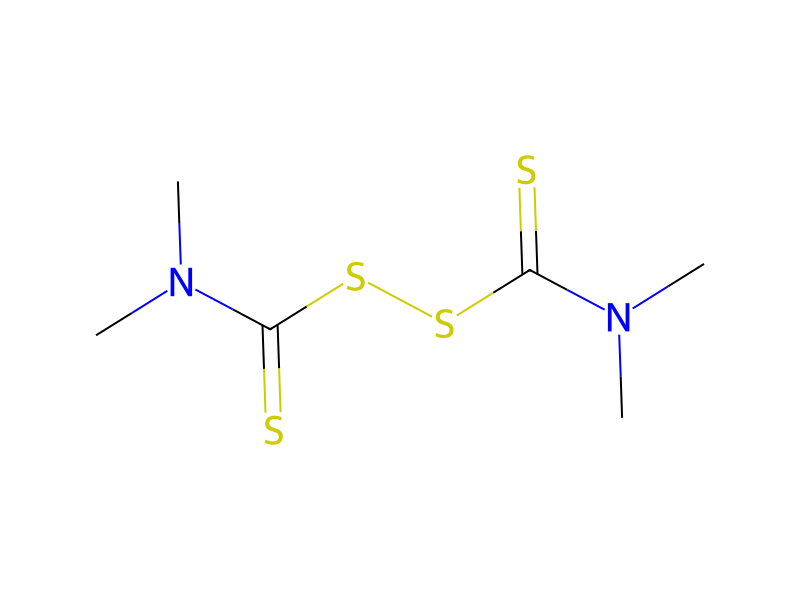
137-26-8CN(C)C(=S)SSC(=S)N(C)CKUAZQDVKQLNFPE-UHFFFAOYSA-NThiram appears as a liquid solution of a white crystalline solid. Primary hazard is to the environment. Immediate steps should be taken to limit spread to the environment. Easily penetrates the soil to contaminates groundwater and waterways.
137-26-8DTXSID5021332Pesticide -> EPA IRIS
Fungicides
Active substance -> EU Pesticides database: Not approved
Pesticides -> Dithiocarbamates (Pesticide)
Environmental transformation -> Pesticide transformation products (metabolite, successor)
Fungicides, Transformation products
log Kow = 1.73
1.82
1.89
1.43 at 68 °F (USCG, 1999) - Denser than water; will sink
1.3 g/cu cm
1.3 g/cm³
1.43
1.3 @25 °C
1.29
White crystalline powder
Colorless to yellow, crystalline solid. (Note: commercial pesticide product may be dyed blue.)
less than 1 mg/mL at 72 °F (NTP, 1992)
Solubility in alcohol and in ether less than 0.2%; solubility in acetone 1.2%; in benzene 2.5%.
安全情報は参考情報です。供給元の安全データシート(SDS)、適用法令、専門家による評価に代わるものではありません。
Warning
H302: Harmful if swallowed [Warning Acute toxicity, oral]
P260, P261, P264, P264+P265, P270, P271, P272, P273, P280, P301+P317, P302+P352, P304+P340, P305+P351+P338, P317, P319, P321, P330, P332+P317, P333+P317, P337+P317, P362+P364, P391, and P501 (click each P-code to see the statement)
Warning
H302+H332 (20.8%): Harmful if swallowed or if inhaled [Warning Acute toxicity, oral; acute toxicity, inhalation]
P260, P261, P264, P264+P265, P270, P271, P272, P273, P280, P301+P317, P302+P352, P304+P340, P305+P351+P338, P317, P319, P321, P330, P332+P317, P333+P317, P337+P317, P362+P364, P391, and P501 (click each P-code to see the statement)
Chemical: Thioperoxydicarbonic diamide ([(H2N)C(S)]2S2), N,N,Nâ²,Nâ²-tetramethyl-
Hazard Traits - Neurotoxicity
Regulation (EC) No 396/2005 (amended)
Thioperoxydicarbonic diamide ([(H2N)C(S)]2S2), N,N,N',N'-tetramethyl- is listed on the EPA's Chemical Data Reporting (CDR) system. Manufacturers and importers of Thioperoxydicarbonic diamide ([(H2N)C(S)]2S2), N,N,N',N'-tetramethyl- are required to report information about their production and use of this chemical to the EPA under the Toxic Substances Control Act (TSCA). (40 eCFR Part 711)
Thiram is listed in the dataset of EPA Human Health Benchmarks for Pesticides under the Safe Drinking Water Act (40 eCFR 141)
03/81/EC, Reg. (EU) 2016/2016, Reg. (EU) No 540/2011, Reg. (Eu) 2018/1500, Reg.(EU)2018/524
Special Hazards of Combustion Products: Toxic and irritating oxides of sulfur are formed. Carbon disulfide may be formed from unburned material. (USCG, 1999)
Inhibition of hepatic dehydrogenases results in an acetaldehyde reaction on exposure to ethanol. Other effects may result from the known reactions of dithiocarbamates with metals, sulfhydryl-containing enzymes, or metabolism to reactive metabolites including carbon disulfide.
...Ingestion of the fungicide thiram (125 mg/kg)... /has/ been reported to evoke ovarian atrophy and cessation of egg laying in hens, presumably through inhibition of dopamine beta-hydroxylase.
... /It was/ previously demonstrated that Disulfiram impairs the permeability of inner mitochondrial membrane (IMM). In this report, the effect of Disulfiram and its structural analogue thiram (Th) on mitochondrial functions was studied in detail. /It was/ found that mitochondria metabolize thiram disulfide compounds (TDs) in a NAD(P)H- and GSH-dependent manner. At the concentration above characteristic threshold, TDs induced irreversible oxidation of NAD(P)H and glutathione (GSH) pools, collapse of transmembrane potential, and inhibition of oxidative phosphorylation. The presence of Ca(2+) and exhaustion of mitochondrial glutathione (GSH+GSSG) decreased the threshold concentration of TDs. ... TDs induced the mitochondrial permeability transition (MPT).
In studies with ruminant animals fed corn treated with thiram, rumen microorganisms degraded thiram to carbon disulfide and probably hydrogen sulfide and dimethylamine. ... some unchanged thiram was also observed in feces /and/ urine.
Pesticides and nitrites in food may be a hazard to man, since many pesticides are secondary or tertiary amines, which form nitroso compounds in the presence of nitrite under conditions resembling those in the human stomach. Compounds were incubated for 4 hours at 37 °C in the presence of excess nitrite at pH 3. Thiram converted to the carcinogen dimethylnitrosamine at a yield of 9%.
The major metabolite in plants is ethylene thiourea, followed by ethylene thiuram monosulfide and presumably ethylene thiuram disulfide and sulfur.
The hepatotoxic effects of thiram metabolism to carbon disulfide were investigated in rats. Male Sprague-Dawley rats were administered 15, 30 or 60 mg/kg thiram ip. Activities of serum glutamic oxaloacetic transaminase and sorbitol dehydrogenase were measured in the blood to assess the extent of liver injury. Detectable amounts of carbon disulfide appeared after 1.5 to 2 hr of treatment; 5 hr were required for complete recovery of carbon disulfide produced from 60 mg/kg thiram. A 2 fold increase in the dose of thiram from 15 to 30 mg/kg resulted in a 10 fold increase in the amount of carbon disulfide in expired air. Increasing the thiram dose 4 times to 60 mg/kg resulted in a 40 fold increase in carbon disulfide production over that from a 15 mg/kg thiram dose. The microsomal inhibitor SKF-525A inhibited the formation of carbon disulfide from thiram; phenobarbital treatment increased the formation of carbon disulfide. Thiram caused a significant loss of cytochrome P450 and benzphetamine-N-demethylase activity at 24 hr following treatment. Five hours after 60 mg/kg thiram treatment, there was an increase in sorbitol dehydrogenase activity 47%; serum glutamic oxaloacetic transaminase activity increased by 41 and 40% during 5 and 24 hr, respectively. /It was/ concluded that carbon disulfide is an in vivo metabolite of thiram and may be responsible for hepatotoxicity.





CHEMBL120563CHEBI:9495Sol in carbon disulfide
Solubility in ethanol <10 g/L at 25 °C, acetone 80 g/L at 25 °C, chloroform 230 g/L at 25 °C, hexane 0.04 g/L at 20 °C; dichloromethane 170 g/L at 20 °C, toluene 18 g/L at 20 °C, isopropanol 0.7 g/L at 20 °C.
In water, 30 mg/L at 25 °C
Solubility in water: none
280 °F (NTP, 1992)
89 °C (192 °F) (closed cup)
89 °C c.c.
280 °F
264 °F at 20 mmHg (NTP, 1992)
129 °C at 20 mm Hg
at 2.6kPa: 129 °C
264 °F at 20 mmHg
Decomposes
化学的特性white to almost white powder
Combustible. Liquid formulations containing organic solvents may be flammable. Gives off irritating or toxic fumes (or gases) in a fire. Finely dispersed particles form explosive mixtures in air.
Inhalation of dust may cause respiratory irritation. Liquid irritates eyes and skin and may cause allergic eczema in sensitive individuals. Ingestion causes nausea, vomiting, and diarrhea, all of which may be persistent; paralysis may develop. (USCG, 1999)
An irritant and a skin sensitizer, thiram is classified as slightly toxic. [EXTOXNET] No increased tumors in chronic studies of rodents; Reproductive endpoints are not generally altered and the fetal animal does not appear to be more sensitive. [ACGIH] The EBCDCs (ethylenebisdithiocarbamates) can cause irritant and allergic contact dermatitis. EBDCs include ferbam, vapam, maneb, mancozeb, zineb, thiram, and ziram. They are also used as rubber accelerators. Ethylene thiourea (ETU), which may contaminate EBCDCs, is carcinogenic and teratogenic in animal experiments. [LaDou, p. 610] ETU is the major metabolite of EBDCs. [Krieger, p. 1690] See the agent, Ethylene thiourea.
California Environmental Protection Agency/Department of Pesticide Regulation; Toxicology Data Review Summaries. Available from: http://www.cdpr.ca.gov/docs/toxsums/toxsumlist.htm on Thiram (137-26-8) as of April 20, 2005.
USEPA/Office of Pesticide Programs; Reregistration Eligibility Decision Document - Thiram. September 2004. The RED summarizes the risk assessment conclusions and outlines any risk reduction measures necessary for the pesticide to continue to be registered in the U.S.[Available from, as of June 1, 2005: http://www.epa.gov/pesticides/reregistration/status.htm]
Excerpt from ERG Guide 151 [Substances - Toxic (Non-Combustible)]:
Use water spray, powder, foam, carbon dioxide.
Fresh air, rest. Refer for medical attention.
Remove contaminated clothes. Rinse and then wash skin with water and soap.
First rinse with plenty of water for several minutes (remove contact lenses if easily possible), then refer for medical attention.
Rinse mouth. Refer for medical attention .
EYES: First check the victim for contact lenses and remove if present. Flush victim's eyes with water or normal saline solution for 20 to 30 minutes while simultaneously calling a hospital or poison control center. Do not put any ointments, oils, or medication in the victim's eyes without specific instructions from a physician. IMMEDIATELY transport the victim after flushing eyes to a hospital even if no symptoms (such as redness or irritation) develop.
(General first aid procedures)
Fire Fighting: Self-contained breathing apparatus with a full facepiece operated in pressure-demand or other positive pressure mode.
If material involved in fire: Extinguish fire using agent suitable for type of surrounding fire. (Material itself does not burn or burns with difficulty.) Use foam, dry chemical, or carbon dioxide. Use water in flooding quantities as fog. Apply water from as far a distance as possible. Keep run-off water out of sewers and water sources.
If thiram is spilled, the following steps should be taken: 1. Ventilate area of spill. 2. For small quantities, sweep onto paper or other suitable material, place in an appropriate container. Quantities may be reclaimed.
Environmental considerations: Land spill: Dig a pit, pond, lagoon, holding area to contain liquid or solid material. /SRP: If time permits, pits, ponds, lagoons, soak holes, or holding areas should be sealed with an impermeable flexible membrane liner./ Dike surface flow using soil, sand bags, foamed polyurethane, or foamed concrete. Absorb bulk liquid with fly ash, cement powder, or commercial sorbents.
Environmental considerations: Water spill: Use natural barriers or oil spill control booms to limit spill travel. Remove trapped material with suction hoses. Land spill: dig a pit, pond, lagoon, holding area to contain liquid or solid material. Dike surface flow using soil, sand bags, foamed polyurethane,or foamed concrete. Absorb bulk liquid with fly ash, cement powder, or commercial sorbents. Apply "universal" gelling agent to immobilize spill. Apply appropriate foam to diminish vapor and fire hazard.
Environmental considerations: Air spill: Apply water spray or mist to knock down vapors.
Generators of waste (equal to or greater than 100 kg/mo) containing this contaminant, EPA hazardous waste number U244, must conform with USEPA regulations in storage, transportation, treatment and disposal of waste.
Thiram may be disposed of: 1. By making packages of thiram in paper or other flammable material and burning in a suitable combustion chamber equipped with an appropriate effluent gas cleaning device. 2. By dissolving thiram in a flammable solvent (such as alcohol) and atomizing in a suitable combustion chamber equipped with an appropriate effluent gas cleaning device.
Thiram can be dissolved in alcohol or other flammable solvents and burned in an incinerator with an afterburner and scrubber. Recommendable method: Incineration.
Incineration: Waste thiram should be disposed of by incineration. Bags should be thoroughly emptied before disposal. Empty bottles and drums should be thoroughly drained and triple rinsed. "Triple rinse" means the flushing of containers three times, each time using a volume of the normal diluent equal to approx ten percent of the container's capacity, and adding the rinse liquid to the spray mixture or disposing of it by a method prescribed for disposing of the pesticide.
Personal protection: chemical protection suit including self-contained breathing apparatus. Do NOT let this chemical enter the environment. Sweep spilled substance into covered containers. Carefully collect remainder. Then store and dispose of according to local regulations.
Avoid long-term exposure, even to small quantities ... . Do not consume alcohol on a day when thiram is used.
Eating and smoking should not be permitted in areas where thiram is handled, processed or stored.
Persons not wearing protective equipment and clothing should be restricted from areas of spills until cleanup has been completed.
Clothing contaminated with thiram should be placed in closed containers for storage until it can be discarded or until provision is made for the removal of thiram from the clothing. If the clothing is to be laundered or otherwise cleaned to remove the thiram, the person performing the operation should be informed of thiram's hazardous properties.
For more Preventive Measures (Complete) data for THIRAM (16 total), please visit the HSDB record page.
Like most dithiocarbamates, thiram induces accumulation of acetaldehyde in blood of rats receiving ethanol at same time. Its reaction with nitrite at acid pH in stomachs of guinea pigs in vivo gives rise to n-nitrosodimethylamine.
Simultaneous admin of thiram and 10 mg/animal L-cysteine ip from day 5-15 of pregnancy resulted in significant decrease both in severity and in number of embryopathies.
Possible interactions between thiram and some drugs, ie, promethazine, meprobamate, and trihexyphenidyl, acting on the central nervous system were studied in rats by behavioral methods. Promethazine also inhibited orientation hypermotility, open-field behavior, and learning ability of rats only in high doses. A 10 mg/kg dose of thiram induced only a moderate decrease in the behavioral activity. In combination the inhibitory effect significantly increased. Thus, there was a definite synergism between the two. The dose-dependent decrease in the behavioral parameters from meprobamate was enhanced to a great extent by combination with thiram. The rate of interaction (synergism) was less than that seen for promethazine. Pretreatment with thiram before trihexylphenidyl (stimulation at < 40 mg/kg and inhibition at higher dose) resulted in the suspension of psychostimulant-like effect of the drug and enhancement of the inhibition. The pesticide-drug interaction was in all cases dose dependent.
Lead concentrations in blood and brain were measured in rats exposed to lead via drinking water, 0.25% lead (12 mM), and dithiocarbamate/thiram derivatives administered by gavage singly or in combination for 6 weeks. Diethyldithiocarbamate and dimethyldithiocarbamate were given in doses of 0.2 mmol/kg and thiram and disulfiram in doses of 0.1 mmol/kg twice a week. In rats that received lead + dithiocarbamate/thiram derivatives lead concentrations in blood and brain were significantly increased; disulfiram being most effective in increasing lead levels, followed by thiram, dimethyldithiocarbamate and diethyldithiocarbamate. In blood, lead levels were increased 3-fold and in brain almost 4-fold after treatment with lead + disulfiram compared to treatment with lead alone. When rats were given diethyldithiocarbamate or thiram by gavage (0.1 mmol/kg/day 5 days a week for 2 weeks) after cessation of the lead treatment, there was no increase in blood lead levels but in thiram-treated rats brain lead concentration was increased 2.7-fold. In rats treated with diethyldithiocarbamate ip after cessation of lead treatment, both blood and brain concentration of lead were increased. Apparently, combined exposure of lead and dithiocarbamate/thiram derivative causes a substantial increase in brain levels of lead which are not always reflected in increases of blood lead levels. This interaction effect ought to be taken into consideration when evaluating the health effects of environmental and occupational lead exposure.
For more Interactions (Complete) data for THIRAM (10 total), please visit the HSDB record page.
Nervous
Eyes, skin, respiratory system, central nervous system
LD50 Anas Platyrhynchos (Mallard duck, female 3 month old) oral >2800 mg/kg /sample purity >/=99%/
LD50 Phasianus colchicus (Ring-necked pheasant, male 3-4 months old) oral 673 mg/kg (95% confidence limit: 485-932 mg/kg) /sample purity >/= 99%/
LD50 /Agelaius phoeniceus/ (Redwing blackbird) oral >100 mg/kg
LC50 Cyprinus carpio (carp) 4 mg/l. /Conditions of bioassay not specified/
For more Ecotoxicity Values (Complete) data for THIRAM (32 total), please visit the HSDB record page.
TERRESTRIAL FATE: Based on a classification scheme(1), a measured Koc value of 676(2) indicates that thiram is expected to have low mobility in soil(SRC). Volatilization of thiram from moist soil surfaces is not expected to be an important fate process(SRC) given a Henry's Law constant of 3.26X10⁻⁷ atm-cu m/mole(3). Thiram is not expected to volatilize from dry soil surfaces(SRC) based upon an a vapor pressure of 1.72X10⁻⁵ mm Hg(2). The rate constant for the photolysis of thiram in soil has been reported to be 0.0346 per day(7). This rate constant corresponds to a half-life of 20 days(SRC). Microbial degradation in soil is expected since thiram has been reported to degrade faster in unsterilized soil than in sterilized soil; however, degradation rates were not specified(4). Half-lives for thiram measured during soil field studies range from 1 day to 15 weeks(5,6).
TERRESTRIAL FATE: Thiram, at a concentration of 180 ppm thoroughly distributed in soil, had a half-life of 1-2 days(1). However, when it was added as a dressing on 0.7 mm glass beads, approximately 10% degradation was observed after 21 days(1). Thiram applied to soil at 100 and 1000 ppm persisted for 4 and >32 weeks, respectively(2). In soil with humus content less than or equal to 1.2%, an initial lag in the decomposition of thiram has been observed(3). Thiram persisted over two months in sandy soil, but disappeared within one week in a compost soil(2). In addition, thiram has been more persistent in sandy soil than laterite and alluvial soils(2). The half-life of thiram applied to bareground and turf plots of sandy loam soil (pH 8.2-9.6) were 27.4 days and 14.4 days, respectively, during terrestrial field studies in California(4). Degradation was biphasic, with rapid initial degradation during the first week followed by much slower degradation(4). Half-lives of thiram applied to bareground (pH 4.1-4.7) and turf plots (pH 4.4-4.5) of sandy loam soil were 36 days and 62.5 days, respectively, during terrestrial field studies in North Carolina(4). In sandy soil humus at pH 3.5, thiram was largely decomposed after 4-5 weeks(5). Thiram decomposed after 14-15 weeks in soil at pH 7.0(5). Persistence of thiram in soil was much greater at 1000 ppm than at 100 ppm in soil(6). However, many of the soil microflora were killed at these concentrations(6).
AQUATIC FATE: Based on a classification scheme(1), a Koc value of 676(2), indicates that thiram is expected to adsorb to suspended solids and sediment(SRC). Volatilization from water surfaces is not expected(3) based upon a Henry's Law constant of 3.26X10⁻⁷ atm-cu m/mole(4). According to a classification scheme(5), BCF values of 1.1-4.4(6) suggest bioconcentration in aquatic organisms is low(SRC). The hydrolysis half-lives measured for thiram at pH 5, pH 7 and pH 9 were 68.5 days, 3.5 days, and 6.9 hours, respectively(7). The rate constant for the photolysis of thiram in water has been reported to be 3.8 per day, which corresponds to a half-life of 4.3 hours(8). Biodegradation is not expected to be an important fate process in water(SRC) based on 2.8% to 30% degradation after 20 days in screening tests using sewage sludge innocula(6,9,10). The half-life of thiram measured during a monitoring study conducted on the Po River in Italy was 15 days(11).
The substance can be absorbed into the body by inhalation of its aerosol and by ingestion.
inhalation, ingestion, skin and/or eye contact
The acute dietary exposure for the general U.S. population has been estimated to be 0.019022 mg/kg/day(1). The chronic dietary exposure for the general U.S. population has been estimated to be 0.000121 mg/kg/day(1).
The estimated daily intakes of dithiocarbamates (including thiram) for Danish farmers with low (166 farmers), medium (39 farmers), and high (46 farmers) consumption of organically grown foods were 12.747, 12.995, and 4.432 ug/person-day, respectively(1).
/BIRDS and MAMMALS/ Mallards showed transient ataxia only. Pheasants showed tachypnea, wing drop, reluctance to move, fluffed feathers, ptosis, diarrhea, tremors like those produced by chlorinated organic compounds, immobility. /sample purity > or = 99%/
/AQUATIC SPECIES/ Acute toxicity experiments (24, 48, 72, and 96 hours) were carried out with an aqueous suspension of thiram. Animal sensitivity was variable. The six species can be classified according to increasing sensitivity as follows: Asellus, Lymnaea, Gammarus and Cloeon larvae at one level, Dugesia and Xenopus larvae. The spectrum of thiram activity is in the range of 10 ppb to 5000-6000 ppm. Thus, thiram presents a real threat to freshwater fauna.
/AQUATIC SPECIES/ Thiram, a dithiocarbamate fungicide, evolved to dimethylnitrosamine when associated with nitrites. Conditions of appearance of the carcinogenic compound were studied in short-term experiments by association of the fungicide, nitrates or nitrites, and species representative of freshwater biota. Dimethylnitrosamine was estimated by GLC equipped with a specific detector. Chlorella vulgaris can rapidly produce nitrites from nitrates and dimethylnitrosamine is obtained in presence of thiram. Daphnia magna can also synthesize dimethylnitrosamine but nitrites have to be added to the medium. Increased toxicity of thiram is observed. The same results are obtained on Cyprinus carpio and for a part on Brachydanio rerio. When the species are associated in a 15-day experimental food chain, and intoxicated algae feed the 2 other levels, no significant transfer is observed. Some dimethylnitrosamine hazard may exist for particular species exposed to thiram associated with nitrites or even nitrates if algae are present.
Confusion. Cough. Dizziness. Headache. Sore throat.
Redness.
Redness. Pain.
See Inhalation.
irritation eyes, skin, mucous membrane; dermatitis; Antabuse-like effects
Thiram
Nervous
5 x 10 ^-3 mg/kg-day
Placement and periodic medical examinations should give special attention to history of skin allergy, eye irritation, and significant respiratory, liver, or kidney disease. SRP: Special counseling for employees with history of heavy alcohol ingestion regarding potential exposure to thiram.
U244; As stipulated in 40 CFR 261.33, when thiram, as a commercial chemical product or manufacturing chemical intermediate or an off-specification commercial chemical product or a manufacturing chemical intermediate, becomes a waste, it must be managed according to Federal and/or State hazardous waste regulations. Also defined as a hazardous waste is any residue, contaminated soil, water, or other debris resulting from the cleanup of a spill, into water or on dry land, of this waste. Generators of small quantities of this waste may qualify for partial exclusion from hazardous waste regulations (40 CFR 261.5).
Pursuant to section 8(d) of TSCA, EPA promulgated a model Health and Safety Data Reporting Rule. The section 8(d) model rule requires manufacturers, importers, and processors of listed chemical substances and mixtures to submit to EPA copies and lists of unpublished health and safety studies. Thiram is included on this list.
Tolerances for residues of the fungicide thiram (tetramethyl thiuram disulfide) in or on raw agricultural commodities are established as follows: apple, peach, and strawberry.
The Agency has completed its assessment of the dietary, occupational, residential, and ecological risk associated with the use of pesticide products containing the active ingredient thiram. Based on a review of these data and on public comments on the Agency's assessments for the active ingredient thiram, the Agency has sufficient information on the human health and ecological effects of thiram to make decisions as part of the tolerance reassessment process under FFDCA and reregistration process under FIFRA, as amended by FQPA. The Agency has determined that thiram containing products are eligible for reregistration provided that: (i) current data gaps and confirmatory data needs are addressed; (ii) the risk mitigation measures outlined in this document are adopted; and (iii) label amendments are made to reflect these measures.
As the federal pesticide law FIFRA directs, EPA is conducting a comprehensive review of older pesticides to consider their health and environmental effects and make decisions about their future use. Under this pesticide reregistration program, EPA examines health and safety data for pesticide active ingredients initially registered before November 1, 1984, and determines whether they are eligible for reregistration. In addition, all pesticides must meet the new safety standard of the Food Quality Protection Act of 1996. Thiram is found on List A, which contains most food use pesticides and consists of the 194 chemical cases (or 350 individual active ingredients) for which EPA issued registration standards prior to FIFRA, as amended in 1988. Case No: 0122; Pesticide type: fungicide; Registration Standard Date: 06/29/84; Case Status: OPP is reviewing data from the pesticide's producers regarding its human health and/or environmental effects, or OPP is determining the pesticide's eligibility for reregistration and developing the Reregistration Eligibility Decision (RED) document.; Active ingredient (AI): Thiram; Data Call-in (DCI) Date(s): 09/16/91, 03/03/95, 10/13/95; AI Status: The producers of the pesticide has made commitments to conduct the studies and pay the fees required for reregistration, and are meeting those commitments in a timely manner.
Persons in charge of vessels or facilities are required to notify the National Response Center (NRC) immediately, when there is a release of this designated hazardous substance, in an amount equal to or greater than its reportable quantity of 10 lb or 4.54 kg. The toll free number of the NRC is (800) 424-8802. The rule for determining when notification is required is stated in 40 CFR 302.4 (section IV. D.3.b).
(FL) FLORIDA 35 ug/L
(ME) MAINE 35 ug/L
For more Metabolism/Metabolites (Complete) data for THIRAM (6 total), please visit the HSDB record page.
0D771IS0FH
THIRAM
Established Pharmacologic Class [EPC] - Standardized Chemical Allergen
Physiologic Effects [PE] - Increased Histamine Release
Physiologic Effects [PE] - Cell-mediated Immunity
Chemical Structure [CS] - Allergens
Chemicals that kill or inhibit the growth of fungi in agricultural applications, on wood, plastics, or other materials, in swimming pools, etc.
Chemical agents that increase the rate of genetic mutation by interfering with the function of nucleic acids. A clastogen is a specific mutagen that causes breaks in chromosomes.
Tetramethylthiuramdisulfide appears to be readily absorbed through the intestinal tract and the lungs and is quickly and widely distributed throughout the body.
In 2 days following its ingestion, bis(dimethylthiocarbamoyl) disulfide (TMTD) is found in the liver and spleen together with its metabolites: amine salt dimethyldithiocarbamic acid (DDCA) and tetramethylthiourea, and in the lungs, carbon disulfide and the amine salt of DDCA. TMTD is known to form N-nitrosodimethylamine by reaction with nitrite in mildly acid solution. TMTD and the amine salt of DDCA are excreted from the body in the urine and feces, and as carbon disulfide via the lungs.
After absorption (respiratory, dermal, gastrointestinal), thiram is distributed in all organs and is mainly excreted unchanged in urine and feces. Some metabolism exists; carbon dioxide is exhaled and dithiocarbamate is excreted in urine.
Used as a crop fungicide and seed protectant; also used as an animal repellent to protect fruit trees and ornamentals; [EXTOXNET] Used as a fungicide applied to foliage; Also used in seed treatment, as a rodent repellent, a vulcanizing agent, and additive to lubricating oil; [ACGIH]
Farming (Pesticides) [Category: Industry]
For thiram (USEPA/OPP Pesticide Code: 079801) ACTIVE products with label matches. /SRP: Registered for use in the U.S. but approved pesticide uses may change periodically and so federal, state and local authorities must be consulted for currently approved uses./
... Fungicide for large brown patch snowmold and dollar spot on fine turfs.
Wood preservative, mushroom disinfectant.
Primary & secondary accelerators in compounding natural, isobutylene-isoprene, butadiene, styrene-butadiene, synthetic isoprene & nitrile-butadiene rubbers.
2023: 850,000 - <1,000,000 lb
Thioperoxydicarbonic diamide ([(H2N)C(S)]2S2), tetramethyl- is listed as a High Production Volume (HPV) chemical (65FR81686). Chemicals listed as HPV were produced in or imported into the U.S. in >1 million pounds in 1990 and/or 1994. The HPV list is based on the 1990 Inventory Update Rule. (IUR) (40 CFR part 710 subpart B; 51FR21438).[EPA/Office of Pollution Prevention and Toxics; High Production Volume (HPV) Challenge Program. Thioperoxydicarbonic diamide (
(1977) 1.69X10+9 G (SALES ONLY)
(1982) 1.04X10+9 G-MIN CONSUMPTION INCL IMPORT
Primary & secondary accelerator for rubbers, approximately 97%; other uses, 3% (1975).
About 97% of thiram utilized in USA is as primary & secondary accelerators in compounding natural, isobutylene-isoprene, butadiene, styrene-butadiene, synthetic isoprene & nitrile-butadiene rubbers.
Based on available data, approximately 165,000 lbs. of thiram are applied to 35,000 acres of strawberries, apples, and peaches annually and up to 631,000 lbs. ai/year are used to treat about 1.3 billion pounds of seed. The seed treatment use in terms of total pounds active ingredient is allocated as follows: cereal grains (73%), cotton seed (12%), large seeded vegetables (7%), soybeans (4%), and small seeded vegetables (3%). The largest foliar markets for thiram in terms of total pounds active ingredient are strawberries (60%), apples (35%), and peaches (3%). The remaining foliar uses are on ornamentals. Most of the foliar usage is in California, Florida, Michigan, New Jersey, New York, Oregon, Pennsylvania, and Washington. In 2003, Pennsylvania applied thiram to 17% of the total acres for peaches (646 acres out of 3,800 acres) based on USDA/NASS data. This is likely to be a sporadic incidence because thiram use was not reported in Pennsylvania in other years. Pennsylvania accounts for only about 3% of the total acres for peaches in the United States, while California, Georgia, and South Carolina together comprise more than 80%. However, Pennsylvania is the only state that shows thiram use on peaches in 2003. Even in 2003 with a relatively higher % acres treated with thiram in Pennsylvania, thiram use on peaches are still less than 3% of the total foliar usage of thiram.
Approximately 53,200 acres in the U.S. were treated with thiram during 1992(1). The estimated annual amounts of thiram applied to apple, strawberry, and peach crop land in the U.S. during 1992 were 139,755 pounds, 117,301 pounds, and 9,320 pounds, respectively(2). Approximately 616,283 ha in the U.K. were treated with thiram during 1992(3).
Thiram is produced by careful oxidation of a N,N-dimethyl dithiocarbamate salt with hydrogen peroxide, chlorine, or air.
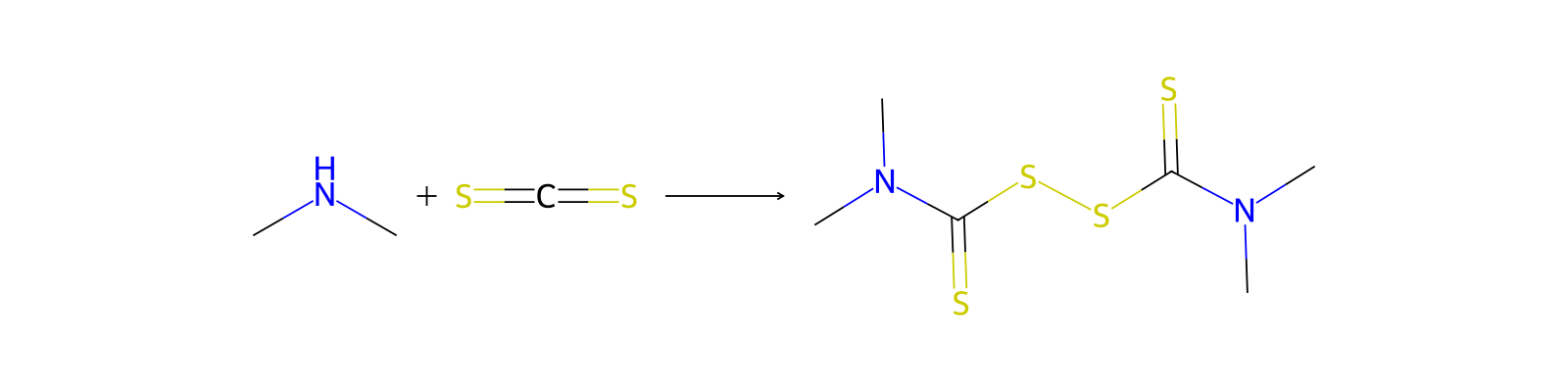
... First prepared by oxidation of dimethylamine salt of dimethyldithiocarbamic acid with iodine in ethanolic solution. ... In USA by passing chlorine gas through solution of sodium dimethyldithiocarbamate. In Canada ... from iron oxide, hydrogen peroxide, sodium hydroxide, dimethylamine, and carbon disulfide.
75% wettable powder, 95% technical powder, ND
Wettable powder; dustable powder; slurry for seed treatment; dry seed treatment; suspension concentrate.
Dispersible powder, eg Arasan 75 and Tersan 75= 75% (Dupont); dust for seed treatment usually 50%; Dusts, water suspensions. Thylate= 65% (Dupont).
Chaperone Rabbit and Deer Repellent: 7% thiram; Deer Ban: 10% thiram; Magic Circle Rabbit Repellent: 20% thiram; Rabbit Rid: 10% thiram; Science Rabbit and Deer Repellent: 20% thiram; TATGO: 22% thiram; Chew-not: 20% thiram; Gustafson 42-5: 42% thiram; Bonide Rabbit and Deer Repellent: 11% thiram.
For more Formulations/Preparations (Complete) data for THIRAM (49 total), please visit the HSDB record page.
Fungicides, Transformation products
Environmental transformation -> Pesticide transformation products (metabolite, successor)
Rubber Product Manufacturing
Thioperoxydicarbonic diamide ([(H2N)C(S)]2S2), N,N,N',N'-tetramethyl-: ACTIVE
The WHO Recommended Classification of Pesticides by Hazard identifies Thiram (technical grade) as Class III: slightly hazardous; Main Use: fungicide.
Developed for fungicidal use. Used ... as spray for control of turf & lawn grass diseases, such as dollar spot & brown patch. Used with low pressure sprinkler, 1 lb/100 gallon of water will treat 6000 sq ft. If pressure of 200 to 300 lbs is available same coverage can be obtained by suspending 1 lb/50 gallons of water.
... Chaperone is the only material presently approved by the EPA as a repellent for deer, mice, and rabbits.
Introduced by EI du Pont de Nemours & Co, Bayer AG and later by other companies. US Patent No 1,972,961 to du Pont; DRP 642,532 to IG Farbenindustrie as trade marks Arasan, Tersan (both to du Pont); Pomarsol (to Bayer AG), Fernasan (ICI Plant Protection Division).
用途殺菌剤, 天然ゴム、合成ゴム用加硫促進剤。
説明Tetramethylthiuram disulfide is a rubber chemieal, an accelerator of vulcanization. It represents the most commonly positive allergen contained in the "thiuram mix". The most frequent occupational categories are the metal industry, homemakers, health services and laboratories, building industries, and shoemakers.
使用Tetramethylthiuram disulfide is used as fungicide; bacteriostat; pesticide; rubber vulcanization accelerator; scabicide; seed disinfectant; animal repellent; insecticide; lube-oil additive; wood preservative; in antiseptic sprays; in the blending of lubrieant oils; used against Botrytis, rusts and downy mildews; seed dressing against "damping off' and verticillium wilt; ethanol antagonist and deterrent in mixtures of the methyl, ethyl, propyl, and butyl derivatives; antioxidant in polyolefin plastics; peptizing agent in polysulphide elastomers; in soaps and rodent repellents; nut, fruit, and mushroom disinfectant.
一般的な説明A liquid solution of a white crystalline solid. Primary hazard is to the environment. Immediate steps should be taken to limit spread to the environment. Easily penetrates the soil to contaminates groundwater and waterways.
純化方法Crystallise thiram (three times) from boiling CHCl3, then recrystallise it from boiling CHCl3 by adding EtOH dropwise to initiate crystallisation, and allow it to cool. Finally it is precipitated from cold CHCl3 by adding EtOH (which retains the monosulfide in solution). [Ferington & Tobolsky J Am Chem Soc 77 4510 1955, Beilstein 4 IV 242.]
定義ChEBI: An organic disulfide that results from the formal oxidative dimerisation of N,N-dimethyldithiocarbamic acid. It is widely used as a fungicidal seed treatment.
ATMOSPHERIC FATE: According to a model of gas/particle partitioning of semivolatile organic compounds in the atmosphere(1), thiram, which has a vapor pressure of 1.72X10⁻⁵ mm Hg at 25 °C(2), will exist in both the vapor and particulate phases in the ambient atmosphere. Vapor-phase thiram is degraded in the atmosphere by reaction with photochemically-produced hydroxyl radicals(SRC); the half-life for this reaction in air is estimated to be 1 hour(SRC), calculated from its rate constant of 3.62X10⁻¹⁰ cu cm/molecule-sec at 25 °C(SRC) that was derived using a structure estimation method(3). Particulate-phase thiram may be removed from the air by wet and dry deposition(SRC).