

基本情報
- 標準SMILES
CCCN=C=O- InChIKey
OQURWGJAWSLGQG-UHFFFAOYSA-N- 分子式
- C4H7NO
- 平均分子量
- 85.1 g/mol
- 単同位体質量
- 85.05276384
概要
N-propyl isocyanate appears as a colorless liquid with a pungent odor. Very toxic by ingestion. May be toxic by skin absorption and inhalation. Insoluble in water but reacts with water to produce a toxic vapor. Used to make other chemicals.
名称と識別子
- 優先名称
- Propyl isocyanate
- IUPAC
- 1-isocyanatopropane
- 現地名
- イソシアン酸 プロピル
- 英語名
- Propyl isocyanate
- 分子式
- C4H7NO
- 分子量
- 85.1
名称と別名
Propyl isocyanate1-Isocyanatopropanen-Propyl isocyanatePROPANE, 1-ISOCYANATO-m-Propyl isocyanateEINECS 203-803-6EW62LG5TQ7NSC 89688UN2482AI3-28281NSC-89688Isocyanic acid n-propyl ester
名称をさらに表示
イソシアン酸 プロピルプロピルイソシアナートイソシアン酸プロピルイソシアン酸n-プロピルイソシアン酸nプロピル1-イソシアナトプロパンIsocyanatopropanen-picWLN: OCN3Desmodur RNPropyl carbimideN-PROPYLCARBIMIDEn-Propylisocyanat
DTXSID5051571OQURWGJAWSLGQG-UHFFFAOYSA-UN 24821IsocyanatopropanemPropyl isocyanate1Propyl isocyanatePropane, 1isocyanatoRefChem:176498
データベース識別子
- CAS
110-78-1- PubChem CID
- 61033
- DTXSID
DTXSID5051571- ChEMBL
CHEMBL441027- UNII
- EW62LG5TQ7
- EC Number
- 203-803-6
- Nikkaji
- J36.792C
物性
構造計算による物性
- XLogP
- 1.9
- 極性表面積
- 29.4 Ų
- 水素結合供与体数
- 0
- 水素結合受容体数
- 2
- 回転可能結合数
- 2
- 重原子数
- 6
- 形式電荷
- 0
- 複雑度
- 63.9
実験および物理化学的性質
Chemical Classes
Toxic Gases & Vapors -> Monoisocyanates
Flammable agents - 3rd degree
SpringerMaterials PropertiesSchoenflies notation
Physical Description
N-propyl isocyanate appears as a colorless liquid with a pungent odor. Very toxic by ingestion. May be toxic by skin absorption and inhalation. Insoluble in water but reacts with water to produce a toxic vapor. Used to make other chemicals.
Colorless liquid with pungent odor; [CAMEO]
物理化学的性質
- 融点
- -30 °C · -30 °C
- 沸点
- 83 · 83-84 °C(lit.)
- 比重(密度)
- 0.908 g/mL · 0.908 g/mL at 25 °C(lit.)
- 屈折率
- 20 · n20/D 1.394(lit.)
- 闪点
- 32 °F · 32 °F
- 貯蔵温度
- Flammables area
- 外見
- 液体
- 色
- クリアイエロー
- 水溶解度
- 激しく反応する
- BRN
- 1098489 · 1098489
- InChI
- InChI=1S/C4H7NO/c1-2-3-5-4-6/h2-3H2,1H3
- InChIKey
- OQURWGJAWSLGQG-UHFFFAOYSA-N
- SMILES
- C(N=C=O)CC
- CAS データベース
- 110 · 110-78-1(CAS DataBase Reference)
- NISTの化学物質情報
- 1 · Propane, 1-isocyanato-(110-78-1)
- EPAの化学物質情報
- 1 · Propane, 1-isocyanato- (110-78-1)
化学的性質
化学的特性clear yellow liquid
安全と法規制
GHS分類
GHS Classification
Danger
H225 (100%): Highly Flammable liquid and vapor [Danger Flammable liquids]
P210, P233, P240, P241, P242, P243, P260, P261, P264, P264+P265, P270, P271, P272, P280, P284, P301+P317, P302+P352, P303+P361+P353, P304+P340, P305+P354+P338, P317, P319, P321, P330, P332+P317, P333+P317, P342+P316, P362+P364, P370+P378, P403, P403+P233, P403+P235, P405, and P501 (click each P-code to see the statement)
Aggregated GHS information provided per 42 reports by companies from 5 notifications to the ECHA C&L Inventory. Each notification may be associated with multiple companies.
危険有害性情報
Hazards IdentificationToxic/poison by inhalation (TIH/PIH)
Regulatory InformationThe New Jersey Worker and Community Right to Know Act requires public and private employers to provide information about hazardous substances at their workplaces. (N.J.S.A. 34:5A-1 et. seq.)
DOT LabelPoison Inhalation Hazard Flammable Liquid
Fire Hazards
Excerpt from ERG Guide 155 [Substances - Toxic and/or Corrosive (Flammable / Water-Sensitive); polymerization hazard]:
· HIGHLY FLAMMABLE: Will be easily ignited by heat, sparks or flames.
Health Hazards
Excerpt from ERG Guide 155 [Substances - Toxic and/or Corrosive (Flammable / Water-Sensitive); polymerization hazard]:
· TOXIC and/or CORROSIVE; inhalation, ingestion or contact (skin, eyes) with vapors, dusts or substance may cause severe injury, burns or death.
Hazards SummaryHighly flammable; May cause burns and death; Reacts with water to slowly produce cyanide vapor; Corrosive gases and flammable hydrogen may be released; [CAMEO]
DOT ID and Guide2482 155P
Reactive GroupIsocyanates and Isothiocyanates
Reactivity AlertsHighly Flammable
Reactivity Profile
Isocyanates and thioisocyanates, such as N-PROPYL ISOCYANATE, are incompatible with many classes of compounds, reacting exothermically to release toxic gases. Reactions with amines, aldehydes, alcohols, alkali metals, ketones, mercaptans, strong oxidizers, hydrides, phenols, and peroxides can cause vigorous releases of heat. Acids and bases initiate polymerization reactions in these materials. Some isocyanates react with water to form amines and liberate carbon dioxide.
DOT Hazard Classification
n-Propyl isocyanate
UN2482
Div 6.1 Poisonous materials (49 eCFR § 173.132)
Div 6.1 Poisonous materials (49 eCFR § 173.132)
PG I: the degree of danger presented by the material is great
Air and Water ReactionsHighly flammable. May react with water slowly to produce a toxic cyanide vapor. Insoluble in water.
安全と保護具
Fire FightingExcerpt from ERG Guide 155 [Substances - Toxic and/or Corrosive (Flammable / Water-Sensitive); polymerization hazard]:
Accidental Release Measures
· CALL 911. Then call emergency response telephone number on shipping paper. If shipping paper not available or no answer, refer to appropriate telephone number listed on the inside back cover.
· ELIMINATE all ignition sources (no smoking, flares, sparks or flames) from immediate area.
First Aid
Excerpt from ERG Guide 155 [Substances - Toxic and/or Corrosive (Flammable / Water-Sensitive); polymerization hazard]:
General First Aid:
Exposure Control and Personal Protection
· Wear positive pressure self-contained breathing apparatus (SCBA).
TIH (Toxic Inhalation Hazard) - Term used to describe gases and volatile liquids that are toxic when inhaled. Some are TIH materials themselves, e.g., chlorine, and some release TIH gases when spilled in water, e.g., chlorosilanes. [ERG 2016].
Nonfire Spill ResponseExcerpt from ERG Guide 155 [Substances - Toxic and/or Corrosive (Flammable / Water-Sensitive); polymerization hazard]:
Isolation and Evacuation
Excerpt from ERG Guide 155 [Substances - Toxic and/or Corrosive (Flammable / Water-Sensitive); polymerization hazard]:
Immediate precautionary measure
Small spill:
Small spill:
Personal Protective Equipment (PPE)Excerpt from ERG Guide 155 [Substances - Toxic and/or Corrosive (Flammable / Water-Sensitive); polymerization hazard]:
Emergency Response Planning Guidelines· Note: Most foams will react with the material and release corrosive/toxic gases.
Acute Exposure Guideline Levels (AEGLs)The compound is currently at the Holding Status AEGLs which have been reviewed by the NAC/AEGL Committee and are on hold due to insufficient data to develop AEGL values.
AEGLs NotesAEGLs Status: Holding
毒性情報
Adverse EffectsDermatotoxin - Skin burns.
安全データ
- F
- 19
- wgk
- 1
- tsca
- TSCA listed
- rtecs
- NR0190000
- ridadr
- UN 2482
- hs_code
- 29291090
- risk_code
- 11-20/21/22-37/38-41-42/43-42-34-26-22-14
- 化審法
- (9)-176
- 消防法
- 危-4-1-II
- hazard_code
- F,Xn,T+
- safety_code
- 23-26-36/37/39-45-38-16
- hazard_class
- 6.1
- packing_group
- I
- Hazard Classifications
- Acute Tox. 4 DermalAcute Tox. 4 InhalationAcute Tox. 4 OralEye Dam. 1Flam. Liq. 2Resp. Sens. 1Skin Irrit. 2Skin Sens. 1STOT SE 3
- ストレージクラス
- 3 - Flammable liquids
化学と産業
用途と製造
UsesUsed to make other chemicals; [CAMEO]
General Manufacturing InformationPropane, 1-isocyanato-: ACTIVE
応用分野
一般的な説明A colorless liquid with a pungent odor. Very toxic by ingestion. May be toxic by skin absorption and inhalation. Insoluble in water but reacts with water to produce a toxic vapor. Flash point 30°F. Used to make other chemicals.
上流・下流製品情報
上流原料
下流製品
サプライヤー50 社
国药集团化学试剂有限公司86-21-63210123 · [email protected]
梯希爱(上海)化成工业发展有限公司021-67121386 · [email protected]
Hebei Chuanghai Biotechnology Co., Ltd+86-17732866630 · [email protected]
湖北成丰化工有限公司13125175253 · [email protected]
杭州品高化工有限公司0571-87658025 · [email protected]
Dayang Chem (Hangzhou) Co.,Ltd.+86-0571-88938639 17705817739 · [email protected]
河北枫嘉新材料科技有限公司+86-0311-87836622 +86-18712993135 · [email protected]
江苏普乐司生物科技有限公司0513-66017706 18551496367 · [email protected]
天津中信凯泰化工有限公司022-66880623 · [email protected]
武汉凯威斯科技有限公司86-027-67849912 · [email protected]
广东云星生物技术有限公司0751-18902340975/189023400307 18902340307 · [email protected]
上海瀚鸿科技股份有限公司021-54306202 13764082696 · [email protected]
新沂市永诚化工有限公司15952286050 · [email protected]
山东西亚化学有限公司13355009207 13355009207 · [email protected]
玛雅试剂+86 (573) 82222445 (0)18006601000 452520369 · [email protected]
同创医药(苏州)有限公司0512-63263366 18912765016 · [email protected]
赛默飞世尔科技(中国)有限公司800-810-5118 · [email protected]
TOKYO CHEMICAL INDUSTRY CO., LTD.03-36680489 · [email protected]
上海丽康新材料有限公司+86-16631818819 +86-17736933208 · [email protected]
PT CHEM GROUP LIMITED+86-85511178; +86-85511178 · [email protected]
上海鑫圭生物科技有限公司15121041756 · [email protected]
陕西缔都医药化工有限公司029-81024372 17792795018 · [email protected]
Changzhou Fullone Chemical Co., Ltd.+86-13328197671 +86-13861172460 · [email protected]
九鼎化学(上海)科技有限公司4009209199 · [email protected]
广东翁江化学试剂有限公司0751-2886766 13927870850 · [email protected]
上海玻尔化学试剂有限公司19102157732 · [email protected]
上海阿拉丁生化科技股份有限公司6206333 13167063860 · [email protected]
启源(广东)医药化工有限公司18026564465 · [email protected]
南京艾比克斯生化科技有限公司025-87193546 18652950785 · [email protected]
南京熙朗化工产品有限公司18936048580 · [email protected]
南通市苏北化工原料有限公司0513-85290972 18762756250 · [email protected]
上海源叶生物科技有限公司13636370518 · [email protected]
上海麦克林生化科技股份有限公司50706066 15221275939 · [email protected]
武汉克米克生物医药技术有限公司027-13163388153 13163388153 · [email protected]
泰安市嘉叶生物科技有限公司15318151873;13127280945 · [email protected]
上海贤鼎生物科技有限公司021-021-52271985 17721149837 · [email protected]
山东英朗化工有限公司15763463371 15265310975 · [email protected]
盼得(上海)国际贸易有限公司80159919 18662931292 · [email protected]
Shaanxi Didu New Materials Co. Ltd+86-86-17392712779 +86-13289823923 · [email protected]
江苏艾康生物医药研发有限公司025-58851090 13913916777 · [email protected]
厦门盈融达化工有限公司+86-0592-6210733 · [email protected]
career henan chemical co+86-0371-86658258 · [email protected]
艾览(上海)化工科技有限公司400-668-9898 · [email protected]
天津中信凯泰化工有限公司86-22-66880623 +8618622897568 · [email protected]
湖北中隆康盛精细化工有限公司027-027-82752821 18186694582 · [email protected]
XIAMEN AMITY INDUSTRY AND TRADE CO., LTD.+8618950047208 · [email protected]
上海迈瑞尔生化科技有限公司18621169109 · [email protected]
武汉吉鑫益邦生物科技有限公司59768661 13297943853 · [email protected]
SUZHOU SENFEIDA CHEMICAL CO.,LTD+86-0512-83500002 +86-15195660023 · [email protected]
上海宝杨宝欣生物科技有限公司021-56698539 19921169802 · [email protected]
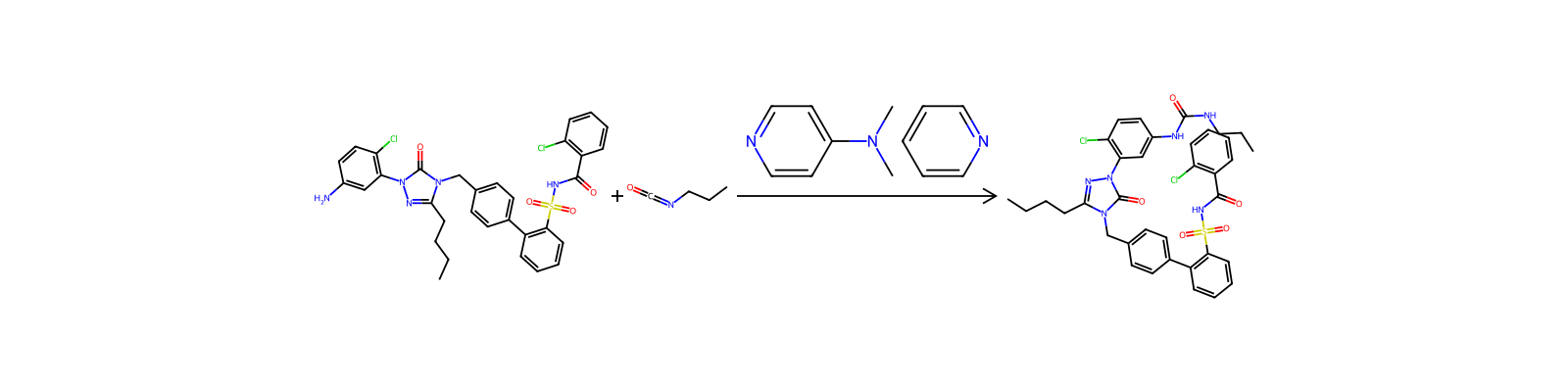
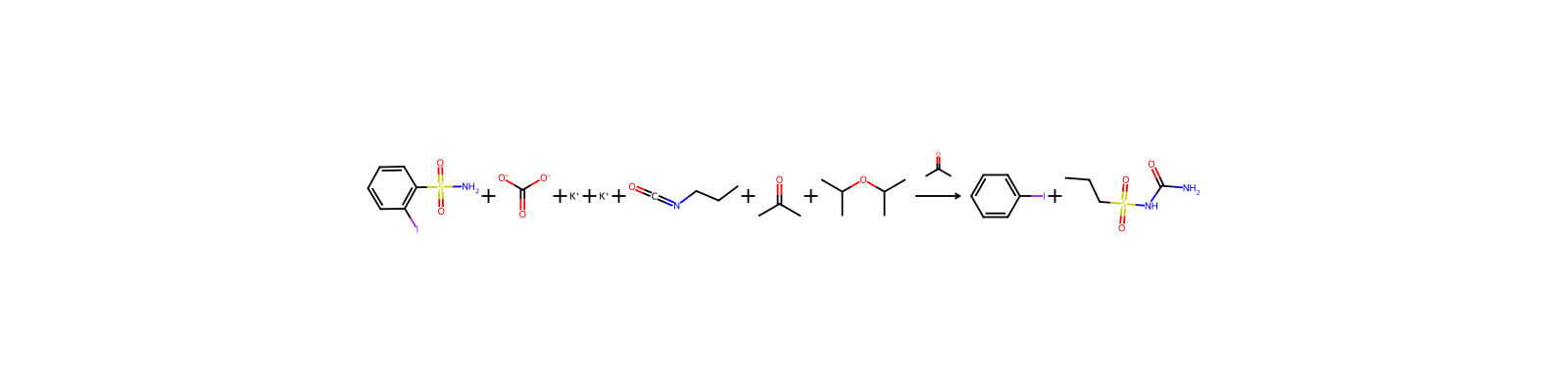
関連反応
263 件



関連ノート
読み込み中…