
1,2-ジアミノプロパン
Propylenediamine
データを補完しています。しばらくしてからページを更新すると最新の内容を表示できます
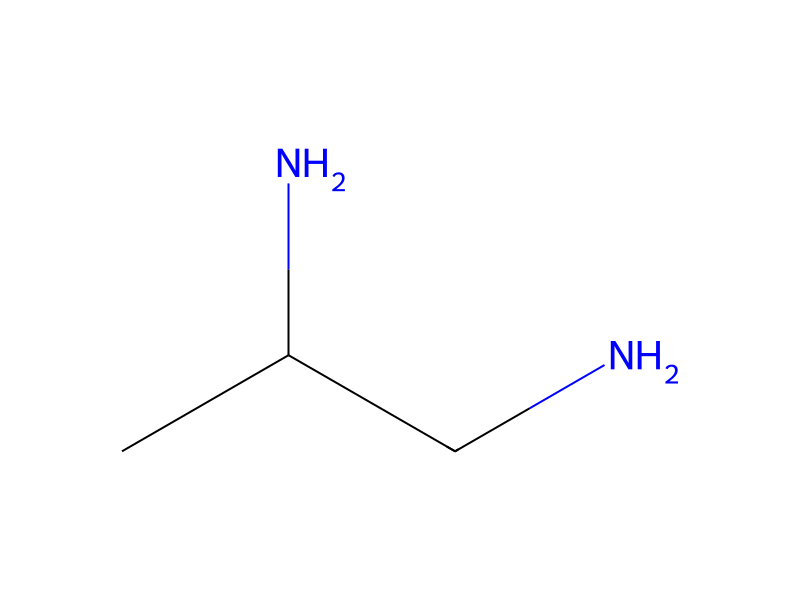
基本情報
- CAS
78-90-0- 標準SMILES
CC(N)CN- InChIKey
AOHJOMMDDJHIJH-UHFFFAOYSA-N- 分子式
- C3H10N2
- 平均分子量
- 74.13 g/mol
- 単同位体質量
- 74.08439832
概要
1,2-propylenediamine appears as a colorless liquid with an ammonia-like odor. Strongly irritates skin and tissue.
名称と識別子
- 優先名称
- Propylenediamine
- IUPAC
- propane-1,2-diamine
- 現地名
- 1,2-ジアミノプロパン
- 英語名
- 1,2-Diaminopropane
- 分子式
- C3H10N2
- 分子量
- 74.12
名称と別名
1,2-DIAMINOPROPANEPropylenediamine78-90-01,2-Propanediamine2,3-DiaminopropaneDTXSID40217612A4P522UGODL-1,2-PropanediamineNSC-1757311-Methyl-1,2-diaminoethaneDTXCID701761CHEBI:30630
名称をさらに表示
1,2-ジアミノプロパン1,2-プロパンジアミン1,2-プロピレンジアミン1,2ジアミノプロパンプロピレンジアミン1,2‐プロパンジアミン1,2-ジアミノプロパン標準液DIAMINOPROPANEPROPANEDIAMINE12APrac 1,2-Diaminopropane-d6NSC 175731
RefChem:411509201-155-9propane-1,2-diamine1,2-PropylenediaminePropylene diamine1-methylethylenediamine10424-38-11,2 Diaminopropane
データベース識別子
- CAS
78-90-0- PubChem CID
- 6567
- DTXSID
DTXSID4021761- ChEMBL
CHEMBL1319459- ChEBI
CHEBI:30630- UNII
- 2A4P522UGO
- EC Number
- 201-155-9
- Nikkaji
- J4.225K
物性
構造計算による物性補完中
- XLogP
- -1.2
- 極性表面積
- 52 Ų
- 水素結合供与体数
- 2
- 水素結合受容体数
- 2
- 回転可能結合数
- 1
- 重原子数
- 5
- 形式電荷
- 0
- 複雑度
- 20.9
実験および物理化学的性質
Chemical Classes
Nitrogen Compounds -> Amines, Aliphatic
Corrosives
LogP-1.8
Density
0.8584 (NTP, 1992) - Less dense than water; will float
Relative density (water = 1): 0.9
0.9 @25 °C
Solubility
Very soluble (NTP, 1992)
Solubility in water: miscible
Flash Point
92 °F (NFPA, 2010)
33 °C c.c.
Boiling Point
248.9 °F at 760 mmHg (NTP, 1992)
119 °C
118.9 °C @760 [mm Hg]
Melting Point
-35 °F (NTP, 1992)
-12 °C
Vapor Density
2.6 (NTP, 1992) - Heavier than air; will sink (Relative to Air)
Relative vapor density (air = 1): 2.6
Vapor Pressure
9.0 [mmHg]
Vapor pressure, kPa at 20 °C: 1.2
安全と法規制
安全情報は参考情報です。供給元の安全データシート(SDS)、適用法令、専門家による評価に代わるものではありません。
GHS分類
GHS Classification
Danger
H226: Flammable liquid and vapor [Warning Flammable liquids]
P210, P233, P240, P241, P242, P243, P260, P264, P270, P280, P301+P317, P301+P330+P331, P302+P352, P302+P361+P354, P303+P361+P353, P304+P340, P305+P354+P338, P316, P317, P321, P330, P362+P364, P363, P370+P378, P403+P235, P405, and P501 (click each P-code to see the statement)
Danger
H226 (100%): Flammable liquid and vapor [Warning Flammable liquids]
P210, P233, P240, P241, P242, P243, P260, P261, P262, P264, P264+P265, P270, P271, P272, P280, P284, P301+P317, P301+P330+P331, P302+P352, P302+P361+P354, P303+P361+P353, P304+P340, P305+P354+P338, P316, P317, P321, P330, P333+P317, P342+P316, P361+P364, P362+P364, P363, P370+P378, P403, P403+P235, P405, and P501 (click each P-code to see the statement)
危険有害性情報
Regulatory Information
Chemical: 1,2-Propanediamine
Status: Active Update: 01-02-2023 https://echa.europa.eu/registration-dossier/-/registered-dossier/2163
1,2-Diaminopropane: Does not have an individual approval but may be used under an appropriate group standard
The New Jersey Worker and Community Right to Know Act requires public and private employers to provide information about hazardous substances at their workplaces. (N.J.S.A. 34:5A-1 et. seq.)
DOT LabelCorrosive Flammable Liquid
Fire Hazards
Excerpt from ERG Guide 132 [Flammable Liquids - Corrosive]:
· Flammable/combustible material.
Flammable. Gives off irritating or toxic fumes (or gases) in a fire. Above 33 °C explosive vapour/air mixtures may be formed.
Health Hazards
Excerpt from ERG Guide 132 [Flammable Liquids - Corrosive]:
· May cause toxic effects if inhaled or ingested.
Hazards Summary
化学と産業
用途と製造
Uses
Used with cupric sulfate as reagent for mercury; [Merck Index] Used to make medicines, dyes, and rubber accelerators; Also used in electroplating and as analytical reagent; [NTP]
Electroplating [Category: Plate]
General Manufacturing Information1,2-Propanediamine: ACTIVE
応用分野
解説CH3CH(NH2)CH2NH2.別名プロピレンジアミン.錯体の塩基性配位子としては,略記号pnが使われる.
用途有機合成原料(イミダゾール化合物)。
用途農薬合成の中間体 (ULLMANNS(E) (6TH, 2003))
説明1,2-Diaminopropane is a colorless liquid that is very hygroscopic and miscible with water and most organic solvents. It forms azeotropes with butanol, 2-methylpropanol, and toluene and has a strong ammoniacal odor.
使用1,2-Diaminopropane was used as model precursor in the electron induced deposition of amorphous carbon nitride films.
一般的な説明A colorless liquid with an ammonia-like odor. Flash point 160°F. Density 0.87 g / cm3. Boiling point 243°F. Strongly irritates skin and tissue.
調製方法
純化方法Purify the diamine by azeotropic distillation with toluene. Then distil it. Store it in a CO2 free atmosphere. [Horton et al. Anal Chem 27 269 1955, Beilstein 4 IV 1255.]
上流・下流製品情報
上流原料
下流製品
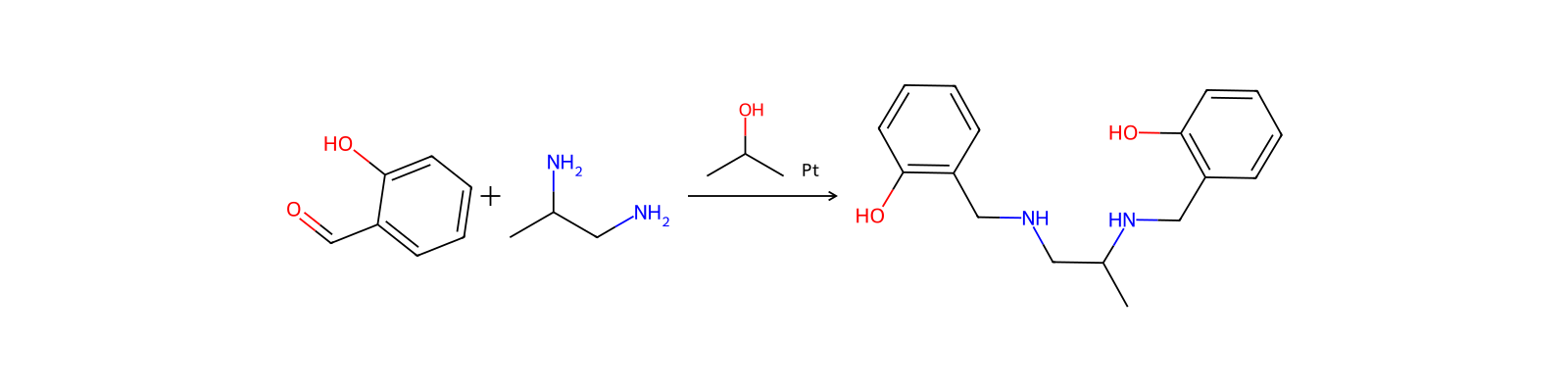
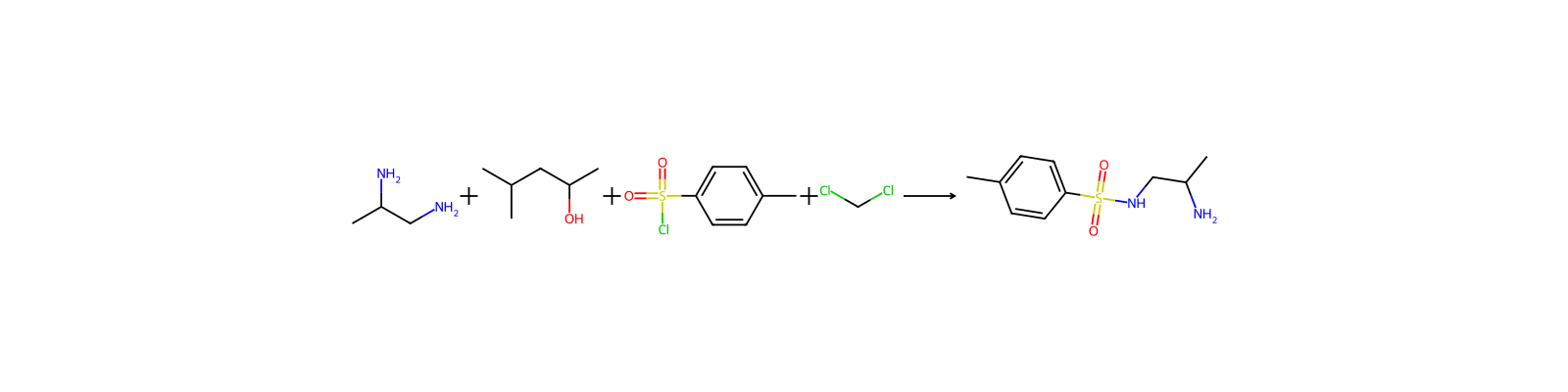
関連反応
93 件




化合物ノート
読み込み中…