ホームMCPワークベンチSkills
ホームワークベンチ通知マイページ
llms.txt · MCPガイドプライバシーポリシー · 利用規約 · サポートv1.8.0
  1. ホーム
  2. /化合物

フタル酸無水物

Phthalic Anhydride
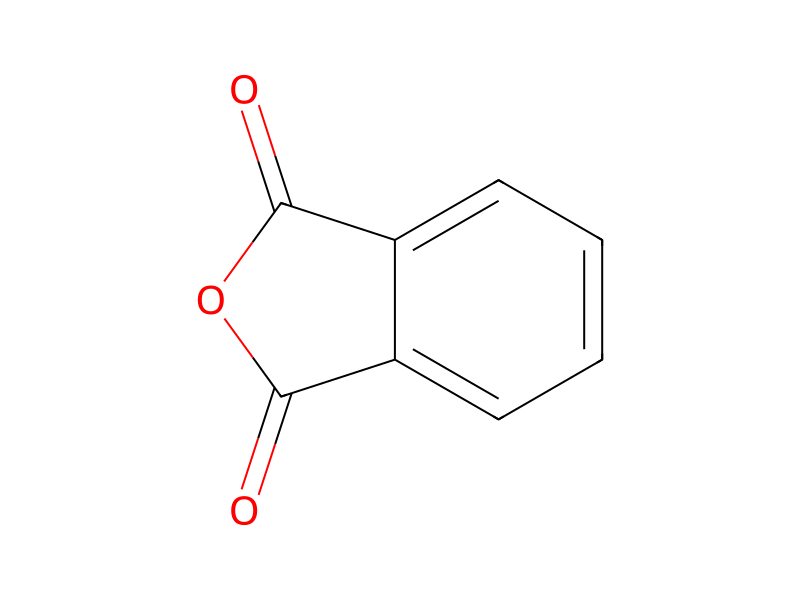
HCID 6811
ノートを作成反応を作成見積依頼を出す
印刷プレビュー
基本情報概要名称と識別子物性安全と法規制化学と産業関連反応化合物ノート
部分構造検索類似構造を探す

基本情報

CAS
85-44-9
標準SMILES
O=C1OC(=O)c2ccccc21
InChIKey
LGRFSURHDFAFJT-UHFFFAOYSA-N
分子式
C8H4O3
平均分子量
148.11 g/mol
単同位体質量
148.01604399

概要

Phthalic anhydride appears as a colorless to white lustrous solid in the form of needles with a mild distinctive odor. Moderately toxic by inhalation or ingestion and a skin irritant. Melting point 64 °F Flash point 305 °F. Forms a corrosive solution when mixed with water. Used in the manufacture of materials such as artificial resins.

名称と識別子

優先名称
Phthalic Anhydride
IUPAC
2-benzofuran-1,3-dione
現地名
フタル酸無水物
英語名
Phthalic anhydride
分子式
C8H4O3
分子量
148.12

名称と別名

PHTHALIC ANHYDRIDE85-44-91,3-Isobenzofurandione2-Benzofuran-1,3-dionePhthalandioneRetarder esen1,3-Dioxophthalan1,3-PhthalandionePhthalic acid anhydrideRetarder AKRetarder PDo-Phthalic acid anhydride
名称をさらに表示
フタル酸無水物水フタル酸無水フタル酸イソベンゾフラン-1,3-ジオンレターダーAKフタル酸無水物 STANDARDレターダーAK STANDARDフタル酸無水物 Standard, 1000 µg/mL in AcCNレターダーAK Standard, 1000 µg/mL in Hexane:Acetone (60:40)1,3-イソベンゾフランジオン1,3-ジヒドロイソベンゾフラン-1,3-ジオンレタルデルAK1,3-ジヒドロ-2-ベンゾフラン-1,3-ジオンレタルデルPDレタルデルESENフタランジオン1,2-ベンゼンジカルボン酸無水物Isobenzofuran-1,3-dionephthalicPTHALIC ANHYDRIDEPHATHALIC ANHYDRIDEO-PHTHALIC ANHYDRIDE
PhthalsaeureanhydridESENVulkalent B/CAnidride ftalicaFtalowy bezwodnikFtaalzuuranhydrideAnhydride phtaliqueFtalanhydrid

データベース識別子

CAS
85-44-9
PubChem CID
6811
DTXSID
DTXSID2021159
ChEMBL
CHEMBL1371297
ChEBI
CHEBI:36605
UNII
UVL263I5BJ
EC Number
201-607-5
Nikkaji
J4.919K

物性

構造計算による物性

XLogP
1.3
極性表面積
43.4 Ų
水素結合供与体数
0
水素結合受容体数
3
回転可能結合数
0
重原子数
11
形式電荷
0
複雑度
187

実験および物理化学的性質

Chemical Classes · 3 件

Hazardous Air Pollutants (HAPs)

Corrosives

Phthalate

PolymersPlastics & Rubber -> Acid Anhydrides, Cyclic
SpringerMaterials PropertiesBoiling point
PesticidesPesticide -> EPA IRIS
LogP · 3 件

log Kow = 1.60

1.6

0.7

Odor · 2 件

Mild

Characteristic, acrid odor

Density · 6 件

1.2 at 275 °F 1.53 at 20 °C (solid) (USCG, 1999) - Denser than water; will sink

1.20 (molten); 1.53 (flake)

1.53 g/cm³

1.53 at 68 °F

1.527 @ 4°C

1.53 (Flake) 1.20 (Molten)

Viscosity1.19 mPa.s at 132 °C; 1.125 mPa.s at 155 °C
Color/Form · 4 件

White, lustrous needles

Colorless needles; monoclinic or rhombic prisms

White needles from alcohol and benzene

White solid (flake) or a clear colorless liquid (molten)

安全と法規制

安全情報は参考情報です。供給元の安全データシート(SDS)、適用法令、専門家による評価に代わるものではありません。

GHS分類

GHS Classification · 6 件

Danger

H302: Harmful if swallowed [Warning Acute toxicity, oral]

P233, P260, P261, P264, P264+P265, P270, P271, P272, P280, P284, P301+P317, P302+P352, P304+P340, P305+P354+P338, P317, P319, P321, P330, P332+P317, P333+P317, P342+P316, P362+P364, P403, P403+P233, P405, and P501 (click each P-code to see the statement)

This chemical does not meet GHS hazard criteria for 0.4% (14 of 3919) of reports.

Danger

H302 (99.6%): Harmful if swallowed [Warning Acute toxicity, oral]

危険有害性情報

Regulatory Information · 6 件

Chemical: 1,3-Isobenzofurandione

Hazard Traits - Dermatotoxicity; Respiratory Toxicity

1,3-Isobenzofurandione is listed on the EPA's Chemical Data Reporting (CDR) system. Manufacturers and importers of 1,3-Isobenzofurandione are required to report information about their production and use of this chemical to the EPA under the Toxic Substances Control Act (TSCA). (40 eCFR Part 711)

REACH registered substance: Phthalic anhydride (EC: 201-607-5)

Phthalic anhydride: Does not have an individual approval but may be used under an appropriate group standard

The New Jersey Worker and Community Right to Know Act requires public and private employers to provide information about hazardous substances at their workplaces. (N.J.S.A. 34:5A-1 et. seq.)

Other Safety InformationIMAP assessments - 1,3-Isobenzofurandione: Human health tier II assessment
DOT LabelCorrosive
Fire Hazards · 3 件

Excerpt from ERG Guide 156 [Substances - Toxic and/or Corrosive (Combustible / Water-Sensitive)]:

· Combustible material: may burn but does not ignite readily.

Combustible. Finely dispersed particles form explosive mixtures in air.

Fire Potential · 2 件

化学と産業

薬理情報

Biological Half-Life · 1 件

The excretion of phthalic anhydride in humans has been investigated in a study where urine samples were collected from nine subjects occupationally exposed to phthalic anhydride, primarily by the inhalation route... Phthalic anhydride is converted to phthalic acid in the presence of water... The concentration of phthalic acid in the urine was found to increase from the pre-shift level to a maximum in the immediate postshift or evening urine sample. The concentration then decreased, with a half-life of approx. 14 hours (no further information on half-life estimation). No evidence was seen of conjugate formation...

Metabolism/Metabolites · 1 件

The excretion of phthalic anhydride in humans has been investigated in a study where urine samples were collected from nine subjects occupationally exposed to phthalic anhydride, primarily by the inhalation route. Samples were taken pre-shift (7:00 hours) on-shift, post-shift (15:00 hours) and in the evening and the next morning after work day. Airborne phthalic anhydride levels ranged from 0.03 to 10.5 mg/cu m (mean value, MMAD not stated), determined from personal air samples from the worker breathing zone. Urine was also taken from a control group of 22 persons not occupational exposed to phthalic anhydride. Phthalic anhydride is converted to phthalic acid in the presence of water. Phthalic acid concentration in the urine was measured after esterification with methanol by electron capture gas chromatography, and expressed in terms of urinary creatinine. Urine samples were also subjected to acid, alkaline, and enzymatic hydrolysis by beta-glucuronidase or aryl sulphatase. At low atmospheric phthalic anhydride concentrations (mean +/- SD; 0.15 +/- 0.15 mg/cu m, range 0.03 - 0.33 mg/cu m, n=5) the excretion of phthalic acid increased from the pre-shift (7:00 hours) concentration to the post-shift (15:00 hours) concentration and decreased then until the pre-shift concentration was again reached. The pre-shift phthalic acid concentration in the urine (0.49 +/- 0.15 umol/mmol creatinine) were not significantly different from those of occupationally unexposed people (0.34 +/- 0.25 mol/mmol creatinine, range 0.02-0.089 umol/mmol creatinine, n=22). Exposure to higher concentrations of phthalic anhydride in air (1.63 +/- 0.13 mg/cu m, n=2) resulted in a body load of phthalic acid which was not totally cleared overnight, and with pre-shift phthalic acid concentrations in the urine with a mean value three times the mean control value (1.02 +/- 0.25 umol/mmol creatinine). One worker exposed to high concentration of phthalic anhydride (10.2 mg/cu m) had a pre-shift urinary concentration of 4.8 umol of phthalic acid /mmol creatinine; approximately 14 times that of the control group. The concentration of phthalic acid in the urine was found to increase from the pre-shift level to a maximum in the immediate postshift or evening urine sample. The concentration then decreased, with a half-life of approx. 14 hours (no further information on half-life estimation). No evidence was seen of conjugate formation. Thus, workers occupationally exposed to atmospheric phthalic anhydride absorbed the substance with some being excreted in the urine as unconjugated phthalic acid.

関連反応

1,309 件
反応記録を作成
HRID 5444 の反応式
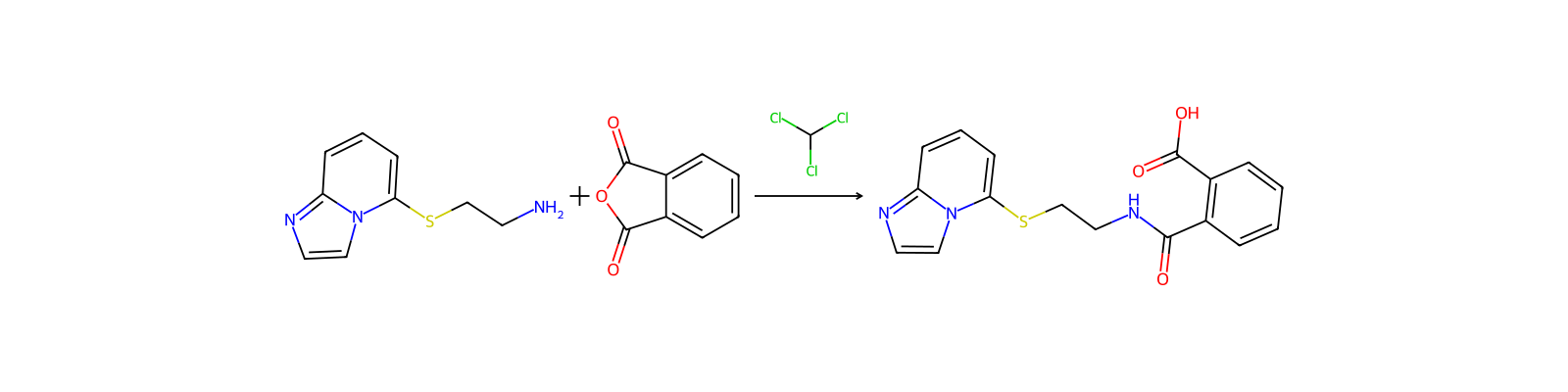
HRID 5444反応物としてuspto-grants-1993_09
HRID 15838 の反応式
HRID 15838反応物としてuspto-grants-2010_06
HRID 18999 の反応式
HRID 18999反応物としてuspto-grants-2010_06
HRID 19726 の反応式
HRID 19726反応物としてuspto-grants-2010_06
HRID 20904 の反応式
HRID 20904反応物としてuspto-grants-2010_06
HRID 25617 の反応式
HRID 25617反応物としてuspto-grants-2005_02
HRID 25619 の反応式
HRID 25619反応物としてuspto-grants-2005_02
HRID 26364 の反応式
HRID 26364反応物としてuspto-grants-1979_04
1 / 164 ページ

化合物ノート

読み込み中…

このページの内容基本情報概要名称と識別子物性安全と法規制化学と産業関連反応化合物ノート
その他の操作
ノートを作成反応を作成見積依頼を出す
Solubility · 6 件

Decomposes (NTP, 1992)

In water, 6,000 mg/L at 25 °C

In water, 6,200 mg/L at 26 °C; 5,964 mg/L at room temperature

In water, 6,200 to 6,400 mg/L at 20-25 °C

In water, 16,400 mg/L including rapid hydrolysis to phthalic acid

For more Solubility (Complete) data for PHTHALIC ANHYDRIDE (7 total), please visit the HSDB record page.

Flash Point · 6 件

305 °F (NTP, 1992)

305 °F (152 °C) (Closed cup)

329 °F (Open cup); 305 °F (Closed cup)

152 °C c.c.

305 °F

305 °F

Boiling Point · 6 件

563 °F at 760 mmHg (sublimes) (NTP, 1992)

285.3 °C

Sublimes below the boiling point

284 °C (sublimes)

563 °F

295 °C @760 [mm Hg]

物理化学的性質

融点
131 · 131-134 °C(lit.)
沸点
284 °C · 284 °C(lit.)
比重(密度)
1 · 1,53 g/cm3
蒸気密度
5.1 · 5.1 (vs air)
蒸気圧
0.01 mm · <0.01 mm Hg ( 20 °C)
屈折率
1.45 · 1.4500 (estimate)
闪点
152 °C · 152 °C
貯蔵温度
30 °C · Store below +30°C.
溶解性
6 g/l · 6g/l(遅分解)
外見
薄片状の結晶
酸解離定数(Pka)
2.97 · 2.97[at 20 ℃]
色
白い
PH
2 · 2 (6g/l, H2O, 20℃)
臭い (Odor)
特徴的な窒息臭
爆発限界(explosive limit)
1.7 · 1.7-10.5%(V)
水溶解度
6 g/L · 6g/L(20℃)
比熱容量
1.08 J/ · Cp(crystal): 1.08 J/(g·K), at 25℃
Merck
14 · 14,7372
BRN
118515 · 118515
Henry's Law Constant
6.29 at · 6.29 at 20 °C (approximate - calculated from water solubility and vapor pressure)
安定性
安定。可燃性。強酸化剤、強塩基、湿気、強酸とは相容れない。粉塵は空気と爆発性混合物を形成する可能性があります。
InChI
1S/C8H4O3/c9-7-5-3-1-2-4-6(5)8(10)11-7/h1-4H
InChIKey
LGRFSURHDFAFJT-UHFFFAOYSA-N
SMILES
O=C1OC(=O)c2ccccc12
LogP
2.07 at · 2.07 at 20℃
CAS データベース
85 · 85-44-9(CAS DataBase Reference)
NISTの化学物質情報
Phthalic anhydride(85-44-9)
EPAの化学物質情報
Phthalic anhydride (85-44-9)

化学的性質

化学的特性Phthalic Anhydride is moderately flammable, white solid (flake) or a clear, colorless, mobile liquid (molten) Characteristic, acrid, choking odor. It is very slightly soluble in H2O, soluble in alcohol, and slightly soluble in ether.

化学性质多塩基酸の一つで,アルキド樹脂の合成に用いられる。

Combustible solid

Combustible when exposed to heat or flame.

Health Hazards · 2 件

Solid irritates skin and eyes, causing coughing and sneezing. Liquid causes severe thermal burns. (USCG, 1999)

· TOXIC and/or CORROSIVE; inhalation, ingestion or contact (skin, eyes) with vapors, dusts or substance may cause severe injury, burns or death.

Hazards Summary · 2 件

Exposure to phthalic anhydride may occur during its use as a chemical intermediate in the plastics industry. The acute (short-term) effects from exposure to phthalic anhydride in humans consists of irritation to the eyes, respiratory tract, and skin, but no permanent injury is observed. Chronic (long-term) effects observed in workers exposed to phthalic anhydride included conjunctivitis, rhinitis, rhinoconjunctivitis, bronchitis, and irritation of the skin and mucous membranes of the respiratory tract. Animal studies indicate that chronic exposure to phthalic anhydride vapor causes congestion, irritation, and injury to lung cells. No studies are available on the reproductive, developmental, or carcinogenic effects of phthalic anhydride in humans. EPA has not classified phthalic anhydride for carcinogenicity.

Occupational asthma reported in plastic resin production workers; [Malo] Solid form causes first degree burns on short exposure; [CHRIS] Phthalic anhydride is a skin irritant. [Quick CPC] Workers exhibiting dermal or respiratory symptoms (e.g., rhinitis) may benefit from early intervention to reduce or eliminate further exposure. . . . A number of human studies found that phthalic anhydride exposure can cause or is associated with sensitization, elevated IgE and IgG, occupational asthma (immediate, late or both), rhinitis, conjunctivitis, chronic bronchitis, respiratory irritation, and contact urticaria. It may also cause allergic contact dermatitis. [ACGIH] See ACID ANHYDRIDES.

DOT ID and Guide · 2 件

2214 156

2214 156

Reactive GroupAnhydrides
Special Reports · 2 件

European Chemicals Bureau; IUCLID Dataset, Phthalic anhydride (CAS No. 85-44-9) (2000 CD-ROM edition). Description of information on usage patterns, toxicology, and ecological effects submitted by industry to the European Union.[Available from, as of August 22, 2006: http://esis.jrc.ec.europa.eu/]

DHEW/NCI; Bioassay of Phthalic Anhydride for Possible Carcinogenicity (1979) Technical Report Series No. 159 (DHEW Pub No. (NIH) 79-1715)[Available from, as of April 4, 2003: http://ntp.niehs.nih.gov/ntp/htdocs/LT_rpts/tr159.pdf]

RCRA Requirements · 1 件

U190; As stipulated in 40 CFR 261.33, when phthalic anhydride, as a commercial chemical product or manufacturing chemical intermediate or an off-specification commercial chemical product or a manufacturing chemical intermediate, becomes a waste, it must be managed according to Federal and/or State hazardous waste regulations. Also defined as a hazardous waste is any residue, contaminated soil, water, or other debris resulting from the cleanup of a spill, into water or on dry land, of this waste. Generators of small quantities of this waste may qualify for partial exclusion from hazardous waste regulations (40 CFR 261.5).

OSHA StandardsPermissible Exposure Limit: Table Z-1 8-hr Time Weighted Avg: 2 ppm (12 mg/cu m).

安全と保護具

Fire Fighting · 2 件

Excerpt from ERG Guide 156 [Substances - Toxic and/or Corrosive (Combustible / Water-Sensitive)]:

Use water spray, foam, dry powder, carbon dioxide.

First Aid Measures · 4 件

Fresh air, rest. Refer for medical attention.

Wear protective gloves when administering first aid. Remove contaminated clothes. Rinse skin with plenty of water or shower for at least 15 minutes. Refer for medical attention .

First rinse with plenty of water for several minutes (remove contact lenses if easily possible), then refer for medical attention.

Rinse mouth. Do NOT induce vomiting. Give one or two glasses of water to drink. Refer for medical attention .

Accidental Release Measures · 2 件

· CALL 911. Then call emergency response telephone number on shipping paper. If shipping paper not available or no answer, refer to appropriate telephone number listed on the inside back cover.

· ELIMINATE all ignition sources (no smoking, flares, sparks or flames) from immediate area.

First Aid · 3 件

EYES: First check the victim for contact lenses and remove if present. Flush victim's eyes with water or normal saline solution for 20 to 30 minutes while simultaneously calling a hospital or poison control center. Do not put any ointments, oils, or medication in the victim's eyes without specific instructions from a physician. IMMEDIATELY transport the victim after flushing eyes to a hospital even if no symptoms (such as redness or irritation) develop.

General First Aid:

(General first aid procedures)

Safe StorageSeparated from combustible substances, reducing agents, strong oxidants, strong bases, strong acids and food and feedstuffs. See Chemical Dangers. Ventilation along the floor. Dry. Well closed. Store only in original container.
Firefighting HazardsA harmful concentration of airborne particles can be reached quickly when dispersed, especially if powdered.
Exposure Control and Personal Protection· Wear positive pressure self-contained breathing apparatus (SCBA).
Fire Fighting Procedures · 3 件

Suitable extinguishing media: Use water spray, alcohol-resistant foam, dry chemical or carbon dioxide.

Advice for firefighters: Wear self-contained breathing apparatus for firefighting if necessary.

If material on fire or involved in fire: Use water in flooding quantities as fog. Use "alcohol" foam, dry chemical or carbon dioxide. Cool all affected containers with flooding quantities of water. Apply water from as far a distance as possible. Keep run-off water out of sewers and water sources.

Storage Conditions · 4 件

Chemical stability: Stable under recommended storage conditions.

Keep container tightly closed in a dry and well-ventilated place.

Separated from combustible ... substances ... food and feedstuffs ... Ventilation along the floor ... Well closed.

Store in a cool, dry, well-ventilated location. Separate from acids, alkalies, oxidizing materials, reducing agents, and moisture.

Cleanup Methods · 5 件

Personal precautions, protective equipment and emergency procedures: Use personal protective equipment. Avoid dust formation. Avoid breathing vapors, mist or gas. Ensure adequate ventilation. Evacuate personnel to safe areas. Avoid breathing dust.

Environmental precautions: Prevent further leakage or spillage if safe to do so. Do not let product enter drains. Discharge into the environment must be avoided.

Methods and materials for containment and cleaning up: Pick up and arrange disposal without creating dust. Sweep up and shovel. Keep in suitable, closed containers for disposal.

1. Ventilate area of spill. 2. For small quantities, sweep onto paper or other suitable material, place in an appropriate container & burn in a safe place (such as a fume hood). Large quantities may be reclaimed; however, if this is not practical, dissolve in a flammable solvent (such as alcohol) & atomize in a suitable combustion chamber equipped with an appropriate effluent gas cleaning device. Liquid containing phthalic anhydride should be absorbed in vermiculite, dry sand, earth, or a similar material for disposal in a secure sanitary landfill.

For more Cleanup Methods (Complete) data for PHTHALIC ANHYDRIDE (9 total), please visit the HSDB record page.

Nonfire Spill ResponseExcerpt from ERG Guide 156 [Substances - Toxic and/or Corrosive (Combustible / Water-Sensitive)]:
Disposal Methods · 5 件

Generators of waste (equal to or greater than 100 kg/mo) containing this contaminant, EPA hazardous waste number U190, must conform with USEPA regulations in storage, transportation, treatment and disposal of waste.

Offer surpls and non-recyclable solutions to a licensed disposal company. Contact a licensed professional waste disposal service to dispose of this material. Dissolve or mix the material with a combustible solvent and burn in a chemical incinerator equipped with an afterburner and scrubber.

Phthalic anhydride is a waste chemical stream constituent which may be subjected to ultimate disposal by controlled incineration.

A good candidate for rotary kiln incineration at a temperature range of 820 to 1,600 °C and residence times of seconds for liquids and gases, and hours for solids. A good candidate for fluidized bed incineration at a temperature range of 450 to 980 °C and residence times of seconds for liquids and gases, and longer for solids.

The following wastewater treatment technologies have been investigated for phthalic acid: Concentration process: Biological Treatment. /Phthalic acid/

毒性情報

Target Organs · 2 件

Respiratory

Eyes, skin, respiratory system, liver, kidneys

Ecotoxicity Values · 5 件

LC50; Species: Leuciscus idus (orfe); Conditions: static; Concentration: 313 mg/L for 48 hr

EC50; Species: Pseudokirchneriella subcapitata (Green algae); Conditions: freshwater; static; Concentration: 41400 ug/L (95% confidence limit: 0 to 109100 ug/L) for 96 hr; Effect: population, biomass /active ingredient/

EC50; Species: Pseudokirchneriella subcapitata (Green algae); Conditions: freshwater; static; Concentration: 78530 ug/L (95% confidence limit: 0 to 1353330 ug/L) for 96 hr; Effect: population, biomass /active ingredient/

EC50; Species: Pseudokirchneriella subcapitata (Green algae); Conditions: freshwater; static; Concentration: 147 ug/L (95% confidence limit: 60 to 350 ug/L) for 96 hr; Effect: population, biomass /active ingredient/

For more Ecotoxicity Values (Complete) data for PHTHALIC ANHYDRIDE (8 total), please visit the HSDB record page.

Environmental Fate · 3 件

TERRESTRIAL FATE: Based on a classification scheme(1), an estimated Koc value of 10(SRC), determined from a structure estimation method(2), indicates that phthalic anhydride is expected to have very high mobility in soil(SRC). However, phthalic anhydride hydrolyzes rapidly in water with a half-life of about 25 minutes or less at 25 °C(3,4) which suggests that leaching may not be an important fate process(SRC). Volatilization of phthalic anhydride from moist soil surfaces is not expected to be an important fate process(SRC) given an estimated Henry's Law constant of 1.7X10⁻⁸ atm-cu m/mole(SRC) based upon its vapor pressure, 5.17X10⁻⁴ mm Hg(5), and water solubility, 6000 mg/L(6). Hydrolysis in moist soil will also attenuate volatilization(SRC). Phthalic anhydride is not expected to volatilize from dry soil surfaces(SRC) based upon its vapor pressure. Based on the available experimental biodegradation test results, phthalic anhydride can be classified as readily biodegradable(3). However, biodegradation test results may be reflective of biodegradation of phthalic acid which is the hydrolysis product of phthalic anhydride(3,4).

AQUATIC FATE: Based on a classification scheme(1), an estimated Koc value of 10(SRC), determined from a structure estimation method(2), indicates that phthalic anhydride is not expected to adsorb to suspended solids and sediment(SRC). Volatilization from water surfaces is not expected(3) based upon an estimated Henry's Law constant of 1.7X10⁻⁸ atm-cu m/mole(SRC), derived from its vapor pressure, 5.17X10⁻⁴ mm Hg(4), and water solubility, 6000 mg/L(5). Phthalic anhydride hydrolyzes rapidly in water with a half-life of about 25 minutes or less at 25 °C(6,7). Phthalic acid is the hydrolysis product(6). Hydrolysis half-lives may drop to one minute or less depending on buffering agents in the water and pH(6-8). According to a classification scheme(9), an estimated BCF of 5(SRC), from its log Kow of 1.60(6) and a regression-derived equation(2), suggests the potential for bioconcentration in aquatic organisms is low(SRC). Any potential volatilization or bioconcentration will be attenuated by hydrolysis(SRC). Based on the available experimental biodegradation test results, phthalic anhydride can be classified as readily biodegradable(6). However, biodegradation test results may be reflective of biodegradation of phthalic acid which is the hydrolysis product of phthalic anhydride(6,7).

ATMOSPHERIC FATE: According to a model of gas/particle partitioning of semivolatile organic compounds in the atmosphere(1), phthalic anhydride, which has a vapor pressure of 5.17X10⁻⁴ mm Hg at 25 °C(2), is expected to exist primarily as a vapor in the ambient atmosphere. However, monitoring data(3) and photoreactor studies(4) have found that phthalic anhydride can exist in ambient air in particulate phase. Vapor-phase phthalic anhydride is degraded in the atmosphere by reaction with photochemically-produced hydroxyl radicals(SRC); the half-life for this reaction in air is estimated to be 21 days(SRC), calculated from its rate constant of 7.5X10⁻¹³ cu cm/molecule-sec at 25 °C that was derived using a structure estimation method(5). Particulate-phase phthalic anhydride may be removed from the air by wet and dry deposition(SRC). Phthalic anhydride absorbs at wavelengths >290 nm(6) and, therefore, may be susceptible to direct photolysis by sunlight(SRC).

Food Survey ValuesPhthalic anhydride was identified, not quanitified, in isolated volatile components of Idaho Russet Burbank Potatoes(1). It is a microcomponent of foods(2).
Adverse EffectsDermatotoxin - Skin burns.
Exposure Routes · 2 件

The substance can be absorbed into the body by inhalation of its aerosol and by ingestion.

inhalation, ingestion, skin and/or eye contact

Toxicity Summary · 1 件

IDENTIFICATION AND USE: Phthalic anhydride presents in many forms including a colorless liquid or needles, white needles, and white flakes. It has a mild, characteristic acrid odor. Phthalic anhydride is an important intermediate in the chemical industry. The major subsequent product groups are alkyd resins, plasticizers, hardener for resins, polyesters, pigments, chlorinated products, pharmaceutical intermediates, insecticides, diethyl phthalate, dimethyl phthalate, and laboratory reagent. It is also widely used in the production of as an anti-scorching agent, a rubber hardener, and as a light- and heat-stabilizer of polyolefins. Phthalic anhydride containing materials are used in coatings applications for home appliances, automobiles, medical devices and furniture. HUMAN EXPOSURE AND TOXICITY: For humans, phthalic anhydride in the form of vapor, fume or dust is a primary irritant to mucous membranes and the upper respiratory tract. Workers exposed to mixtures of phthalic acid and phthalic anhydride developed conjunctivitis, bloody nasal discharge, atrophy of the nasal mucosa, hoarseness, cough, occasional bloody sputum, bronchitis, and emphysema. Several cases of bronchial asthma resulted; skin sensitization with occasional urticaria and eczematous response were also documented. Clinical sensitization of phthalic anhydride occurred in a worker who developed symptoms of rhinorrhea, lacrimation, and wheezing after chronic exposure. Positive skin tests, provocative bronchial challenges, and a high serum titer of specific IgE to phthalic anhydride corroborated his clinical hypersensitivity. Bronchial provocation studies showed immediate airway obstruction. Sensitized people can have serological reactivity of phthalic anhydride, both immunoglobulin E (IgE) and immunoglobulin G (IgG), but IgE appears to discriminate cases of asthma from workers without asthma better than IgG, because the prevalence of IgG is high in exposed workers. ANIMAL STUDIES: Phthalic anhydride caused severe skin irritation in rabbits following 24 hr exposure. Phthalic anhydride was also irritating to rabbit eyes in the Draize test. Phthalic acid caused statistically significant increases in Th2 cytokines, IL-4, IL-5 and IL-13 in dermally sensitized and intratracheally challenged mice, compared with the control. Guinea pigs exposed to and challenged with 5.0 mg/cu m phthalic anhydride dust had significant numbers of hemorrhagic lung foci; and animals with the greatest number of foci had high IgG antibody activity to phthalic anhydride. Cats given 68 mg phthalic anhydride/kg body weight for 90 days developed meteorism (tympanites) and diarrhea, and some excitation of the NS without other signs of intoxication. Rabbits given 20 mg/kg body weight for 3 months developed leukocytosis and increased aldolase activity. On gross pathology examination there was moderate parenchymatous dystrophy of the liver cells with slight perivascular lymphoid infiltration. In some studies, exposure to high doses of phthalic anhydride can be fatal. Four mice exposed to sublimation of phthalic anhydride 10 mg/L, 4 hr/day for 14 days exhibited slightly reduced breathing. One mouse died after the second day while a second one was found dead after the last day on test. Oral doses in rats (starting at 20 mg/kg/day) were doubled weekly; 0.89 g/kg was reached by ninth wk. Rats that died at high dosage had severe nephrosis, with destruction of tubular epithelium. Surviving animals had gastric ulceration. Phthalic acid did not show evidence of carcinogenicity in male and female mice fed 16,346 or 32,692 ppm (males) and 12,019 or 24,038 ppm (females) for 2 years. Phthalic anhydride was significantly teratogenic to mice: Branched ribs, fused vertebrae and cleft palate were the most common defects. In regards to genotoxicity, phthalic anhydride was negative in Ames test using Salmonella typhimurium TA98, TA100, TA1535, and TA1537 with or without rat and hamster liver S-9 metabolic activation. There was a genotoxic effect found with phthalic anhydride in vitro at extremely high, cytotoxic concentrations, and only in the absence of a metabolic activation system which is not expected to be relevant under in vivo conditions, where phthalic anhydride is rapidly hydrolyzed to the non-genotoxic phthalic acid. Chinese hamster ovary cells were exposed to higher doses (6, 8, 10 mM) for 3 hours in the presence or absence of S9; cells were then washed, further incubated and harvested at 20 hours from the beginning of the treatment. Phthalic anhydride caused a decrease in pH when added to culture medium and was immediately neutralized with NaOH. Effects were observed in the main study only without S9 and only at the highest compound concentration which was very toxic (remaining cell counts 29 %) and gave precipitate. Chromosome aberration rate increased to 18.5 % at the highest dose compared with a control of 3%.

Plant ConcentrationsPhthalic anhydride is a component of tobacco(1).
Signs and Symptoms · 5 件

Cough. Sore throat. Wheezing. Shortness of breath.

Redness. Pain.

Redness. Pain. Corneal damage.

Burning sensation. Abdominal pain.

irritation eyes, skin, upper respiratory system; conjunctivitis; nasal ulcer bleeding; bronchitis, bronchial asthma; dermatitis; In Animals: liver, kidney damage

Ongoing Test Status · 1 件

The following link will take the user to the National Toxicology Program (NTP) Test Agent Search Results page, which tabulates all of the "Standard Toxicology & Carcinogenesis Studies", "Developmental Studies", and "Genetic Toxicity Studies" performed with this chemical. Clicking on the "Testing Status" link will take the user to the status (i.e., in review, in progress, in preparation, on test, completed, etc.) and results of all the studies that the NTP has done on this chemical.[Available from: http://ntp-apps.niehs.nih.gov/ntp_tox/index.cfm?fuseaction=ntpsearch.searchresults&searchterm=85-44-9]

Effluent Concentrations · 1 件

Phthalic anhydride was identified, not quantified, in advanced waste treatment concentrates(1), fly ash from a municipal solid waste incinerator(2) and effluents from two unspecified chemical plants(3). Identified industrial point sources include industrial plants which oxidize xylenes and naphthalene for phthalic anhydride production; gross estimate of discharge 5,000 tons/yr; waste treatment and disposal sources: incineration of industrial refuse and water sludges and slurries from plastic products and other manufacturing processes; leaches from municipal and industrial wastes containing plastics(4). Phthalic anhydride was identified in diesel exhaust(5) and emissions from polyurethane products(6). Phthalic anhydride had 183 occurrences in the Contract Laboratory Program (CLP) analytical results data base for samples from hazardous waste sites(7).

EPA IRIS Information · 3 件

Phthalic anhydride

Respiratory

2 mg/kg-day

法規制情報

RCRA Requirements · 1 件

U190; As stipulated in 40 CFR 261.33, when phthalic anhydride, as a commercial chemical product or manufacturing chemical intermediate or an off-specification commercial chemical product or a manufacturing chemical intermediate, becomes a waste, it must be managed according to Federal and/or State hazardous waste regulations. Also defined as a hazardous waste is any residue, contaminated soil, water, or other debris resulting from the cleanup of a spill, into water or on dry land, of this waste. Generators of small quantities of this waste may qualify for partial exclusion from hazardous waste regulations (40 CFR 261.5).

Atmospheric Standards · 2 件

This action promulgates standards of performance for equipment leaks of Volatile Organic Compounds (VOC) in the Synthetic Organic Chemical Manufacturing Industry (SOCMI). The intended effect of these standards is to require all newly constructed, modified, and reconstructed SOCMI process units to use the best demonstrated system of continuous emission reduction for equipment leaks of VOC, considering costs, non air quality health and environmental impact and energy requirements. Phthalic anhydride is produced, as an intermediate or a final product, by process units covered under this subpart.

Listed as a hazardous air pollutant (HAP) generally known or suspected to cause serious health problems. The Clean Air Act, as amended in 1990, directs EPA to set standards requiring major sources to sharply reduce routine emissions of toxic pollutants. EPA is required to establish and phase in specific performance based standards for all air emission sources that emit one or more of the listed pollutants. Phthalic anhydride is included on this list.

CERCLA Reportable Quantities · 1 件

Persons in charge of vessels or facilities are required to notify the National Response Center (NRC) immediately, when there is a release of this designated hazardous substance, in an amount equal to or greater than its reportable quantity of 5000 lb or 2270 kg. The toll free number of the NRC is (800) 424-8802. The rule for determining when notification is required is stated in 40 CFR 302.4 (section IV. D.3.b).

State Drinking Water Guidelines(FL) FLORIDA 14,000 ug/L

安全データ

F
10-21
OEB
B
OEL
TWA: 6 mg/m3 (1 ppm)
wgk
1
IDLA
60 mg/m3
tsca
TSCA listed
rtecs
TI3150000
ridadr
UN 2214 (PHTHALIC ANHYDRIDE with more than 0.05 % of maleic anhydride)
毒性
LD50 orally in Rabbit: 1530 mg/kg LD50 dermal Rabbit > 3160 mg/kg
PRTR法
第一種指定化学物質
hs_code
29173500
risk_code
22-37/38-41-42/43
化審法
(3)-1344
安衛法
57,57-2
hazard_code
Xn
safety_code
23-24/25-26-37/39-46-22
hazard_class
8
packing_group
III
自然発火温度
580 °C
Hazard Classifications
Acute Tox. 4 OralEye Dam. 1Resp. Sens. 1Skin Irrit. 2Skin Sens. 1STOT SE 3
ストレージクラス
11 - Combustible Solids
有毒物質データの
85-44-9(Hazardous Substances Data)
Absorption, Distribution and Excretion · 4 件

Covalently bound radioactivity was found in all tissues of fetuses of CD-1 mouse dams injected ip with 80 mg/kg (14)C-phthalic anhydride on days 11, 12 and 13 of gestation.

Administration of [(14)-C]- or [(3)H]-phthalic anhydride to pregnant rabbits during embryogenesis /resulted in/ bound radioactivity ... found in all tissues examined.

Bound radioactivity was found in the fetuses of mice receiving [(14)C]- phthalic anhydride by the intraperitoneal route, indicating the phthalic anhydride or a metabolite of the substrate may can cross the placenta.

The excretion of phthalic anhydride in humans has been investigated in a study where urine samples were collected from nine subjects occupationally exposed to phthalic anhydride, primarily by the inhalation route. Samples were taken pre-shift (7:00 hours) on-shift, post-shift (15:00 hours) and in the evening and the next morning after work day. Airborne phthalic anhydride levels ranged from 0.03 to 10.5 mg/cu m (mean value, MMAD not stated), determined from personal air samples from the worker breathing zone. Urine was also taken from a control group of 22 persons not occupational exposed to phthalic anhydride. Phthalic anhydride is converted to phthalic acid in the presence of water. Phthalic acid concentration in the urine was measured after esterification with methanol by electron capture gas chromatography, and expressed in terms of urinary creatinine. Urine samples were also subjected to acid, alkaline, and enzymatic hydrolysis by beta-glucuronidase or aryl sulphatase. At low atmospheric phthalic anhydride concentrations (mean +/- SD; 0.15 +/- 0.15 mg/cu m, range 0.03 - 0.33 mg/cu m, n=5) the excretion of phthalic acid increased from the pre-shift (7:00 hours) concentration to the post-shift (15:00 hours) concentration and decreased then until the pre-shift concentration was again reached. The pre-shift phthalic acid concentration in the urine (0.49 +/- 0.15 umol/mmol creatinine) were not significantly different from those of occupationally unexposed people (0.34 +/- 0.25 mol/mmol creatinine, range 0.02-0.089 umol/mmol creatinine, n=22). Exposure to higher concentrations of phthalic anhydride in air (1.63 +/- 0.13 mg/cu m, n=2) resulted in a body load of phthalic acid which was not totally cleared overnight, and with pre-shift phthalic acid concentrations in the urine with a mean value three times the mean control value (1.02 +/- 0.25 umol/mmol creatinine). One worker exposed to high concentration of phthalic anhydride (10.2 mg/cu m) had a pre-shift urinary concentration of 4.8 umol of phthalic acid /mmol creatinine; approximately 14 times that of the control group. The concentration of phthalic acid in the urine was found to increase from the pre-shift level to a maximum in the immediate postshift or evening urine sample. The concentration then decreased, with a half-life of approx. 14 hours (no further information on half-life estimation). No evidence was seen of conjugate formation. Thus, workers occupationally exposed to atmospheric phthalic anhydride absorbed the substance with some being excreted in the urine as unconjugated phthalic acid.

用途と製造

Uses · 6 件

Phthalic anhydride is an important chemical intermediate in the plastics industry from which are derived numerous phthalate esters that function as plasticizers in synthetic resins. Phthalic anhydride itself is used as a monomer for synthetic resins such as glyptal, the alkyd resins, and the polyester resins. Phthalic anhydride is used in the synthesis of primary amines, the agricultural fungicide phaltan, and thalidomide. Other reactions with phthalic anhydride yield phenolphthalein, benzoic acid, phthalylsulfathiazole (an intestinal antimicrobial agent), and orthophthalic acid.

Chemical intermediate for various chemical resins, dyes, and pigments; curing agent for epoxy resins; [HSDB] Occupational asthma reported in plastic resin production workers; [Malo] Used to make alkyd resins in the production of paints; Workers may be exposed while welding on painted metals containing alkyd resin with phthalic anhydride hardener; [ACGIH]

Plastic Composites Manufacturing [Category: Industry]

Manufacture phthaleins, phthalates, benzoic acid, synthetic indigo, artificial resins (glyptal). Buffer.

Chem int for dioctyl phthalates-eg, di(2-ethylhexyl), other phthalate plasticizers-eg, dibutyl, insect repellents-eg, dimethyl phthalate, unsaturated polyester resins, alkyd resins, dyes and pigments, isatoic anhydride, halogenated phthalic anhydrides, diallyl phthalate, urethane polyester polyols, phenolphthalein; curing agent for epoxy resins.

Rubber retarder

Impurities · 2 件

The most troublesome impurity is phthalide (1(3)-isobenzofuranone), which is structurally similar to phthalic anhydride.

Impure phthalic anhydride may contain small amt of maleic anhydride & traces of naphthoquinone, which might augment irritant action.

U.S. Exports · 2 件

(1978) 4.18X10+8 G

(1982) 5.05X10+9 G

U.S. Imports · 2 件

(1978) 1.83X10+10 G

(1982) 8.63X10+8 G

U.S. Production · 6 件

2023: 400,000,000 - <550,000,000 lb

(1978) 4.44X10+11 G

(1982) 3.14X10+11 G

(1988) 9.99X10+8 LB

Production volumes for non-confidential chemicals reported under the Inventory Update Rule. [Table#4706]

For more U.S. Production (Complete) data for PHTHALIC ANHYDRIDE (7 total), please visit the HSDB record page.

Consumption Patterns · 5 件

CHEM INT FOR: PHTHALATE PLACTICIZERS, 53%; UNSATURATED POLYESTER RESINS, 22%; ALKYD RESINS, 19%; OTHER USES (EG, CHEM INT FOR DYES, RUBBER RETARDER), 6% (1983)

End use pattern: phthalate plasticizers, 50%; unsaturated polyesters, 25%; alkyd resins, 15%; miscellaneous, 10% (1985)

CHEMICAL PROFILE: Phthalic Anhydride. Plasticizers, 48%; polyester resins, 23%; alkyd resins, 19%; miscellaneous, 5%; exports, 5%.

CHEMICAL PROFILE: Phthalic anhydride. Demand: 1988: 1,050 million lb; 1989: 950 million lb; 1993 /projected/: 1,190 million lb. (Includes exports, but not imports, which totaled 30 million lb last year.)

Today 60% of production is used as a plasticizer in vinyl chloride polymerization. About 30% of output is used for the production of saturated & unsaturated polyester resins, for pesticides & as constituents of certain essences & perfumes. The remaining 10% is employed in the production of alkyd resins used in paints & lacquers, of phthalocyanine dyes & also for the preparation of benzoic acid.

Consumer UsesHardener
Industry UsesDye
Methods of Manufacturing · 2 件

Prepared from naphthalene by oxidation with a mixture of HgSO4 and CuSO4 in presence of H2SO4; by passing naphthalene and oxygen over a suitable catalyst at 400-500 °C.

/Commercial production by/ ... gas-phase oxidation of naphthalene or o-xylene in an air stream with vanadium oxide as catalyst.

Formulations/Preparations · 2 件

Grade: Pure, technical.

Grades or purity: flake, molten; commercial: 99.8% purity.

Household ProductsInformation on 1 consumer products that contain Phthalic anhydride in the following categories is provided:
General Manufacturing Information · 2 件

Rubber Product Manufacturing

1,3-Isobenzofurandione: ACTIVE

応用分野 · 6 件

用途フタル酸系可塑剤原料、 塗料、ポリエステル樹脂、塗料中間体(フタルイミド、フタロニトリル、O-ベンゾイル、安息香酸など)、テレフタル酸、医薬品、香料

用途可塑剤、樹脂塗料

解説無水フタル酸,フタル酸を加熱すると容易に脱水して無水物が得られる.工業的には,ナフタレンやo-キシレンを酸化バナジウム触媒の存在下400~460 ℃ で空気酸化して大量に合成される.昇華しやすい結晶で,融点131~132 ℃,沸点295 ℃.d441.527.アルコール類,ベンゼンなどに可溶,また熱水には溶けてフタル酸になる.可塑剤やアルキド樹脂の原料として,またフタロシアニン染料,そのほかの染料・顔料の中間物として用いられる.眼の粘膜を刺激することがある.

説明Phthalic anhydride is the organic compound with the formula C6H4(CO)2O. It is the anhydride of phthalic acid. This colourless solid is an important industrial chemical, especially for the large-scale production of plasticizers for plastics. Phthalic anhydride is an important chemical intermediate in the plastics industry from which are derived numerous phthalate esters that function as plasticizers in synthetic resins. Phthalic anhydride itself is used as a monomer for synthetic resins such as glyptal, the alkyd resins, and the polyester resins. Phthalic anhydride is also used as a precursor of anthraquinone, phthalein, rhodamine, phthalocyanine, fluorescein, and xanthene dyes. Phthalic anhydride is used in the synthesis of primary amines, the agricultural fungicide phaltan, and thalidomide. Other reactions with phthalic anhydride yield phenolphthalein, benzoic acid, phthalylsulfathiazole (an intestinal antimicrobial agent), and orthophthalic acid.

一般的な説明A colorless to white lustrous solid in the form of needles with a mild distinctive odor. Moderately toxic by inhalation or ingestion and a skin irritant. Melting point 64°F Flash point 305°F. Forms a corrosive solution when mixed with water. Used in the manufacture of materials such as artificial resins.

使用用途無水フタル酸は、プラスチックを柔らかくするための可塑剤であるフタル酸ジオクチル、フタル酸ジブチルなどのフタル酸ジエステルの製造用原料として利用されています。この他、、合成樹脂塗料原料である顔料やアルキド樹脂、、、エオシンなどの染料、医薬の合成原料も用途の1つです。 これらは、主に、住宅の壁紙や床材電線の被覆、家具等の塩ビレザーなどの原料として幅広く使用されています。

調製方法 · 4 件

製造方法The most important modifying component used in the manufacture of linear unsaturated polyesters is phthalic anhydride. The anhydride is generally obtained by the oxidation of o-xylene: The reaction is carried out in the vapour phase by passing a mixture of o-xylene and air over a catalyst such as vanadium pentoxide supported on silica and promoted with titanium dioxide at about 400C. The exit gases are cooled and the phthalic anhydride is collected and purified by distillation under reduced pressure.

製造方法無水フタル酸は、硫酸などの脱水剤存在下でフタル酸を加熱し分子内脱水して得られます。工業的な量産には、触媒にを用いてまたはオルトキシレンを気相で酸化する手法が使われています。製造設備は、いずれの原料でも製造できるようになっていることがほとんどです。 製造方法は触媒の使用方法により、流動床法と固定床法に分けられますが、いずれの方法でも、反応、凝縮、蒸留の3つの主要工程から成り立っています。原料であるナフタレンまたはオルトキシレンを蒸発器で気化します。気化した原料を混合器で大過剰の空気と混合し、これを100~200℃に余熱します。 これを触媒が詰められた多管式の反応器に通すことで、空気中の酸素により原料のナフタレンまたはオルトキシレンが酸化されて無水フタル酸が生成します。 触媒は使用する原料によって違いはありますが、一般的にはシリカ、アルミナ、シリコンカーバイド、軽石などの担体にバナジウム系の触媒を付着させたものが用いられています。反応時の接触時間は0.1~0.5秒と言われています。 反応器の温度は、400~500℃で行われるのが基本です。得られた粗無水フタル酸を蒸留し、収率85%程度で無水フタル酸が得られます。

合成方法ナフタレン酸化法,o-キシレン酸化法

純化方法Distil the anhydride under reduced pressure. Purify it from the acid by extracting with hot CHCl3, filtering and evaporating. The residue is crystallised from CHCl3, CCl4 or *benzene, or sublimed. Fractionally crystallise it from its melt. Dry it under vacuum at 100o. [Saltiel J Am Chem Soc 108 2674 1986, Beilstein 17/11 V 253.]

上流・下流製品情報

上流原料

o-キシレンナフタレンMotor benzol無水マレイン酸Technical naphthaleneLubricating oilCrude anhydrideStorage sumpベンゼンVanadium catalyst五酸化バナジウム

下流製品

フタル酸ジアリルフタル酸水素カリウム1,2,5-オキサジアゾール-3-カルボン酸N-ヒドロキシメチルフタルイミドN-(2,6-ジオキソテトラヒドロ-2H-ピラン-3-イル)フタルイミド3',6'-ビス(ジエチルアミノ)スピロ[イソベンゾフラン-1(3H),9'-[9H]キサンテン]-3-オンAlkyd resin insulating paint2',7'-ジブロモ-3',6'-ジヒドロキシスピロ[イソベンゾフラン-1(3H),9'-[9H]キサンテン]-3-オンDI-ISO-DECYL PHTHALATE2-Benzoylbenzoyl chlorideN-フェニルフタルイミド2-ビベンジルカルボン酸1-Chloro-4-methoxyphthalazine2-クロロアントラキノン2-[4-クロロ-3-(クロロスルホニル)ベンゾイル]安息香酸フタル酸 ジフェニルフタル酸ジアミルAmino resin varnish2,3,4,5-テトラフルオロ安息香酸フタル酸ジノニル (異性体混合物)2-ベンゾイル安息香酸2-フェニル-2H-イソインドール-1(3H)-オンフタル酸ジイソノニル2-メチルアントラキノンフタル酸ジイソブチルフタル酸ジシクロヘキシルインドブフェンフタル酸ビス(6-メチルヘプチル)2-エチルアントラキノンフタル酸ジ-n-オクチル(Z)-シクロオクテン2-(トリクロロメチルチオ)-2H-イソインドール-1,3-ジオンフルオレセインフタル酸ビス(1-メチルヘプチル)N-(2-ブロモエチル)フタルイミドo-(モルホリノカルボニル)安息香酸3-ベンザルフタリド3-メチル-1,2,5-オキサジアゾール12H-フタロペリン-12-オンフタル酸ジデシル

補足説明

定義ChEBI: Phthalic anhydride is the cyclic dicarboxylic anhydride that is the anhydride of phthalic acid. It has a role as an allergen. It is a cyclic dicarboxylic anhydride and a member of 2-benzofurans.