ホームMCPワークベンチSkills
ホームワークベンチ通知マイページ
llms.txt · MCPガイドプライバシーポリシー · 利用規約 · サポートv1.8.0
  1. ホーム
  2. /化合物

2,4,6-トリメチルアニリン

2,4,6-Trimethylaniline

HCID 6913
ノートを作成反応を作成見積依頼を出す
印刷プレビュー
基本情報概要名称と識別子物性安全と法規制化学と産業関連反応化合物ノート
部分構造検索類似構造を探す

基本情報

CAS
88-05-1
標準SMILES
Cc1cc(C)c(N)c(C)c1
InChIKey
KWVPRPSXBZNOHS-UHFFFAOYSA-N
分子式
C9H13N
平均分子量
135.21 g/mol
単同位体質量
135.10479942

概要

Aniline, 2,4,6-trimethyl- appears as a liquid. (EPA, 1998)

名称と識別子

優先名称
2,4,6-Trimethylaniline
IUPAC
2,4,6-trimethylaniline
現地名
2,4,6-トリメチルアニリン
英語名
2,4,6-Trimethylaniline
分子式
C9H13N
分子量
135.21

名称と別名

2,4,6-TRIMETHYLANILINE88-05-1MesidineAminomesityleneMesitylamine2-AminomesityleneBenzenamine, 2,4,6-trimethyl-2,4,6-TrimethylbenzenamineMesidin2-Amino-1,3,5-trimethylbenzeneAniline, 2,4,6-trimethyl-Mesitylene, 2-amino-
名称をさらに表示
2,4,6-トリメチルアニリン2,4,6-トリメチルベンゼン-1-アミン2-アミノメシチレンアミノメシチレン2-アミノ-1,3,5-トリメチルベンゼンメシジン2,4,6-トリメチルベンゼンアミンメシチルアミン2,4,6トリメチルアニリン2,4,6‐トリメチルアニリン2,4,6-TrimethylanilinehydrochlorideMezidineMESIDENEIsotritoluidine
2,4,6-TrimethylphenylamineYIR5CRL5BG1-Amino-2,4,6-trimethylbenzen1-Amino-2,4,6-trimethylbenzeneNSC-31DTXSID5043847RefChem:82142DTXCID3023847

データベース識別子

CAS
88-05-1
PubChem CID
6913
DTXSID
DTXSID5043847
ChEBI
CHEBI:82545
UNII
YIR5CRL5BG
EC Number
201-794-3
Nikkaji
J4.286B

物性

構造計算による物性

XLogP
2.3
極性表面積
26 Ų
水素結合供与体数
1
水素結合受容体数
1
回転可能結合数
0
重原子数
10
形式電荷
0
複雑度
99.3

実験および物理化学的性質

Chemical ClassesNitrogen Compounds -> Amines, Aromatic
SpringerMaterials Properties13C nuclear magnetic resonance spectrum
LogP2.56
Density · 3 件

0.9633 (EPA, 1998) - Less dense than water; will float

0.96 kg/l

0.96 @25 °C

Color/FormLiquid
SolubilityInsoluble in water
Boiling Point · 3 件

450 to 451 °F at 760 mmHg (EPA, 1998)

232-234 °C

232 °C @760 [mm Hg]

DecompositionWhen heated to decomposition it emits toxic fumes of nitroxides.
Melting Point · 3 件

23 °F (EPA, 1998)

-5 °C

-5 °C

Vapor Pressure0.06 [mmHg]
Physical Description · 2 件

Aniline, 2,4,6-trimethyl- appears as a liquid. (EPA, 1998)

安全と法規制

安全情報は参考情報です。供給元の安全データシート(SDS)、適用法令、専門家による評価に代わるものではありません。

GHS分類

GHS Classification · 6 件

This chemical does not meet GHS hazard criteria for 36.9% (38 of 103) of reports.

Danger

H301 (10.7%): Toxic if swallowed [Danger Acute toxicity, oral]

P260, P261, P262, P264, P264+P265, P270, P271, P280, P284, P301+P316, P301+P317, P302+P352, P304+P340, P305+P351+P338, P316, P317, P319, P320, P321, P330, P332+P317, P337+P317, P361+P364, P362+P364, P403+P233, P405, and P501 (click each P-code to see the statement)

Aggregated GHS information provided per 103 reports by companies from 17 notifications to the ECHA C&L Inventory. Each notification may be associated with multiple companies.

Danger

危険有害性情報

Regulatory Information · 4 件

Chemical: Benzenamine, 2,4,6-trimethyl-

REACH registered substance: 2,4,6-trimethylaniline (EC: 201-794-3)

2,4,6-Trimethylaniline: Does not have an individual approval but may be used under an appropriate group standard

The New Jersey Worker and Community Right to Know Act requires public and private employers to provide information about hazardous substances at their workplaces. (N.J.S.A. 34:5A-1 et. seq.)

DOT LabelPoison
Fire HazardsWhen heated to decomposition, it emits toxic fumes of nitrogen oxides. Avoid decomposing heat. (EPA, 1998)
Health Hazards · 1 件

This material is moderately toxic orally. It is also considered highly toxic by unspecified routes. It is a skin and eye irritant. Suspect occupational carcinogen. (Non-Specific -- Aromatic Amines) The danger of acute poisoning is represented by methemoglobinemia leading to adverse effects on the red cells. A number of the amines may act as skin sensitizers. (EPA, 1998)

Hazards Summary · 1 件

Irritating to skin; Severely irritating to eyes; Oral LD50 (rat) = 743 mg/kg; Causes liver injury in high-dose animal experiments; [HSDB] An irritant; Effects in high-dose animal studies include lacrimation, toxic hepatitis, and methemoglobinemia; [MSDSonline] See 2,4,5-Trimethylaniline.

化学と産業

用途と製造

Uses · 2 件

Used in dyes; [HSDB]

Dyes

Methods of ManufacturingProduced by reduction of 1,3,5-trimethyl-2-nitrobenzene, which is obtained by nitration of mesitylene under special conditions.
Formulations/PreparationsAcid Blue 80, Acid Blue 129
General Manufacturing InformationBenzenamine, 2,4,6-trimethyl-: ACTIVE
応用分野 · 3 件

用途染料、顔料、その他有機工業薬品中間体。

使用2,4,6-Trimethylaniline is useful for the preparation of Grubbs' catalyst. It is used as a precursor to dyes. It undergoes condensation reaction with glyoxal to prepare glyoxal-bis(mesitylimine). It is also involved in the preparation of 1,3-diketimines ligands by condensation with 1,3-diketones. Further, it is used for the production of Acid Blue 129 dye, which is useful in histochemistry studies. In addition to this, it serves as a building block to various bulky ligands.

一般的な説明2,4,6-Trimethylaniline is a clear liquid. easily turns light brown when exposed to air and light. It is an intermediate for dyes, organic pigments and pesticides.

調製方法 · 1 件

製造方法2,4,6-Trimethylaniline is prepared by selective mononitration of mesitylene, avoiding oxidation of the methyl groups.Mix sulfuric acid and nitric acid into mixed acid, nitrify with mesitylene at atmospheric pressure below 10°C for 4 hours, stand for stratification, and let off the waste acid. The obtained 2,4,6-trimethylnitrobenzene, iron powder, hydrochloric acid and water were prepared in a ratio of 1:3.74:0.9:2.22 (mol ratio) for reduction reaction at 100-105°C for 8h. Crude 2,4,6-Trimethylaniline was then distilled off from the reduced material and purified by distillation.

関連反応

170 件
反応記録を作成
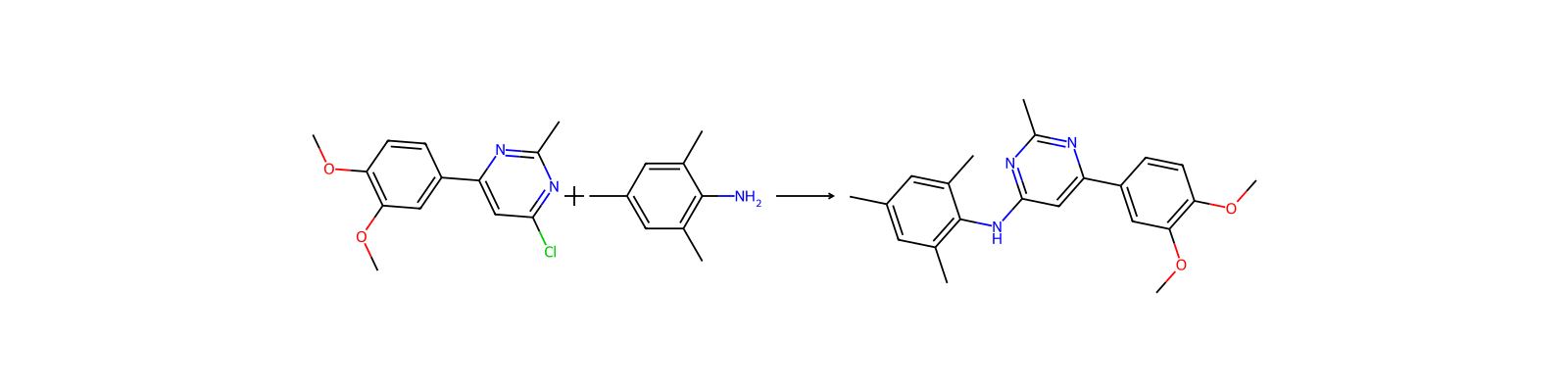
HRID 4335 の反応式
HRID 4335反応物としてuspto-grants-1988_02
HRID 14423 の反応式
HRID 14423反応物としてuspto-grants-2010_06
HRID 15707 の反応式
HRID 15707反応物としてuspto-grants-2010_06
HRID 41364 の反応式
HRID 41364反応物としてuspto-grants-2013_09
HRID 41365 の反応式
HRID 41365反応物としてuspto-grants-2013_09
HRID 49750 の反応式
HRID 49750反応物としてuspto-grants-2004_03
HRID 65160 の反応式
HRID 65160反応物としてuspto-grants-1986_09
HRID 65161 の反応式
HRID 65161反応物としてuspto-grants-1986_09
1 / 22 ページ

化合物ノート

読み込み中…

このページの内容基本情報概要名称と識別子物性安全と法規制化学と産業関連反応化合物ノート
その他の操作
ノートを作成反応を作成見積依頼を出す

Liquid; [HSDB] Rose colored liquid; [MSDSonline]

Dissociation ConstantspKa= 4.38

物理化学的性質

融点
-5 °C · -5 °C
沸点
108 · 108-110 °C11 mm Hg(lit.)
比重(密度)
0.963 g/mL · 0.963 g/mL at 25 °C(lit.)
屈折率
20 · n20/D 1.551(lit.)
闪点
205 °F · 205 °F
貯蔵温度
Keep in dark place,Inert atmosphere,Room temperature
溶解性
Chloroform (Slightly), Ethanol (Slightly), Methanol (Slightly)
酸解離定数(Pka)
1 · pK1:4.38(+1) (25°C)
外見
液体(透明)
色
クリアブラウン
水溶解度
混和しない
BRN
636559 · 636559
Henry's Law Constant
3.7 · 3.7×100 mol/(m3Pa) at 25℃, HSDB (2015)
InChI
1S/C9H13N/c1-6-4-7(2)9(10)8(3)5-6/h4-5H,10H2,1-3H3
InChIKey
KWVPRPSXBZNOHS-UHFFFAOYSA-N
SMILES
Cc1cc(C)c(N)c(C)c1
CAS データベース
88 · 88-05-1(CAS DataBase Reference)
NISTの化学物質情報
2 · Benzenamine, 2,4,6-trimethyl-(88-05-1)
EPAの化学物質情報
2 · 2,4,6-Trimethylaniline (88-05-1)

化学的性質

化学的特性clear yellow to brown liquid. Insoluble in water, soluble in organic solvents such as ethanol and ether.

Reactive GroupAmines, Aromatic
Reactivity Profile · 1 件

ANILINE, 2,4,6-TRIMETHYL- neutralizes acids in exothermic reactions to form salts plus water. May be incompatible with isocyanates, halogenated organics, peroxides, phenols (acidic), epoxides, anhydrides, and acid halides. Flammable gaseous hydrogen may be generated in combination with strong reducing agents, such as hydrides.

Air and Water ReactionsNo rapid reaction with air. No rapid reaction with water.
CERCLA Reportable Quantities · 1 件

Releases of CERCLA hazardous substances are subject to the release reporting requirement of CERCLA section 103, codified at 40 CFR part 302, in addition to the requirements of 40 CFR part 355. Aniline, 2,4,6-trimethyl- is an extremely hazardous substance (EHS) subject to reporting requirements when stored in amounts in excess of its threshold planning quantity (TPQ) of 500 lbs.

Hazard Classes and Categories · 2 件

Acute Tox. 3 (10.7%)

Acute toxicity (Oral) - Category 4

Skin, Eye, and Respiratory IrritationsA skin and severe eye irritant.
Hazardous Reactivities and IncompatibilitiesSmall amounts of aromatic amines - aniline ignite on contact, while larger amounts exploded dangerously, probably owing to rapid formation of diazonium perchlorates.

安全と保護具

Fire Fighting · 1 件

(Non-Specific -- Poisonous Liquid, n.o.s.) Keep unnecessary people away; isolate hazard area and deny entry. Stay upwind; keep out of low areas. Ventilate closed spaces before entering them. Wear positive pressure breathing apparatus and special protective clothing. If water pollution occurs, notify appropriate authorities.

First Aid · 1 件

Signs and Symptoms of Aniline, 2,4,6-Trimethyl- Exposure: Acute exposure to aniline, 2,4,6-trimethyl- may result in eye and skin irritation and cyanosis. Headache, nausea, dizziness, and weakness may also occur. Repeated exposure to aniline, 2,4,6- trimethyl- may cause a decrease in the peripheral vision and photosensitivity of the eye.

Nonfire Spill Response(Non-Specific -- Poisonous Liquid, n.o.s.) Do not touch spilled material; stop leak if you can do so without risk. Use water spray to reduce vapors.
Disposal Methods · 1 件

SRP: At the time of review, criteria for land treatment or burial (sanitary landfill) disposal practices are subject to significant revision. Prior to implementing land disposal of waste residue (including waste sludge), consult with environmental regulatory agencies for guidance on acceptable disposal practices.

Preventive Measures · 1 件

SRP: The scientific literature for the use of contact lenses in industry is conflicting. The benefit or detrimental effects of wearing contact lenses depend not only upon the substance, but also on factors including the form of the substance, characteristics and duration of the exposure, the uses of other eye protection equipment, and the hygiene of the lenses. However, there may be individual substances whose irritating or corrosive properties are such that the wearing of contact lenses would be harmful to the eye. In those specific cases, contact lenses should not be worn. In any event, the usual eye protection equipment should be worn even when contact lenses are in place.

Isolation and EvacuationExcerpt from ERG Guide 153 [Substances - Toxic and/or Corrosive (Combustible)]:
Protective Action Criteria (PAC) · 3 件

0.26 [mg/m3]

2.9 [mg/m3]

10 [mg/m3]

Personal Protective Equipment (PPE) · 1 件

For emergency situations, wear a positive pressure, pressure-demand, full facepiece self-contained breathing apparatus (SCBA) or pressure- demand supplied air respirator with escape SCBA and a fully-encapsulating, chemical resistant suit. (EPA, 1998)

毒性情報

Environmental Fate · 3 件

TERRESTRIAL FATE: Based on a classification scheme(1), an estimated Koc value of 198(SRC), determined from a structure estimation method(2), indicates that 2,4,6-trimethylaniline is expected to have moderate mobility in soil(SRC). However, aromatic amines (including anilines) bind to humate found in soil in two phases(3). Initially, a rapid, reversible equilibrium is established, which may represent formation of imine linkages with the humate carbonyls(3). Subsequently, there is a slow reaction that is not readily reversed(3). Also, a pKa value of 4.38(4) suggests that 2,4,6-trimethylaniline will partially exist in the protonated form in moist soils and the protonated form of 2,4,6-trimethylaniline is expected to bind strongly to soil surfaces. Volatilization of 2,4,6-trimethylaniline from moist soil surfaces is expected to be an important fate process(SRC) given an estimated Henry's Law constant of 2.7X10⁻⁶ atm-cu m/mole(SRC), using a fragment constant estimation method(5). 2,4,6-Trimethylaniline is not expected to volatilize from dry soil surfaces(SRC) based upon an estimated vapor pressure of 0.067 mm Hg(SRC), determined from a fragment constant method(6).

AQUATIC FATE: Based on a classification scheme(1), an estimated Koc value of 198(SRC), determined from an estimation method(2), indicates that 2,4,6-trimethylaniline is expected to slightly adsorb to sediment and suspended solids in water(SRC). In a biodegradation study of 2,4,6-trimethylaniline in a mixed domestic/industrial treatment plant, 0-9% degraded at a concentration of 20 mg/l after 6 hours and 25 °C(3). Volatilization from water surfaces is expected(4) based upon an estimated Henry's Law constant of 2.7X10⁻⁶ atm-cu m/mole(SRC), developed using a fragment constant estimation method(5). Using this Henry's Law constant and an estimation method(4), volatilization half-lives for a model river and model lake are 11 and 120 days, respectively(SRC). However, volatilization from water surfaces may be attenuated by adsorption to humate material in the water column(6). However, aromatic amines (including anilines) bind to humate found in water in two phases(6). Initially, a rapid, reversible equilibrium is established, which may represent formation of imine linkages with the humate carbonyls(6). Subsequently, there is a slow reaction that is not readily reversed(6). A pKa of 4.38(7) suggests that 2,4,6-trimethylaniline will partially exist in the protonated form in the aqueous environments and the protonated form of 2,4,6-trimethylaniline is not expected to volatilize from water. According to a classification scheme(8), an estimated BCF of 25(SRC), from an estimated log Kow of 2.72(9) and a regression-derived equation(10), suggests the potential for bioconcentration in aquatic organisms is low.

ATMOSPHERIC FATE: According to a model of gas/particle partitioning of semivolatile organic compounds in the atmosphere(1), 2,4,6-trimethylaniline, which has an estimated vapor pressure of 0.067 mm Hg at 25 °C(2), is expected to exist solely as a vapor in the ambient atmosphere. Vapor-phase 2,4,6-trimethylaniline is degraded in the atmosphere by reaction with photochemically-produced hydroxyl radicals(SRC); the half-life for this reaction in air is estimated to be 6.7 hrs(SRC), calculated from its rate constant of 5.7X10⁻¹¹ cu cm/molecule-sec at 25 °C(SRC) determined using a structure estimation method(3).

Adverse EffectsOccupational hepatotoxin - Secondary hepatotoxins: the potential for toxic effect in the occupational setting is based on cases of poisoning by human ingestion or animal experimentation.
Soil Adsorption/Mobility · 1 件

Using a structure estimation method based on molecular connectivity indices(1), the Koc for 2,4,6-trimethylaniline can be estimated to be 198(SRC). According to a classification scheme(2), this estimated Koc value suggests that 2,4,6-trimethylaniline is expected to have moderate mobility in soil. However, primary amines(including anilines) bind to humate found in soil in two phases(3). Initially, a rapid, reversible equilibrium is established, which may represent formation of imine linkages with the humate carbonyls(3). Subsequently, there is a slow reaction that is not readily reversed(3).

Human Toxicity Excerpts · 1 件

...WORKERS WHO HAD BEEN ENGAGED FOR ELEVEN TO TWENTY YR IN MFR OF MESIDINE & ANILINE WERE REPORTED TO HAVE NARROWING OR PERIPHERAL VISUAL FIELDS, INCR IN SIZE OF BLIND SPOT, & DECR IN "PHOTOSENSITIVITY," FOR WHICH MESIDINE WAS THOUGHT TO BE RESPONSIBLE.

Artificial Pollution Sources2,4,6-Trimethylaniline's production and use in the manufacture of dyes(1) may result in its release to the environment through various waste streams(SRC).
Environmental Biodegradation · 1 件

AEROBIC: In a pure culture study using Escherichia coli B, 2,4,6-trimethylaniline was not found to degrade after 7 days incubation at 37 °C in total darkness(1). 2,4,6-Trimethylaniline exhibited 0-9% depletion at 20 mg/l after 6 hrs @ 25 °C in a mixed domestic/industrial treatment plant(2).

Carcinogen Classification · 5 件

2,4,6-Trimethylaniline

Group 3: Not classifiable as to its carcinogenicity to humans

Volume 27: (1982) Some Aromatic Amines, Anthraquinones and Nitroso Compounds, and Inorganic Fluorides Used in Drinking-water and Dental Preparations

1987

1987

Environmental Bioconcentration · 1 件

An estimated BCF of 25 was calculated for 2,4,6-trimethylaniline(SRC), using an estimated log Kow of 2.72(1,SRC) and a regression-derived equation(2). According to a classification scheme(3), this BCF suggests the potential for bioconcentration in aquatic organisms is low.

Volatilization from Water/Soil · 1 件

The Henry's Law constant for 2,4,6-trimethylaniline is estimated as 2.7X10⁻⁶ atm-cu m/mole(SRC) using a fragment constant estimation method(1). This Henry's Law constant indicates that 2,4,6-trimethylaniline is expected to volatilize from water surfaces(2). Based on this Henry's Law constant, the volatilization half-life from a model river (1 m deep, flowing 1 m/sec, wind velocity of 3 m/sec)(2) is estimated as 11 days(SRC). The volatilization half-life from a model lake (1 m deep, flowing 0.05 m/sec, wind velocity of 0.5 m/sec)(2) is estimated as 120 days(SRC). However, aromatic amines (including anilines) bind to humate found in water in two phases(3). Initially, a rapid, reversible equilibrium is established, which may represent formation of imine linkages with the humate carbonyls(3). Subsequently, there is a slow reaction that is not readily reversed(3). A pKa of 4.38(4) suggests that 2,4,6-trimethylaniline will partially exist in the protonated form in the aqueous environments and the protonated form of 2,4,6-trimethylaniline is not expected to volatilize from water. 2,4,6-Trimethylaniline's Henry's Law constant(1) indicates that volatilization from moist soil surfaces may occur(SRC). 2,4,6-Trimethylaniline is not expected to volatilize from dry soil surfaces(SRC) based upon an estimated vapor pressure of 0.067 mm Hg(SRC), determined from a fragment constant method(5).

Non-Human Toxicity Excerpts · 4 件

...PROVED PARTICULARLY TOXIC TO RETINA WHEN GIVEN TO RATS & RABBITS, PRODUCING MORPHOLOGIC CHANGES IN RETINA.

... IT HAS BEEN FOUND THAT 2,4,6-TRIMETHYLANILINE PRODUCES LIVER TUMORS IN RATS.

TESTED FOR LONG-TERM TOXICITY BY DIETARY ADMIN TO MALE CHARLES RIVER RATS & MALE & FEMALE HAM/1CR MICE. 2,4,6-TRIMETHYLANILINE LED TO TUMORS IN 1 OR MORE TISSUES IN ALL 3 ANIMAL MODELS & ALSO LED TO CIRRHOSIS OF LIVER IN RATS ONLY.

PITUITARY TUMOR WAS INDUCED IN FEMALE INBRED BUF RAT ON 18-MO DIET CONTAINING 1.1 MMOLE 2,4,6-TRIMETHYLANILINE/KG. IN 6TH TRANSFER, THIS TUMOR DEVELOPED INTO 2 LINES OF TRANSPLANTABLE TUMORS WITH DIFFERENT CHARACTERISTICS.

Evidence for CarcinogenicityNo data are available in humans. Inadequate evidence of carcinogenicity in animals. OVERALL EVALUATION: Group 3: The agent is not classifiable as to its carcinogenicity to humans.
Environmental Abiotic Degradation · 1 件

The rate constant for the vapor-phase reaction of 2,4,6-trimethylaniline with photochemically-produced hydroxyl radicals has been estimated as 5.7X10⁻¹¹ cu cm/molecule-sec at 25 °C(SRC) using a structure estimation method(1). This corresponds to an atmospheric half-life of about 6.7 hrs at an atmospheric concentration of 5X10+5 hydroxyl radicals per cu cm(1). 2,4,6-Trimethylaniline is not expected to undergo hydrolysis in the environment due to the lack of hydrolyzable functional groups(2) nor to directly photolyze due to the lack of absorption in the environmental UV spectrum (>290 nm).

法規制情報

CERCLA Reportable Quantities · 1 件

Releases of CERCLA hazardous substances are subject to the release reporting requirement of CERCLA section 103, codified at 40 CFR part 302, in addition to the requirements of 40 CFR part 355. Aniline, 2,4,6-trimethyl- is an extremely hazardous substance (EHS) subject to reporting requirements when stored in amounts in excess of its threshold planning quantity (TPQ) of 500 lbs.

安全データ

wgk
3
tsca
TSCA listed
rtecs
BZ0700000
ridadr
UN 2810 6.1/PG 2
hs_code
29214980
risk_code
21/22-26-36/38-33-23/24/25
化審法
(3)-132
安衛法
変異原性物質
消防法
危-4-3-III
hazard_code
T+,T
safety_code
26-28-36/37-45-28A
hazard_class
6.1
packing_group
III
Hazard Classifications
Acute Tox. 1 InhalationAcute Tox. 4 DermalAcute Tox. 4 OralEye Irrit. 2Skin Irrit. 2
ストレージクラス
6.1A - Combustible acute toxic Cat. 1 and 2very toxic hazardous materials
有毒物質データの
88-05-1(Hazardous Substances Data)

上流・下流製品情報

上流原料

ニトロトルエンメシチレン

下流製品

1-アミノ-4-[(2,4,6-トリメチルフェニル)アミノ]-9,10-ジヒドロ-9,10-ジオキソアントラセン-2-スルホン酸ナトリウムN,N-ジエチル-3-(2,4,6-トリメチルフェニルスルホニル)-1H-1,2,4-トリアゾール-1-カルボキサミド1,4-ビス(メシチルアミノ)アントラキノンTracid Light Yellow G3,3'-[(9,10-ジヒドロ-9,10-ジオキソアントラセン-1,4-ジイル)ジイミノ]ビス[2,4,6-トリメチルベンゼンスルホン酸ナトリウム](E)-3-(4-amino-3,5-dimethylphenyl)acrylonitrile1,4-ジシアノナフタレン3-ブロモ-2,4,6-トリメチルアニリンメシチル ヨージド1,3-ビス(2,4,6-トリメチルフェニル)イミダゾリニウムクロリドAcid Violet 481-アミノ-4-[(2,4,6-トリメチルフェニル)アミノ]-9,10-ジヒドロ-9,10-ジオキソアントラセン-2-スルホン酸ナトリウム1,4-ビス(メシチルアミノ)アントラキノン1-アミノ-4-[(2,4,6-トリメチル-3-スルホフェニル)アミノ]-9,10-ジヒドロ-9,10-ジオキソアントラセン-2-スルホン酸2-ナトリウムAcid Violet 1263,3'-[(9,10-ジヒドロ-9,10-ジオキソアントラセン-1,4-ジイル)ジイミノ]ビス[2,4,6-トリメチルベンゼンスルホン酸ナトリウム]grubbs触媒世代