
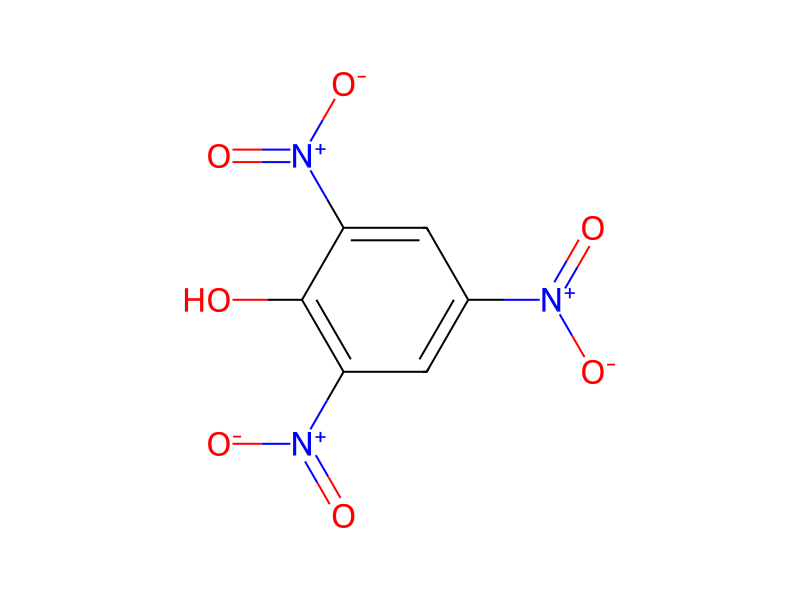
基本情報
- 標準SMILES
O=[N+]([O-])c1cc([N+](=O)[O-])c(O)c([N+](=O)[O-])c1- InChIKey
OXNIZHLAWKMVMX-UHFFFAOYSA-N- 分子式
- C6H3N3O7
- 平均分子量
- 229.1 g/mol
- 単同位体質量
- 228.99709944
概要
Picric acid, [dry] appears as yellow crystals. An explosive. Specific gravity 1.767. Melting point 251.2 °F (121.8 °C). Explodes at 572 °F. Toxic by ingestion.
名称と識別子
- 優先名称
- Picric Acid
- IUPAC
- 2,4,6-trinitrophenol
- 現地名
- ピクリン酸
- 英語名
- PICRIC ACID
- 分子式
- C6H3N3O7
- 分子量
- 229.1
名称と別名
PICRIC ACID2,4,6-TrinitrophenolTrinitrophenol88-89-1Carbazotic acidPicronitric acidMeliniteAcide picriqueNitroxanthic acidPhenol trinitratePicralPikrinezuur
名称をさらに表示
メリニット2,4,6-トリニトロフェノールピクロ硝酸カルバゾチン酸ニトロキサンチン酸ピクリン酸ピクリン酸(2,4,6-トリニトロフェノール)2,4,6‐トリニトロフェノール2,4,6-トリニトロフェノール (水添加) ピクリン酸 (水添加)ピクリン酸 100ΜG/ML2,4,6-トリニトロフェノール (15~25%含水)ピクリン酸 (15~25%含水)2.4.6-トリニトロフェノール(15?25%水添加)ピクリン酸 溶液ピクリン酸標準液picric2,4,6-TrinitrofenolPICRIC ACID SOLUTIONPicric acid moistened with water, >=98%TNP、PA
PikrinsaeureAcido picricoPikrynowy kwasPhenol, 2,4,6-trinitro-Phenoltrinitrate2-Hydroxy-1,3,5-trinitrobenzenePicricum acidumKyselina pikrova
データベース識別子
- CAS
88-89-1- PubChem CID
- 6954
- DTXSID
DTXSID4025909- ChEMBL
CHEMBL108541- ChEBI
CHEBI:46149- UNII
- A49OS0F91S
- EC Number
- 201-865-9
- Nikkaji
- J3.910A
物性
構造計算による物性
- XLogP
- 0.9
- 極性表面積
- 158 Ų
- 水素結合供与体数
- 1
- 水素結合受容体数
- 7
- 回転可能結合数
- 0
- 重原子数
- 16
- 形式電荷
- 0
- 複雑度
- 292
実験および物理化学的性質
Chemical Classes
Other Uses -> Explosives
Flammable agents - 4th degree
DrugsPharmaceuticals -> Listed in ZINC15
SpringerMaterials PropertiesBoiling point
LogP
log Kow = 1.44
2.03
1.64
OdorOdorless
TasteIntensely bitter
Density
1.76 (NIOSH, 2024) - Denser than water; will sink
1.763 (NTP, 1992) - Denser than water; will sink
1.763 g/cu cm
1.8 g/cm³
1.763 no temp
1.76
Color/Form
Pale yellow crystals
Yellow solid [Note: Usually used as an aqueous solution]
Yellow leaves from water; prisms from diethyl ether; plates from ethanol
Colorless crystals from ligroin or concentrated hydrochloric acid; yellow leaflets from water
Solubility
1 % (NIOSH, 2024)
1 to 10 mg/mL at 75 °F (NTP, 1992)
In water, 1.27X10+4 mg/L at 25 °C
Slightly soluble in water
1 g in 12 mL alcohol, 10 mL benzene, 35 mL chloroform, and 65 mL ether
Soluble in ethanol, ether, benzene, chloroform; very soluble in acetone
CorrosivityAttacks common metals, except for aluminum and tin
Flash Point
302 °F (NIOSH, 2024)
302 °F (NTP, 1992)
150 °C (302 °F) - closed cup
150 °C c.c.
302 °F
Boiling Point
Explodes above 572 °F (NIOSH, 2024)
greater than 572 °F at 760 mmHg (Sublimes/explodes) (NTP, 1992)
Explodes above 572 °F
BP: Explodes
Explodes above 572 °F
物理化学的性質
- 融点
- 122 · 122-123 °C (dried material, Lit. Merck Index 12th Ed.)(lit.)
- 沸点
- 300 ℃ · 300℃
- 比重(密度)
- 1 g/mL · 1.00 g/mL at 20 °C
- 蒸気密度
- 7.9 · 7.9 (vs air)
- 蒸気圧
- 1 mm · 1 mm Hg ( 195 °C)
- 屈折率
- 1.763 · 1.7630 (estimate)
- 闪点
- 150 ℃ · 150℃
- 貯蔵温度
- Store at RT.
- 溶解性
- 1 · アルコール: 可溶1 (g/12 mL)(lit.)
- 酸解離定数(Pka)
- 0.38 · 0.38(at 25℃)
- 外見
- 溶液(飽和水溶液)
- 比重
- 1.005 · 1.005
- 色
- イエローソリューション
- 爆発限界(explosive limit)
- 0.01 % · 0.01%
- 水溶解度
- 100 °C · (mg/L): 100°C で 66,670 (Windholz et al., 1983 により引用); 20°C で 14,000、100°C で 68,000 (Verschueren, 1983 により引用)
- 比熱容量
- 1.05 J/ · Cp(crystal): 1.05 J/(g·K), at 25℃
- Merck
- 13 · 13,7492
- BRN
- 423400 · 423400
- Henry's Law Constant
- 3 · 3.0×105 mol/(m3Pa) at 25℃, Ebert et al. (2023)
- 安定性
- 20 · 不安定で、ぶつかったり、加熱したり、接地したりすると爆発する可能性があります。乾燥すると引火性が高い。乾燥すると爆発する可能性があります - 常に湿らせておいてください。水分含有量は少なくとも20%でなければなりません。可燃性。強力な酸化剤、アルカリ、最も一般的な金属、アンモニア、強力な還元剤とは相容れません。衝撃、摩擦、高温を避けてください。
- 主な用途
- 爆発物、電力回路、高エネルギー物質、液化ガス燃料、薄膜、発電、電池、燃料電池、鋼鉄、金薄膜、ナノパウダー、自動車用不凍液、重合阻害剤、皮膚からのタトゥー除去、抗炎症剤、腫瘍治療
- InChIKey
- OXNIZHLAWKMVMX-UHFFFAOYSA-N
- CAS データベース
- 88 · 88-89-1(CAS DataBase Reference)
- EPAの化学物質情報
- Picric acid (88-89-1)
化学的性質
化学的特性Picric acid is a highly flammable, white to yellowish crystalline substance. It used in the manufacture of fi reworks, matches, electric batteries, colored glass, explosives, and disinfectants. Pharmaceutical, textile, and leather industries also make use of picric acid.
安全と法規制
GHS分類
GHS Classification
Danger
H201: (Deleted) Explosive; mass explosion hazard [Danger Explosives]
P210, P230, P240, P250, P261, P262, P264, P270, P271, P280, P301+P316, P302+P352, P304+P340, P316, P321, P330, P361+P364, P370+P380, P372, P373, P401, P403+P233, P405, and P501 (click each P-code to see the statement)
Danger
H201 (98.5%): (Deleted) Explosive; mass explosion hazard [Danger Explosives]
P203, P210, P230, P240, P250, P260, P261, P262, P264, P264+P265, P270, P271, P272, P273, P280, P301+P316, P302+P352, P304+P340, P305+P351+P338, P316, P318, P319, P321, P330, P333+P317, P337+P317, P361+P364, P362+P364, P370+P380, P372, P373, P391, P401, P403+P233, P405, and P501 (click each P-code to see the statement)
危険有害性情報
Regulatory Information
Chemical: Phenol, 2,4,6-trinitro-
Status: Cease Manufacture Update: 03-04-2018 https://echa.europa.eu/registration-dossier/-/registered-dossier/23472
Phenol, 2,4,6-trinitro- (wetted with >30% water): HSNO Approval: HSR001448 Approved with controls
The New Jersey Worker and Community Right to Know Act requires public and private employers to provide information about hazardous substances at their workplaces. (N.J.S.A. 34:5A-1 et. seq.)
Other Safety InformationIMAP assessments - Phenol, 2,4,6-trinitro-: Human health tier I assessment
DOT Label
Explosive 1.1D
Flammable Solid
Flammable Solid
Fire Hazards
Excerpt from ERG Guide 112 [Explosives - Division 1.1, 1.2, 1.3 or 1.5]:
Excerpt from ERG Guide 113 [Flammable Materials (Wet / Desensitized Explosive)]:
Excerpt from ERG Guide 113 [Flammable Materials (Wet / Desensitized Explosive)]:
· Flammable/combustible material.
· Flammable/combustible material.
· Flammable/combustible material.
Fire Potential
Flammable solid.
Flammable solid when exposed to heat or flame ... .
It will burn once ignited by a flame and will continue to burn quietly if the quantity is small or the material is thinly spread over a large area. /Trinitrophenol, dry/
Health Hazards
Excerpt from NIOSH Pocket Guide for Picric acid:
Excerpt from ERG Guide 113 [Flammable Materials (Wet / Desensitized Explosive)]:
Excerpt from ERG Guide 113 [Flammable Materials (Wet / Desensitized Explosive)]:
· Some are toxic and may be fatal if inhaled, ingested or absorbed through skin. Specifically, Dinitrophenol, wetted (UN1320); Dinitrophenolates, wetted (UN1321), Sodium dinitro-o-cresolate, wetted (UN1348); and Barium azide, wetted (UN1571) are known to be toxic.
· Some are toxic and may be fatal if inhaled, ingested or absorbed through skin. Specifically, Dinitrophenol, wetted (UN1320); Dinitrophenolates, wetted (UN1321), Sodium dinitro-o-cresolate, wetted (UN1348); and Barium azide, wetted (UN1571) are known to be toxic.
· Some are toxic and may be fatal if inhaled, ingested or absorbed through skin. Specifically, Dinitrophenol, wetted (UN1320); Dinitrophenolates, wetted (UN1321), Sodium dinitro-o-cresolate, wetted (UN1348); and Barium azide, wetted (UN1571) are known to be toxic.
Hazards Summary
Workers may develop skin sensitization. Laboratory dogs receiving subcutaneously 100-125 mg/kg die of respiratory paralysis and have liver abnormalities on pathological examination. [HSDB] Irritating to the skin, eyes, and respiratory tract; May stain yellow the hair and skin; [ICSC] Danger of skin sensitization; [MAK]
DOT ID and Guide
3364 113
1344 113
3364 113
1344 113
1344 113(wet, > or =10% water)
3364 113(wetted, > or =10% water)
Reactive Group
Nitro, Nitroso, Nitrate, and Nitrite Compounds, Organic
Nitro, Nitroso, Nitrate, and Nitrite Compounds, Organic
Nitro, Nitroso, Nitrate, and Nitrite Compounds, Organic
EC ClassificationSymbol: E, T; R: 3-4-23/24/25; S: (1/2)-28-35-36/37-45
UN ClassificationUN Hazard Class: 1.1D
Special ReportsThe ability of picric acid to form potentially explosive metallic picrates is discussed. Properties (stability, detonation, sensitivity) of picric acid are compared with those of TNT.[Garey HE; Chem Eng News 57 (41): 51 (1979)]
安全と保護具
Fire Fighting
Excerpt from ERG Guide 112 [Explosives - Division 1.1, 1.2, 1.3 or 1.5]:
Excerpt from ERG Guide 113 [Flammable Materials (Wet / Desensitized Explosive)]:
Excerpt from ERG Guide 113 [Flammable Materials (Wet / Desensitized Explosive)]:
Use water in large amounts. In case of fire: keep drums, etc., cool by spraying with water.
First Aid Measures
Fresh air, rest. Refer for medical attention.
Rinse and then wash skin with water and soap. Seek medical attention if you feel unwell.
Rinse with plenty of water for several minutes (remove contact lenses if easily possible).
Rinse mouth. Give one or two glasses of water to drink. Refer for medical attention .
Accidental Release Measures
· CALL 911. Then call emergency response telephone number on shipping paper. If shipping paper not available or no answer, refer to appropriate telephone number listed on the inside back cover.
· ELIMINATE all ignition sources (no smoking, flares, sparks or flames) from immediate area.
· CALL 911. Then call emergency response telephone number on shipping paper. If shipping paper not available or no answer, refer to appropriate telephone number listed on the inside back cover.
· ELIMINATE all ignition sources (no smoking, flares, sparks or flames) from immediate area.
· CALL 911. Then call emergency response telephone number on shipping paper. If shipping paper not available or no answer, refer to appropriate telephone number listed on the inside back cover.
· ELIMINATE all ignition sources (no smoking, flares, sparks or flames) from immediate area.
First Aid
Excerpt from NIOSH Pocket Guide for Picric acid:
Excerpt from ERG Guide 113 [Flammable Materials (Wet / Desensitized Explosive)]:
EYES: First check the victim for contact lenses and remove if present. Flush victim's eyes with water or normal saline solution for 20 to 30 minutes while simultaneously calling a hospital or poison control center. Do not put any ointments, oils, or medication in the victim's eyes without specific instructions from a physician. IMMEDIATELY transport the victim after flushing eyes to a hospital even if no symptoms (such as redness or irritation) develop.
General First Aid:
General First Aid:
General First Aid:
Safe StorageFireproof. Cool. Substance should be kept wet. Separated from strong oxidants, metals and reducing agents. Store in an area without drain or sewer access.
Firefighting Hazards
The primary hazard is from blast effect where the entire load can explode instantaneously and not from flying projectiles and fragments. /Trinitrophenol, dry/
Closed containers may rupture violently when heated.
Explosive decomposition may occur under fire conditions.
Exposure Control and Personal Protection
· Wear positive pressure self-contained breathing apparatus (SCBA).
· Wear positive pressure self-contained breathing apparatus (SCBA).
· Wear positive pressure self-contained breathing apparatus (SCBA).
· Wear positive pressure self-contained breathing apparatus (SCBA).
Fire Fighting Procedures
Suitable extinguishing media: Use water spray, alcohol-resistant foam, dry chemical or carbon dioxide.
Advice for firefighters: Wear self-contained breathing apparatus for firefighting if necessary.
Use water spray to cool unopened containers.
Use dry chemical, carbon dioxide, water spray, or alcohol foam extinguishers ... If material or contaminated runoff enters waterways, notify downstream users of potentially contaminated waters. Notify local health and fire officials and pollution control agencies. Containers may explode. From a secure, explosion-proof location, use water spray to cool exposed containers. If cooling streams are ineffective (venting sound increases in volume and pitch, tank discolors or shows any signs of deforming), withdraw immediately to a secure position ... The only respirators recommended for fire fighting are self-contained breathing apparatuses that have full facepieces and are operated in a pressure-demand or other positive-pressure mode.
For more Fire Fighting Procedures (Complete) data for Picric acid (9 total), please visit the HSDB record page.
Storage Conditions
Keep container tightly closed in a dry and well-ventilated place. Keep wetted with water. Do not allow material to become dry.
Keep in a cool place and remote from fire.
Store in a flammable materials storage area. Prior to working with this chemical you should be trained on its proper handling and storage. Store in an explosion-proof refrigerator away from oxidizers, reducing agents, and metals. Where possible, automatically pump liquid from drums or other storage containers to process containers. Sources of ignition, such as smoking and open flames, are prohibited where this chemical is handled, used, or stored. Metal containers involving the transfer of 5 gallons or more of this chemical should be grounded and bonded. Drums must be equipped with self-closing valves, pressure vacuum bungs, and flame arresters. Use only non-sparking tools and equipment, especially when opening or closing containers of this chemical. Wherever this chemical is used, handled, manufactured, or stored, use explosion-proof electrical equipment and fittings.
Store in a cool, dry, well-ventilated detached location. Do not allow material to become dry. Isolate from organic materials; transition and heavy metals.
Cleanup Methods
ACCIDENTAL RELEASE MEASURES: Personal precautions, protective equipment and emergency procedures: Wear respiratory protection. Avoid dust formation. Avoid breathing vapors, mist or gas. Ensure adequate ventilation. Remove all sources of ignition. Evacuate personnel to safe areas. Avoid breathing dust. Environmental precautions: Prevent further leakage or spillage if safe to do so. Do not let product enter drains. Methods and materials for containment and cleaning up: Sweep up and shovel. Contain spillage, and then collect with an electrically protected vacuum cleaner or by wetbrushing and place in container for disposal according to local regulations.
Evacuate persons not wearing protective equipment from area of spill or leak until clean-up is complete. Remove all ignition sources. Dampen spilled material with alcohol to avoid dust, then transfer material to a suitable container for eventual disposal. Collect powdered material in the the mose convenient and safe manner and deposit in sealed containers. Ventilate area after clean-up is complete. It may be necessary to contain and dispose of this chemical as a hazardous waste. If material or contaminated runoff enters waterways, notify downstream users of potentially contaminated waters. ...
Prompt cleanup and removal are necessary. During cleanup, avoid shock, friction, or heat. With extreme caution, shovel into suitable dry container.
Nonfire Spill Response
Excerpt from ERG Guide 112 [Explosives - Division 1.1, 1.2, 1.3 or 1.5]:
Excerpt from ERG Guide 113 [Flammable Materials (Wet / Desensitized Explosive)]:
Excerpt from ERG Guide 113 [Flammable Materials (Wet / Desensitized Explosive)]:
Disposal Methods
Generators of waste (equal to or greater than 100 kg/mo) containing this contaminant, EPA hazardous waste number D003, must conform with USEPA regulations in storage, transportation, treatment and disposal of waste.
Product: Contact a licensed professional waste disposal service to dispose of this material. Burn in a chemical incinerator equipped with an afterburner and scrubber but exert extra care in igniting as this material is highly flammable. Offer surplus and non-recyclable solutions to a licensed disposal company; Contaminated packaging: Dispose of as unused product.
SRP: Wastewater from contaminant suppression, cleaning of protective clothing/equipment, or contaminated sites should be contained and evaluated for subject chemical or decomposition product concentrations. Concentrations shall be lower than applicable environmental discharge or disposal criteria. Alternatively, pretreatment and/or discharge to a permitted wastewater treatment facility is acceptable only after review by the governing authority and assurance that "pass through" violations will not occur. Due consideration shall be given to remediation worker exposure (inhalation, dermal and ingestion) as well as fate during treatment, transfer and disposal. If it is not practicable to manage the chemical in this fashion, it must be evaluated in accordance with EPA 40 CFR Part 261, specifically Subpart B, in order to determine the appropriate local, state and federal requirements for disposal.
Controlled incineration in a rotary kiln incinerator equipped with particulate abatement and wet scrubber devices. Recommendable method: Incineration. Not recommendable method: Landfill. Peer review: Extreme care. Picric acid is a very shock sensitive high explosive when dry. Do not allow it to remain in contact with metals. Deliberately exploding picric acid using a detonator and booster explosive is an effective disposal method. Never treat a large amount at one time.
For more Disposal Methods (Complete) data for Picric acid (6 total), please visit the HSDB record page.
毒性情報
Interactions
Fifty mg/kg of picric acid injected ip into rats 30 min before morphine, meperidine, methadone, pentazocine, etonitazene, aminopyrine, sodium salicylate and pentobarbital potentiated analgesia and sleeping time induced by these drugs, but had no effect on pentylenetetrazole and amphetamine.
Target OrgansEyes, skin, kidneys, liver, blood
Ecotoxicity Values
LC50; Species: Nitocra spinipes (Harpacticoid Copepod) age 2-4 wk, adult; Conditions: saltwater, static, 20 °C; Concentration: 72000 ug/L for 96 hr /formulation/
EC50; Species: Daphnia magna (Water Flea) age 6-24 hr newborn, clone 1; Conditions: freshwater, static, 20 °C, dissolved oxygen >80%; Concentration: 104000 ug/L for 24 hr; Effect: intoxication, immobilization /formulation/
EC50; Species: Daphnia magna (Water Flea) age 6-24 hr newborn, clone 1; Conditions: freshwater, static, 20 °C, dissolved oxygen >80%; Concentration: 55000 ug/L for 48 hr; Effect: intoxication, immobilization /formulation/
LC50; Species: Americamysis bahia (Opossum Shrimp) age 4 days, juvenile; Conditions: saltwater, static, 20 °C, pH > or =7.0-8.0, dissolved oxygen 70-121%; Concentration: 13000 ug/L for 96 hr /> or =99% purity/
For more Ecotoxicity Values (Complete) data for Picric acid (8 total), please visit the HSDB record page.
Environmental Fate
TERRESTRIAL FATE: Based on a classification scheme(1), an estimated Koc value of 2250(SRC), determined from a structure estimation method(2), indicates that picric acid is expected to have slight mobility in soil(SRC). The pKa of picric acid is 0.42(3), indicating that this compound will exist entirely in the anion form in the environment and anions generally do not adsorb more strongly to soils containing organic carbon and clay than their neutral counterparts(4). Volatilization of the anion from moist soil is not expected because anions do not volatilize(SRC). Picric acid is not expected to volatilize from dry soil surfaces(SRC) based upon a vapor pressure of 7.5X10⁻⁷ mm Hg at 25 °C(5). A 23% of Theoretical BOD using activated sludge in the Japanese MITI test(6) suggests that biodegradation is not an important environmental fate process in soil(SRC).
AQUATIC FATE: Based on a classification scheme(1), an estimated Koc value of 2250(SRC), determined from a structure estimation method(2), indicates that picric acid is expected to adsorb to suspended solids and sediment(SRC). A pKa of 0.42(3) indicates picric acid will exist entirely in the anion form at pH values of 5 to 9 and, therefore, volatilization from water surfaces is not expected to be an important fate process(SRC). The picric acid concentration in sterile pore water decreased from 2000 umoles/L to <1500 umoles/L at 20 °C after 28 days, suggesting that hydrolysis or other unknown abiotic breakdown processes contribute to picric acid transformation(4). According to a classification scheme(5), BCFs of <2.2 measured in carp (Cyprinus carpio)(6) suggest bioconcentration in aquatic organisms is low. Under simulated solar radiation, the picric acid concentration in seawater decreased from 3510.55 umoles/L to 3206.05 umoles/L after 47 days exposure(4). Mixed cultures of phenol adapted microorganisms exhibited little or no oxygen uptake in the presence of picric acid(7-8), suggesting that picric acid is resistant to degradation under aerobic conditions(SRC).
ATMOSPHERIC FATE: According to a model of gas/particle partitioning of semivolatile organic compounds in the atmosphere(1), picric acid, which has a vapor pressure of 7.5X10⁻⁷ mm Hg at 25 °C(2), will exist in both the vapor and particulate phases in the ambient atmosphere. Vapor-phase picric acid is degraded in the atmosphere by reaction with photochemically-produced hydroxyl radicals(SRC); the half-life for this reaction in air is estimated to be 110 days(SRC), calculated from its rate constant of 1.4X10⁻¹³ cu cm/molecule-sec at 25 °C(SRC) that was derived using a structure estimation method(3). Particulate-phase picric acid may be removed from the air by wet or dry deposition(SRC). Picric acid contains chromophores that absorb at wavelengths >290 nm(4) and, therefore, may be susceptible to direct photolysis by sunlight(SRC).
Adverse EffectsOccupational hepatotoxin - Secondary hepatotoxins: the potential for toxic effect in the occupational setting is based on cases of poisoning by human ingestion or animal experimentation.
Exposure Routes
The substance can be absorbed into the body by ingestion.
inhalation, skin absorption, ingestion, skin and/or eye contact
Toxicity Summary
IDENTIFICATION AND USE: Picric acid is a yellow solid. It is used in explosives, matches, electric batteries, in the leather industry, for etching copper, in the manufacture colored glass, and as a textile mordant. It is also a reagent for preparation of organic derivatives for chemical identification. HUMAN STUDIES: Picric acid dust or fumes cause irritation of eyes, and this may be aggravated by sensitization. Skin contact with the dry powder of picric acid or ammonium picrate powder caused sensitization dermatitis among workers. The face was usually involved, especially around the mouth and sides of the nose. Edema, papules, vesicles, and finally desquamation developed. Potential symptoms of overexposure also include yellow stained hair and skin, weakness, myalgia, anuria, polyuria, bitter taste, GI disturbances, hepatitis, hematuria, albuminuria, and nephritis. Systemic poisoning following the absorption of picric acid caused symptoms of headache, vertigo, nausea, vomiting, and diarrhea. Yellow coloration of the skin and conjunctiva have occurred, and there have been reports of darkened or port wine-colored urine. During the 1920's and 30's picric acid was used both alone and in combination with butyl aminobenzoate as an antiseptic surgical dressing for treatment of burns. A serious dysfunction of the central nervous system following topical application of picric acid was reported. Approximately 4% of the patients treated with picric acid were sensitive and developed a local dermatitis. ANIMAL STUDIES: Blood gas analysis indicated severe acidosis during acute intoxication. After an acute lethal dose of picric acid, dogs died from respiratory paralysis. Autopsy results demonstrated the presence of yellow staining of the subcutaneous fat, lung, intestines and blood vessels. Swelling of the liver and glomerulitis were also observed. Sublethal doses of picric acid less than or equal to 50 mg/kg in dogs have resulted in transitory changes in the kidney, including glomerulitis and other changes in kidney ultrastructure. Mutagenic assays of picric acid were carried out with histidine-requiring strains of Salmonella typhimurium. Picric acid (10 micrograms per plate) demonstrated mutagenicity (both frame shift and base substitution-type mutations) only after metabolic activation. Picric acid was reported to be positive for the induction of sex-linked recessive lethal mutations in Drosophila melanogaster. ECOTOXICITY STUDIES: No significant inhibition of growth was observed for rainbow trout exposed to 0.45 and 0.05 mg/L picric acid. American oysters exposed to 0.45 and 0.05 mg/L picric acid showed significant inhibition of shell deposition during exposure period. Discoloration of nacre layer of the shell and body mass was observed in oysters.
Ecotoxicity Excerpts
/AQUATIC SPECIES/ Juvenile rainbow trout (Salmo gairdneri) and American oyster (Crassostrea virginica) were exposed to sublethal doses of picric acid and picramic acid for 42 days. No significant inhibition of growth was observed for rainbow trout exposed to 0.45 and 0.05 mg/L picric acid. American oysters exposed to 0.45 and 0.05 mg/L picric acid showed significant inhibition of shell deposition during exposure period. Discoloration of nacre layer of the shell and body mass was observed in oysters exposed to both compounds by the end of 42 days.
/AQUATIC SPECIES/ Picramic acid was more toxic than picric acid to rainbow trout and American oysters. Sublethal no growth median effective concentrations (EC50) and shell deposition ED50 for oysters showed that both compounds caused adverse effects at much lower concentrations than indicated by the LD50 values. The 144 hr shell deposition EC50s were 27.9 mg/L for picric acid and 5.6 mg/L for picramic acid. Sediment adsorption studies in estuarine water indicated that both compounds are not readily adsorbed. Oysters, which filter large quantities of particulate matter, would more likely be affected by picric acid and picramic acid.
/AQUATIC SPECIES/ A toxicity database for ordnance compounds was generated using eight compounds of concern /including picric acid/ and marine toxicity tests with five species from different phyla. Toxicity tests and endpoints included fertilization success and embryological development with the sea urchin Arbacia punctulata; zoospore germination, germling length, and cell number with the green macroalga Ulva fasciata; survival and reproductive success of the polychaete Dinophilus gyrociliatus; larvae hatching and survival with the redfish Sciaenops ocellatus; and survival of juveniles of the opossum shrimp Americamysis bahia (formerly Mysidopsis bahia). ... The most sensitive toxicity test endpoints overall were the macroalga zoospore germination and the polychaete reproduction tests. The most toxic ordnance compounds overall were tetryl and 1,3,5-trinitrobenzene. These were also the most degradable compounds, often being reduced to very low or below-detection levels at the end of the test exposure. Among the dinitro- and trinitrotoluenes and benzenes, toxicity tended to increase with the level of nitrogenation. Picric acid and RDX were the least toxic chemicals tested overall.
/AQUATIC SPECIES/ Toxicological and chemical studies were performed with a silty and a sandy marine sediment spiked with 2,6-dinitrotoluene (2,6-DNT), 2,4,6-trinitrophenylmethylnitramine (tetryl), or 2,4,6-trinitrophenol (picric acid). Whole sediment toxicity was analyzed by the 10-day survival test with the amphipod Ampelisca abdita, and porewater toxicity tests assessed macro-algae (Ulva fasciata) zoospore germination and germling growth, sea urchin (Arbacia punctulata) embryological development, and polychaete (Dinophilus gyrociliatus) survival and reproduction. ... The ... picric acid LC50 in the sandy sediment /was/ 144 mg/kg dry weight ... . The fine-grained sediment spiked with picric acid generated a U-shaped concentration-response curve in the amphipod test, with increased survival both in the lowest and highest concentration. Grain-size distribution and organic carbon content strongly influenced the behavior of ordnance compounds in spiked sediments. ... Porewater toxicity varied with its sedimentary origin and with ordnance compound. The sea urchin embryological development test tended to be the least sensitive. /Picric acid was the least/ toxic chemical in all porewater tests ... .
/AQUATIC SPECIES/ The effects of phenol, 4-chlorophenol, 2,4-dichlorophenol, 2,4,6-trichlorophenol, pentachlorophenol, 3-methylphenol, 4-chloro-3,5-dimethylphenol, 2,4-dinitrophenol and 2,4,6-trinitrophenol on the crayfish A. astacus medial giant axon were studied using intracellular microelectrodes. Phenols which are largely nonionized at physiological pH produced a rather specific inhibition of voltage-dependent K conductance. ... The weakly ionized phenols caused motor excitation and discoordination in intact crayfish. The more acid derivatives had a depressant effect. ...
Signs and Symptoms
Headache. Nausea. Vomiting.
Redness.
Headache. Dizziness. Nausea. Vomiting. Diarrhoea.
irritation eyes, skin; sensitization dermatitis; yellow-stained hair, skin; lassitude (weakness, exhaustion), myalgia, anuria, polyuria; bitter taste, gastrointestinal disturbance; hepatitis, hematuria (blood in the urine), albuminuria, nephritis
Ongoing Test Status
The following link will take the user to the National Toxicology Program (NTP) Test Status of Agents Search page, which tabulates the results and current status of tests such as "Short-Term Toxicity Studies", "Long-term Carcinogenicity Studies", "Developmental Studies", "Genetic Toxicology Studies", etc., performed with this chemical. Testing status for picric acid is available.[Available from, as of March 27, 2018: https://ntpsearch.niehs.nih.gov/?e=True&ContentType=Testing+Status]
ICSC Environmental DataThe substance is harmful to aquatic organisms.
Soil Adsorption/Mobility
Using a structure estimation method based on molecular connectivity indices(1), the Koc of picric acid can be estimated to be 2250(SRC). According to a classification scheme(2), this estimated Koc value suggests that picric acid is expected to have slight mobility in soil. The pKa of picric acid is 0.24(3), indicating that this compound will exist entirely in anion form in the environment and anions generally do not adsorb more strongly to soils containing organic carbon and clay than their neutral counterparts(4).
法規制情報
RCRA RequirementsD003; A solid waste containing picric acid may become characterized as a hazardous waste when subjected to testing for reactivity as stipulated in 40 CFR 261.23, and if so characterized, must be managed as a hazardous waste.
DHS Chemicals of Interest (COI)
Trinitrophenol
A Commercial Grade
5000
A Commercial Grade
400
Explosive chemical that can be released at a facility.
State Drinking Water Guidelines(ME) MAINE 57 ug/L
安全データ
- OEB
- D
- OEL
- TWA: 0.1 mg/m3, STEL: 0.3 mg/m3 [skin]
- wgk
- 2
- IDLA
- 75 mg/m3
- tsca
- TSCA listed
- rtecs
- TJ7875000
- ridadr
- UN 3364 4.1/PG I (TRINITROPHENOL (PICRIC ACID), WETTED, with not less than 10 % water by mass)
- 毒性
- LC50 (48-h) for red killifish 513 mg/L (Yoshioka et al., 1986).
- risk_code
- 1-4-11-23/24/25-2-36-20/21/22-3
- 化審法
- 一般化学物質
- 安衛法
- 57,57-2
- 消防法
- 危-5-NC-2-II
- hazard_code
- F,T,E,Xn
- safety_code
- 35-45-37-28-36/37-36-26-16-25
- hazard_class
- 4.1
- packing_group
- I
- 毒劇物取締法
- III
- 環境リスク評価
- ピクリン酸(88-89-1)
- 有毒物質データの
- 88-89-1(Hazardous Substances Data)
化学と産業
薬理情報
Biological Half-Life
The bioconcentration and metabolism of picric acid and picramic acid were determined for rainbow trout. ... The half-life (t1/2) elimination for the high and low dose of picric acid was 12.0 and 12.5 d, respectively ... .
/In Fischer-344 rats/ the plasma half-life for picric acid was 13.4 hr with a gut absorption coefficient (ka) of 0.069/hr.
Metabolism/Metabolites
Picric acid is metabolized largely to picramic acid.
The bioconcentration and metabolism of picric acid and picramic acid were determined for rainbow trout. The bioconcentration factor (BCF) in the epaxial muscle at 42 d for both of these compounds was less than 1; the skin had a BCF value of 1 and 9, respectively. The half-life (t1/2) elimination for the high and low dose of picric acid was 12.0 and 12.5 d, respectively; and for picramic acid was 9.0 and 9.5 d, respectively. In separate experiments, approximately 34% of the injected [14C]picric acid was metabolized to picramic acid, glucuronide conjugates, and an unidentified group of compounds, and 42% of the [(14)C]picric acid was metabolized to picric acid, glucuronide conjugates, and an unidentified group of compounds. The low bioconcentration in the trout muscle may be due to the trout's ability to excrete the parent compound and metabolites. The higher radioactivity observed on the skin may be due to the water route of exposure and the binding of the parent compounds to protein.
Metabolism of picric acid /in Fischer-344 rats/ was limited to reduction of nitro groups to amines. Metabolites isolated from urine included N-acetylisopicramic acid (14.8%), picramic acid (18.5%), N-acetylpicramic acid (4.7%), and unidentified components (2.4%). Approximately 60% of the parent picric acid was excreted unchanged.
MeSH Pharmacological Classification
Substances used for the detection, identification, analysis, etc. of chemical, biological, or pathologic processes or conditions. Indicators are substances that change in physical appearance, e.g., color, at or approaching the endpoint of a chemical titration, e.g., on the passage between acidity and alkalinity. Reagents are substances used for the detection or determination of another substance by chemical or microscopical means, especially analysis. Types of reagents are precipitants, solvents, oxidizers, reducers, fluxes, and colorimetric reagents. (From Grant & Hackh's Chemical Dictionary, 5th ed, p301, p499)
Chemical agents that uncouple oxidation from phosphorylation in the metabolic cycle so that ATP synthesis does not occur. Included here are those IONOPHORES that disrupt electron transfer by short-circuiting the proton gradient across mitochondrial membranes.
Absorption, Distribution and Excretion
Twenty-four hours following oral administration of ((14)C)picric acid (100 mg/kg) /to Fischer-344 rats/, the primary depots of radioactivity (per gram tissue basis) were blood, spleen, kidney, liver, lung, and testes. Respective tissue/blood ratios were 0.37, 0.31, 0.28, 0.26, and 0.22. All other tissue assayed had partition ratios < 0.20, with brain and adipose tissue having the least amount of radioactivity. Tissue/blood ratios were essentially maintained over a 48-hr postadministration period. Binding (in vitro) of ((14)C)picric acid to plasma proteins (whole blood preparations) demonstrated both high- and low-affinity binding sites, with dissociation constants of 3.18 x 10⁻⁶ and 2.85 x 10⁻⁴ M, respectively.
/Picric acid is/ readily absorbed through skin ... .
... /Picric acid/ may be absorbed from ... mucous membranes of body.
... Trinitrophenol /was found/ in the urine of humans following oral exposure. ... Picric acid is eliminated from humans in both the free form and as picramic acid.
用途と製造
Uses
Used as an explosive, dye, fungicide, copper etching agent, and chemical intermediate for metal picrates; it is used in the manufacturing of leather products, batteries, colored glass, textile mordants, rocket fuel, and photographic emulsions; [HSDB]
An OSHA Class A Explosive (1910.109)
Battery Manufacturing [Category: Industry]
Explosives, matches; in leather industry; electric batteries; etching copper; manufacture colored glass; textile mordant. Reagent for preparation of organic derivatives for identification.
Used in synthesis of dyes.
Picric acid was used as solvent for extraction of insulin from human tissue.
U.S. Production
(1972) PROBABLY GREATER THAN 4.54X10+5 G
(1975) PROBABLY GREATER THAN 4.54X10+5 G
Production volumes for non-confidential chemicals reported under the Inventory Update Rule. [Table#3803]
Methods of Manufacturing
Prepared by sulfonating phenol then treating with nitric acid ... ; by treating benzene with nitric acid and mercuric nitrate: Teeters, Mueller, United States of America patent 2455322 (1948 to Allied Chem.); by nitration of 2-tert-butyl-4,6-dinitrophenol ... .
Nitration of phenolsulfonic acid, obtained by heating phenol with concentrated sulfuric acid.
Formulations/Preparations
Grades: technical paste; pure paste.
Usually found in solution with 10 - 20% water.
General Manufacturing Information
Phenol, 2,4,6-trinitro-: ACTIVE
The explosive power of picric acid is somewhat superior to that of TNT, both as regards to the strength and the velocity of detonation.
応用分野
解説2,4,6-trinitrophenol.C6H3N3O7(229.11).2,4-ジニトロクロロベンゼンをアルカリ水溶液で2,4-ジニトロフェノールにかえて,さらにニトロ化すれば得られる."淡黄色の結晶.融点122.5 ℃.pKa 0.29(25 ℃).加熱や衝撃によって爆発する.水,有機溶媒に可溶.フェノールの一種であるが,強い酸性と苦味をもつのでこの名称がある(picro = 苦味).多くの有機化合物と分子化合物をつくり,これらはピクラートとよばれてその分離確認に使われる.多くの金属と爆発性の塩を形成する.花火,マッチ,電池などに用いられる.皮膚に付着すると黄色に変色し,吸引すると下痢,おう吐などの症状を引き起こす.[CAS 88-89-1]森北出版「化学辞典(第2版)
用途火薬、花火、農薬原料(クロロピクリン)、染料(合金属染料)、ガス脱硫触媒
説明Picric acid is a white to yellowish crystalline substance, soluble in most organic solvents and highly flammable. Picric acid is a derivative of phenol. It reacts with metals to form metal picrates, which like picric acid itself are highly sensitive. It is often used for tissue fixative (Bouin solution) for histology specimens, as a booster to detonate another, less sensitive explosive, such as trinitotoluene (TNT). It is used in the manufacture of fireworks, matches, electric batteries, coloured glass, dyes, antiseptics, explosives, disinfectants, leather industries, pharmaceutical, and textile. Picric acid is also used as a yellow dye, as an antiseptic, and in the synthesis of chloropicrin, or nitro-trichloromethane. Picric acids are highly sensitive to heat, shock, or friction and because of the explosive nature it is among the most hazardous substances found in the laboratory.
使用Picric acid and its metal salts are used as explosives. It is also used in making matches; electric batteries, colored glass; in etching copper; and for dyeing textiles.
一般的な説明A paste or slurry consisting of the yellow crystalline solid mixed with water. The dry compound is a sensitive high explosive. The mixture with water is considered safe for storage, handling and shipping. Can be detonated with a number 8 electric blasting cap. The primary hazard is blast where the entire load explodes instantaneously and not from flying projectiles fragments. Can explode under prolonged exposure to heat.
使用用途ピクリン酸は分子内にニトロ基を3つ持ち、ニトロ基は分解する際に多量の熱を放出するため、強い爆発性を持ちます。さらに、1つのニトロ基から熱が放出されると他のニトロ基も分解されるため連鎖的に発熱反応が発生します。 この性質を利用して、軍用の爆薬として使用されていました。1885年にフランス軍が軍用爆薬として用いると、各国へと広がりました。日本でも、日露戦争や太平洋戦争において砲弾や魚雷の爆薬として用いられ、下瀬(しもせ)火薬と呼ばれました。 しかし、爆薬としてのピクリン酸には、衝撃や摩擦に敏感すぎる、金属と反応して爆発性の塩を生成するなどの欠点があります。そのため今では爆薬として使われることは少なく、これらの欠点のないTNT()が、主要な爆薬として使われるようになりました。 現在では、金属や有機化合物との反応性を利用して、生物組織標本作成用の固定液、酸塩基指示薬等の分析用試薬として用いられています。また、花火、農薬原料、染料、ガス脱硫触媒などに使用されています。
調製方法
Picric acid is used in making explosives; as a burster in projectiles; in rocket fuels, fireworks, colored glass, batteries, and disinfectants; in the pharmaceutical and leather industries; as a fast dye for wool and silk; in metal etching and photographic chemicals; and as a laboratory reagent.
純化方法Crystallise the acid first from acetic acid, then acetone, toluene, CHCl3, aqueous 30% EtOH, 95% EtOH, MeOH or H2O. Dry it in a vacuum for 2hours. Alternatively, dry it over Mg(ClO4)2 or fuse (CARE) and allow it to solidify under a vacuum three times. Because it is EXPLOSIVE, picric acid should be stored moistened with H2O, and only small portions should be dried at any one time. The dry acid should NOT be heated. [Beilstein 6 IV 1388.]
上流・下流製品情報
上流原料
下流製品
補足説明
定義A yellow crystalline solid made by nitrating phenolsulfonic acid. It is used as a dye and as an explosive. With aromatic hydrocarbons picric acid forms characteristic charge-transfer complexes (misleadingly called picrates), used in analysis for identifying the hydrocarbon.
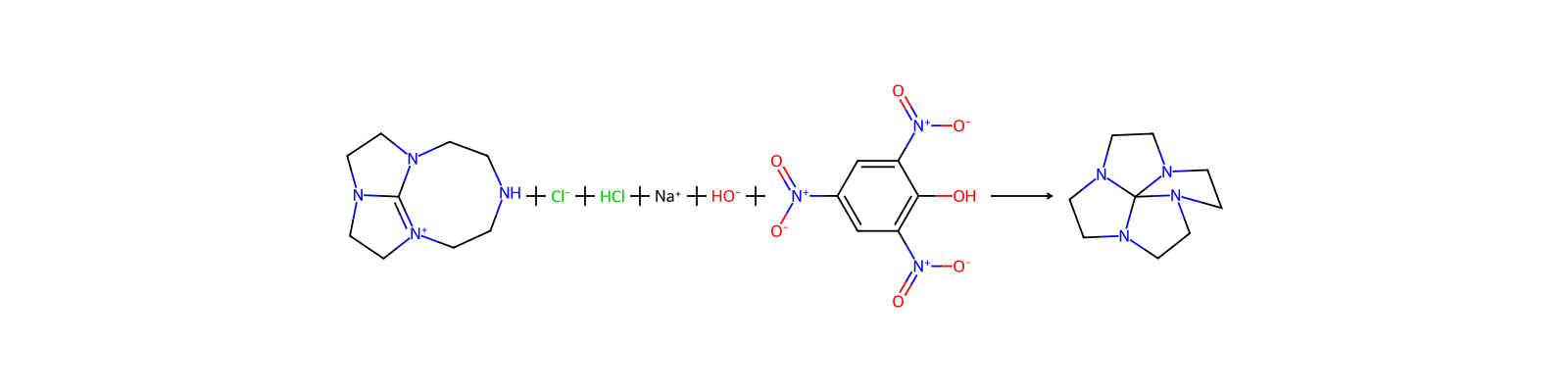
関連反応
26 件





関連ノート
読み込み中…