Phenothiazine
データを補完しています。しばらくしてからページを更新すると最新の内容を表示できます
92-84-2c1ccc2c(c1)Nc1ccccc1S2WJFKNYWRSNBZNX-UHFFFAOYSA-NPhenothiazine is a light green to steel-blue powder. Acquires a greenish-brown tint under exposure to sunlight. (NTP, 1992)
92-84-2DTXSID5021126CHEMBL828CHEBI:37931log Kow = 4.15
4.15
3.97
YELLOW, RHOMBIC LEAFLETS OR DIAMOND-SHAPED PLATES FROM TOLUENE OR BUTANOL
YELLOW PRISMS FROM ALCOHOL
GRAYISH-GREEN TO GREENISH YELLOW POWDER, GRANULES OR FLAKES
Grayish-green to greenish-yellow solid. [insecticide]
less than 1 mg/mL at 68 °F (NTP, 1992)
FREELY SOL IN BENZENE; SOL IN ETHER & IN HOT ACETIC ACID; SLIGHTLY SOL IN ALCOHOL & IN MINERAL OILS; PRACTICALLY INSOL IN PETROLEUM ETHER, CHLOROFORM
VERY SOL IN ACETONE
Water solubilty = 1.59 mg/l at 25 °C
Solubility in water: none
Insoluble
安全情報は参考情報です。供給元の安全データシート(SDS)、適用法令、専門家による評価に代わるものではありません。
This chemical does not meet GHS hazard criteria for 0.7% (24 of 3466) of reports.
Warning
H302 (94.2%): Harmful if swallowed [Warning Acute toxicity, oral]
P260, P261, P264, P270, P272, P273, P280, P301+P317, P302+P352, P319, P321, P330, P333+P317, P362+P364, P391, and P501 (click each P-code to see the statement)
Aggregated GHS information provided per 3466 reports by companies from 53 notifications to the ECHA C&L Inventory. Each notification may be associated with multiple companies.
Warning
Chemical: 10H-Phenothiazine
10H-Phenothiazine is listed on the EPA's Chemical Data Reporting (CDR) system. Manufacturers and importers of 10H-Phenothiazine are required to report information about their production and use of this chemical to the EPA under the Toxic Substances Control Act (TSCA). (40 eCFR Part 711)
REACH registered substance: Phenothiazine (EC: 202-196-5)
Phenothiazine: Does not have an individual approval but may be used under an appropriate group standard
Flash point data for this chemical are not available, but it is probably combustible. (NTP, 1992)
Combustible. Gives off irritating or toxic fumes (or gases) in a fire.
SOME PHENOTHIAZINE IS CONVERTED WITHIN GUT TO SOL DERIV, MAINLY PHENOTHIAZINE SULFATE...
YIELDS 3-HYDROXYPHENOTHIAZINE IN DOGS. /FROM TABLE/
THE ANTHELMINTIC, PHENOTHIAZINE, WAS OXIDIZED TO SULFOXIDE BY ENZYMES OF THE PROGLOTTIDS OF THE CESTODE, MONIEZIA EXPANSA & CYTOSOL OF INTESTINAL EPITHELIAL CELLS OF THE NEMATODE ASCARIS SUUM. ENZYMES IN THESE TISSUES ALSO DECR SULFOXIDES TO THIOETHERS IN ABSENCE OF O.
RAT, MOUSE, & GERBIL EXCRETED THE MAJORITY OF PHENOTHIAZINE IN CONJUGATED FORM. THE RAT, MOUSE, & GERBIL PRODUCED LEUCOPHENOTHIAZONE SULFATE AS MAJOR METABOLITE, RELYING MORE ON C-OXIDATION PATHS THAN THE HAMSTER WHICH EXCRETED LARGE AMT OF PHENOTHIAZINE N-GLUCURONIDE.
BECAUSE OF ITS LOW SOLUBILITY, RATE OF ITS ABSORPTION FROM GI TRACT IS DEPENDENT ON PARTICLE SIZE. MICRONIZED FORM OF DRUG IS ABSORBED RAPIDLY.
...ABOUT 30-50% OF ORAL DOSE PASSES THROUGH ALIMENTARY TRACT UNCHANGED. SOME PHENOTHIAZINE IS CONVERTED WITHIN GUT TO SOL DERIV...WHICH ARE ABSORBED INTO PORTAL VENOUS SYSTEM. ...DERIV ARE SECRETED IN URINE & ARE RESPONSIBLE FOR ITS RED COLOR WHEN EXPOSED TO AIR. THEY ALSO APPEAR IN BILE & IN MILK OF LACTATING ANIMALS. URINARY & FECAL EXCRETION OF PHENOTHIAZINE OR ITS DERIV ACCOUNTS FOR 80% OF ORAL DOSE IN SHEEP; FATE OF REMAINING 20% IS UNKNOWN.
URINARY & FECAL EXCRETION OF PHENOTHIAZINE OR ITS DERIV ACCOUNTS FOR 80% OF ORAL DOSE IN SHEEP; FATE OF REMAINING 20% IS UNKNOWN.
ABSORBED BY SKIN.
... Phenothiazine was readily absorbed from the alimentary tract, with the free drug and reddish oxidation products appearing in the urine.
Used to manufacture veterinary anthelmintics and other pharmaceuticals; [Merck Index, #7252]
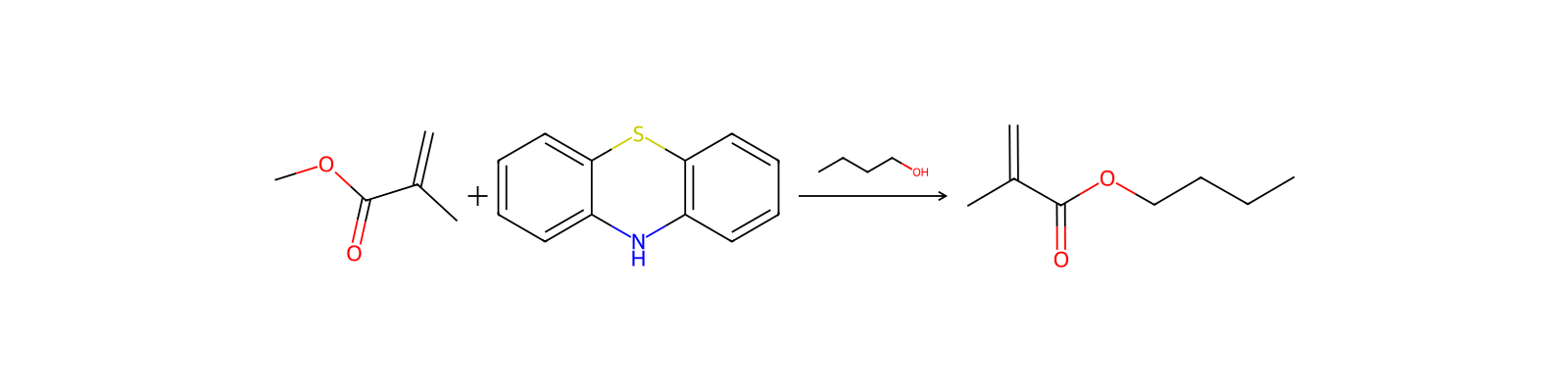
MFR OF DYES; PARENT CMPD FOR CHLORPROMAZINE & RELATED ANTIPSYCHOTIC DRUGS; POLYMERIZATION INHIBITOR; ANTIOXIDANT
Used in control of insects that breed in manure
読み込み中…
700 °F at 760 mmHg (NTP, 1992)
371 °C @ 760 MM HG
371 °C
700 °F
700 °F
365.9 to 366.6 °F (NTP, 1992)
185.1 °C
185.1 °C
365 °F
365 °F
化学的特性Phenothiazine is a greenish-yellow to greenish-gray crystalline substance. Slight odor and taste.
Pursuant to section 8(d) of TSCA, EPA promulgated a model Health and Safety Data Reporting Rule. The section 8(d) model rule requires manufacturers, importers, and processors of listed chemical substances and mixtures to submit to EPA copies and lists of unpublished health and safety studies. Phenothiazine is included on this list.
While petitions for tolerances for negligible residues are pending and until action is completed on the petitions, an interim tolerance of 2 ppm is established for residues of phenothiazine in or on the following raw agricultural commodity(ies): meat, fat, and meat byproducts of cattle.
PHENOTHIAZINE is slowly decomposed by sunlight. (NTP, 1992). Organosulfides are incompatible with acids, diazo and azo compounds, halocarbons, isocyanates, aldehydes, alkali metals, nitrides, hydrides, and other strong reducing agents. Reactions with these materials generate heat and in many cases hydrogen gas. Many of these compounds may liberate hydrogen sulfide upon decomposition or reaction with an acid.
Fires involving this compound should be controlled with a dry chemical, carbon dioxide or Halon extinguisher. (NTP, 1992)
Use powder, water spray, foam, carbon dioxide.
Fresh air, rest.
Remove contaminated clothes. Rinse and then wash skin with water and soap. Refer for medical attention if skin irritation occurs.
Rinse with plenty of water (remove contact lenses if easily possible).
Rinse mouth. Seek medical attention if you feel unwell.
EYES: First check the victim for contact lenses and remove if present. Flush victim's eyes with water or normal saline solution for 20 to 30 minutes while simultaneously calling a hospital or poison control center. Do not put any ointments, oils, or medication in the victim's eyes without specific instructions from a physician. IMMEDIATELY transport the victim after flushing eyes to a hospital even if no symptoms (such as redness or irritation) develop.
(General first aid procedures)
SMALL SPILLS AND LEAKAGE: If a spill of this chemical occurs, FIRST REMOVE ALL SOURCES OF IGNITION, then you should dampen the solid spill material with acetone and transfer the dampened material to a suitable container. Use absorbent paper dampened with acetone to pick up any remaining material. Seal your contaminated clothing and the absorbent paper in a vapor-tight plastic bag for eventual disposal. Solvent wash all contaminated surfaces with acetone followed by washing with a soap and water solution. Do not reenter the contaminated area until the Safety Officer (or other responsible person) has verified that the area has been properly cleaned.
SRP: At the time of review, criteria for land treatment or burial (sanitary landfill) disposal practices are subject to significant revision. Prior to implementing land disposal of waste residue (including waste sludge), consult with environmental regulatory agencies for guidance on acceptable disposal practices.
Personal protection: particulate filter respirator adapted to the airborne concentration of the substance. Do NOT let this chemical enter the environment. Sweep spilled substance into covered containers. If appropriate, moisten first to prevent dusting. Carefully collect remainder. Then store and dispose of according to local regulations.
SRP: Local exhaust ventilation should be applied wherever there is an incidence of point source emissions or dispersion of regulated contaminants in the work area. Ventilation control of the contaminant as close to its point of generation is both the most economical and safest method to minimize personnel exposure to airborne contaminants.
MAIN PRECAUTIONS MUST BE DIRECTED @ PREVENTING ACCIDENTAL INGESTION OF MATERIAL DURING MFR & USE. ... PROCESSES SHOULD BE ENCLOSED & LOCAL EXHAUST VENTILATION SHOULD BE APPLIED WHERE DUST WOULD OTHERWISE ESCAPE... FIRE PRECAUTIONS SHOULD BE PROVIDED...
The worker should immediately wash the skin when it becomes contaminated.
The worker should wash daily at the end of each work shift.
For more Preventive Measures (Complete) data for PHENOTHIAZINE (6 total), please visit the HSDB record page.
PREVIOUS DRENCHING WITH CARBON TETRACHLORIDE MAY ALSO SERVE TO INCR ITS TOXICITY.
ANTIOXIDANTS, EG PHENOTHIAZINE, INHIBITED THE MUTAGENICITY OF BENZO(A)PYRENE & SOME OF ITS DERIVATIVES TOWARDS SALMONELLA TYPHIMURIUM STRAIN TA98; THIS INHIBITION WAS CONCN DEPENDENT.
TERRESTRIAL FATE: Based on a recommended classification scheme(1), an estimated Koc value of 4300(SRC), determined from an experimental log Kow(2) and a recommended regression-derived equation(3), indicates that phenothiazine will have slight mobility in soil(SRC). Volatilization of phenothiazine will not be important from moist soil surfaces(SRC) given an estimated Henry's Law constant of 2.8X10⁻⁸ atm-cu m/mole(4,SRC), or from dry soil surfaces(SRC) based on an estimated vapor pressure of 8.9X10⁻⁷ mm Hg(5,SRC). The adsorptivity of phenothiazine is expected to be sensitive to pH since phenothiazine is a base with a pKa of 2.52(6). According to a MITI biodegradation study(7), biodegradation of phenothiazine will not be an important fate process in soil(SRC).
AQUATIC FATE: Based on a recommended classification scheme(1), an estimated Koc value of 4300(SRC), determined from an experimental log Kow(2) and a recommended regression-derived equation(3), indicates that phenothiazine would adsorb to suspended solids and sediment(SRC). Phenothiazine would be essentially non-volatile from water surfaces based on an estimated Henry's Law constant of 2.8X10⁻⁸ atm-cu m/mole(SRC), developed using a fragment constant estimation method(4,SRC). Experimental BCF values of 127-660 and 180-528(6) suggest that phenothiazine will bioconcentrate in aquatic organisms(SRC) according to a recommended classification scheme(5). According to a MITI biodegradation study(6), biodegradation of phenothiazine will not be an important fate process in water(SRC).
ATMOSPHERIC FATE: According to a model of gas/particle partitioning of semivolatile organic compounds in the atmosphere(1), phenothiazine, which has an estimated vapor pressure of 8.9X10⁻⁷ mm Hg at 25 °C(2,SRC) will exist as both vapor and particulate in the ambient atmosphere. Vapor-phase phenothiazine is degraded in the atmosphere by reaction with photochemically produced hydroxyl radicals(SRC); the half-life for this reaction in air is estimated to be about 2 hours(3,SRC). Particulate-phase phenothiazine may be physically removed from the air by dry deposition(SRC).
Occupational hepatotoxin - Secondary hepatotoxins: the potential for toxic effect in the occupational setting is based on cases of poisoning by human ingestion or animal experimentation.
The most common adverse reactions include:
The substance can be absorbed into the body by ingestion.
inhalation, skin absorption, ingestion, skin and/or eye contact
A review of 48 hospital-admitted phenothiazine toxicities with concentrations of 200 mg to 500 mg per patient has listed common reactions such as hypothermia, tachycardia, tachypnea, and decreased diastolic blood pressure. A tendency towards obtundation can present in cases where other drugs were also involved. Furthermore, a pupil size of less than 3 mm was present in the most severe poisoning cases. Prolonged QTc interval was noted, and patients were treated with diphenylhydantoin. An echocardiogram is a suggested approach for all cases of phenothiazine overdoses.
Severe itching. Redness.
Abdominal cramps.
Itching, irritation, reddening skin; hepatitis, hemolytic anemia, abdominal cramps, tachycardia; kidney damage; skin photophobia (abnormal visual intolerance to light) sensitization
The substance is toxic to aquatic organisms. Bioaccumulation of this chemical may occur in fish. The substance may cause long-term effects in the aquatic environment. This substance does enter the environment under normal use. Great care, however, should be taken to avoid any additional release, for example through inappropriate disposal.
The Koc of phenothiazine is estimated as approximately 4300(SRC), using an experimental log Kow of 4.15(1) and a regression-derived equation(2,SRC). According to a recommended classification scheme(3), this estimated Koc value suggests that phenothiazine has slight mobility in soil(SRC). The adsorptivity of phenothiazine is expected to be sensitive to pH since phenothiazine is a base with a pKa of 2.52(4).
Pursuant to section 8(d) of TSCA, EPA promulgated a model Health and Safety Data Reporting Rule. The section 8(d) model rule requires manufacturers, importers, and processors of listed chemical substances and mixtures to submit to EPA copies and lists of unpublished health and safety studies. Phenothiazine is included on this list.
While petitions for tolerances for negligible residues are pending and until action is completed on the petitions, an interim tolerance of 2 ppm is established for residues of phenothiazine in or on the following raw agricultural commodity(ies): meat, fat, and meat byproducts of cattle.
Synthesis of promethazine hydrochloride
Polymerization inhibitor for chloroprene
For more Uses (Complete) data for PHENOTHIAZINE (10 total), please visit the HSDB record page.
DISPERSIBLE POWDERS (36%).
GRADES: TECHNICAL; NF.
Printing Ink Manufacturing
10H-Phenothiazine: ACTIVE
PURIFICATION: VIERLING, US PATENT 2,887,482 (1959); RIGBY, US PATENT 3,000,887 (1961 TO SHELL OIL).
/OXIDATION/...CAN BE PREVENTED BY ADMIXTURE OF 0.3-1.0% METHENAMINE.
...PARENT OF NUMBER OF DYESTUFFS INCL METHYLENE BLUE, THIAZINE DYES & THIAMINE BLUE.
INTRODUCED IN 1925, IT WAS ONE OF EARLIEST ORG INSECTICIDES. ACTION: ORAL INSECTICIDE & ANTHELMINTIC. FED IN SALT OR MINERAL SUPPLEMENT TO CONTROL HORN FLY & FACE FLY LARVAE & TO REMOVE & CONTROL CERTAIN INTERNAL PARASITES.
解説フェノチアジン,黄色の板状晶.融点182 ℃,沸点290 ℃(5.3 kPa).ベンゼン,エーテルに可溶,水に不溶.昇華性で,空気中で光により酸化されやすい.塩化鉄(Ⅲ)のエタノール溶液で緑色を呈する.銅と煮沸するとカルバゾールを与える.殺菌,殺虫,駆虫薬として用いられる.LD50 5000 mg/kg(ラット,静口).森北出版「化学辞典(第2版)
用途殺虫剤、尿路感染症に用いられる。重合抑制剤、酸化防止剤。
説明Phenothiazine was initially synthesized in 1883 by Bernthsen. It was the basis for the development of other drugs including the phenothiazine class of antipsychotics or neuroleptics. Phenothiazines are the largest class of neuroleptics and include agents such as chlorpromazine, thioridazine, and prochlorperazine. In 1933, a derivative of phenothiazine, promethazine, was synthesized. It was found to have much more significant sedative and antihistaminic effects than previous derivatives of phenothiazine and it was used to induce sedation for surgical patients. After promethazine was developed, a series of agents, including chlorpromazine, was synthesized and tested in France at a military hospital by the French physician Laborit. Laborit found that chlorpromazine induced calm in patients and had other effects that might be useful clinically. Chlorpromazine, known colloquially as ‘Laborit’s drug’ was released into the market in 1953 after a trial published in 1952 showed efficacy in treatment of psychosis in 38 individuals who received daily injections of chlorpromazine. Chlorpromazine is the prototypical drug for the phenothiazine class of antipsychotics. The phenothiazines are classified as low-potency antipsychotics and have more side effects at standard doses than the newer agents used as neuroleptics. For example, they are more anticholinergic and have more extrapyramidal effect than newer agents.
使用Phenothiazines are neuroleptic agents that affect a variety of receptors including dopaminergic receptor sites. Phenothiazines are used to treat psychosis including schizophrenia; violent, agitated, disturbed behavior; and mania secondary to bipolar disorder. Other uses include treatment of pain, headache, hiccups, acute severe anxiety, idiopathic dystonia, withdrawal, taste disorders, leishmaniasis, acute intermittent porphyria, and alleviation of nausea and vomiting. Phenothiazines allow smoother induction of anesthesia, potentiate anesthetic agents, and treat behavioral symptoms secondary to Alzheimer disease and senile dementia. Some phenothiazines exert an antipruritic effect and are useful for the treatment of neurodermatitis and pruriginous eczema, and relieve psychogenic itching.
一般的な説明Light green to steel-blue powder. Acquires a greenish-brown tint under exposure to sunlight.
使用用途フェノチアジンの主な使用用途は、殺虫剤、尿路感染症の治療薬や、重合禁止剤、酸化防止剤、染料などです。また、フェノチアジンの誘導体は、フェノチアジン系抗精神病薬として広く使用されており、特に統合失調症治療薬としての効能が知られています。 代表例としては、クロルプロマジンやプロメタジンなどが特に有名です。また、プロメタジンは、抗ヒスタミン薬、抗パーキンソン剤として知られています。
合成方法図2. フェノチアジンの合成 フェノチアジンは、と硫黄を触媒存在下で溶融させることで合成が可能です。この際、硫化水素が副生します。
純化方法Crystallise it from *benzene, toluene, hexane or Me2CO (charcoal) after boiling for 10minutes under reflux. Filter the crystals off and dry them in an oven at 100o, then in a vacuum desiccator over paraffin chips. Also recrystallise it twice from water and dry it in an oven at 100o for 8-10hours. It sublimes at 130o/1mm and has UV with at 253nm in heptane. [Beilstein
定義ChEBI: The 10H-tautomer of phenothiazine.