
HRID 9644反応物として
Benzyl mercaptan

100-53-8SCc1ccccc1UENWRTRMUIOCKN-UHFFFAOYSA-NBenzyl thiol is a thiol that is toluene in which one of the methyl hydrogens has been replaced by a sulfanyl group. It has a role as a plant metabolite. It is a member of benzenes and a thiol. It derives from a hydride of a toluene.
100-53-8、16528-58-8DTXSID6026664CHEMBL1224557CHEBI:137674Repulsive, garlic-like odor
Odor of leek
1.058 at 20 °C
1.050-1.058
Colorless liquid
Water-white, mobile liquid
Slightly soluble in carbon tetrachloride; soluble in carbon disulfide; very soluble in ethanol and ether
insoluble in water; soluble in oils
1 ml in 1 ml 95% alcohol (in ethanol)
安全情報は参考情報です。供給元の安全データシート(SDS)、適用法令、専門家による評価に代わるものではありません。
Warning
H302 (100%): Harmful if swallowed [Warning Acute toxicity, oral]
P264, P264+P265, P270, P280, P301+P317, P305+P351+P338, P330, P337+P317, and P501 (click each P-code to see the statement)
Aggregated GHS information provided per 1599 reports by companies from 12 notifications to the ECHA C&L Inventory. Each notification may be associated with multiple companies.
Danger
H227: Combustible liquid [Warning Flammable liquids]
Chemical: Benzenemethanethiol
Regulation (EC) No 1831/2003 (amended)
SP - indicates a substance that is identified in a proposed Significant New Use Rule.
Benzyl mercaptan: Does not have an individual approval but may be used under an appropriate group standard
Combustible
Flammable when exposed to heat or flame.
A lachrymator; A skin, eye, and respiratory tract irritant; Inhalation of high concentrations can cause mild CNS depression; [CHEMINFO] Causes weakness, ataxia, and cyanosis in lethal inhalation studies of mice; [RTECS] Safe when used as a flavoring agent in food; [JECFA] An irritant; May have CNS effects; [MSDSonline] See Thiols.
Benzyl mercaptan is a food additive permitted for direct addition to food for human consumption as a synthetic flavoring substance and adjuvant in accordance with the following conditions: a) they are used in the minimum quantity required to produce their intended effect, and otherwise in accordance with all the principles of good manufacturing practice, and 2) they consist of one or more of the following, used alone or in combination with flavoring substances and adjuvants generally recognized as safe in food, prior-sanctioned for such use, or regulated by an appropriate section in this part.
The simple thiol flavoring agents considered are alkyl and alicyclic thiols (/including benzyl mercaptan/) and aromatic thiols... . These substances may be metabolized along several pathways. Simple aliphatic and aromatic thiols undergo S-methylation in mammals to produce the corresponding methyl thioether or sulfide. Methylation is catalysed by thiopurine methyltransferase in the cytoplasm and thiol methyltransferase in microsomes, and both reactions require S-adenosyl-l-methionine as a methyl group donor. Thiopurine methyltransferase is present in human liver, kidney, and erythrocytes; preferential substrates for this enzyme include aromatic and heterocyclic thiols. S-Methylation of aliphatic thiols is catalysed by microsomal thiol methyltransferase, and the resulting methyl thioether (sulfide) metabolite would undergo S-oxidation to give the methyl sulfoxide and methyl sulfone analogues as urinary products. /Thiols/
The methyl aromatic thioethers (Methyl phenyl sulfide and Benzyl methyl sulfide) are predicted to be major metabolites of the corresponding aromatic thiols (Benzenethiol and Benzyl mercaptan) and would be oxidized to sulfoxides and sulfones, which would be excreted.
Benzyl mercaptan... is readily metabolized to benzyl disulfide, and then to benzyl alcohol by the basidiomycete fungi Coriolus versicolor and Tyromyces palustris.
Simple aliphatic and aromatic thiols undergo S-methylation in mammals to produce the corresponding methyl thioether or sulfide. Methylation is catalysed by thiopurine methyltransferase in the cytoplasm and thiol methyltransferase in microsomes, and both reactions require S-adenosyl-l-methionine as a methyl group donor. Thiopurine methyltransferase is present in human liver, kidney, and erythrocytes; preferential substrates for this enzyme include aromatic and heterocyclic thiols. S-Methylation of aliphatic thiols is catalysed by microsomal thiol methyltransferase, and the resulting methyl thioether (sulfide) metabolite would undergo S-oxidation to give the methyl sulfoxide and methyl sulfone analogues as urinary products. Thiols may react with glutathione and other endogenous thiol substances to form mixed disulfides. Both microsomal and cytoplasmic thioltransferasess have been reported to catalyse the formation of mixed disulfides. The resulting mixed disulfides can undergo reduction back to thiols, oxidative desulfuration, or oxidation to a sulfonic acid via the intermediate thiosulfinate and sulfinic acids. The principal form in the circulation would probably be a mixed disulfide formed with albumin. /Simple thiols/




194-195 °C
194.00 to 195.00 °C. @ 760.00 mm Hg
194-195 °C
化学的特性Benzyl mercaptan has repulsive, garlic-like odor. It oxidizes in air to dibenzyl disulfide.
2 - Materials that, under emergency conditions, can cause temporary incapacitation or residual injury.
2 - Materials that must be moderately heated or exposed to relatively high ambient temperatures before ignition can occur. Materials would not under normal conditions form hazardous atmospheres with air, but under high ambient temperatures or under moderate heating could release vapor in sufficient quantities to produce hazardous atmospheres with air.
0 - Materials that in themselves are normally stable, even under fire conditions.
Acute Tox. 4 (100%)
Flammable liquids - Category 4
Can react vigorously with oxidizing materials.
Oxidizes in air to dibenzyl disulfide.
In general, materials which are toxic as stored or which can decompose into toxic components ... should be stored in a cool, well-ventilated place, out of direct rays of the sun, away from areas of high fire hazard, and should be periodically inspected... Incompatible materials should be isolated from each other.
SRP: The most favorable course of action is to use an alternative chemical product with less inherent propensity for occupational exposure or environmental contamination. Recycle any unused portion of the material for its approved use or return it to the manufacturer or supplier. Ultimate disposal of the chemical must consider: the material's impact on air quality; potential migration in soil or water; effects on animal, aquatic, and plant life; and conformance with environmental and public health regulations.
SRP: Local exhaust ventilation should be applied wherever there is an incidence of point source emissions or dispersion of regulated contaminants in the work area. Ventilation control of the contaminant as close to its point of generation is both the most economical and safest method to minimize personnel exposure to airborne contaminants.
EC50 Daphnia magna straus (Waterflea, age <24 hr; immobilization) 0.26 mg/L/24 hr (95% confidence interval: 0.079-0.51 mg/L); static, temperature 19.5-20.5 °C, dissolved oxygen >2 mg/L, pH 7.97-8.17 /99.45% pure Benzyl mercaptan/
EC50 Daphnia magna straus (Waterflea, age <24 hr; immobilization) 0.15 mg/L/48 hr; static, temperature 19.5-20.5 °C, dissolved oxygen >2 mg/L, pH 7.97-8.17 /99.45% pure Benzyl mercaptan/
TERRESTRIAL FATE: Based on a classification scheme(1), an estimated Koc value of 520(SRC), determined from a structure estimation method(2), indicates that benzyl mercaptan is expected to have low mobility in soil(SRC). Volatilization of benzyl mercaptan from moist soil surfaces is expected to be an important fate process(SRC) given an estimated Henry's Law constant of 2.1X10⁻⁴ atm-cu m/mole(SRC), using a fragment constant estimation method(3). Benzyl mercaptan is not expected to volatilize from dry soil surfaces(SRC) based upon an estimated vapor pressure of 0.47 mm Hg(SRC), determined from a fragment constant method(4). Biodegradation data were not available(SRC, 2005).
AQUATIC FATE: Based on a classification scheme(1), an estimated Koc value of 520(SRC), determined from a structure estimation method(2), indicates that benzyl mercaptan is expected to adsorb to suspended solids and sediment(SRC). Volatilization from water surfaces is expected(3) based upon a estimated Henry's Law constant of 2.1X10⁻⁴ atm-cu m/mole(SRC), developed using a fragment constant estimation method(4). Using this Henry's Law constant and an estimation method(3), volatilization half-lives for a model river and model lake are 8 hours and 6 days, respectively(SRC). According to a classification scheme(5), an estimated BCF of 16(SRC), from an estimated log Kow of 2.5(6) and a regression-derived equation(7), suggests the potential for bioconcentration in aquatic organisms is low(SRC). Biodegradation data were not available(SRC, 2005).
ATMOSPHERIC FATE: According to a model of gas/particle partitioning of semivolatile organic compounds in the atmosphere(1), benzyl mercaptan, which has an estimated vapor pressure of 0.47 mm Hg at 25 °C(SRC), determined from a fragment constant method(2), is expected to exist solely as a vapor in the ambient atmosphere. Vapor-phase benzyl mercaptan is degraded in the atmosphere by reaction with photochemically-produced hydroxyl radicals(SRC); the half-life for this reaction in air is estimated to be 9 hours(SRC), calculated from its rate constant of 4.5X10⁻¹¹ cu cm/molecule-sec at 25 °C(SRC) that was derived using a structure estimation method(3). Benzyl mercaptan does contain chromophores that absorb at wavelengths >290 nm and therefore is expected to be susceptible to direct photolysis by sunlight(SRC).
Using a structure estimation method based on molecular connectivity indices(1), the Koc of benzyl mercaptan can be estimated to be 520(SRC). According to a classification scheme(2), this estimated Koc value suggests that benzyl mercaptan is expected to have low mobility in soil.
NATURALLY OCCURS IN COFFEE.
...BENZYL MERCAPTAN, WHICH ORIGINATES FROM A WEED (LAND CRESS), SOMETIMES PRESENT IN GRASSLAND.
An estimated BCF of 16 was calculated for benzyl mercaptan(SRC), using an estimated log Kow of 2.48(1) and a regression-derived equation(2). According to a classification scheme(3), this BCF suggests the potential for bioconcentration in aquatic organisms is low(SRC).
The Henry's Law constant for benzyl mercaptan is estimated as 2.1X10⁻⁴ atm-cu m/mole(SRC) using a fragment constant estimation method(1). This Henry's Law constant indicates that benzyl mercaptan is expected to volatilize from water surfaces(2). Based on this Henry's Law constant, the volatilization half-life from a model river (1 m deep, flowing 1 m/sec, wind velocity of 3 m/sec)(2) is estimated as 8 hours(SRC). The volatilization half-life from a model lake (1 m deep, flowing 0.05 m/sec, wind velocity of 0.5 m/sec)(2) is estimated as 6 days(SRC). Benzyl mercaptan is not expected to volatilize from dry soil surfaces(SRC) based upon an estimated vapor pressure of 0.47 mm Hg(SRC), determined from a fragment constant method(3).
/LABORATORY ANIMALS: Acute Exposure/ alpha-Toluenethiol rated 1 /(slight irritation)/ on rabbit eyes. ...Tested externally on eyes of rabbits and have been rated numerically on a scale of 1-10 according to degree of injury observed after 24 hr, paying particular attention to condition of cornea. Most severe injuries have been rated 10.
/LABORATORY ANIMALS: Acute Exposure/ ... A concentration of 17 mg/L (3347 ppm) was lethal to mice in 30 min, and a concentration of 6.3 mg/L (1240 ppm) was lethal in 2 hr.
/LABORATORY ANIMALS: Acute Exposure/ Clinical signs /of toxicity in male Wistar rats and Swiss mice exposed for 4 hr to/... several thiols /including benzyl mercaptan, 97% pure at doses of 58, 98, 130, 145, 185, and 235 ppm/ tested by inhalation: - Maximal sublethal and lethal concentrations induced characteristic symptoms of toxicity, i.e. increased respiration and restlessness (hyperactivity in mice), incoordinated movement and staggering gait, muscular weakness, partial skeletal muscle paralysis beginning in the hind limbs, light to severe cyanosis, tolerance of prone position, and mild to heavy sedation. - Fatal Responses usually followed one of two patterns: (1) animals exposed to maximal lethal concentrations died from respiratory arrest while in or shortly after removal from the chamber, and (2) those animals exposed to minimal lethal concentrations died while in a semiconscious condition of long duration. - The aromatic thiols induced some lethargy and sedation which was quickly terminated upon exposure to normal atmosphere. - Most of the thiols were irritating to the mucus membranes within approximately 15 minutes after exposure to high concentrations as evidenced by their rubbing of the eyes and nose, eye closure, occasional sneezing, watering of the eyes, and retracting of the head. /Aliphatic and Aromatic Thiols (Mercaptans)/
/LABORATORY ANIMALS: Acute Exposure/ /Benzyl mercaptan, 99.3% pure (sample contained 0.04% Dibenzylsulphide and 0.13% Dibenzyldisulphide)/... was applied in its original form to the dorsal area skin (10% surface area) of one group of 10 Sprague-Dawley rats (5 males and 5 females) at a dose of 2000 mg/kg. The test site was then covered by semi-occlusive dressing for 24 hours. Clinical signs, mortality and body weight gain were checked for a period of 14 days following the single administration of the test substance. ...No clinical signs and no cutaneous reactions were observed during the study. General behavior and body weight was not affected. Macroscopic examination of the main organs of the animals revealed no apparent abnormalities.
For more Non-Human Toxicity Excerpts (Complete) data for BENZYL MERCAPTAN (9 total), please visit the HSDB record page.
The rate constant for the vapor-phase reaction of benzyl mercaptan with photochemically-produced hydroxyl radicals has been estimated as 4.5X10⁻¹¹ cu cm/molecule-sec at 25 °C(SRC) using a structure estimation method(1). This corresponds to an atmospheric half-life of about 9 hours at an atmospheric concentration of 5X10+5 hydroxyl radicals per cu cm(1). Benzyl mercaptan is not expected to undergo hydrolysis in the environment due to the lack of hydrolyzable functional groups(2). Benzyl mercaptan does contain chromophores that absorb at wavelengths >290 nm and therefore is expected to be susceptible to direct photolysis by sunlight(SRC).
Occupational exposure to benzyl mercaptan may occur through inhalation and dermal contact with this compound at workplaces where benzyl mercaptan is produced or used. Use data indicate that the general population may be exposed to benzyl mercaptan ingestion of food products containing benzyl mercaptan as a flavoring. (SRC)
Benzyl mercaptan is a food additive permitted for direct addition to food for human consumption as a synthetic flavoring substance and adjuvant in accordance with the following conditions: a) they are used in the minimum quantity required to produce their intended effect, and otherwise in accordance with all the principles of good manufacturing practice, and 2) they consist of one or more of the following, used alone or in combination with flavoring substances and adjuvants generally recognized as safe in food, prior-sanctioned for such use, or regulated by an appropriate section in this part.
Used as an odorant, synthetic flavor, and to make pesticides; [HSDB] Used as a bacteriostat; [Hawley]
Odorant; flavors
Synthetic flavoring agent; reported uses in non-alcoholic beverages 0.15-0.25 ppm; ice cream, ices, etc 0.15-0.50 ppm; candy 0.50-0.75 ppm; baked goods 0.50-0.75 ppm.
Benzyl mercaptan is a food additive used as a synthetic flavoring substance and adjuvant.
Chemical intermediate in the production of pesticides
Benzenemethanethiol is listed as a High Production Volume (HPV) chemical (65FR81686). Chemicals listed as HPV were produced in or imported into the U.S. in >1 million pounds in 1990 and/or 1994. The HPV list is based on the 1990 Inventory Update Rule. (IUR) (40 CFR part 710 subpart B; 51FR21438).
Benzyl chloride + sodium hydrosulfide (thiolation).
Thiols can be prepared by a variety of methods. The most-utilized of these synthetic methods for tertiary and secondary thiols is acid-catalyzed synthesis; for normal and secondary thiols, the most-utilized methods are free-radical-initiated, alcohol substitution, or halide substitution; for mercaptoalcohols, the most-utilized method is oxirane addition; and for mercaptoacids and mercaptonitriles, the most-utilized methods are Michael-type additions. /Thiols/
Flavoring Agents -> JECFA Flavorings Index
Flavouring Agent -> FLAVOURING_AGENT -> JECFA Functional Classes
Flavouring Agent -> FLAVOURING_AGENT -> JECFA Functional Classes
Flavouring Agent -> FLAVOURING_AGENT -> JECFA Functional Classes
Flavouring Agent -> FLAVOURING_AGENT -> JECFA Functional Classes
Benzenemethanethiol: ACTIVE
...Benzyl mercaptan, which originates from a weed (land cress), sometimes present in grassland, can also cause off-flavors in milk.
FEMA No. 2147
用途農薬の製造における化学中間体
天然物の起源Reported found in coffee.
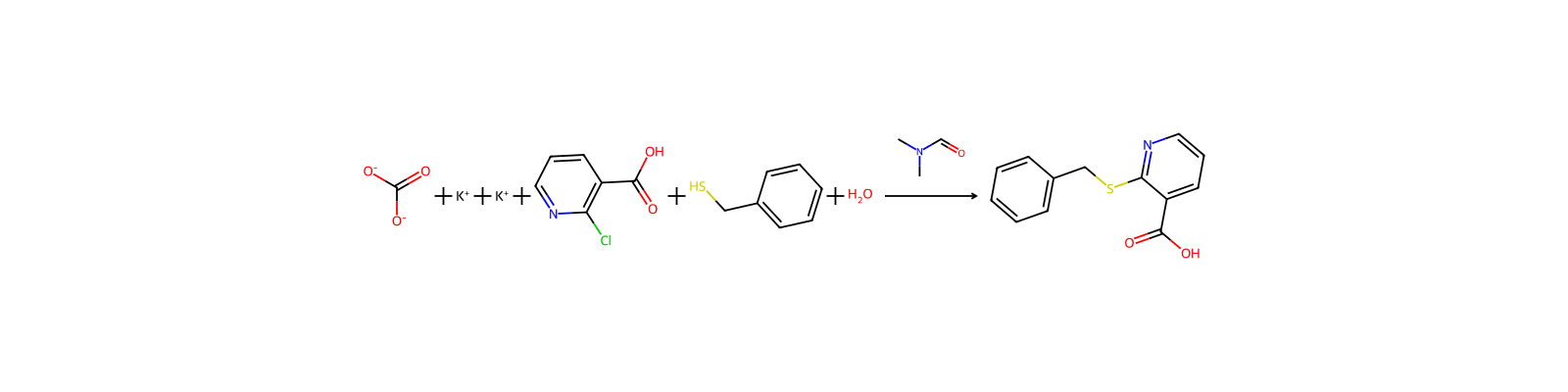
使用Benzyl mercaptan can be used as:A nucleophilic reagent in the cleavage of proanthocyanidins into their constitutive subunits.A reactant in the synthesis of dithiocarboxylic esters in the presence of phosphorus pentasulfide as a catalyst.A modifier to functionalize the surface of CNT for enhanced interaction with Pt-nanoparticles.
製造方法From benzyl chloride and potassium hydrosulfide.
純化方法Purify benzyl mercaptan via the mercury salt [see Kern J Am Chem Soc 75 1865 1953], which crystallises from *benzene as needles (m 121o), and then dissolve it in CHCl3. Pass H2S gas through the solution to regenerate the mercaptan. The HgS that precipitates is filtered off and washed thoroughly with CHCl3. The filtrate and washings are evaporated to remove CHCl3; then the residue is fractionally distilled under reduced pressure [Mackle & McClean, Trans Faraday Soc 58 895 1962]. [Beilstein 6 IV 2632.]