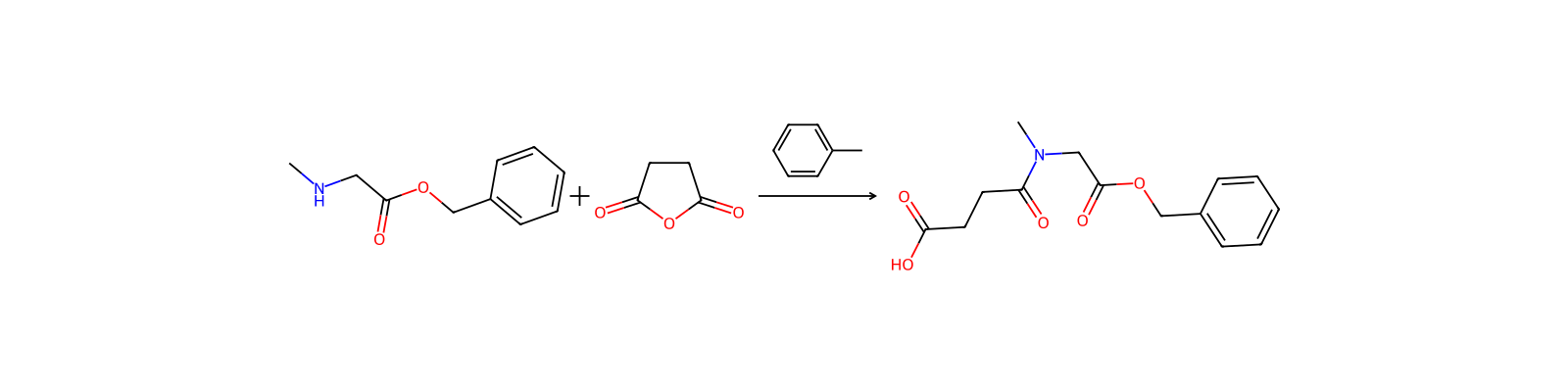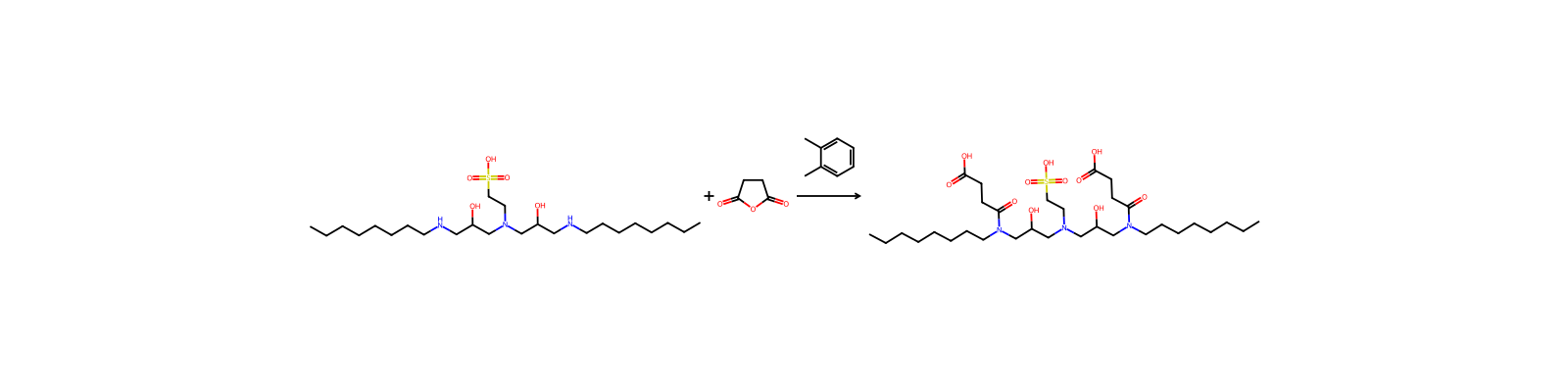
Succinic anhydride
108-30-5O=C1CCC(=O)O1RINCXYDBBGOEEQ-UHFFFAOYSA-NSuccinic anhydride appears as colorless needles or white crystalline solid. Melting point 237 °F. Sublimes at 239 °F at 5 mmHg pressure; and at 198 °F and 1 mmHg pressure. Moderately toxic and an irritant.
108-30-5、68412-02-2DTXSID7021287CHEMBL1370164CHEBI:365951.234 at 68 °F (NTP, 1992) - Denser than water; will sink
1.503 (also given as 1.104 and 1.234)
Bulk density: 47.2 lb/cu ft
Relative density (water = 1): 1.503
1.104 @25 °C
NEEDLES FROM ALC; RHOMBIC PYRAMIDS FROM CHLOROFORM OR CARBON TETRACHLORIDE
COLORLESS OR LIGHT-COLORED NEEDLES OR FLAKES
Orthorhombic prisms from abs alc.
Succinic anhydride forms rhombic pyramidal or bipyramidal crystals.
less than 1 mg/mL at 70 °F (NTP, 1992)
Insoluble in water
IN ETHANOL AT 25 °C: 2.56 G/100 ML; IN ETHER AT 25 °C: 0.64 G/100 ML; IN CHLOROFORM AT 25 °C: 0.87 G/100 ML
Soluble in chloroform, carbon tetrachloride, alcohol; very slightly soluble in ether and water.
Solubility in water: none
安全情報は参考情報です。供給元の安全データシート(SDS)、適用法令、専門家による評価に代わるものではありません。
Danger
H302: Harmful if swallowed [Warning Acute toxicity, oral]
P233, P260, P261, P264, P264+P265, P270, P271, P272, P280, P284, P301+P317, P301+P330+P331, P302+P352, P302+P361+P354, P304+P340, P305+P354+P338, P316, P317, P321, P330, P333+P317, P342+P316, P362+P364, P363, P403, P405, and P501 (click each P-code to see the statement)
This chemical does not meet GHS hazard criteria for 0.2% (2 of 1275) of reports.
Danger
H302 (98.5%): Harmful if swallowed [Warning Acute toxicity, oral]
Chemical: 2,5-Furandione, dihydro-
Hazard Traits - Respiratory Toxicity
2,5-Furandione, dihydro- is listed on the EPA's Chemical Data Reporting (CDR) system. Manufacturers and importers of 2,5-Furandione, dihydro- are required to report information about their production and use of this chemical to the EPA under the Toxic Substances Control Act (TSCA). (40 eCFR Part 711)
REACH registered substance: Succinic anhydride (EC: 203-570-0)
Succinic anhydride: Does not have an individual approval but may be used under an appropriate group standard
Flash point data for this compound are not available, however, it is probably combustible. (NTP, 1992)
Combustible. Gives off irritating or toxic fumes (or gases) in a fire. Finely dispersed particles form explosive mixtures in air.
A skin, eye, and respiratory tract irritant; [HSDB] May cause blisters and burns to skin; [CAMEO] The substance is severely irritating to the eyes and is irritating to the respiratory tract. [ICSC] An irritant (severe to eyes); [MSDSonline] See ACID ANHYDRIDES.
Used as an acidulant and dehydrating agent (food processing), cross-linking agent (epoxy resins and ion exchange membranes), and in gas and water treatment; Also used to make adhesives, paint drying oils, dyes, pharmaceuticals, esters, elastomers (cable coverings and extruded articles), hardeners for resins, starch modifiers in foods, succinylated monoglyceride food emulsifiers, silver haloid photographic emulsions, detergents, cosmetics, plant growth regulators, textiles, surface-active agents, lubricant additives, fire-retardants for paper, insect repellants, and herbicides; [HSDB]
Textiles (Fiber & Fabric Manufacturing) [Category: Industry]
Acidulant in processed foods
Dehydrating agent in dry food mixtures
Chemical intermediate for adhesives, dyes; elastomers for special tubings, cable coverings, and extruded articles.
Manufacture of chemicals, pharmaceuticals, esters; hardener for resins, starch modifier in foods.
(1972) No Data
(1975) No Data
(1984) 2.07X10+8 g /Anhydrides, Acyl Halides, and their derivatives/
(1972) 4.5X10+6 G (PRINCPL CUSTOMS DISTS)
(1974) 2.7X10+6 G (PRINCPL CUSTOMS DISTS)
(1984) 1.99X10+9 g /Organic acid anhydrides/
2023: 50,000 - <250,000 lb
2,5-Furandione, dihydro- is listed as a High Production Volume (HPV) chemical (65FR81686). Chemicals listed as HPV were produced in or imported into the U.S. in >1 million pounds in 1990 and/or 1994. The HPV list is based on the 1990 Inventory Update Rule. (IUR) (40 CFR part 710 subpart B; 51FR21438).
(1972) PROBABLY GREATER THAN 4.54X10+5 G
(1975) PROBABLY GREATER THAN 9.08X10+5 G
(1986) No Data
For more U.S. Production (Complete) data for SUCCINIC ANHYDRIDE (9 total), please visit the HSDB record page.
読み込み中…
157 °C
157 °C
502 °F at 760 mmHg (NTP, 1992)
261 °C at 760 mm Hg
261 °C
261 °C @760 [mm Hg]
247.3 °F (NTP, 1992)
119.6 °C
119 °C
119.6 °C
119.6 °C
化学的特性fine white crystalline solid
化学的特性Succinic anhydride is an odourless, colourless needle-like or white crystalline solid natural product. Molecular formula C4H4O3, molecular weight 100.07 g/mol, relative density 1.503, melting point 237 °F. 239 °F at 5 mmHg, 239 °F at 198 °F and 1 mmHg. Soluble in chloroform, carbon tetrachloride, and ethanol; very slightly soluble in ether and water (insoluble in water). Moderately toxic and irritating, emits pungent and irritating fumes when heated to decomposition.
SUCCINIC ANHYDRIDE reacts exothermically with water. Reactions are usually slow, but might become violent if local heating accelerates their rate. Acids accelerate the reaction with water. Incompatible with acids, strong oxidizing agents, alcohols, amines, and bases.
Fires involving this compound should be controlled using a Halon, carbon dioxide, or dry chemical extinguisher. A water spray may also be used. (NTP, 1992)
Use water spray, powder, alcohol-resistant foam, carbon dioxide.
Fresh air, rest.
Rinse and then wash skin with water and soap.
First rinse with plenty of water for several minutes (remove contact lenses if easily possible), then refer for medical attention.
Rinse mouth. Give one or two glasses of water to drink.
EYES: First check the victim for contact lenses and remove if present. Flush victim's eyes with water or normal saline solution for 20 to 30 minutes while simultaneously calling a hospital or poison control center. Do not put any ointments, oils, or medication in the victim's eyes without specific instructions from a physician. IMMEDIATELY transport the victim after flushing eyes to a hospital even if no symptoms (such as redness or irritation) develop.
SMALL SPILLS AND LEAKAGE: If a spill of this chemical occurs, FIRST REMOVE ALL SOURCES OF IGNITION, then you should dampen the solid spill material with acetone and transfer the dampened material to a suitable container. Use absorbent paper dampened with acetone to pick up any remaining material. Seal your contaminated clothing and the absorbent paper in a vapor-tight plastic bag for eventual disposal. Solvent wash all contaminated surfaces with acetone followed by washing with a soap and water solution. Do not reenter the contaminated area until the Safety Officer (or other responsible person) has verified that the area has been properly cleaned.
SRP: The most favorable course of action is to use an alternative chemical product with less inherent propensity for occupational exposure or environmental contamination. Recycle any unused portion of the material for its approved use or return it to the manufacturer or supplier. Ultimate disposal of the chemical must consider: the material's impact on air quality; potential migration in soil or water; effects on animal, aquatic, and plant life; and conformance with environmental and public health regulations.
Prevent dispersion of dust!
Inhalation /exposure can be prevented by/ local exhaust or breathing protection. Skin /exposure can be prevented by/ protective gloves. Eye /exposure can be prevented by/ safety goggles, or eye protection in combination with breathing protection if powder. /from table/
Do not eat, drink, or smoke during work. /from table/
TERRESTRIAL FATE: The half-life for the hydrolysis of succinic anhydride is 4.3 minutes(SRC), based on a rate constant of 0.0027 1/sec at 25 °C(1). The major fate of succinic anhydride in soil is expected to be hydrolysis (SRC). Succinic anhydride is not expected to volatilize from dry soil surfaces(SRC) based upon a vapor pressure of 1.5X10⁻³ mm Hg(2).
AQUATIC FATE: The half-life for the hydrolysis of succinic anhydride is 4.3 minutes(SRC), based on a rate constant of 0.0027 1/sec at 25 °C(1). The major fate of succinic anhydride in aquatic environments is expected to be hydrolysis(SRC). Bioconcentration of succinic anhydride in aquatic organisms is unlikely due its rapid hydrolysis(SRC). Approximately 78% of the succinic anhydride added to activated sewage sludge was biodegraded within five days(2,3); however, hydrolysis is expected to be the principal fate of succinic anhydride in water(SRC).
ATMOSPHERIC FATE: According to a model of gas/particle partitioning of semivolatile organic compounds in the atmosphere(1), succinic anhydride, which has a vapor pressure of 1.5X10⁻³ mm Hg at 25 °C(2) is expected to exist solely as a vapor in the ambient atmosphere. Vapor-phase succinic anhydride is degraded in the atmosphere by reaction with photochemically-produced hydroxyl radicals(SRC); the half-life for this reaction in air is estimated to be 70 days (SRC), calculated from its rate constant of 4.56X10⁻¹³ cu cm/molecule-sec at 25 °C(SRC) that was derived using a structure estimation method(3).
Cough. Shortness of breath. Sore throat.
Redness. Pain.
Diarrhoea. Nausea. Vomiting.
The following link will take the user to the National Toxicology Program (NTP) Test Agent Search Results page, which tabulates all of the "Standard Toxicology & Carcinogenesis Studies", "Developmental Studies", and "Genetic Toxicity Studies" performed with this chemical. Clicking on the "Testing Status" link will take the user to the status (i.e., in review, in progress, in preparation, on test, completed, etc.) and results of all the studies that the NTP has done on this chemical. [http://ntp-apps.niehs.nih.gov/ntp_tox/index.cfm?fuseaction=ntpsearch.searchresults&searchterm=108-30-5]
/SIGNS AND SYMPTOMS/ The substance irritates the eyes, the skin and the respiratory tract.
/SIGNS AND SYMPTOMS/ Inhalation /may cause/ cough, shortness of breath, sore throat. Skin or eye /exposure may cause/ redness, pain. Ingestion /may cause/ diarrhea, nausea, vomiting. /from table/
Succinic anhydride's production and use as a chemical reactant and intermediate, in the manufacture of pharmaceuticals and esters, as a hardener for resin(1), and as an acidulant in foods(2) may result in its release to the environment through various waste streams(SRC).
AEROBIC: Approximately 78% of the succinic anhydride added to activated sewage sludge at 50 ug/L was biodegraded within five days at 25 °C (1,2); however, hydrolysis is expected to be the principal fate of succinic anhydride in water and these results are probably for succinic acid, the hydrolysis product(SRC).
Succinic anhydride
Group 3: Not classifiable as to its carcinogenicity to humans
Volume 15: (1977) Some Fumigants, the Herbicides 2,4-D and 2,4,5-T, Chlorinated Dibenzodioxins and Miscellaneous Industrial Chemicals
1987
1987
Succinic Anhydride
Bioconcentration of succinic anhydride in aquatic organisms is unlikely due its rapid hydrolysis(1). Experimental bioconcentration factors (chemical concentration in fish/chemical concentration in water) of succinic anhydride in fish (Golden ide) were less than 10(2,3).
Hydrogenation of maleic anhydride or fumaric acid; heating of succinic acid at elevated temperature and pressure.
...By treating succinic acid with diketene, succinyl chloride or acetic anhydride, or by reacting diethyl ester with boron chloride.
... Warming succinic acid with acetic anhydride, acetyl chloride, or phosphorus oxychloride.
Succinic anhydride is manufactured by catalytic hydrogenation of maleic anhydride. In the most widely used commercial process this reaction is performed in the liquid phase, at temperatures of 120-180 °C and at moderate pressures, in the range of 500-4000 kPa (72-580 psi). Catalysts mentioned in the patent literature include nickel, Raney nickel, palladium on different carriers, and palladium complexes.
Grade: distilled.
...Available in US as commercial grade containing at least 99.5% of pure chemical, with maximum of 0.5% unsaturated compound...0.15% chlorides, 0.04% sulfates...and 20 mg/kg heavy metals.
Flake
Plastics Material and Resin Manufacturing
2,5-Furandione, dihydro-: ACTIVE
Anhydrous dentifrices containing an acid anhydride to maintain sweetener stability reported. Toothpaste containing 0.50 parts succinic anhydride is an example.
Succinic anhydride is...very useful dehydrating agent for removal of small amounts of moisture in...dry food mixtures which are later to be admixed with water. ...It is capable of taking up 20% of its weight of water, and the acid formed is desirable flavoring agent in many foods.
解説dihydro-2,5-furandione.C4H4O3(100.07).コハク酸を無水酢酸,塩化アセチルなどと加熱すると得られる.融点120 ℃,沸点261 ℃,128 ℃(1.33 kPa).クロロホルム,エタノールに可溶,エーテル,水に微溶.無水コハク酸は,熱水やアルカリ性水溶液によりコハク酸またはその塩になる。無水アルコールと反応してモノエステルを,アミンとの反応でモノアミドが得られる.種々の合成反応原料のほか,アルキド樹脂,接着剤,可塑剤の製造原料としても利用される.森北出版「化学辞典(第2版)
用途加工食品用酸味料、脱水剤、合成樹脂原料
説明Succinic anhydride, also called di hydro - 2,5- furandione , is an organic compound with the molecular formula C4H4O3.This colorless solid is the acid anhydride of succinic acid.
使用Succinic Anhydride is an acidulant that hydrolyzes very slowly to succinic acid in water. it has thermal stability and a low melting point of 118°c which permits it to be used in products at compara- tively low temperatures. it is used as a leavening acidulant for bak- ing powder.
一般的な説明Colorless needles or white crystalline solid. Melting point 237°F. Sublimes at 239°F at 5 mm Hg pressure; and at 198°F and 1 mm Hg pressure. Moderately toxic and an irritant.
一般的な説明Succinic anhydride is a cyclic anhydride of succinic acid with a five-membered ring. It is widely used in the manufacture of polymeric materials, pharmaceuticals, agrochemicals, dyes, surface-active agents, and organic flame-retardant materials. It also finds application as a cross-linking agent in ion-exchange membranes and a curing agent for epoxy resins.
使用用途無水コハク酸は、多様な分野で幅広く使用されています。以下は主な使用用途です。 1. 合成樹脂原料 無水コハク酸は、アルキド樹脂や不飽和ポリエステル樹脂の製造に用いられます。これらの樹脂は、塗料、接着剤、プラスチックなどの製品に使用されています。 特に植物を由来としたコハク酸を用いた樹脂は、生分解性プラスチックとして、資源循環や、の削減に寄与すると期待されています。 2. 有機合成 無水コハク酸は、エステル化剤やアシル化剤として、有機化合物の合成に使用されます。これにより、さまざまな化学製品や中間体の製造が可能になります。医薬品の合成、染料や顔料の製造においても重要な役割を果たす物質です。 特に、Friedel-Crafts条件下でのアシル化にしばしば用いられています。そのほか、アルケニル基を有するアルケニル無水コハク酸 (ASA) は、エポキシ樹脂硬化剤や、製紙用のサイズ剤として用いられています。
The compound is produced from succinic anhydride and hydrogen peroxide . This material must be stabilized by using a dehydrating agent such as disodium sulfate or magnesium sulfate.
製造方法A solution of succinic acid (500 mg, 42 mmol) and triethylamine (1.23 mL, 42 mmol) in anhydrous THF (120 mL) was allowed to react with triphosgene (42 mg, 7.0 mmol) at ice-water temperature for 10 min. The reaction mixture was subsequently stirred for a further 15 min at room temperature. The solution was then filtered, and the filtrate was concentrated to dryness. The residue was crystallized from ethyl acetate to afford the desired product as white crystals (370 mg, 85%).
製造方法無水コハク酸の製造方法 無水コハク酸の製造方法はいくつか存在します。工業的に用いられる方法は、メラミン-コハク酸プロセスです。 この方法では、メラミンとコハク酸を反応させて無水コハク酸を生成します。両者を混合し加熱すると、メラミンがコハク酸のカルボキシ基と反応して、中間体となるメラミンコハク酸塩が生成されます。その後、中間体を加熱すると無水コハク酸が生成され、メラミンが再生されます。 このプロセスでは、メラミンが反応後に再生・再利用され、触媒として機能するため、効率的に無水コハク酸を製造可能です。そのほか、を接触的に水素添加して製造する方法も一般的に用いられています。 また、コハク酸の脱水反応でも無水コハク酸を得ることが可能です。コハク酸を加熱し、無水酢酸、リン酸ペンタオキシドなどの適切な脱水剤を加えることで、水分子が除去され、無水コハク酸が生成されます。
純化方法Crystallise the anhydride from redistilled acetic anhydride or CHCl3, then filter, wash with diethyl ether and dry it in a vacuum. [Beilstein 17 H 606, 17 V 6.]