ホームMCPワークベンチSkills
ホームワークベンチ通知マイページ
llms.txt · MCPガイドプライバシーポリシー · 利用規約 · サポートv1.8.0
  1. ホーム
  2. /化合物

シクロペンタノン

Cyclopentanone
HCID 8452
ノートを作成反応を作成見積依頼を出す
印刷プレビュー
基本情報概要名称と識別子物性安全と法規制化学と産業関連反応化合物ノート
部分構造検索類似構造を探す

基本情報

CAS
120-92-3
標準SMILES
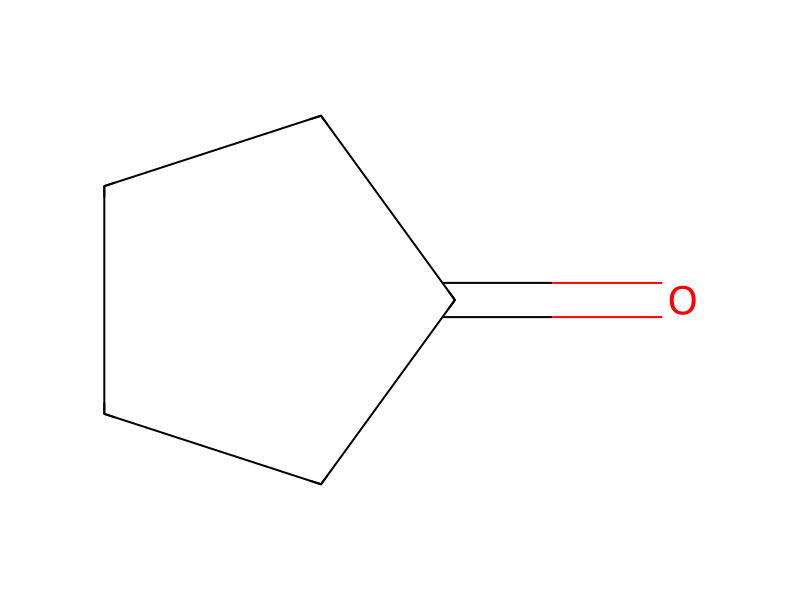
O=C1CCCC1
InChIKey
BGTOWKSIORTVQH-UHFFFAOYSA-N
分子式
C5H8O
平均分子量
84.12 g/mol
単同位体質量
84.05751487

概要

Cyclopentanone appears as a clear colorless liquid with a petroleum-like odor. Flash point 87 °F. Less dense than water and insoluble in water. Vapors heavier than air.

名称と識別子

優先名称
Cyclopentanone
IUPAC
cyclopentanone
現地名
シクロペンタノン
英語名
Cyclopentanone
分子式
C5H8O
分子量
84.12

名称と別名

CYCLOPENTANONE120-92-3Adipic ketoneKetocyclopentaneKetopentamethyleneDumasinAdipinketonAdipin ketonDTXSID3029154FEMA NO. 3910220W81TN3SNSC-4122
名称をさらに表示
シクロペンタノンシクロペンタン-1-オンケトシクロペンタンズマシンケトペンタメチレンアジピンケトンシクロペンテノンケトシクロペンタン(シクロペンタノン)シクロペンタノン, 99%Cyclopentanone-HGFEMA 3910opentanone
DTXCID209154CHEBI:16486RefChem:5722204-435-9cyclopentan-1-onecyclopentanonoxocyclopentaneNSC 4122

データベース識別子

CAS
120-92-3
PubChem CID
8452
DTXSID
DTXSID3029154
ChEMBL
CHEMBL18620
ChEBI
CHEBI:16486
UNII
220W81TN3S
EC Number
204-435-9
Nikkaji
J5.333C

物性

構造計算による物性

XLogP
0.4
極性表面積
17.1 Ų
水素結合供与体数
0
水素結合受容体数
1
回転可能結合数
0
重原子数
6
形式電荷
0
複雑度
58.3

実験および物理化学的性質

Chemical ClassesFlammable agents - 3rd degree
SolventsSolvents -> Ketones (<C12)
SpringerMaterials PropertiesSchoenflies notation
LogP0.38
OdorDISTINCTIVE ETHEREAL ODOR, SOMEWHAT LIKE PEPPERMINT
Food AdditivesFLAVORING AGENT OR ADJUVANT -> FDA Substance added to food
Density · 5 件

0.94869 at 68 °F (NTP, 1992) - Less dense than water; will float

0.94869 @ 20 °C/4 °C

Relative density (water = 1): 0.95

0.950-0.960

0.95 @ 20°C

Flavoring AgentsEU Flavoring substances
Color/FormWATER-WHITE, MOBILE LIQUID
Solubility · 5 件

Sol in alcohol, acetone, ether

Estimated water solubility of 9175 mg/l

Solubility in water: poor

water; miscible in ether

Miscible at room temperature (in ethanol)

安全と法規制

安全情報は参考情報です。供給元の安全データシート(SDS)、適用法令、専門家による評価に代わるものではありません。

GHS分類

GHS Classification · 6 件

Warning

H226: Flammable liquid and vapor [Warning Flammable liquids]

P210, P233, P240, P241, P242, P243, P264, P264+P265, P280, P302+P352, P303+P361+P353, P305+P351+P338, P321, P332+P317, P337+P317, P362+P364, P370+P378, P403+P235, and P501 (click each P-code to see the statement)

This chemical does not meet GHS hazard criteria for 1.8% (12 of 678) of reports.

Warning

H226 (98.2%): Flammable liquid and vapor [Warning Flammable liquids]

危険有害性情報

Regulatory Information · 6 件

Chemical: Cyclopentanone

Regulation (EC) No 1334/2008 (amended)

Cyclopentanone is listed on the EPA's Chemical Data Reporting (CDR) system. Manufacturers and importers of Cyclopentanone are required to report information about their production and use of this chemical to the EPA under the Toxic Substances Control Act (TSCA). (40 eCFR Part 711)

REACH registered substance: Cyclopentanone (EC: 204-435-9)

Cyclopentanone: Does not have an individual approval but may be used under an appropriate group standard

The New Jersey Worker and Community Right to Know Act requires public and private employers to provide information about hazardous substances at their workplaces. (N.J.S.A. 34:5A-1 et. seq.)

Other Safety InformationIMAP assessments - Cyclopentanone: Human health tier I assessment
DOT LabelFlammable Liquid
Fire Hazards · 3 件

Excerpt from ERG Guide 128 [Flammable Liquids (Water-Immiscible)]:

· HIGHLY FLAMMABLE: Will be easily ignited by heat, sparks or flames.

Flammable. Heating will cause rise in pressure with risk of bursting. Gas/air mixtures are explosive.

Fire PotentialDANGEROUS WHEN EXPOSED TO FLAME; CAN REACT WITH OXIDIZING MATERIALS.

化学と産業

薬理情報

Metabolism/Metabolites · 2 件

... MINOR (1-2%) METABOLITES OF CYCLOPENTANONE ... HAVE BEEN DETECTED IN RAT & RABBIT URINE. 2-HYDROXYCYCLOALKYLMERCAPTURIC ACIDS ... WHICH WERE PRESENT AS ... SULFATE ('DOUBLE CONJUGATE') ... PRESUMABLY FORMED BY DEHYDRATION OF CYCLOALKANOLS (MAJOR METABOLITES) TO CYCLOALKENES WITH SUBSEQUENT EPOXIDATION & MERCAPTURATION.

... RABBITS FED ... /CYCLOPENTANONE/ EXCRETED LARGE AMT (MORE THAN HALF THE DOSE) AS CYCLOPENTYL ... GLUCURONIDE ... MINOR AMT OF SULFATE CONJUGATES WERE ALSO PRESENT.

Cellular LocationsCytoplasm

用途と製造

Uses · 2 件

Used as intermediate for pharmaceuticals, biologicals, insecticides, and rubber chemicals; [Hawley]

INT FOR PHARMACEUTICALS, BIOLOGICALS, INSECTICIDES, & RUBBER CHEMICALS.

U.S. Imports(1983) 2.00X10+5 g
U.S. Production2023: 5,500,000 - <7,000,000 lb
Consumer UsesFragrance
Industry UsesSolvent
Methods of ManufacturingPREPD BY HEATING ADIPIC ACID TO 285-295 °C IN PRESENCE OF BARIUM HYDROXIDE, DISTILLING, EXTRACTING WITH ETHER & FRACTIONATING.
Formulations/Preparations99+% PURITY GRADE /AVAILABLE FROM COASTAL SPECIALTY CHEMICALS/
Use Classification · 6 件

Flavouring Agent -> FLAVOURING_AGENT -> JECFA Functional Classes

Flavoring Agents -> JECFA Flavorings Index

Flavouring Agent -> FLAVOURING_AGENT -> JECFA Functional Classes

Flavouring Agent -> FLAVOURING_AGENT -> JECFA Functional Classes

関連反応

879 件
反応記録を作成
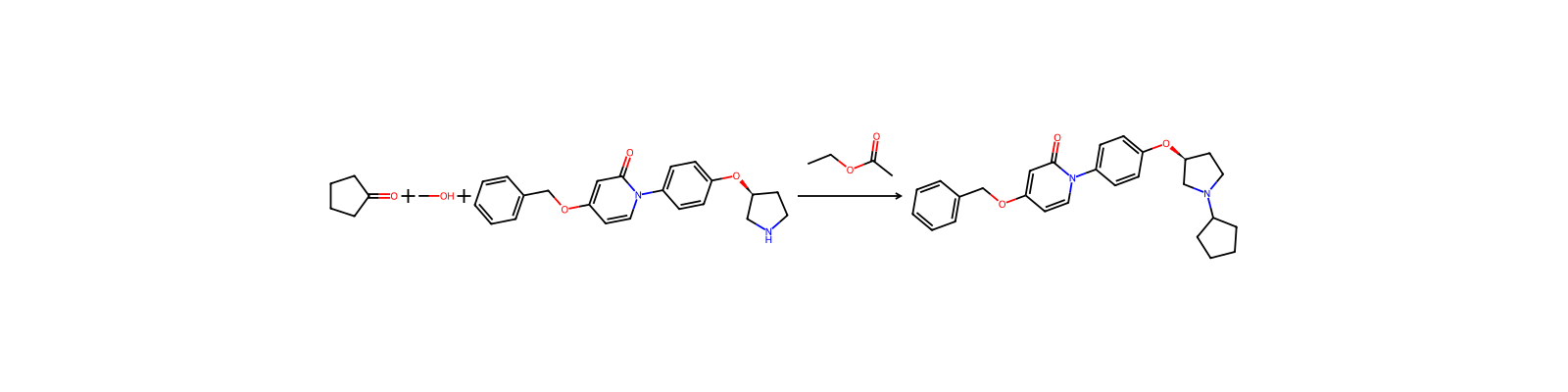
HRID 10961 の反応式
HRID 10961反応物としてuspto-grants-2006_08
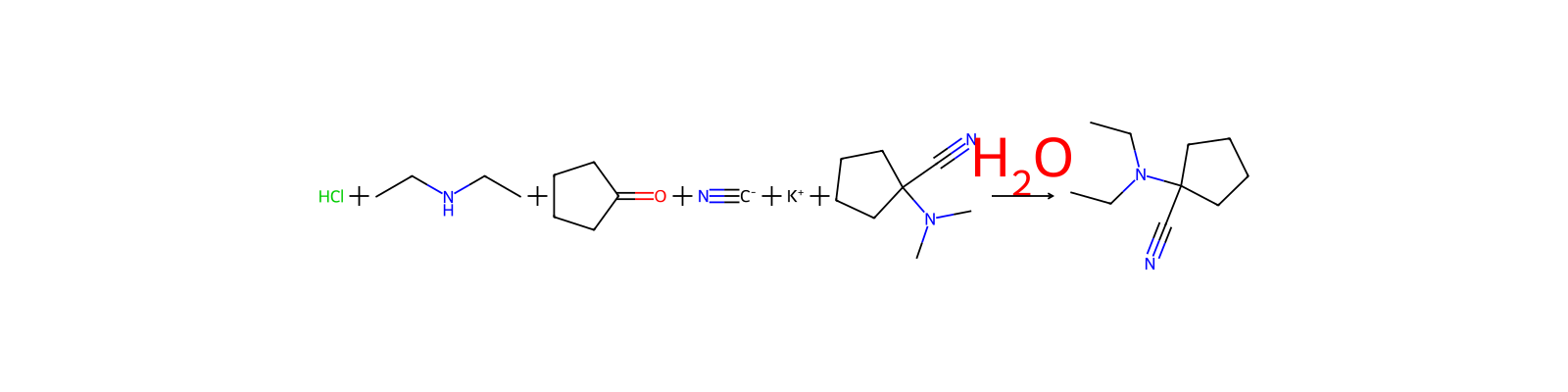
HRID 11416 の反応式
HRID 11416反応物としてuspto-grants-2006_08
HRID 12885 の反応式
HRID 12885反応物としてuspto-grants-2010_06
HRID 15036 の反応式
HRID 15036反応物としてuspto-grants-2010_06
HRID 20783 の反応式
HRID 20783反応物としてuspto-grants-2010_06
HRID 20784 の反応式
HRID 20784反応物としてuspto-grants-2010_06
HRID 20790 の反応式
HRID 20790反応物としてuspto-grants-2010_06
HRID 20792 の反応式
HRID 20792反応物としてuspto-grants-2010_06
1 / 110 ページ

化合物ノート

読み込み中…

このページの内容基本情報概要名称と識別子物性安全と法規制化学と産業関連反応化合物ノート
その他の操作
ノートを作成反応を作成見積依頼を出す
Flash Point · 3 件

86 °F (NTP, 1992)

87 °F (CLOSED CUP)

26 °C

Boiling Point · 6 件

267.17 °F at 760 mmHg (NTP, 1992)

130.6 °C AT 760 MM HG

130.00 to 131.00 °C. @ 760.00 mm Hg

131 °C

130-131 °C

130.6 °C @760 [mm Hg]

物理化学的性質

融点
-51 °C · -51 °C (lit.)
沸点
130 · 130-131 °C (lit.)
比重(密度)
0.951 g/mL · 0.951 g/mL at 25 °C (lit.)
蒸気密度
2.97 · 2.97 (vs air)
蒸気圧
11.5 hPa · 11.5 hPa (20 °C)
FEMA
3910 · 3910 | CYCLOPENTANONE
屈折率
20 · n20/D 1.437(lit.)
闪点
87 °F · 87 °F
貯蔵温度
30 °C · Store below +30°C.
溶解性
9.18 g/l · 9.18g/l 微溶性
外見
液体
色
無色透明~微黄色透明
臭い (Odor)
楽しい
においのタイプ
ミント系
由来生物
synthetic
爆発限界(explosive limit)
1.6 · 1.6-10.8%(V)
水溶解度
実質的に不溶
Merck
14 · 14,2743
JECFA Number
1101 · 1101
BRN
605573 · 605573
Henry's Law Constant
1.2 · 1.2×100 mol/(m3Pa) at 25℃, Brockbank (2013)
Dielectric constant
16 · 16.0(-49℃)
安定性
安定。強力な還元剤、強力な酸化剤、強塩基とは相容れない。
主な用途
フレーバーそして香料
化粧品成分の機能
香料
InChI
1S/C5H8O/c6-5-3-1-2-4-5/h1-4H2
InChIKey
BGTOWKSIORTVQH-UHFFFAOYSA-N
SMILES
O=C1CCCC1
LogP
0.7 at · 0.7 at 25℃
表面張力
33.78 mN/m · 33.78mN/m at 298.15K
CAS データベース
120 · 120-92-3(CAS DataBase Reference)
NISTの化学物質情報
Cyclopentanone(120-92-3)
EPAの化学物質情報
Cyclopentanone (120-92-3)
化学的性質 · 1 件

化学的特性Cyclopentanone is a colorless liquid with a pleasant, slightly pepperminty odor. It is soluble in water and miscible with common organic solvents. Cyclopentanone has an agreeable, peppermint-like odor. It tends to polymerize in the presence of acids.

Health Hazards · 2 件

Excerpt from ERG Guide 128 [Flammable Liquids (Water-Immiscible)]:

CAUTION: Petroleum crude oil (UN1267) may contain TOXIC hydrogen sulphide gas.

Hazards Summary · 2 件

A skin and eye irritant; A possible respiratory tract irritant; Can be absorbed through skin; [ICSC] Inhalation of high concentrations can cause CNS depression; [HSDB] May cause irritation or burns to skin and eyes; [CAMEO] A skin and eye irritant; [eChemPortal: ESIS] Oral LD50 (mouse) = 1820 mg/kg; Effects in high-dose animal studies include somnolence, coma, and other changes to liver; [RTECS] Safe when used as a flavoring agent; [JECFA]

The major hazards encountered in the use and handling of cyclopentanone stem from its toxicologic properties and flammability. Toxic by all routes (ie, inhalation, ingestion, and dermal absorption), exposure to this peppermint-smelling, water-white liquid may occur from its production and use as an intermediate for pharmaceuticals, biologicals, insecticides, and rubber chemicals. Effects from exposure may include contact burns to the skin and eyes, CNS depression, and suffocation. In activities and situations where over-exposure may occur, wear protective clothing and a positive pressure self-contained breathing apparatus. If contact should occur, irrigate exposed eyes with copious amounts of tepid water for at least 15 minutes and wash exposed skin thoroughly with soap and water. Contaminated clothing and shoes should be removed and isolated at the site. Cyclopentanone may be ignited by heat, sparks, or flames (flash point: 87 °F, closed cup), and is dangerously reactive with oxidizing materials. Its heavier-than-air vapor may travel to a source of ignition and flash back, or accumulate to explosive concentrations in confined spaces such as sewers. Also, containers of this substance may explode in the heat of a fire. For fires involving cyclopentanone, extinguish with dry chemical, CO2, water spray, fog, or alcohol-resistant foam. Isolate the area for 1/2 mile in all directions if a tank, rail car, or tank truck is involved in the fire. For small spills of cyclopentanone, take up with sand or other noncombustible absorbent and place into containers for later disposal. Large spills should first be diked far ahead of the spill.

DOT ID and Guide2245 128
Reactive GroupKetones
EC ClassificationSymbol: Xi; R: 10-36/38; S: (2)-23
UN ClassificationUN Hazard Class: 3; UN Pack Group: III
Special Reports · 2 件

OPDYKE DL J; FOOD COSMET TOXICOL 17 (3): 271 (1979). REVIEW WITH 23 REFERENCES ON TOXICITY, INHALATION, IRRITATION, SENSITIZATION, METABOLISM, PHARMACOLOGY & CYTOTOXICITY OF CYCLOPENTANONE.

Savolainer H; Nordic Expert Group for Documentation of Occupational Exposure Limits. Arbetarskyddtyrelsen Publikationsservice, 171 84 Solna, Sweden 33 pp. (1985). Literature survey on cyclohexanone and cyclopentanone as background for discussion of occupational exposure limits.

安全と保護具

Fire Fighting · 2 件

Excerpt from ERG Guide 128 [Flammable Liquids (Water-Immiscible)]:

Use powder, AFFF, foam, carbon dioxide. In case of fire: keep drums, etc., cool by spraying with water.

First Aid Measures · 3 件

Fresh air, rest. Refer for medical attention.

Rinse and then wash skin with water and soap.

First rinse with plenty of water for several minutes (remove contact lenses if easily possible), then refer for medical attention.

Accidental Release Measures · 2 件

· CALL 911. Then call emergency response telephone number on shipping paper. If shipping paper not available or no answer, refer to appropriate telephone number listed on the inside back cover.

· ELIMINATE all ignition sources (no smoking, flares, sparks or flames) from immediate area.

First Aid · 2 件

EYES: First check the victim for contact lenses and remove if present. Flush victim's eyes with water or normal saline solution for 20 to 30 minutes while simultaneously calling a hospital or poison control center. Do not put any ointments, oils, or medication in the victim's eyes without specific instructions from a physician. IMMEDIATELY transport the victim after flushing eyes to a hospital even if no symptoms (such as redness or irritation) develop.

General First Aid:

Safe StorageFireproof. Separated from acids. Cool. Keep in the dark. Keep in a well-ventilated room. Store only if stabilized.
Exposure Control and Personal Protection· Wear positive pressure self-contained breathing apparatus (SCBA).
Fire Fighting ProceduresALCOHOL FOAM, CARBON DIOXIDE, DRY CHEM.
Nonfire Spill ResponseExcerpt from ERG Guide 128 [Flammable Liquids (Water-Immiscible)]:
Disposal MethodsThe following wastewater treatment technologies have been investigated for cyclopentanone: concentration process: Biological treatment
Spillage DisposalCollect leaking liquid in sealable containers. Absorb remaining liquid in sand or inert absorbent. Then store and dispose of according to local regulations.
Isolation and Evacuation · 2 件

Excerpt from ERG Guide 128 [Flammable Liquids (Water-Immiscible)]:

Immediate precautionary measure

Eye PreventionWear safety goggles.

毒性情報

Environmental Fate · 3 件

TERRESTRIAL FATE: Cyclopentanone is not expected to hydrolyse in soils(1), or undergo photolysis on sunlit soil surfaces due to lack of >290 nm UV adsorption(2). A single 5-day BOD screening test, which utilized activated sludge for inocula, suggests that cyclopentanone will biodegrade rapidly upon acclimation in terrestrial environments(3). An estimated Koc of 30(1) indicates cyclopentanone should have a very high mobility in soil(4). A Henry's Law constant of 1.0X10⁻⁵ atm-cu m/mole(5) suggests volatilization of cyclopentanone from moist soils may be an important fate process(1). Based on a vapor pressure of 11.4 mm Hg at 25 °C(6), cyclopentanone should evaporate from dry surfaces, especially when present in high concn such as in spill situations(SRC).

AQUATIC FATE: Cyclopentanone is not expected to hydrolyze(1) or undergo direct photolysis in aquatic systems(2). A single 5-day BOD screening test, which utilized activated sludge for inocula, suggests that cyclopentanone will biodegrade rapidly upon acclimation in natural waters(3). An estimated log bioconcentration factor (log BCF) of -0.05(1) indicates cyclopentanone should not bioconcentrate in aquatic organisms(SRC). An estimated Koc of 30(1) indicates cyclopentanone should not partition from the water column to organic matter contained in sediments and suspended solids(SRC). A Henry's Law constant of 1.0X10⁻⁵ atm-cu m/mole at 25 °C(4) indicates that volatilization of cyclopentanone from natural bodies of water should be an important fate process(1). Based on this Henry's Law constant, the volatilization half-life from a model river has been estimated to be 3.5 days(1,SRC). The volatilization half-life from an model pond, which considers the effect of adsorption, has been estimated to be about 40 days(5,SRC).

ATMOSPHERIC FATE: Based on a vapor pressure of 11.4 mm Hg at 25 °C(1), cyclopentanone is expected to exist almost entirely in the vapor phase in ambient air(2). Vapor phase reactions with photochemically produced hydroxyl radicals in the atmosphere have been shown to be important(SRC). A rate constant for cyclopentanone of 2.94X10⁻¹² cu cm/molecule-sec at 25 °C corresponds to an atmospheric half-life of about 5.5 days at an atmospheric concn of 5X10+5 hydroxyl radicals per cu cm(3). Direct photolysis in air is not expected to be an important environmental fate process(4).

Food Survey ValuesCyclopentanone was identified as a volatile component of baked potatoes produced by the baking process(1).
Adverse EffectsNeurotoxin - Acute solvent syndrome
Exposure RoutesThe substance can be absorbed into the body by inhalation of its vapour, through the skin and by ingestion.
Signs and Symptoms · 3 件

Cough. Sore throat.

Redness. Pain.

Redness. Pain.

Effluent Concentrations · 1 件

Cyclopentanone was detected in 4 of 7 wastewater effluents from energy related processes(1). A groundwater water sample from a coal gasification facility in Hanna, WY contained cyclopentanone at an average concn of 32 ppb; the process water at a coal gasification facility in Gillette, WY contained cyclopentanone at an average concn of 110 ppb; effluent from the gasification of Rosebud coal in Morgantown, WV contained cyclopentanone at an average concn of 56 ppb; and retort water from an in situ shale oil processing facility in Rock Spring, WY contained cyclopentanone at an average concn of 5 ppb(1). Wastewater from coal gasification at the Grand Fork's Energy Technology Center, ND was also reported to contain cyclopentanone at a concn of 0.8 mg/L(2). In addition, wastewater effluent from a shale oil facility in Queensland, Australia was shown to contain cyclopentanone at a concn of 53 mg/L(3).

Soil Adsorption/MobilityBased on an estimated water solubility of 9175 mg/L(1), a Koc value of 30 for cyclopentanone has been calculated from a regression-derived equation(1,SRC). This Koc value indicates cyclopentanone should be very highly mobile in soil(2).
Atmospheric ConcentrationsSOURCE DOMINATED: In Nov. 1982, cyclopentanone was detected in the air outside an oil shale wastewater facility of Occidental Oil Shale Inc. at Logan Wash, CO(1).
Human Toxicity Excerpts · 2 件

/PRODUCES CNS DEPRESSION/ IN HIGH CONCN.

25 MMOLAR CYCLOPENTANONE INCUBATED WITH /HUMAN LUNG FIBROBLAST/ CELLS FOR 30 MIN AT 37 °C SHOWED NO SIGNS OF ACTIVE MEMBRANE DAMAGE.

Artificial Pollution Sources · 1 件

Cyclopentanone may be released to the environment via effluents at sites where it is produced or used as an intermediate for pharmaceuticals, biologicals, insecticides and rubber chemicals(4). Cyclopentanone is also released to the environment via effluents from the manufacture and use of coal-derived liquid fuels and the disposal of coal liquefaction and gasification waste byproducts(1-3).

Environmental Biodegradation · 1 件

Pure culture studies showed various isolated species of bacteria(1,2) and yeast(3) were unable to utilize cyclopentanone as a single carbon source. A single 5-day BOD screening test, which utilized activated sludge for inocula, indicates cyclopentanone biodegraded rapidly with acclimation(4). After a 20 day acclimation period. 95.4% COD of an initial concn of 100 mg/L was removed in a closed bottle maintained at 20 °C and a pH of 7.2(4).

Environmental Bioconcentration · 1 件

Based upon an estimated log kow of 0.24(1), the bioconcentration factor (log BCF) for cyclopentanone has been calculated to be -0.05, from a recommended regression-derived equations(2). This BCF value indicates cyclopentanone should not bioconcentrate in aquatic organisms(SRC).

安全データ

wgk
1
tsca
TSCA listed
rtecs
GY4725000
ridadr
UN 2245
hs_code
2914 29 00
risk_code
10-36/38
化審法
(9)-2108
消防法
危険物第4類第二石油類(非水溶性)
hazard_code
Xi
safety_code
23
hazard_class
3
packing_group
III
自然発火温度
445 °C
Hazard Classifications
Eye Irrit. 2Flam. Liq. 3Skin Irrit. 2
ストレージクラス
3 - Flammable liquids
有毒物質データの
120-92-3(Hazardous Substances Data)

Flavouring Agent -> FLAVOURING_AGENT -> JECFA Functional Classes

Flavouring Agent -> FLAVOURING_AGENT -> JECFA Functional Classes

General Manufacturing Information · 2 件

Computer and Electronic Product Manufacturing

Cyclopentanone: ACTIVE

応用分野 · 6 件

解説シクロペンタノンとは、化学式(CH2)4COで表される5員環構造を有する環状ケトンの1つです。 分子量は84.12 g/mol、密度は0.95 g/cm3、融点は-58.2 ℃、沸点は130.6 ℃、CAS番号は120-92-3です。

用途医薬品、殺虫剤、ゴム薬品の合成中間体

天然物の起源Reported found in roasted onion, baked potato, tomato, gruyere cheese, butter, heated chicken, boiled beef, heated pork, roasted pecan, yellow passion fruit juice.

使用Cyclopentanone is used as an intermediate in the synthesis of rubber adhesives, synthetic resins, pharmaceuticals and biologically active compounds. It acts as precursor for the preparation of cyclopentamine and also pentethylcyclanone, cyclopentobarbital. It is a useful laboratory reagent and is used as thinner for epoxies. It can also be used as a solvent in paint and varnish removers and for electronic applications. As a dry cleaning agent, it is used for oil extraction. It is also involved in the preparation of cyclopentanone derivatives like cyclopenylamine and cyclopentanol which find application in the perfume industry.

一般的な説明A clear colorless liquid with a petroleum-like odor. Flash point 87°F. Less dense than water and insoluble in water. Vapors heavier than air.

使用用途シクロペンタノンの使用用途として、医薬品、殺虫剤、ゴム薬品などの合成中間体が挙げられます。ウェーハ製造などの電子材料分野においては、洗浄剤や溶剤としても有用です。 1. 植物由来物質の原料 シクロペンタノン骨格は、ジャスミンから単離された植物ホルモン様物質であるジャスモン酸に含まれているように、さまざまな植物由来物質の構造中に含まれています。このようなホルモンなど、植物にとって不可欠な物質を合成する際にシクロペンタノンは非常に重要な原料です。 2. 香料の原料 上記で述べたジャスモン酸の類縁体であるジヒドロジャスモン酸メチルや2-ブチルシクロペンタノン、2-ヘキシリデンシクロペンタノン、(Z)-3-(2-オキソプロピル)-2-(ペンタ-2-エン-1-イル)シクロペンタノンおよびMagnolioneなどは、各種香料の原料としても重要であり、合成上のとなります。 3. 金属の洗浄剤 シクロペンタノンは金属材料に付着する各種の油、ワックスの洗浄、さらには電子材料分野でのフラックス洗浄剤としても用いられます。あらゆる金属加工油の脱脂洗浄力、各種フラックス、各種ワックスの溶解力、洗浄力が優れていることです。 また、比較的に沸点が低く乾燥性や回収性が優れていたり、蒸留再生をすることで品質が安定し、リサイクル使用が可能であったり、生分解性が良好で毒性が低かったりすることも理由の1つです。

調製方法 · 2 件

製造方法Prepared by heating adipic acid (285 to 295°C) in the presence of barium hydroxide, distilling, ether extraction and then fractionation.

純化方法Shake it with aqueous KMnO4 to remove materials absorbing around 230 to 240nm. Dry it with Linde-type 13X molecular sieves and fractionally distil it. It has also been purified by conversion to the NaHSO3 adduct which, after crystallising four times from EtOH/water (4:1), is decomposed by adding to an equal weight of Na2CO3 in hot H2O. The free cyclopentanone is steam distilled from the solution. The distillate is saturated with NaCl and extracted with *benzene which is then dried (anhydrous K2CO3) and evaporated. The residue is then distilled [Allen, et al. J Chem Soc 1909 1960]. [Beilstein 7 IV 5.]

上流・下流製品情報

上流原料

アジピン酸ジクロロカルシウム水酸化バリウム

下流製品

セバシン酸2-ヒドロキシ-3-メチル-2-シクロペンテノン2-オキソシクロペンタン酢酸エチル(4-Oxo-6,7-dihydro-4H,5H-cyclopenta[4,5]thieno-[2,3-d]pyrimidin-3-yl)-acetic acidブスピロン3-(4-Oxo-3,5,6,7-tetrahydro-4H-cyclopenta[4,5]thieno[2,3-d]pyrimidin-2-yl)propanoic acidベンゾフラン-5-ボロン酸2,2-ジメチルシクロペンタノン1-シクロヘキシル-5-(4-クロロブチル)-1H-テトラゾール1,2,3,5-テトラヒドロ-8-チア-5,7-ジアザ-シクロペンタ[A]インデン-4-オン1-シクロペンテンカルボン酸1,1-シクロペンタン二酢酸1-(4-クロロベンジル)-1-シクロペンチル-3-フェニル尿素2-Amino-5,6-dihydro-4H-cyclopenta[b]thiophene-3-carbonitrileシクロペンタンチオール2-シクロペンテン-1-オン1-Bromo-1-cyclopentene1-Cyclopentylidene-propan-2-oneスピロ[4.5]デカン-7,9-ジオンシクロペンタノン1-アミノシクロペンタン-1-メタノール1-Cyanocyclopenteneシクロペンタノールビオアレトリン6,7-ジヒドロ-5H-シクロペンタ[b]ピリジンシクロペンタングルタル酸2-アミノ-5,6-ジヒドロ-4H-シクロペンタ[B]チオフェン-3-カルボン酸エチルエステル2-アミノ-5,6-ジヒドロ-4H-シクロペンタ[B]チオフェン-3-カルボン酸アミドブロモシクロペンタン2-アミノ-5,6-ジヒドロ-4H-シクロペンタ[B]チオフェン-3-カルボン酸メチルジヒドロジャスモン酸メチル (cis-, trans-混合物)δ-バレロラクトン

補足説明

定義ChEBI: A cyclic ketone that consists of cyclopentane bearing a single oxo substituent.