基本情報
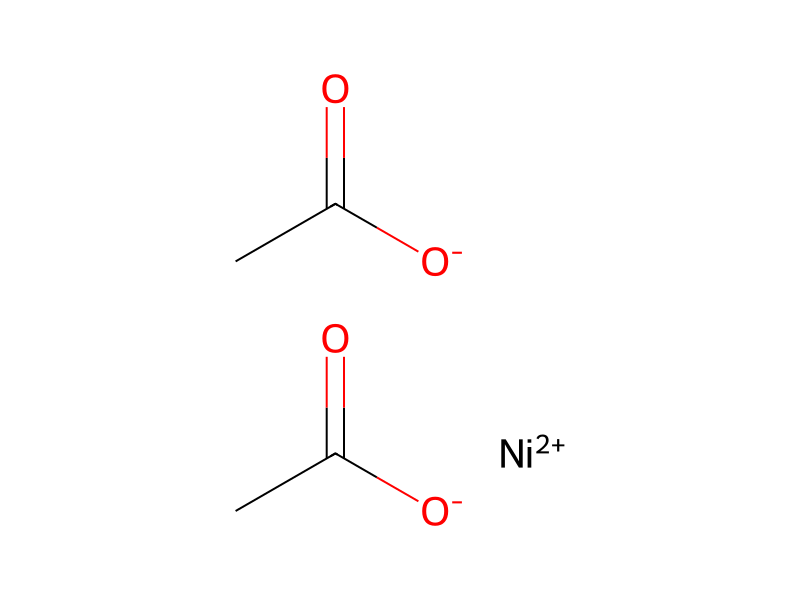
- 標準SMILES
CC(=O)[O-].CC(=O)[O-].[Ni+2]- InChIKey
AIYYMMQIMJOTBM-UHFFFAOYSA-L- 分子式
- C4H6NiO4
- 平均分子量
- 176.78 g/mol
- 単同位体質量
- 175.96195157
概要
Nickel Acetate can cause cancer according to California Labor Code.
名称と識別子
- 優先名称
- Nickel Acetate
- IUPAC
- nickel(2+) diacetate
名称と別名
Nickelous acetateNickel(II) acetate373-02-4NICKEL ACETATENickel diacetateNickel (II) acetateNickel di(acetate)Nickel(2+) acetateNickel(II) acetate (1:2)Acetic acid, nickel(2+) salt99QP4ELX96AI3-26110
名称をさらに表示
Acetic acid, nickel(2+) salt (2:1)DTXSID7020926NSC-112210NSC112210RefChem:165654DTXCID10926(acetyloxy)nickelio acetate tetrahydrate206-761-7
データベース識別子
- CAS
14998-37-9、373-02-4- PubChem CID
- 9756
- DTXSID
DTXSID7020926- UNII
- 99QP4ELX96
- EC Number
- 206-761-7、239-086-1
- Nikkaji
- J5.712F
物性
構造計算による物性
- 極性表面積
- 80.3 Ų
- 水素結合供与体数
- 0
- 水素結合受容体数
- 4
- 回転可能結合数
- 0
- 重原子数
- 9
- 形式電荷
- 0
- 複雑度
- 25.5
実験および物理化学的性質
Chemical Classes
Metals -> Nickel Compounds, Inorganic
Carcinogens
Density
1.74 at 68 °F (USCG, 1999) - Denser than water; will sink
1.798
Density: 1.74 g/cu m /Nickel acetate tetrahydrate/
Color/Form
GREEN PRISMS
Green monoclinic crystals
Solubility
INSOL IN ALCOHOL
12.5 mol % in acetic acid @ 30 °C
17.000 lb/100 lb water at 68 °F
Boiling Point16.6 °C
DecompositionToxic gases and vapors (such as nickel carbonyl) may be released ... in the decomp of nickel cmpd. /Nickel & sol nickel cmpd/
Physical Description
Dull green odorless solid. Sinks and mixes slowly with water. (USCG, 1999)
Liquid
Green monoclinic crystals; [HSDB]
Other Experimental Properties
Decomp before melting
Slight acetic acid odor /Nickel acetate tetrahydrate/
When /nickel acetate/ is heated, it loses its water of crystallization and then decomposes to form nickel oxide. /Nickel acetate tetrahydrate/
BP: 16 °C; sol in dil alcohol /Tetrahydrate/
Green crystal mass or powder; acetic odor; density; 1.744; sol in 6 parts water, in alcohol /Tetrahydrate/
Effloresces somewhat in air
安全と法規制
GHS分類
GHS Classification
Danger
H302: Harmful if swallowed [Warning Acute toxicity, oral]
P203, P233, P260, P261, P264, P270, P271, P272, P273, P280, P284, P301+P317, P302+P352, P304+P340, P317, P318, P319, P321, P330, P333+P317, P342+P316, P362+P364, P391, P403, P405, and P501 (click each P-code to see the statement)
Danger
H302: Harmful if swallowed [Warning Acute toxicity, oral]
P203, P233, P260, P261, P264, P270, P271, P272, P273, P280, P284, P301+P317, P302+P352, P304+P340, P317, P318, P319, P321, P330, P333+P317, P342+P316, P362+P364, P391, P403, P405, and P501 (click each P-code to see the statement)
危険有害性情報
Regulatory Information
Chemical: Acetic acid, nickel(2+) salt
Hazard Traits - Carcinogenicity; Reproductive Toxicity; Respiratory Toxicity
Acetic acid, nickel(2+) salt (2:1) is listed on the EPA's Chemical Data Reporting (CDR) system. Manufacturers and importers of Acetic acid, nickel(2+) salt (2:1) are required to report information about their production and use of this chemical to the EPA under the Toxic Substances Control Act (TSCA). (40 eCFR Part 711)
Status: Active Update: 30-01-2023 https://echa.europa.eu/registration-dossier/-/registered-dossier/13892
Restricted substance: Nickel di(acetate)
Restricted substance: Nickel acetate
Other Safety InformationIMAP assessments - Soluble nickel compounds (Group 1): Human health tier II assessment
DOT LabelPoison
Fire HazardsExcerpt from ERG Guide 154 [Substances - Toxic and/or Corrosive (Non-Combustible)]:
Fire PotentialNot flammable
Health HazardsInhalation causes irritation of nose and throat. Ingestion causes vomiting. Contact with eyes causes irritation. May cause dermatitis in contact with skin. (USCG, 1999)
Hazards SummaryA skin, eye, nose, and throat irritant; [HSDB] Danger of skin and airway sensitization; [MAK] There is limited evidence in experimental animals that nickel acetate is carcinogenic. [IARC] See Nickel and linked occupational diseases.
Reactive GroupSalts, Basic
OSHA Standards
Vacated 1989 OSHA PEL TWA 0.1 mg/cu m is still enforced in some states. /Nickel soluble compounds, as Ni/
Permissible Exposure Limit: Table Z-1 8-hr Time Weighted Avg: 1 mg/cu m. /Nickel, soluble cmpd, as Ni/
Reactivity ProfileNICKEL ACETATE is a green, crystalline material, mildly toxic and carcinogenic. Combustible when exposed to heat or flame. When heated to decomposition it emits acrid smoke and irritating fumes [Lewis, 3rd ed., 1993, p. 909].
Atmospheric Standards
Listed as a hazardous air pollutant (HAP) generally known or suspected to cause serious health problems. The Clean Air Act, as amended in 1990, directs EPA to set standards requiring major sources to sharply reduce routine emissions of toxic pollutants. EPA is required to establish and phase in specific performance based standards for all air emission sources that emit one or more of the listed pollutants. Nickel acetate is included on this list.
Air and Water ReactionsWater soluble.
安全と保護具
Fire FightingExcerpt from ERG Guide 154 [Substances - Toxic and/or Corrosive (Non-Combustible)]:
First AidINHALATION: remove to fresh air; get medical attention if exposure has been severe.
Storage ConditionsStorage temperature: Ambient; Venting: Open
Nonfire Spill ResponseExcerpt from ERG Guide 154 [Substances - Toxic and/or Corrosive (Non-Combustible)]:
Disposal Methods
SRP: At the time of review, criteria for land treatment or burial (sanitary landfill) disposal practices are subject to significant revision. Prior to implementing land disposal of waste residue (including waste sludge), consult with environmental regulatory agencies for guidance on acceptable disposal practices.
Preventive Measures
SRP: The scientific literature for the use of contact lenses in industry is conflicting. The benefit or detrimental effects of wearing contact lenses depend not only upon the substance, but also on factors including the form of the substance, characteristics and duration of the exposure, the uses of other eye protection equipment, and the hygiene of the lenses. However, there may be individual substances whose irritating or corrosive properties are such that the wearing of contact lenses would be harmful to the eye. In those specific cases, contact lenses should not be worn. In any event, the usual eye protection equipment should be worn even when contact lenses are in place.
Isolation and EvacuationExcerpt from ERG Guide 154 [Substances - Toxic and/or Corrosive (Non-Combustible)]:
Minimum Risk LevelChronic Inhalation: 0.0001 mg/m3 (L134)
Intermediate Oral: 0.01 mg/kg/day (L134)
Threshold Limit Values (TLV)
0.1 [mg/m3], inhalable fraction, as Ni
8 hr Time Weighted Avg (TWA) 0.1 mg/cu m (inhalable fraction) /Nickel, soluble inorganic compounds (NOS), as Ni/
Excursion Limit Recommendation: Excursions in worker exposure levels may exceed 3 times the TLV-TWA for no more than a total of 30 minutes during a work day, and under no circumstances should they exceed 5 times the TLV-TWA, provided that the TLV-TWA is not exceeded. /Nickel, soluble inorganic compounds (NOS), as Ni/
A4: Not classifiable as a human carcinogen. /Nickel, soluble inorganic compounds (NOS), as Ni/
Permissible Exposure Limit (PEL)1.0 [mg/m3], as Ni
Personal Protective Equipment (PPE)
Bu. Mines approved respirator; rubber gloves; safety goggles; protective clothing (USCG, 1999)
Rubber gloves; face shield or safety goggles; protective clothing.
Other Standards Regulations and GuidelinesMax allowable concn (MAX) USSR 0.005 mg/cu m as Ni /Nickel salts & aerosols/
毒性情報
TreatmentExcess exposure to nickel is usually handled by preventing further exposure and symptomatic treatment. Nickel poisoning may also be treated using chelation therapy with sodium diethyldithiocarbamate. (L42)
Interactions
The ability of the physiologically essential divalent metals, calcium and magnesium, to inhibit the tumorigenic activities of ... nickel towards the lung of strain A mice was investigated. The tumorigenic salt ... nickel (II) acetate was injected ip at the maximal tolerated dose (0.04 mmol/kg/injection) for a total of 24 injections. ... Calcium (II) acetate and magnesium (II) were administered in the same preparation along with the nickel salts at molar doses of approximately 1, 3, 10, and 30 times the maximal tolerated dose of the tumorigen. The animals were sacrificed 30 weeks after the first injection, and the lung tumors were counted. ... Nickel salts, administered alone, each produced a significant increase in the observed number of lung adenomas per mouse. When administered with any of the doses of calcium acetate or magnesium acetate, ... nickel acetate showed /no/ significant tumorigenic activity. ... The results indicate an antagonism between magnesium and calcium and the tumorigenic metal nickel.
Protective effects of zinc acetate toward the toxicity of nickelous acetate in rats ... study was designed to determine the effects of zinc pretreatment on the acute toxicity of nickel. Male Fischer rats received either Ni alone ip, Zn alone sc, Zn plus Ni, or saline (ip and sc; controls). In the lethality studies, the dose was 115 umol nickel/kg (as nickel) given in multiple doses of 300 umol Zn/kg (as zinc acetate) at -24, 0 and +24 hr relative to Ni (total Zn dose 900 umol/kg) for lethality studies of -24 and 0 hr for studies 24 hr and under in duration (total dose 600 umol/kg). Zn pretreatment significantly increased the 14 day survival of Ni related rats. Zn did not, however, prevent the reduction in weight gain over 2 wk seen with Ni treatment. Histopathologically, at 120 hr following Ni exposure, kidneys in the group receiving Ni alone generally showed moderate nephropathy (multifocal proximal tubule degeneration with necrosis) while in the Zn plus Ni group the nephropathy was generally mild. Zn pretreatment had no apparent effect on the pharmacokinetics of Ni over 24 hr as assessed by urinary excretion, blood levels, or organ distribution. Zn pretreatment also did not alter the subcellular distribution of renal Ni, 6 hr after exposure. Enhanced synthesis of metallothionein did not appear to play a critical role in the reduction of Ni toxicity, since renal concentrations of this metal binding protein, although elevated as compared to controls, were not different in rats receiving Zn and Ni or Zn alone. Zn pretreatment did, however have marked effect on Ni induced hyperglycemia, reducing both the duration and severity of elevated blood glucose levels. Results of this study show that Zn can prevent some of the toxic effects of Ni and that the mechanisms of this action does not appear to involve either metallothionein or alterations in the pharmacokinetics of Ni.
Health Effects
The most common harmful health effect of nickel in humans is an allergic reaction. This usually manifests as a skin rash, although some people experience asthma attacks. Long term inhahation of nickel causes chronic bronchitis and reduced lung function, as well as damage to the naval cavity. Ingestion of excess nickel results in damage to the stomach, blood, liver, kidneys, and immune system, as well as having adverse effects on reproduction and development. (L41)
Adverse EffectsSkin Sensitizer - An agent that can induce an allergic reaction in the skin.
Exposure RoutesInhalation (L41) ; oral (L41) ; dermal (L41)
Toxicity Summary
Nickel is known to substitute for other essential elements in certain enzmes, such as calcineurin. It is genotoxic, and some nickel compounds have been shown to promote cell proliferation. Nickel has a high affinity for chromatin proteins, particularly histones and protamines. The complexing of nickel ions with heterochromatin results in a number of alterations including condensation, DNA hypermethylation, gene silencing, and inhibition of histone acetylation, which have been shown to disturb gene expression. Nickel has also been shown to alter several transcription factors, including hypoxia-inducible transcription factor, activating transcription factor, and NF-KB transcription factor. There is also evidence that nickel ions inhibit DNA repair, either by directly inhibiting DNA repair enzymes or competing with zinc ions for binding to zinc-finger DNA binding proteins, resulting in structural changes in DNA that prevent repair enzymes from binding. Nickel ions can also complex with a number of cellular ligands including amino acids, peptides, and proteins resulting in the generation of oxygen radicals, which induce base damage, DNA strand breaks, and DNA protein crosslinks. (L41, A40)
Signs and SymptomsSymptoms of nickel poisoning include headache, nausea, vomiting, dizziness, irritability, and difficulty sleeping, followed by chest pains, sweating, rapid heart beat, and a dry cough. (L42)
Human Toxicity Excerpts
Cytotoxicity, anchorage independence, (cell transformation) mutation to ouabain resistance, and mutation to 6-thioguanine resistance induced by arsenic, nickel, and chromium compounds was studied in cultured primary human diploid foreskin cells. Cells treated with the nickel compounds, nickel acetate, nickel sulfate, and nickel subsulfide, exhibited dose dependent cytotoxicity and induction of anchorage independent colonies over the dose range of 0 to 5 uM. Cells treated with 10 uM of either nickel subsulfide or nickel sulfate had an approximately 34 fold increase in anchorage independent colonies. Cells treated with the same concentration of nickel acetate showed a 13 fold increase in the frequency of anchorage independence. The chromium compounds lead chromate, potassium dichromate, calcium dichromate and chromic oxide demonstrated dose dependent cytotoxicity and increases in the frequency of anchorage independent colonies ranging from five to 13 fold. The arsenic compounds sodium arsenite and sodium arsenate but not potassium arsenate also increased the number of anchorage independent colonies. The frequency of anchorage independence increased for 11 to 14 days and then decreased.
The cytogenic effects of nickel acetate on human blood lymphocytes and the interactive effects of nickel and ionizing radiation on DNA repair were investigated using a novel challenge assay. Cultures derived from blood samples were treated with nickel acetate and irradiated at 80 centigrays (cGy)/minute. Dosing the cell cultures with nickel-acetate at concentrations ranging from 0.1 to 1000 umol failed to increase the frequency of chromosome aberrations or sister chromatid exchanges. Cytotoxic doses of 1000 micromolar nickel-acetate did, however, inhibit mitosis. To elucidate the effect of nickel (7440020) on DNA repair following ionizing radiation, lymphocytes were exposed to varying concentrations of nickel-acetate for 1 hour during the gap 0 phase, followed by irradiation with two doses of gamma rays (75cGy per dose and separated by 60 minutes). This challenge assay resulted in significant dose dependent increases of chromosome rearrangements and reduction of mitotic indices, indicating that nonclastogenic and noncytotoxic doses of nickel were capable of interfering with DNA repair mechanisms following ionizing radiation. Although the cause of the response was not identified in this study, it was proposed that nickel induction of DNA repair processes may be problematic, demonstrating that adaptation may not always be beneficial. The authors conclude that DNA repair problems appear to be one of the mechanisms explaining the carcinogenic effect of nickel.
Carcinogen Classification1, carcinogenic to humans. (L135)
Non-Human Toxicity Excerpts
... 6-12 MG NICKEL/KG BODY WT DAILY /BY MOUTH/ FOR 100-200 DAYS ... IN FORM OF THE ACETATE, CAUSED NO SIGNIFICANT INJURY.
NO TUMORS OBSERVED @ IMPLANTATION SITES IN RATS THAT RECEIVED ... NICKEL ACETATE. ...
WEANLING RATS WERE FED DIETS CONTAINING 0, 100, 500 & 1000 PPM NICKEL ACETATE. HIGH LEVELS DEPRESSED GROWTH, PACKED CELL VOLUME, HB, & TISSUE CYTOCHROME OXIDASE & ALKALINE PHOSPHATASE ACTIVITIES, BUT NO EFFECT ON PLASMA CERULOPLASMIN & COPPER CONCN.
A number of metal compounds are human carcinogens. Others, while not proven human carcinogens, produce tumors in laboratory animals. Short-term bacterial assays for genotoxic effects were not successful in predicting the carcinogenicity of metal compounds. Some metal compounds cause the induction of lambda prophage in Escherichia coli WP2s (lambda). By far the strongest inducing ability was observed with potassium chromate (K2CrO4), followed by lead nitrate (Pb(NO3)2) > maganese chloride (MnCl2) > nickel acetate (Ni(OOCCH3)2) > CrCl2 > Na2WO4 > Na2MoO4 > potassium permanganate (KMnO4). With the exception of chromate; long-term exposures in a narrow subtoxic dose range were required in order to demonstrate phage induction.
For more Non-Human Toxicity Excerpts (Complete) data for NICKEL ACETATE (6 total), please visit the HSDB record page.
Evidence for Carcinogenicity
A4: Not classifiable as a human carcinogen. /Nickel, soluble inorganic compounds (NOS), as Ni/
Evaluation: There is sufficient evidence in humans for the carcinogenicity of nickel sulfate, and of the combinations of nickel sulfides and oxides encountered in the nickel refining industry. There is inadequate evidence in humans for the carcinogenicity of metallic nickel and nickel alloys. There is sufficient evidence in experimental animals for the carcinogenicity of metallic nickel, nickel monoxides, nickel hydroxides and crystalline nickel sulfides. There is limited evidence in experimental animals for the carcinogenicity of nickel alloys, nickelocene, nickel carbonyl, nickel salts, nickel arsenides, nickel antimonide, nickel selenides and nickel telluride. There is inadequate evidence in experimental animals for the carcinogenicity of nickel trioxide, amorphous nickel sulfide and nickel titanate. The Working Group made the overall evaluation on nickel compounds as a group on the basis of the combined results of epidemiological studies, carcinogenicity studies in experimental animals, and several types of other relevant data, supported by the underlying concept that nickel compounds can generate nickel ions at critical sites in their target cells. Overall evaluation: Nickel compounds are carcinogenic to humans (Group 1). Metallic nickel is possibly carcinogenic to humans (Group 2B). /Nickel compounds/
Antidote and Emergency Treatment
Basic treatment: Establish a patent airway. Suction if necessary. Watch for signs of respiratory insufficiency and assist ventilation if necessary. Administer oxygen by nonrebreather mask at 10 t0 15 L/min. Monitor for shock and treat if necessary ... . Monitor for pulmonary edema and treat if necessary ... . For eye contamination, flush eyes immediately with water. Irrigate each eye continuously with normal saline during transport ... . Do not use emetics. For ingestion, rinse mouth and administer 5 ml/kg up to 200 ml of water for dilution if the patient can swallow, has a strong gag reflex, and does not drool ... . /Nickel and related compounds/
Advanced treatment: Consider orotracheal or nasotracheal intubation for airway control in the patient who is unconscious. Positive pressure ventilation techniques with a bag valve mask device may be beneficial. Monitor cardiac rhythm and treat arrhythmias if necessary ... . Consider drug therapy for pulmonary edema ... . Start an IV with D5W /SRP: "To keep open", minimal flow rate/. Use lactated Ringer's if signs of hypovolemia are present. For hypotension with signs of hypovolemia, administer fluid cautiously. Consider vasopressors for hypotension with a normal fluid volume. Watch for signs of fluid overload ... . Use proparacaine hydrochloride to assist eye irrigation ... . /Nickel and related compounds/
法規制情報
Atmospheric Standards
Listed as a hazardous air pollutant (HAP) generally known or suspected to cause serious health problems. The Clean Air Act, as amended in 1990, directs EPA to set standards requiring major sources to sharply reduce routine emissions of toxic pollutants. EPA is required to establish and phase in specific performance based standards for all air emission sources that emit one or more of the listed pollutants. Nickel acetate is included on this list.
Clean Water Act RequirementsToxic pollutant designated pursuant to section 307(a)(1) of the Clean Water Act and is subject to effluent limitations. /Nickel and compounds/
State Drinking Water Standards
(CA) CALIFORNIA 100 ug/L /Nickel/
(CT) CONNECTICUT 100 ug/l /Nickel/
(DE) DELEWARE 100 ug/l /Nickel/
(FL) FLORIDA 100 ug/L /Nickel/
(WI) WISCONSIN 100 ug/L /Nickel/
State Drinking Water Guidelines
(AZ) ARIZONA 150 ug/l /Nickel/
(MA) MASSACHUSETTS 100 ug/l /Nickel/
(ME) MAINE 140 ug/l /Nickel/
(MN) MINNESOTA 100 ug/l /Nickel/
Federal Drinking Water GuidelinesEPA 100 ug/l /Nickel/
化学と産業
薬理情報
Metabolism/Metabolites
Nickel is absorbed mainly through the lungs and gastrointestinal tract. Once in the body it enters the bloodstream, where it binds to albumin, L-histidine, and _2-macroglobulin. Nickel tends to accumulate in the lungs, thyroid, kidney, heart, and liver. Absorbed nickel is excreted in the urine, wherease unabsorbed nickel is excreted in the faeces. (L41)
用途と製造
Uses
Used as a catalyst and mordant for textiles; [Merck Index]
Textiles (Printing, Dyeing, or Finishing) [Category: Industry]
MAINLY AS A MORDANT IN TEXTILE INDUSTRY & TO A MINOR EXTENT AS A HYDROGENATION CATALYST
As an intermediate in the formation of other nickel compounds, as a sealer for anodized aluminum, in nickel electroplating /Nickel acetate tetrahydrate/
Catalysts; mordant for textiles
Electrodeless nickel-hydrazine coating reagent
U.S. Imports(1986) 9.35X10+4 lb
U.S. Production
2023: 1,058,279 lb
(1972) PROBABLY GREATER THAN 4.54X10+5 GRAMS
(1975) PROBABLY GREATER THAN 1.36X10+6 GRAMS
Consumer UsesPlating agent
Industry UsesPlating agent
Methods of Manufacturing
REACTION OF SODIUM ACETATE WITH A NICKEL SULFATE SOLUTION (PREPARED FROM NICKEL SULFATE OR BY DISSOLVING NICKEL OXIDE IN SULFURIC ACID)
By heating nickel hydroxide with acetic acid in the presence of metallic nickel.
Nickel oxide, black + acetic acid (salt formation)
Formulations/PreparationsGrades or Purity: Commercial 99%; reagent
General Manufacturing Information
All Other Chemical Product and Preparation Manufacturing
Acetic acid, nickel(2+) salt (2:1): ACTIVE
関連反応
20 件


関連ノート
読み込み中…