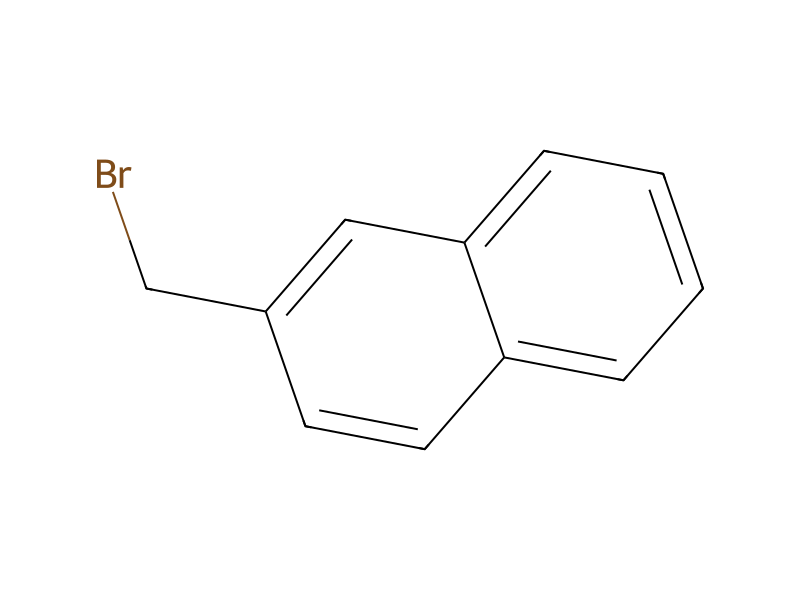
A solution of 1.12 g (5 mmol) of (3RS,4RS)-4-(4-chloro-phenyl)-1-methyl-piperidine-3-ol in 5 ml of tetrahydrofuran was added dropwise to a suspension of 0.264 g (5 mmol) of sodium hydride (50% dispersion in refined oil) in 8 ml of tetrahydrofuran and the mixture was stirred at 50° C. for 60 minutes. Subsequently, it was cooled to room temperature and treated with 1.10 g (5 mmol) of 2-bromomethyl-naphthalene in 5 ml of tetrahydrofuran. After 2 hours at 50° C. the reaction solution was poured into 60 ml of ice-water and extracted three times with 25 ml of ethyl acetate each time. The organic phases were washed with saturated sodium chloride solution, dried over magnesium sulphate, filtered and evaporated. The residue was chromatographed on silica gel using a 95:5 mixture of methylene chloride and ethanol as the eluent. There was obtained 0.53 9 (28% of theory) of (3RS,4RS)-4-(4-chloro-phenyl)-1-methyl-3-(naphthalen-2-ylmethoxy)-piperidine as a pale yellow oil; MS: 366 (M)+.