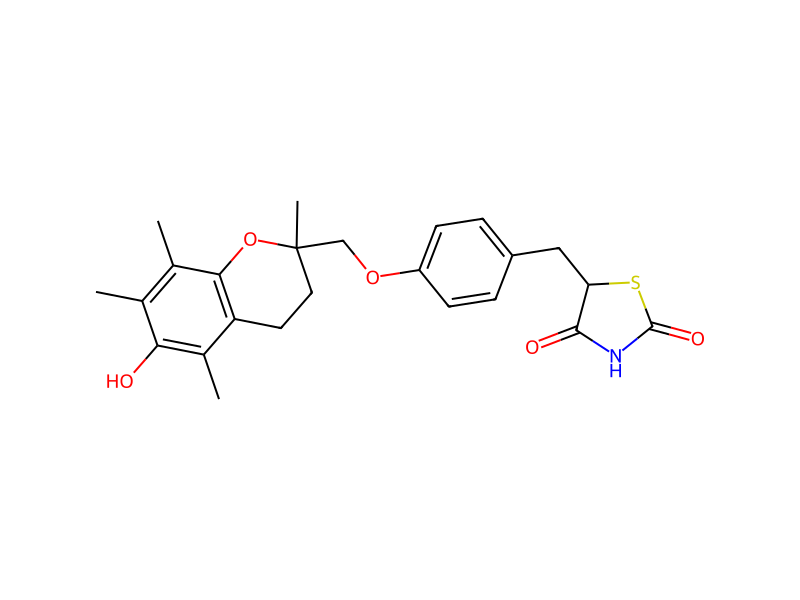
5-[4-(6-Hydroxy-2,5,7,8-tetramethyl-2H-chromen-2-yl-methoxy)benzyl]thiazolidine-2,4-dione → Troglitazone
反応式

[OH:1][C:2]1[C:3]([CH3:31])=[C:4]2[C:9](=[C:10]([CH3:13])[C:11]=1[CH3:12])[O:8][C:7]([CH2:15][O:16][C:17]1[CH:30]=[CH:29][C:20]([CH2:21][CH:22]3[S:26][C:25](=[O:27])[NH:24][C:23]3=[O:28])=[CH:19][CH:18]=1)([CH3:14])[CH:6]=[CH:5]2.[H][H]>CO.[Pd]>[OH:1][C:2]1[C:3]([CH3:31])=[C:4]2[C:9](=[C:10]([CH3:13])[C:11]=1[CH3:12])[O:8][C:7]([CH2:15][O:16][C:17]1[CH:30]=[CH:29][C:20]([CH2:21][CH:22]3[S:26][C:25](=[O:27])[NH:24][C:23]3=[O:28])=[CH:19][CH:18]=1)([CH3:14])[CH2:6][CH2:5]2参加物
5




実験手順
Following the procedure described in Preparation 58, 120 mg of 5-[4-(6-hydroxy-2,5,7,8-tetramethyl-2H-chromen-2-ylmethoxy)benzyl]thiazolidine -2,4-dione (prepared as described in Example 32) were dissolved in 4 ml of methanol and, in the presence of 40 mg of 10% w/w palladium-on-carbon, it was reduced under 3-5 atmospheres (about 3-5 bars) pressure of hydrogen, to give the title compound. The melting point and nuclear magnetic resonance spectrum of this compound accorded with those of the compound obtained in Example 27(b).