反応式

CC(CCCCCOC([C:12]1[C:17](C(OCCCCCC(C)C)=O)=[CH:16][CH:15]=[CH:14][CH:13]=1)=O)C.[CH:29]1[CH:30]=[CH:31][C:32]([P:35](C2C(C3C(P(C4C=CC=CC=4)C4C=CC=CC=4)=CC=C4C=3C=CC=C4)=C3C(C=CC=C3)=CC=2)[C:36]2[CH:37]=[CH:38][CH:39]=[CH:40][CH:41]=2)=[CH:33][CH:34]=1.C1OC2C(C3C4OCOC=4C=CC=3P(C3C=CC=CC=3)C3C=CC=CC=3)=C(P(C3C=CC=CC=3)C3C=CC=CC=3)C=CC=2O1.C1C2C=CC(=C(P(C3C=CC=CC=3)C3C=CC=CC=3)C=2)CCC2C=CC(=C(P(C3C=CC=CC=3)C3C=CC=CC=3)C=2)C1.COC1C(P(C2C=CC=CC=2)CCP(C2C(OC)=CC=CC=2)C2C=CC=CC=2)=CC=CC=1.CC(C(C)P(C1C=CC=CC=1)C1C=CC=CC=1)P(C1C=CC=CC=1)C1C=CC=CC=1.C1(P(CC2C(CP(C3C=CC=CC=3)C3C=CC=CC=3)OC(C)(C)O2)C2C=CC=CC=2)C=CC=CC=1.ClC1C=CC(P(C2C=CC=CC=2)C2C=CC=CC=2)=C(C2C(OC)=C(Cl)C=CC=2P(C2C=CC=CC=2)C2C=CC=CC=2)C=1OC.CC1P(C2C(P3C(C)CCC3C)=CC=CC=2)C(C)CC1.C1(P(C2C=CC=CC=2)C(CC(P(C2C=CC=CC=2)C2C=CC=CC=2)C)C)C=CC=CC=1.C1(P(C2C=CC=CC=2)C2C(P(C3C=CC=CC=3)C3C=CC=CC=3)CNC2)C=CC=CC=1.C1(P(C2C=CC=CC=2)C2CNC(CP(C3C=CC=CC=3)C3C=CC=CC=3)C2)C=CC=CC=1>>[CH:39]1[CH:38]=[CH:37][C:36]([P:35]([C:12]2[CH:13]=[CH:14][CH:15]=[CH:16][CH:17]=2)[C:32]2[CH:33]=[CH:34][CH:29]=[CH:30][CH:31]=2)=[CH:41][CH:40]=1参加物
反応物 12
 HCID 33934Diisooctyl phthalate2 回
 HCID 122582((5-((Diphenylphosphino)methyl)-2,2-dimethyl-1,3-dioxolan-4-yl)methyl)(diphenyl)phosphine
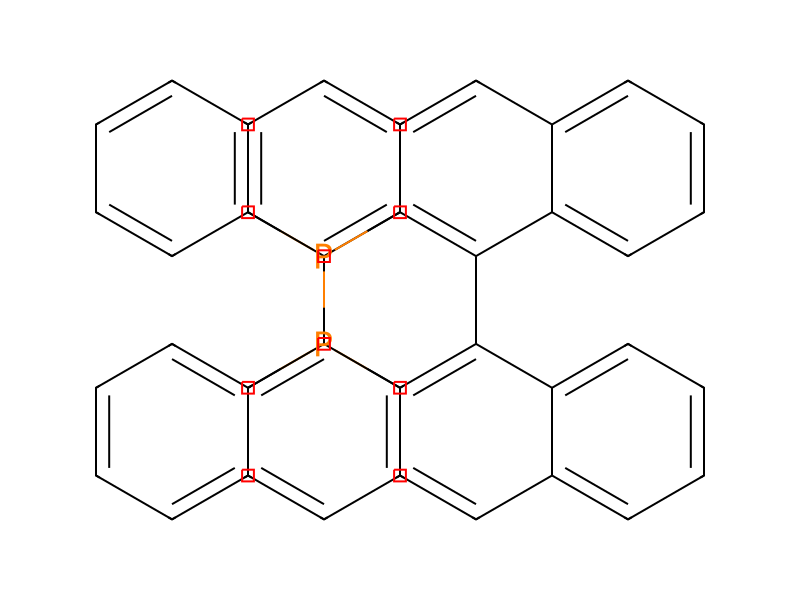 HCID 634876Binap, (A+-)-3 回
 HCID 27345571,2-Bis[(2-methoxyphenyl)phenylphosphino]ethane3 回
 HCID 3882352Chiraphos3 回
 HCID 41858942,4-Bis(diphenylphosphino)pentane
 HCID 41875183,4-bis(diphenylphosphino)-Pyrrolidine
 HCID 41893931,2-Bis[(2R,5R)-2,5-dimethylphospholano]benzene
 HCID 50000714-(diphenylphosphino)-2-[(diphenylphosphino)methyl]-Pyrrolidine
 HCID 5165044(5,5'-Dichloro-6,6'-dimethoxy-2,2'-biphenyldiyl)bis(diphenylphosphine)
 HCID 10864772(R)-Phanephos2 回
 HCID 110175104,4'-Bi-1,3-benzodioxole-5,5'-diylbis(diphenylphosphine)3 回
生成物 1

実験手順
Synthesis of Complexes using C2 symmetric bis-P ligands (DIOP, BINAP, Cl-MeO-BIPHEP, SEGPHOS, PhanePHOS, DIPAMP, DuPHOS, BDPP, CHIRAPHOS, PPM, PYRPHOS) uses the compound [RuCl2(benzene)], RuCl2(PPh3)3 and trans-RuCl2(NBD)(py)2 as the starting material, while the complexes were prepared in accordance with the procedure published in the literature (Noyori, R.; Takeshi, O.; Hirohito, O. Shohei, H.; Takao, I. J. Am. Chem. Soc. 1995, 117, 2675; Akotsi, O. M.; Meters, K.; Reid, R. D.; McDonald, R.; Bergens, S. H. Chirality 2000, 12, 514-522; BINAP=2,2′-bis(diphenylphosphino)-1,1′-binaphthyl, DIOP=4,5-Bis(diphenylphosphinomethyl)-2,2-dimethyl-1,3-dioxolane, Cl-MeO-BIPHEP=5,5′-Dichloro-6,6′-dimethoxy-2,2′-bis(diphenylphosphino)-1,1′-biphenyl, SEGPHOS=5,5′-Bis(diphenylphosphino)-4,4′-bi-1,3-benzodioxole, PhanePHOS=4,12-Bis(diphenylphosphino)-[2.2]-paracyclophane, DIPAMP=1,2-Bis[(2-methoxyphenyl)(phenyl)phosphino]ethane, Me-DuPHOS=1,2-Bis((2S,5S)-2,5-dimethylphospholano)benzene, BDPP=2,4-Bis(diphenylphosphino)pentane, CHIRAPHOS=Bis(diphenylphosphino)butane, PYRPHOS=3,4-bis(diphenylphosphino)-Pyrrolidine, PPM=4-(diphenylphosphino)-2-[(diphenylphosphino)methyl]-Pyrrolidine. Synthesis of Complexes using C1 symmetric bis-P ligand (JosiPHOS, WalPHOS, MandyPHOS) uses the compound RuCl2(PPh3)3 as the starting material which can be obtained easily from hydrated RuCl3 and PPh3 (Steohenson, T. A.; Wilkinson, G. J. Inorg. Nucl. Chem. 1966, 28, 945-956; Josiphos=1-[Diarylphosphano]-2-[1-(dicyclohexylphosphano)ethyl]ferrocene.), while the complexes and RuCl2[(R,S)-Josiphos](PPh3) were prepared in accordance with the procedure published in the literature (Baratta, W.; Ballico, M.; Chelucci, G.; Siega, K.; Rigo, P. Angew. Chem. Int. Ed. 2008, 47, 4362-4365). The monochloride complex (11) was prepared from (10) by reacting with Et3N. The pre-catalysts used for in situ hydrogenation were [RuCl2BINAP(pyridine)2, RuCl2DIOP(pyridine)2, RuCl2(Josiphos)(pyridine)2]. As non-limiting examples of the present invention the synthesis and the characteristics of the complexes (8-25) are described in detail. All the syntheses were carried out under argon atmosphere, using freshly distilled solvents.
後処理
- customSynthesis of Complexes
- customwhile the complexes were prepared in accordance with the procedure
- customSynthesis of Complexes
出典と根拠
- ORDレコード
- ord-ee399126a4ea4fbb8e6c2d6923800d12
- 出典データセット
- uspto-grants-2013_10
- 特許番号
- US08563739B2
関連ノート
読み込み中…