ホームMCPワークベンチSkills
ホームワークベンチ通知マイページ
llms.txt · MCPガイドプライバシーポリシー · 利用規約 · サポートv1.8.0
  1. ホーム
  2. /反応

Potassium Carbonate → 6-fluoro-5-(2'-hydroxybiphenyl-4-yl)-1H-indole-3-carbaldehyde

HRID 1054844
ノート
印刷プレビュー

反応式

HRID 1054844 の反応式
CC1(C)C(C)(C)OB([C:9]2[CH:14]=[CH:13][C:12]([C:15]3[C:16]([OH:21])=[CH:17][CH:18]=[CH:19][CH:20]=3)=[CH:11][CH:10]=2)O1.Br[C:24]1[CH:25]=[C:26]2[C:30](=[CH:31][C:32]=1[F:33])[NH:29][CH:28]=[C:27]2[CH:34]=[O:35].C(=O)([O-])[O-].[K+].[K+].S([O-])(O)(=O)=O.[Na+]>C(OCC)(=O)C.C1C=CC(P(C2C=CC=CC=2)[C-]2C=CC=C2)=CC=1.C1C=CC(P(C2C=CC=CC=2)[C-]2C=CC=C2)=CC=1.Cl[Pd]Cl.[Fe+2].CCO.C1COCC1.C1(C)C=CC=CC=1>[F:33][C:32]1[CH:31]=[C:30]2[C:26]([C:27]([CH:34]=[O:35])=[CH:28][NH:29]2)=[CH:25][C:24]=1[C:9]1[CH:10]=[CH:11][C:12]([C:15]2[CH:20]=[CH:19][CH:18]=[CH:17][C:16]=2[OH:21])=[CH:13][CH:14]=1
参加物反応条件実験手順後処理出典と根拠反応ノート

参加物

10

反応物 4

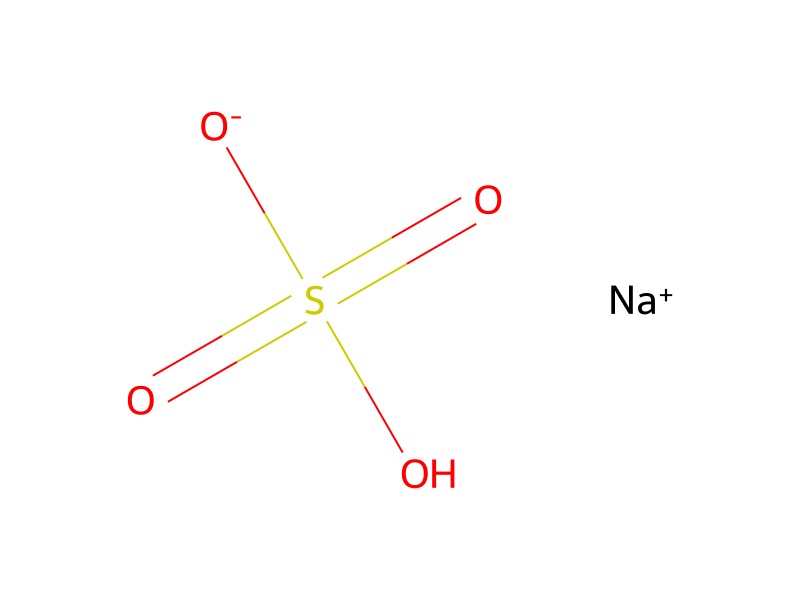
HCID 11430Potassium CarbonateHCID 516919Sodium BisulfateHCID 592678134'-(4,4,5,5-Tetramethyl-1,3,2-dioxaborolan-2-yl)-[1,1'-biphenyl]-2-olHCID 735543615-Bromo-6-fluoro-1H-indole-3-carbaldehyde

生成物 1

HCID 866988376-fluoro-5-(2'-hydroxybiphenyl-4-yl)-1H-indole-3-carbaldehyde収率 24.1%

試薬・触媒・溶媒 5

HCID 44119782
Bis(cyclopenta-1,4-dien-1-yl(diphenyl)phosphane);dichloropalladium;iron(2+)
触媒
HCID 702Ethanol溶媒
HCID 1140Toluene溶媒
HCID 8028Tetrahydrofuran溶媒
HCID 8857Ethyl Acetate溶媒

反応条件

温度
115 °C

実験手順

A glass tube was charged with 4′-(4,4,5,5-tetramethyl-1,3,2-dioxaborolan-2-yl)-[1,1′-biphenyl]-2-ol (73.5 mg, 0.25 mmol), 5-bromo-6-fluoro-1H-indole-3-carbaldehyde (60 mg, 0.25 mmol), toluene (1.2 mL), THF (0.6 mL), EtOH (0.6 mL), and 2.0 M potassium carbonate solution (0.6 mL, 1.2 mmol). Nitrogen was then bubbled through the mixture for 5 minutes then [1,1′-bis(diphenylphosphino)ferrocene]dichloropalladium(II) (21.5 mg, 0.025 mmol) was added. The tube was sealed and heated to 115° C. for 2 hours. The reaction was cooled to room temperature, opened, and neutralized with 1.0 M sodium hydrogensulfate then diluted with ethyl acetate. The layers were separated and the aqueous extracted with ethyl acetate (×2). The combined organic layers were dried over sodium sulfate, filtered, and concentrated in vacuo. The residue was dissolved in methylene chloride and methanol, silica was added, and the solvent removed in vacuo. The dry-loaded silica gel was then subjected to flash column chromatography (20% to 100% ethyl acetate/heptane) to provide the title compound as a white solid (20 mg, 24%). MS (ES+) 332.3 (M+H). 1H NMR (500 MHz, DMSO-d6) δ ppm 12.24 (br. s, 1 H) 9.96 (s, 1 H) 9.59 (s, 1 H) 8.36 (s, 1 H) 8.19 (d, 1 H) 7.67 (d, 2 H) 7.58 (d, 2 H) 7.46 (d, 1 H) 7.33 (d, 1 H) 7.18 (t, 1 H) 6.97 (d, 1 H) 6.91 (t, 1 H).


後処理

  1. customNitrogen was then bubbled through the mixture for 5 minutes
  2. customThe tube was sealed
  3. temperatureThe reaction was cooled to room temperature
  4. customThe layers were separated
  5. extractionthe aqueous extracted with ethyl acetate (×2)
  6. dry with materialThe combined organic layers were dried over sodium sulfate
  7. filtrationfiltered
  8. concentrationconcentrated in vacuo
  9. dissolutionThe residue was dissolved in methylene chloride
  10. additionmethanol, silica was added
  11. customthe solvent removed in vacuo

出典と根拠

ORDレコード
ord-a92e434d298c4da5969fbfd268ae0c9b
出典データセット
uspto-grants-2016_07
DOI
10.6084/m9.figshare.5104873.v1
特許番号
US09394285B2

反応ノート

読み込み中…

このページの内容参加物反応条件実験手順後処理出典と根拠反応ノート