Benzyl chloroformate → HCID 18790412、化合物
反応式

Cl[C:2]([O:4][CH2:5][C:6]1[CH:11]=[CH:10][CH:9]=[CH:8][CH:7]=1)=[O:3].[OH-:12].[Na+].[C:14]([CH:17]([CH2:22][CH2:23][CH2:24][NH2:25])[CH2:18][CH2:19][CH2:20][NH2:21])([OH:16])=[O:15]>O>[CH2:5]([O:4][C:2]([NH:25][CH2:24][CH2:23][CH2:22][CH:17]([CH2:18][CH2:19][CH2:20][NH:21][C:2]([O:4][CH2:5][C:6]1[CH:11]=[CH:10][CH:9]=[CH:8][CH:7]=1)=[O:12])[C:14]([OH:16])=[O:15])=[O:3])[C:6]1[CH:11]=[CH:10][CH:9]=[CH:8][CH:7]=1参加物
5
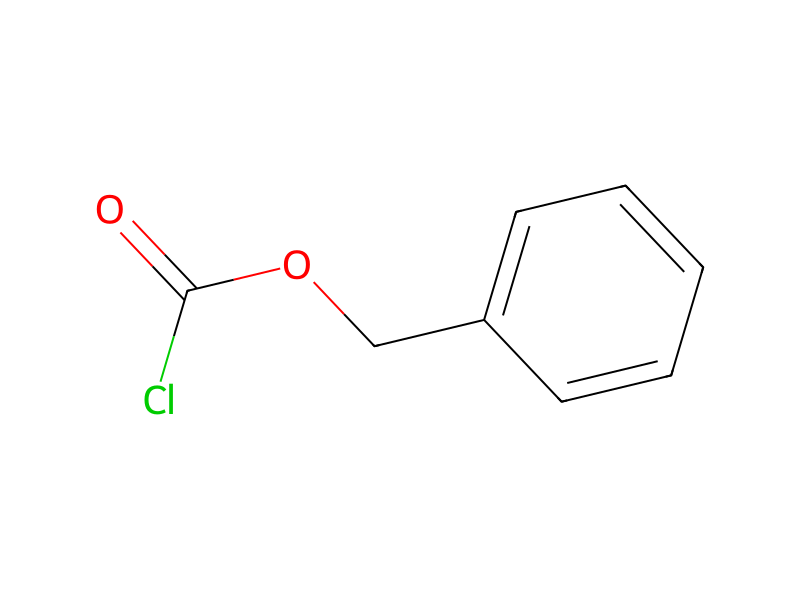




実験手順
24.48 g (143.5 mmol) of benzyl chloroformate and 5N aqueous sodium hydroxide solution are simultaneously added in drops at 0° C. to 10 g (57.39 mmol) of 4-carboxy-1,7-diaminoheptane (produced according to: A. Reissert, Chem. Ber. 26, 2137 (1893); 27, 979 (1894)) in 150 ml of water, and the pH is kept at 10. It is stirred overnight at room temperature. It is extracted twice with 150 ml of ethyl acetate each. The aqueous phase is carefully acidified with 4N aqueous hydrochloric acid (pH 2) and extracted three times with 200 ml of ethyl acetate each. The organic phase is dried on magnesium sulfate and evaporated to the dry state in a vacuum.