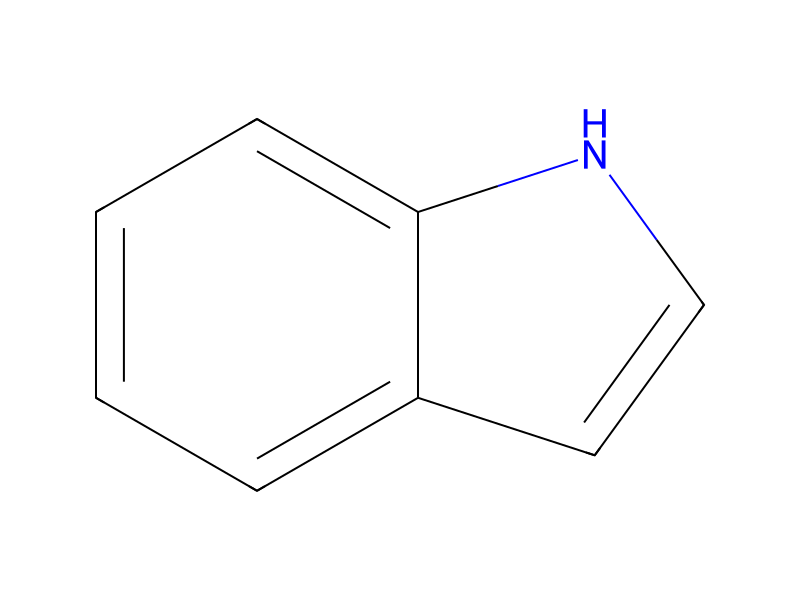
Indole → 1-(2-chloroethyl)-1H-indole
HRID 1108539
反応式

[H-].[Na+].[NH:3]1[C:11]2[C:6](=[CH:7][CH:8]=[CH:9][CH:10]=2)[CH:5]=[CH:4]1.C1(C)C=CC(S(O[CH2:22][CH2:23][Cl:24])(=O)=O)=CC=1>O1CCCC1>[Cl:24][CH2:23][CH2:22][N:3]1[C:11]2[C:6](=[CH:7][CH:8]=[CH:9][CH:10]=2)[CH:5]=[CH:4]1参加物
5




実験手順
An oil dispersion (7.2 g) of sodium hydride (0.21 mol) and tetrahydrofuran (50 ml) were placed in a 500-ml flask equipped with a stirrer and a condenser tube, and the mixture was stirred in an ice-water bath. Indole (24.60 g, 0.21 mol) dissolved in tetrahydrofuran (100 ml) was gradually added dropwise to the mixture. After completion of addition, the ice-water bath was removed, and the mixture was stirred for one hour at room temperature. Subsequently, 2-chloroethyl p-toluenesulfonate (49.29 g, 0.21 mol) was added, and the mixture was allowed to react for 15 hours while being stirred under heat-reflux conditions. After completion of reaction, insoluble matter was removed by filtration, and the filtrate was concentrated under reduced pressure. The reaction mixture was purified by silica gel column chromatography to obtain 1-(2-chloroethyl)indole (15.4 g).