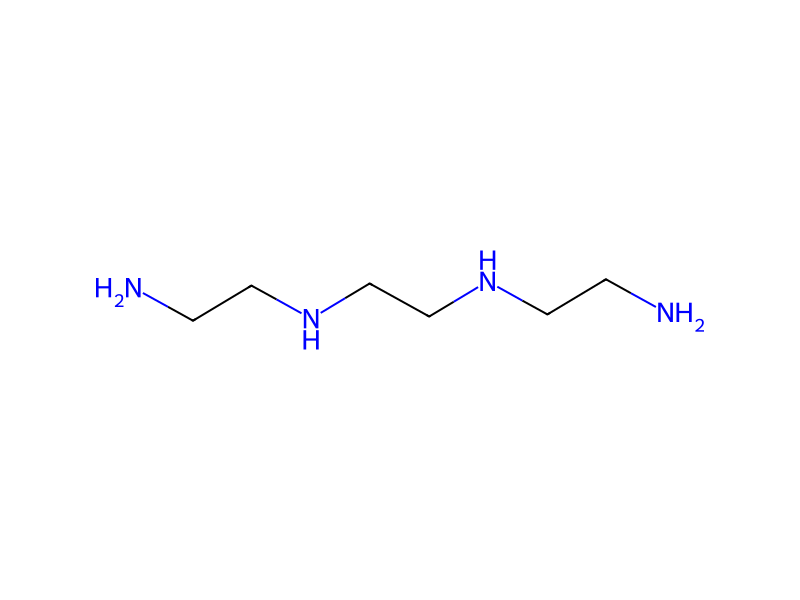
Acrylic Acid → Triethylenetetramine
HRID 1109784
反応式

IC#N.C(O)(=O)C=C.[CH2:9]([NH2:24])[CH2:10][NH:11][CH2:12][CH2:13][NH:14][CH2:15][CH2:16][NH:17][CH2:18][CH2:19][NH:20][CH2:21][CH2:22][NH2:23]>>[CH2:9]([NH2:24])[CH2:10][NH:11][CH2:12][CH2:13][NH:14][CH2:15][CH2:16][NH2:17].[CH2:22]([NH2:23])[CH2:21][NH:20][CH2:19][CH2:18][NH:17][CH2:16][CH2:15][NH:14][CH2:13][CH2:12][NH:11][CH2:10][CH2:9][NH2:24]参加物
5



実験手順
Commercial ampholytes were obtained from Bio-Rad (Biolytes, pH 3-10), ICN (Iso-Lytes, pH 3-10), Geltech (Technolytes, pH 3.5-9.5) and LKB (Ampholines, pH 3.5-9.5). Ampholytes 1-8, 1A, 2A and 2B as shown in FIGS. 3, 4, and 6 were obtained from ATI. TETA, TEPA, and PEHA ampholytes were synthesized as described by Binion and Rodkey in Electrophoresis 3, 284 (1982) using a 2:1 ratio of available polyamine nitrogen to acrylic acid. A group of ampholytes termed "UT WIDE" ampholytes were prepared by mixing ampholytes made with TEPA and PEHA monomers.