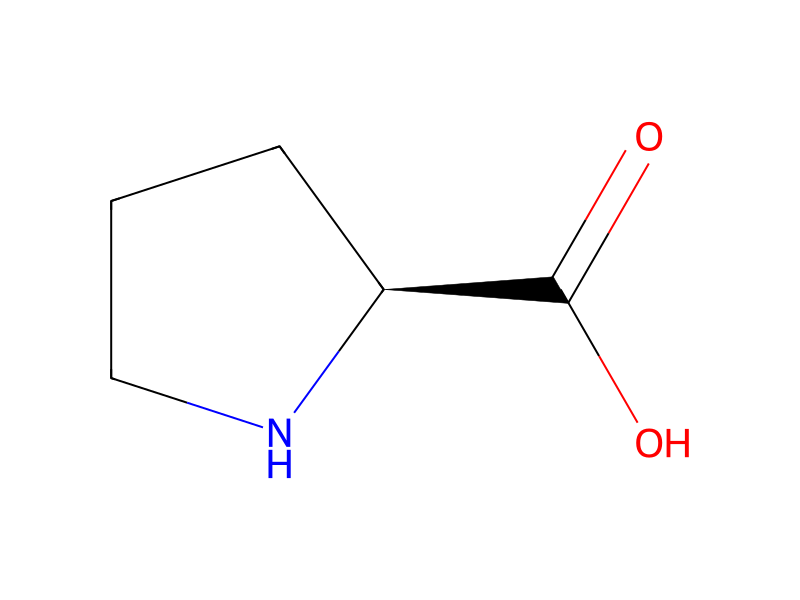
L-Proline → 1-[3-(3-pyridylcarbonyl)acryloyl]-L-proline
反応式

[N:1]1[CH:6]=[CH:5][CH:4]=[C:3]([C:7]([CH:9]=[CH:10][C:11]([OH:13])=O)=[O:8])[CH:2]=1.[NH:14]1[CH2:21][CH2:20][CH2:19][C@H:15]1[C:16]([OH:18])=[O:17]>O1CCCC1>[N:1]1[CH:6]=[CH:5][CH:4]=[C:3]([C:7]([CH:9]=[CH:10][C:11]([N:14]2[CH2:21][CH2:20][CH2:19][C@H:15]2[C:16]([OH:18])=[O:17])=[O:13])=[O:8])[CH:2]=1参加物
4



実験手順
As for Example 27, 3-(3-pyridylcarbonyl)acrylic acid (0.01 mole) is reacted with N,N'-carbonyldiimidazole (0.011 mole) in tetrahydrofuran and to the mixture is added 0.011 mole of L-proline. The mixture is refluxed 16 hours and the solvent removed under reduced pressure. The mixture is partitioned between dichloromethane and water containing acetic acid. The organic layer is separated, washed with water and dried over magnesium sulfate. The solvent is removed in vacuo to yield 1-[3-(3-pyridylcarbonyl)acryloyl]-L-proline. The preceding compound is dissolved in carbon tetrachloride and 0.03 mole of thioacetic acid is added. The mixture is heated 3 hours and the solvent is removed in vacuo to give the product of the Example as a glass.
後処理
- temperatureThe mixture is refluxed 16 hours
- customthe solvent removed under reduced pressure
- customThe mixture is partitioned between dichloromethane and water
- additioncontaining acetic acid
- customThe organic layer is separated
- washwashed with water
- dry with materialdried over magnesium sulfate
- customThe solvent is removed in vacuo
出典と根拠
- ORDレコード
- ord-5bab5dcd2b854f60857da669b4c9fbc2
- 出典データセット
- uspto-grants-1981_11
- 特許番号
- US04299769
反応ノート
読み込み中…