ホームMCPワークベンチSkills
ホームワークベンチ通知マイページ
llms.txt · MCPガイドプライバシーポリシー · 利用規約 · サポートv1.8.3
  1. ホーム
  2. /反応

Water → 8-Bromo-6-methoxy-4-(2-trimethylsilanyl-ethoxymethoxy)-quinoline-2-carboxylic acid (4-morpholinyl-phenyl)-amide

HRID 1181968
印刷

反応式

HRID 1181968 の反応式
[N:1]1([C:7]2[CH:12]=[CH:11][C:10]([NH:13][C:14]([C:16]3[NH:17][C:18]4[C:23]([C:24](=[O:26])[CH:25]=3)=[CH:22][C:21]([O:27][CH3:28])=[CH:20][C:19]=4[Br:29])=[O:15])=[CH:9][CH:8]=2)[CH2:6][CH2:5][O:4][CH2:3][CH2:2]1.[H-].[Na+].[CH3:32][Si:33]([CH3:40])([CH3:39])[CH2:34][CH2:35][O:36][CH2:37]Cl.O>CN1CCCC1=O.CO>[N:1]1([C:7]2[CH:12]=[CH:11][C:10]([NH:13][C:14]([C:16]3[CH:25]=[C:24]([O:26][CH2:37][O:36][CH2:35][CH2:34][Si:33]([CH3:40])([CH3:39])[CH3:32])[C:23]4[C:18](=[C:19]([Br:29])[CH:20]=[C:21]([O:27][CH3:28])[CH:22]=4)[N:17]=3)=[O:15])=[CH:9][CH:8]=2)[CH2:6][CH2:5][O:4][CH2:3][CH2:2]1


参加物実験手順後処理出典と根拠反応ノート

参加物

7

反応物 4

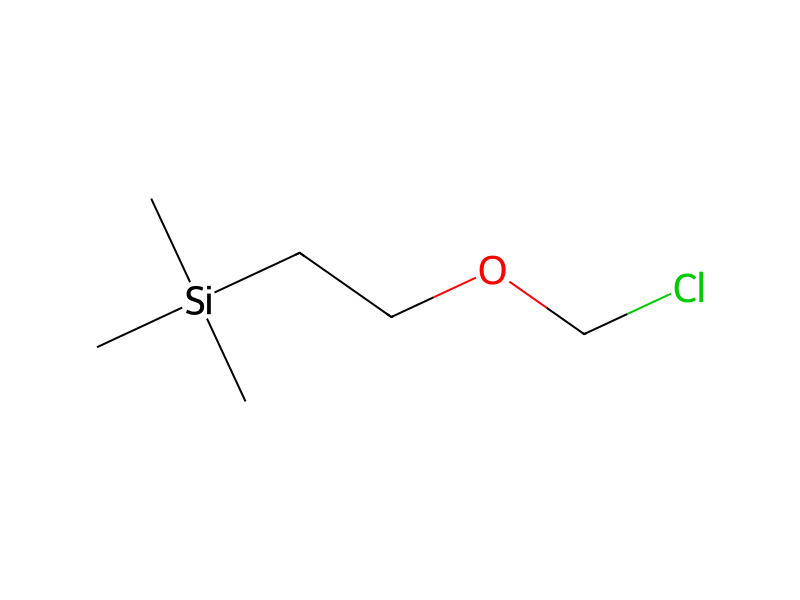
HCID 962WaterHCID 24758Sodium hydrideHCID 27242712-Chloromethyl 2-(trimethylsilyl)ethyl etherHCID 86587185HCID 86587185、化合物

生成物 1

HCID 865871868-Bromo-6-methoxy-4-(2-trimethylsilanyl-ethoxymethoxy)-quinoline-2-carboxylic acid (4-morpholinyl-phenyl)-amide収率 80.3%

試薬・触媒・溶媒 2

HCID 887
Methanol
溶媒
HCID 13387N-methyl-2-pyrrolidone溶媒

実験手順

A yellow suspension of 8-bromo-6-methoxy-4-oxo-1,4-dihydro-quinoline-2-carboxylic acid (4-morpholin-4-yl-phenyl)-amide (Reference Example 27b) (3.092 g, 6.75 mmol) in 40 mL N-methylpyrolidinone was treated with sodium hydride (60% dispersion in oil, 0.410 g, 10.24 mmol). Gas evolution and warming were observed and the suspension became light brown and almost clear. The reaction was stirred for 10 minutes at room temperature under nitrogen. Addition of the 2-(trimethylsilyl)ethoxymethyl chloride (1.6 mL, 9.1 mmol) resulted in a slightly cloudy, lighter brown solution. After 4.5 hours at room temperature, the reaction mixture was poured into 300 mL water, stirred for 15 minutes and then stored at 0° C. overnight. The solids were isolated by filtration, suspended in methanol, filtered again, and dried under high vacuum to afford the product as a yellow solid (3.190 g, 80%). 1H NMR (300 MHz, DMSO, d6) δ 10.18 (s, 1 H, C(O)NH), 7.95 (d, 1 H, Jm=2.4 Hz, ArH7), 7.83 (s, 1 H, ArH3), 7.69 (d, 2 H, Jo=9.0 Hz, ArH2′& H6′), 7.51 (d, 1 H, Jm=2.7 Hz, ArH5), 7.00 (d, 2 H, Jo=9.0 Hz, ArH3′& H5′), 5.69 (s, 2 H, OCH2O), 3.95 (s, 3 H, OCH3), 3.85 (t, 2 H, J=8.0 Hz, OCH2CH2Si), 3.75 (t, 4 H, J=4.7 Hz, OCH2CH2N), 3.10 (t, 4 H, J=4.7 Hz, OCH2CH2N), 0.94 (t, 2 H, J=8.0 Hz, OCH2CH2Si), −0.04 (s, 9 H, Si(C H3)3; Mass Spec.: calc. for [C27H34BrN3O5Si+H]+ Theor. m/z=588, 590; Obs.=588, 590.

後処理

  1. temperatureGas evolution and warming
  2. customresulted in a slightly cloudy, lighter brown solution
  3. waitAfter 4.5 hours at room temperature
  4. stirringstirred for 15 minutes
  5. waitstored at 0° C. overnight
  6. customThe solids were isolated by filtration
  7. filtrationfiltered again
  8. customdried under high vacuum

出典と根拠

ORDレコード
ord-e3fb54ff1c0640e7ad3c7c5d948da288
出典データセット
uspto-grants-2007_10
DOI
10.6084/m9.figshare.5104873.v1
特許番号
US07285662B2

反応ノート

このページの内容参加物実験手順後処理出典と根拠反応ノート