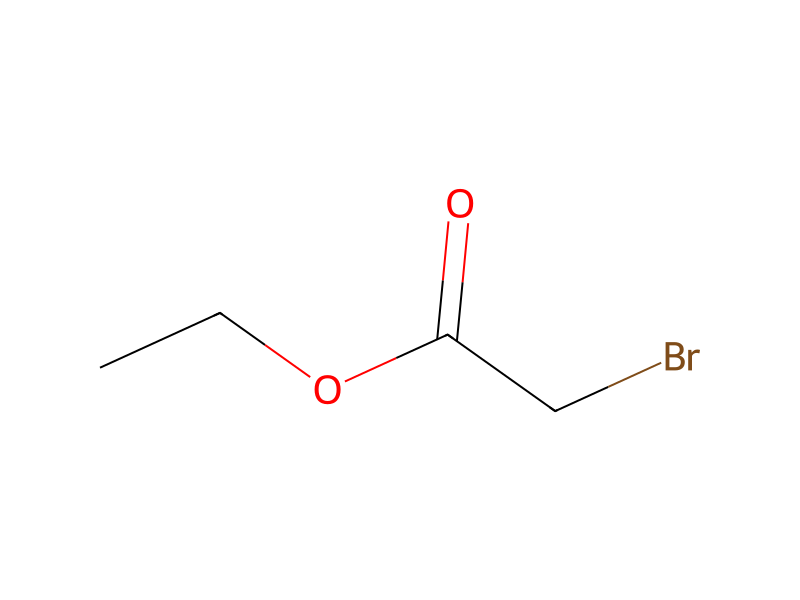
Ethyl bromoacetate → Ethyl 2-(4-formyl-2-nitrophenoxy)acetate
HRID 1271204
反応式

[OH:1][C:2]1[CH:9]=[CH:8][C:5]([CH:6]=[O:7])=[CH:4][C:3]=1[N+:10]([O-:12])=[O:11].[H-].[Na+].Br[CH2:16][C:17]([O:19][CH2:20][CH3:21])=[O:18]>O1CCCC1.CN(C=O)C>[CH2:20]([O:19][C:17](=[O:18])[CH2:16][O:1][C:2]1[CH:9]=[CH:8][C:5]([CH:6]=[O:7])=[CH:4][C:3]=1[N+:10]([O-:12])=[O:11])[CH3:21]参加物
5




実験手順
To a solution of 4-hydroxy-3-nitrobenzaldehyde (5.00 g, 29.9 mmol) in tetrahydrofuran/DMF (300 mL/120 mL) was added NaH (60%, 1.32 g, 32.9 mmol), followed by ethyl bromoacetate (5.49 g, 3.65 mL, 32.9 mmol). The mixture was heated at reflux for 20 hours, cooled to room temperature, and concentrated under reduced pressure. The residue was dissolved in ethyl acetate (200 mL), acidified to pH 2 with 1N HCl, and the layers were separated. The aqueous layer was extracted with ethyl acetate (2×50 mL), the organic extracts were combined and washed with saturated NaHCO3 (2×50 mL), brine (1×50 mL), dried over MgSO4, and concentrated to an amber oil. Purification of the residue by silica gel flash chromatography (25% ethyl acetate/hexanes) afforded the title compound. 1H NMR (DMSO-d6) δ 1.91 (t, J=7.08 Hz, 3H), 4.16 (q, J=7.08 Hz, 2H), 5.15 (s, 2H), 7.50 (d, J=8.79 Hz, 1H), 8.12–8.14 (m, 1H), 8.42 (d, J=1.95 Hz, 1H), 9.93 (s, 1H) ppm. MS: M+−1=252.1 Da.