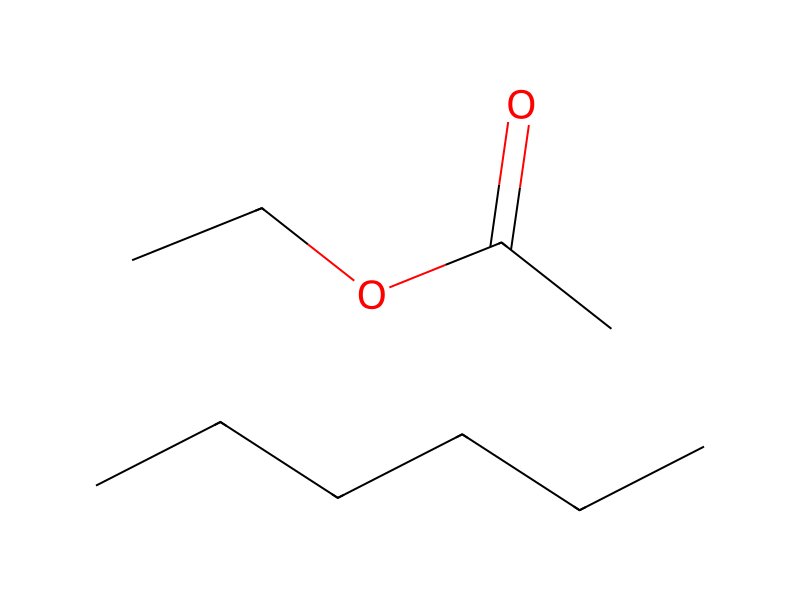
N[C:2]1C=[C:4]2[C:8](=[CH:9][CH:10]=1)N[C:6]([N:11]1[CH2:16][CH2:15][N:14]([C:17]3[C:22]([NH:23]C(C)C)=[CH:21][CH:20]=[CH:19][N:18]=3)[CH2:13][C:12]1=C=O)=[CH:5]2.[CH3:29]C(C)=O.C[Si]([C:37]#[N:38])(C)C.[OH-].[Na+].[C:41](O)(=O)[CH3:42]>CO.C(OCC)(=O)C.CCCCCC>[CH2:6]([N:11]1[CH2:12][CH2:13][N:14]([C:17]2[C:22]([NH:23][C:41]([C:37]#[N:38])([CH3:42])[CH3:29])=[CH:21][CH:20]=[CH:19][N:18]=2)[CH2:15][CH2:16]1)[C:5]1[CH:2]=[CH:10][CH:9]=[CH:8][CH:4]=1The 1-[5-Aminoindolyl -2-carbonyl -4-[3-(1-methylethyl amino)-2-pyridinyl]piperazine (EXAMPLE 7, 11.68 g, 43.51 mmol) is dissolved in 130 ml methanol and 130 ml acetic acid. Acetone (25.6 ml, 348.1 mmol) and trimethylsilylcyanide (46.4 ml, 348.1 mmol) are added and the mixture is stirred twenty hours. The solution is poured into cold aqueous sodium hydroxide solution, stirring vigorously, to give a basic solution. The aqueous solution is then extracted with ethyl acetate, the organic extract is washed with saline, dried over sodium sulfate and evaporated to dryness to give an oily residue of 12.6 g. Chromatography on a 400 g silica gel column with a step gradient of ethyl acetate/hexane (2/3 to 3/2, v/v), pooling and concentrating the appropriate fractions gives the title compound, NMR (300 MHz, CD3OD) 7.65, 7.29-7.17, 6.96-6.92, 3.51, 2.98, 2.55, 1.14 δ.