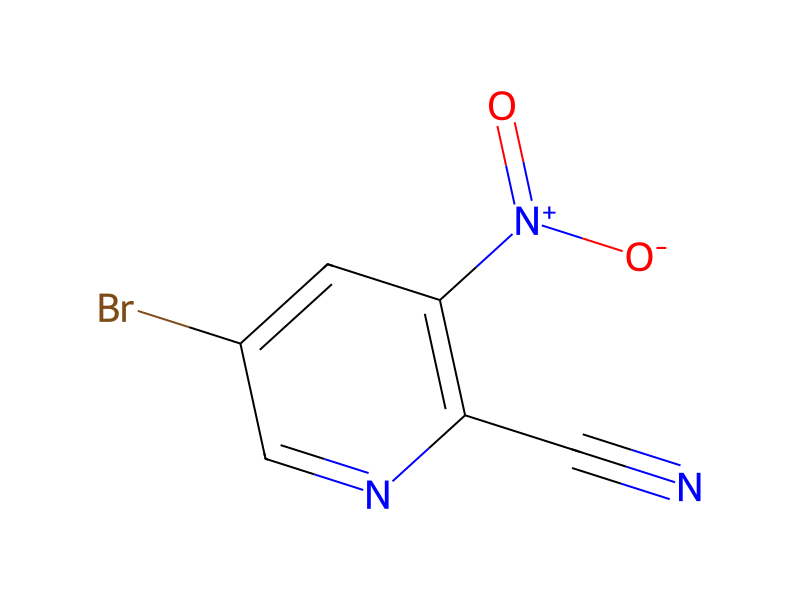
5-Bromo-3-nitropicolinonitrile (24.0 g, 105 mmol), 1-ethyl-1H-pyrazol-5-ol (13.0 g, 116 mmol), and sodium carbonate (11.2 g, 105 mmol) were combined with acetonitrile (400 ml). The mixture was heated to reflux for 20 hours. The mixture was then cooled to ambient temperature, filtered and evaporated. The residue was dissolved in ethyl acetate (800 ml) and washed with water (3×200 ml) and brine, dried (MgSO4), filtered and evaporated. The crude material was purified over silica gel (15:35:50, then 20:30:50 ethyl acetate/chloroform/hexane) to afford 5-bromo-3-(1-ethyl-1H-pyrazol-5-yloxy)picolinonitrile (16.4 g, 53% yield) as a white solid.