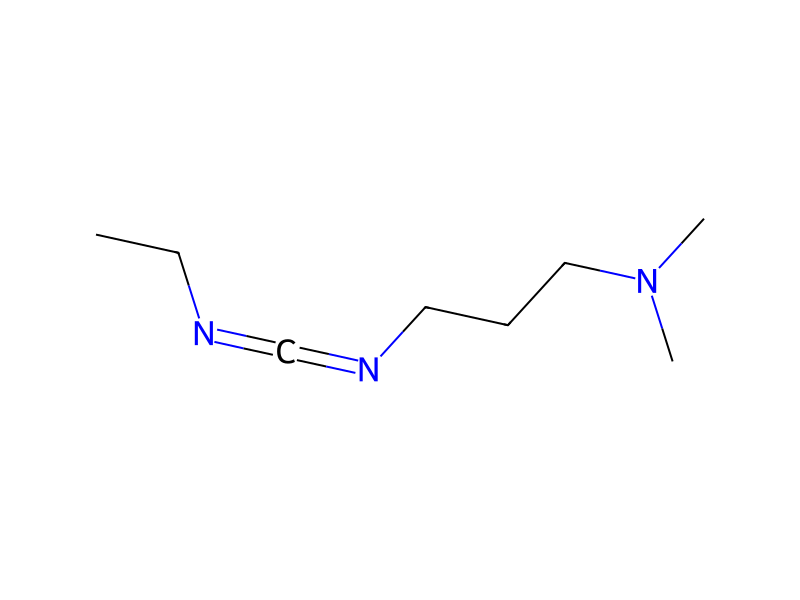
[NH2:1][C:2]1[CH:7]=[C:6]([C:8]([F:11])([F:10])[F:9])[CH:5]=[CH:4][C:3]=1[OH:12].[CH2:13]([C:15]1[C:16]([C:21](O)=[O:22])=[N:17][CH:18]=[N:19][CH:20]=1)[CH3:14].CCN=C=NCCCN(C)C.N1C=CC=CC=1>O>[CH2:13]([C:15]1[C:16]([C:21]([NH:1][C:2]2[CH:7]=[C:6]([C:8]([F:9])([F:10])[F:11])[CH:5]=[CH:4][C:3]=2[OH:12])=[O:22])=[N:17][CH:18]=[N:19][CH:20]=1)[CH3:14]A mixture of 2-amino-4-trifluoromethyl-phenol (0.27 g), 5-ethyl-pyrimidine-4-carboxylic acid (0.27 g), WSC (0.25 g), and pyridine (5 ml) was stirred at 80° C. for 1 hour, at 100 for 1.5 hours, and at 115° C. for 0.5 hours. After standing to cool the reaction mixture to room temperature, to the reaction mixture, water was added, and extracted with ethyl acetate. The organic layer was dried over magnesium sulfate, and concentrated under reduced pressure. The residue was subjected to silica gel column chromatography to give 0.34 g of 5-ethyl-N-(2-hydroxy-5-trifluoromethyl-phenyl)-pyrimidine-4-carboxamide.