Oxygen → Squalane
HRID 1576596
反応式

N1[CH:6]=[CH:5][CH:4]=[CH:3][CH:2]=1.O=O>[Ni].C([O-])(=O)C.[Cu+2].C([O-])(=O)C.CCCCCCC>[CH3:2][CH:3]([CH2:4][CH2:5][CH2:6][CH:3]([CH2:4][CH2:5][CH2:6][CH:3]([CH2:4][CH2:5][CH2:6][CH2:2][CH:3]([CH2:4][CH2:5][CH2:6][CH:3]([CH2:4][CH2:5][CH2:6][CH:3]([CH3:4])[CH3:2])[CH3:2])[CH3:6])[CH3:2])[CH3:2])[CH3:5]参加物
6





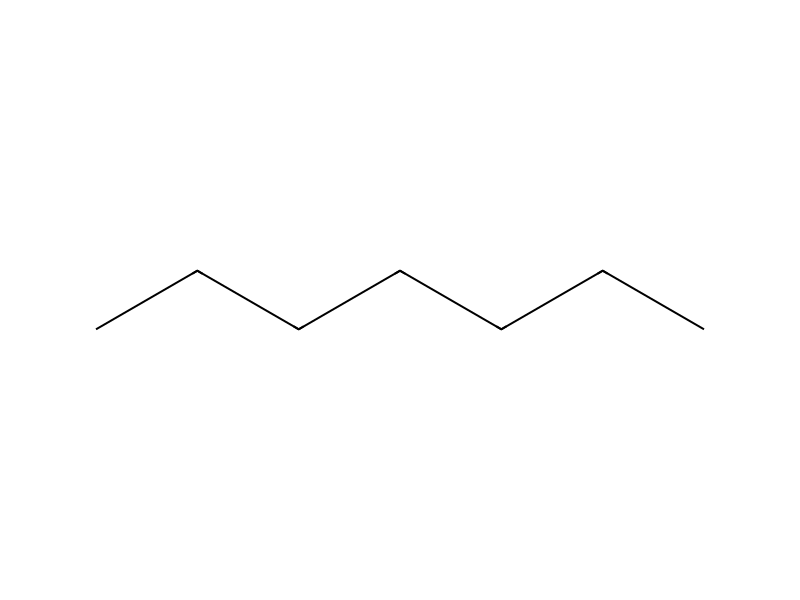
実験手順
In a 2-l. three-necked and round-bottomed flask were placed 220 g of 3,7,11-trimethyl-6,10-dien-1-in-3-ol, 1 g of copper acetate, 20.2 ml of pyridine and 440 ml of n-heptane. The mixture was stirred at temperatures of 60°~70°C for 5 hours by passing oxygen. The reaction mixture was washed with a 3N-H2SO4 -solution and then with a 10 % aqueous sodium chloride solution respectively three times and the n-heptane was distilled off to give 348 g of a crude product. A 100 g portion of this crude product was placed in a 500 ml autoclave and 200 ml of n-heptane, 1.8 g of nickel catalyst supported on diatomaceous earth which is roughly the same amount as that of nickel and 3.6 g of silica-alumina (alumina: 28~30 %) were added thereto. The mixture was subjected to hydrogenolysis at a temperature of 200°C under a hydrogen pressure of 100~20 kg/cm2 with stirring for 16 hours. After filtering off the catalyst and distilling off the n-heptane, the residue was distilled off at 202° - 208°C under reduced pressure of 0.3 - 0.4 mmHg to give 45.0 g of squalane.